
The Florentine steak, or Bistecca alla Fiorentina, is a thick-cut, bone-in steak traditionally prepared over an open fire. Here I served it with BBQ vegetables. Since the 1970s, I have experienced this dish firsthand at my aunt's farm in the Chianti region of Tuscany, where it was cooked with simplicity and care. I will explain how to prepare it the traditional way, from choosing the best ingredients to mastering the open-fire grilling process, while also exploring its history and cultural importance.
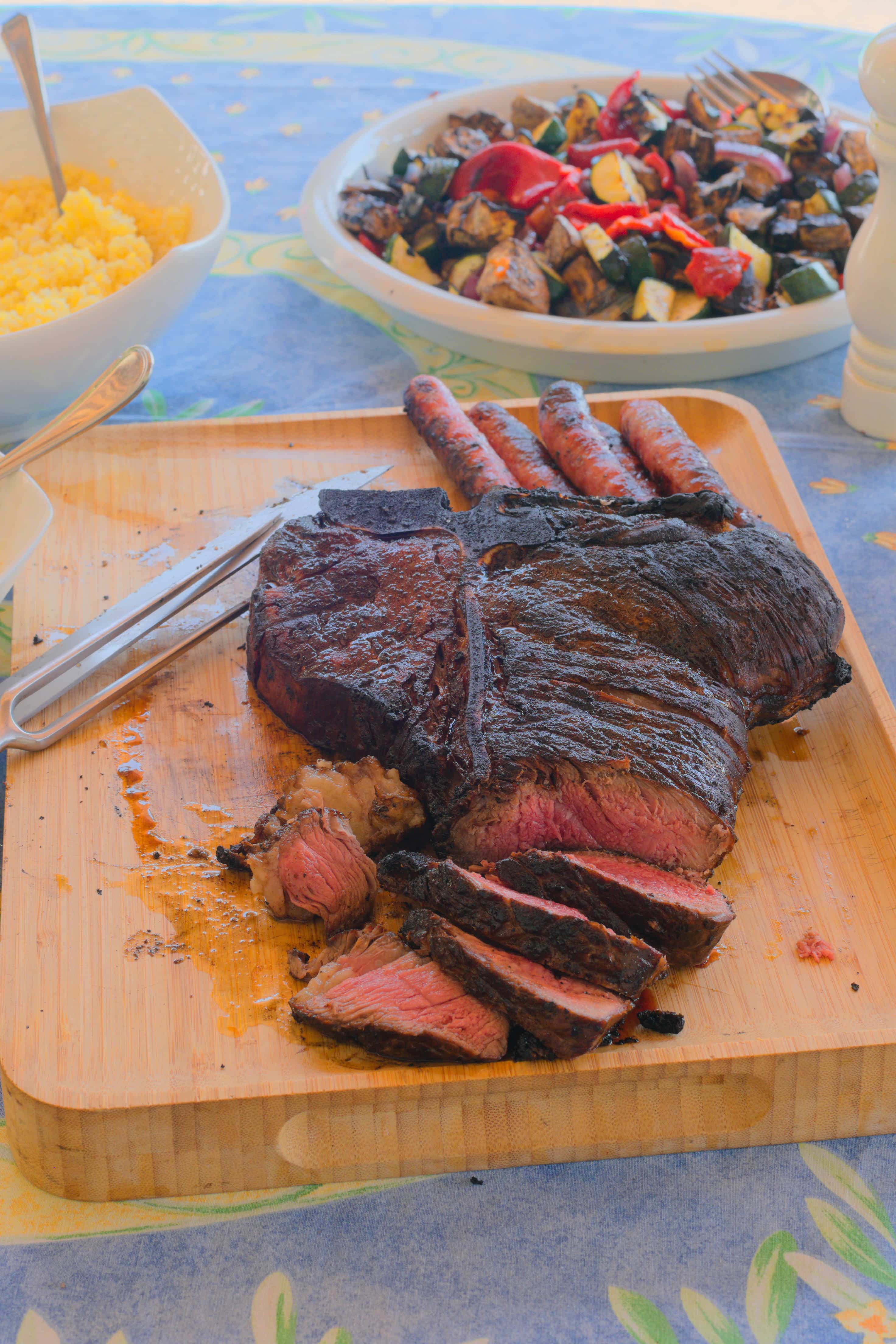
The Bistecca alla Fiorentina is a symbolic dish of Tuscany, made from a thick-cut, bone-in steak (T-bone or Porterhouse) taken from the loin of a young steer or heifer, traditionally of the Chianina breed.
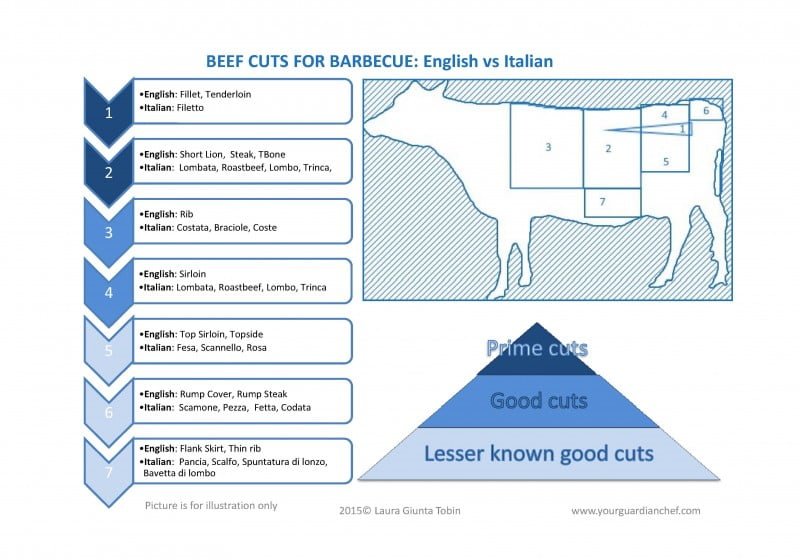
This cut is distinguished by the central "T" bone, which separates the tenderloin (filetto) from the sirloin (controfiletto).
If you want to know more about how to translate the names of beef cuts from English into Italian, you can read my article: Beef Cuts Diagram for French and Italian Recipes
Unlike other similar cuts, such as the American T-bone or Porterhouse, the Florentine steak is defined by its preparation method: grilling over high heat to achieve a seared exterior while maintaining a juicy, red interior.
It is never pierced, flipped repeatedly, or pressed during cooking, preserving its unique texture and flavor.
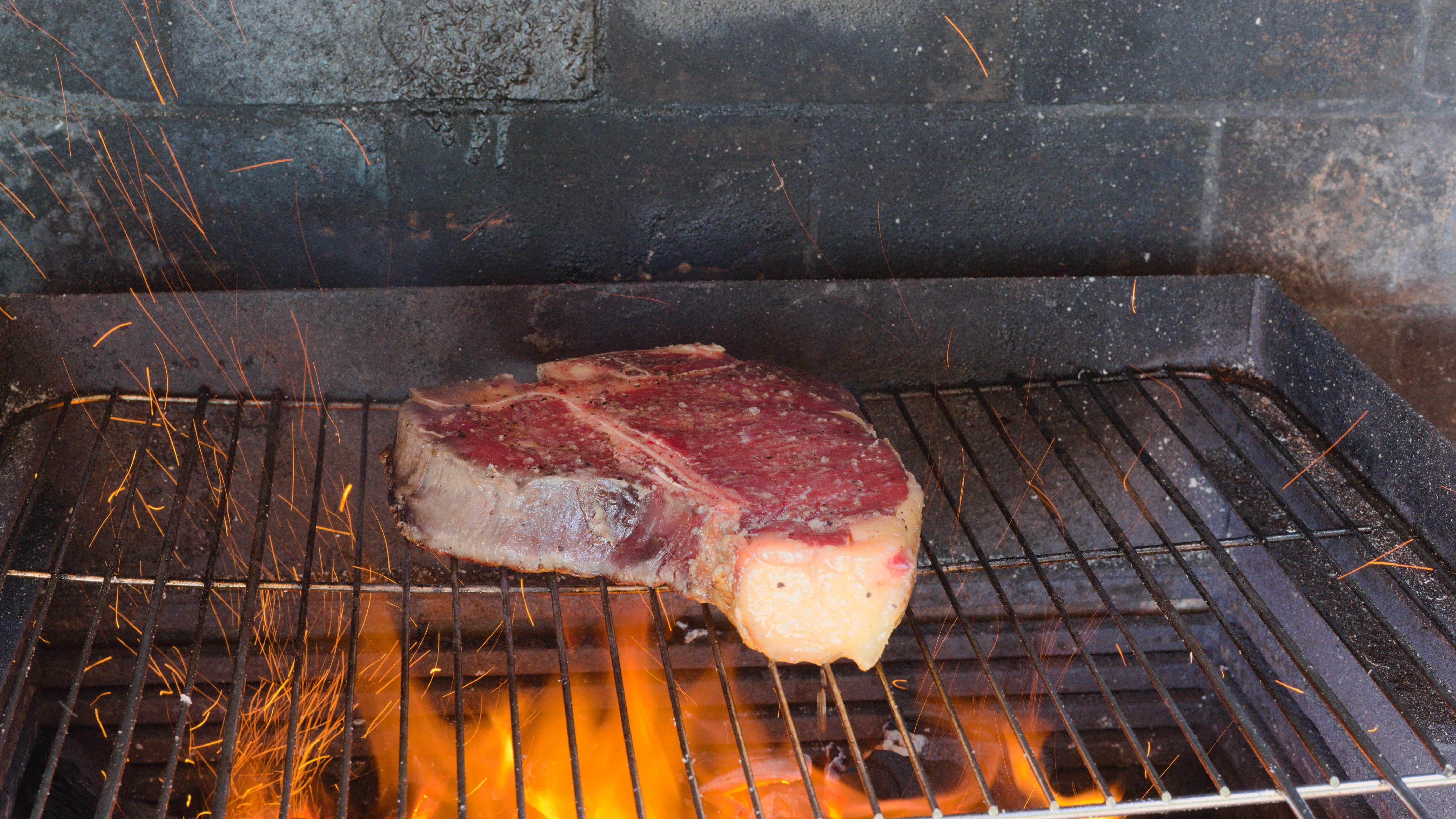
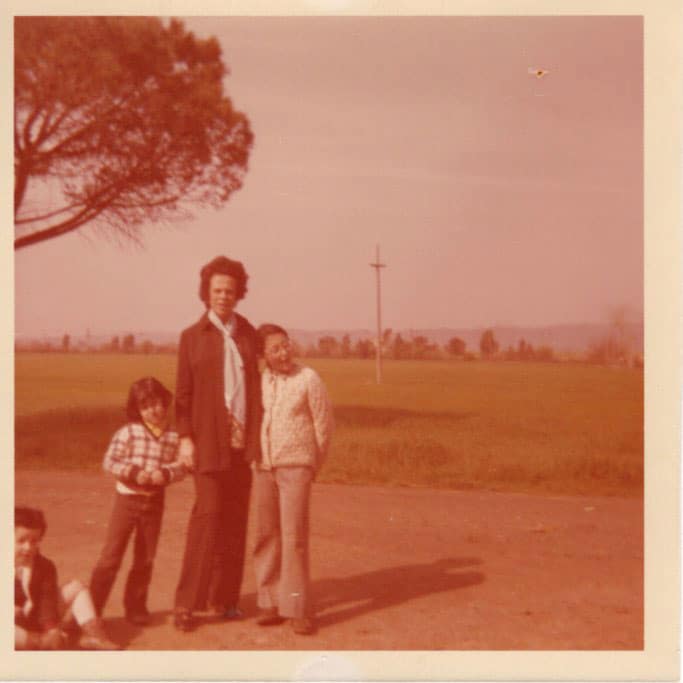
I remember when my uncle would prepare this steak on the open fire in the kitchen of his old farmhouse in Campo Rotondo.
It was always a big event, as this large cut of beef would feed two families.
As children, we would get smaller portions, leaving more for the adults to enjoy.
The simplicity of the preparation and the communal nature of the meal made it a truly memorable experience.
For more Tuscan recipes from the 70s you can check out: spinach ricotta malfatti, wild boar in dolce forte chocolate sauce, and cenci.
Historic origin
The origins of Bistecca alla Fiorentina date back to the Renaissance and the Medici court in Florence.
According to legend, during the feast of San Lorenzo in 1565, large cuts of meat were roasted over open flames in Piazza San Lorenzo.
English knights attending the celebration called the meat "beef-steak," giving rise to the Italian term "bistecca."
Over time, Bistecca alla Fiorentina became a hallmark of Tuscan cuisine, celebrated for its simple preparation and cultural significance, and it remains a staple in traditional Florentine trattorias and regional events today.
If you want to know more about the history of the Tuscan cuicine you can check out the article: Tuscan Cuisine: A Journey Through History

The meat
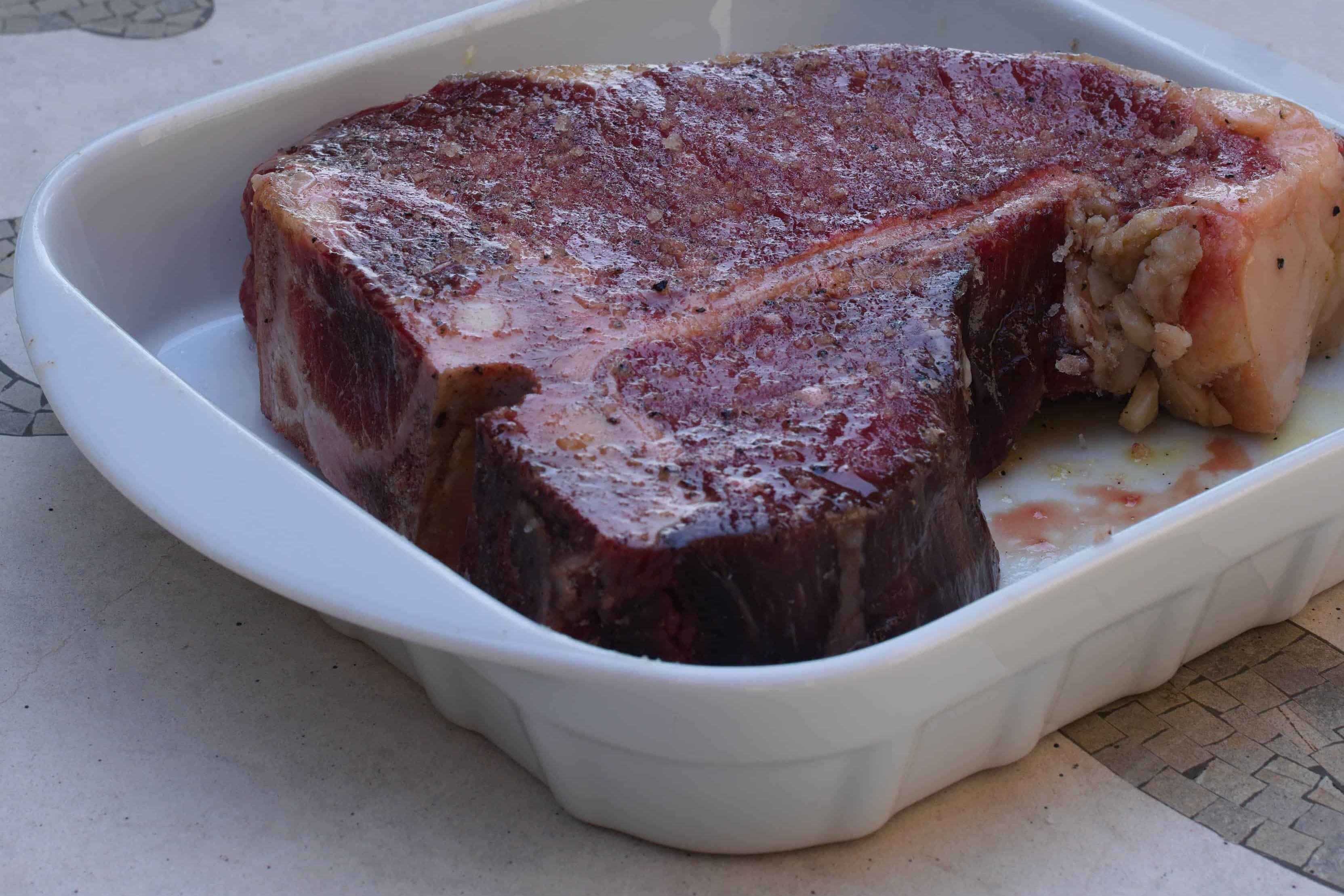
Key characteristics of the Florentine steak include its thickness, typically 5-6 cm (about 3-4 inches), and its weight, often reaching 1-2 kg.
While Chianina beef is the traditional choice due to its tenderness and flavor, other high-quality, dry-aged beef from breeds such as Maremmana or Marchigiana is also used.
Proper aging is essential, with at least 20 days of maturation recommended to enhance tenderness.
The steak is always cooked over a wood fire, preferably using oak, olive, or holm oak, and is served rare (al sangue).
It is seasoned simply with salt and olive oil, enhancing the natural flavors of the meat.
The other ingredients
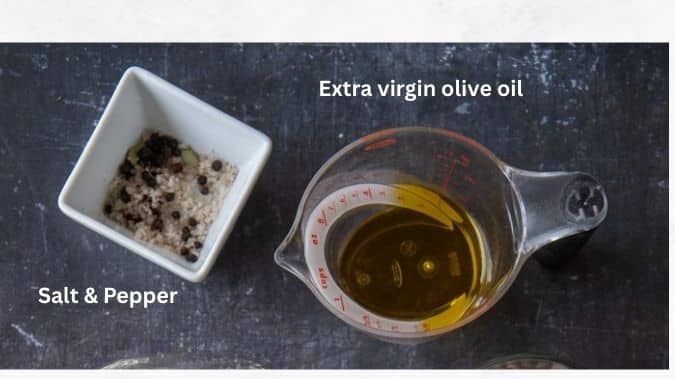
Salt, Pepper, and Olive Oil
The beauty of Bistecca alla Fiorentina lies in its simplicity.
Only three ingredients are used to season the steak: coarse sea salt or kosher salt, freshly ground black pepper, and good-quality extra virgin olive oil.
These essential components enhance the natural flavor of the beef without overpowering it, staying true to the dish's rustic Tuscan origins.
Making Good Use of the BBQ
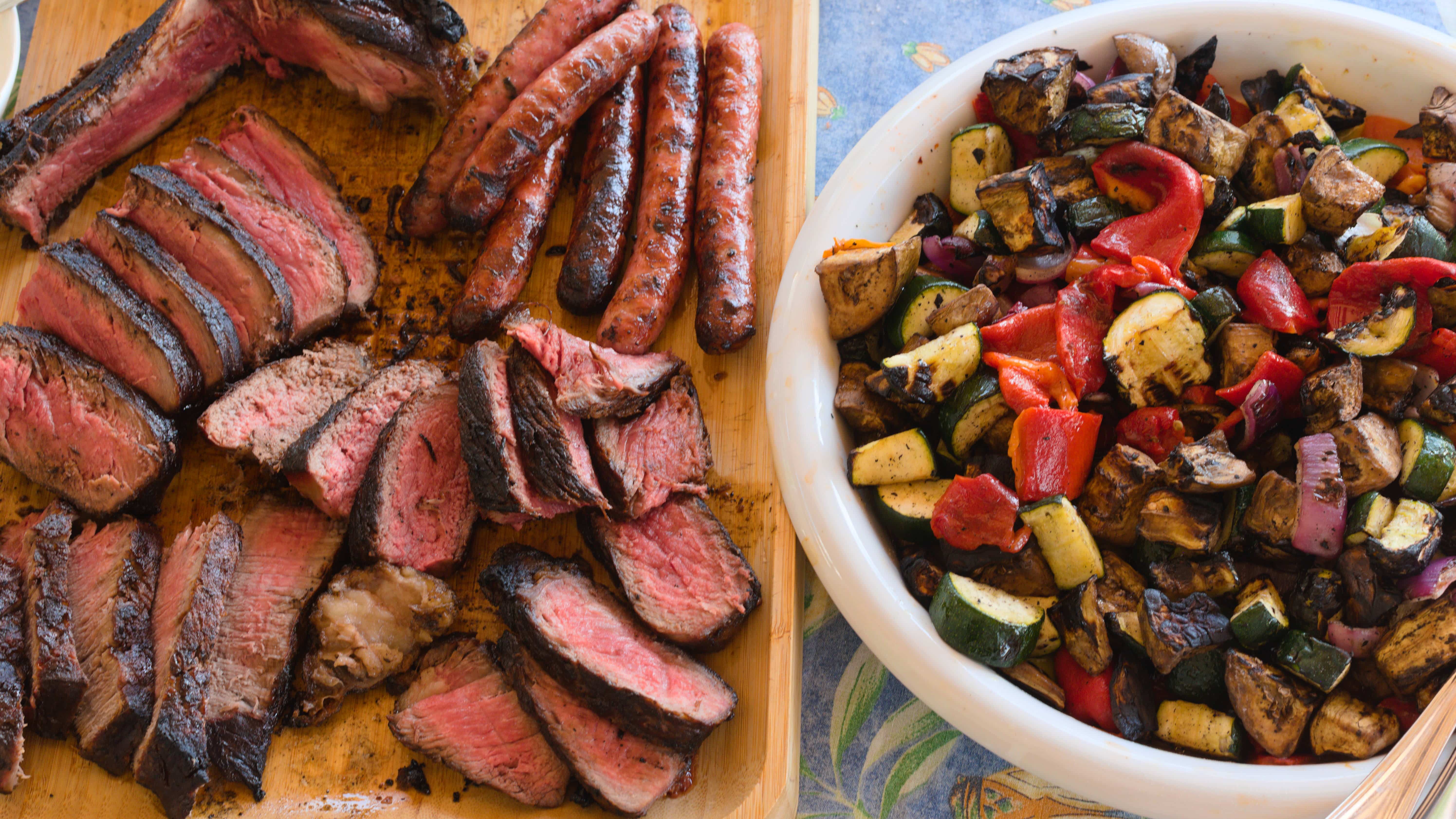
While the Bistecca alla Fiorentina cooks relatively quickly, the BBQ can also be used to prepare a variety of seasonal summer vegetables.
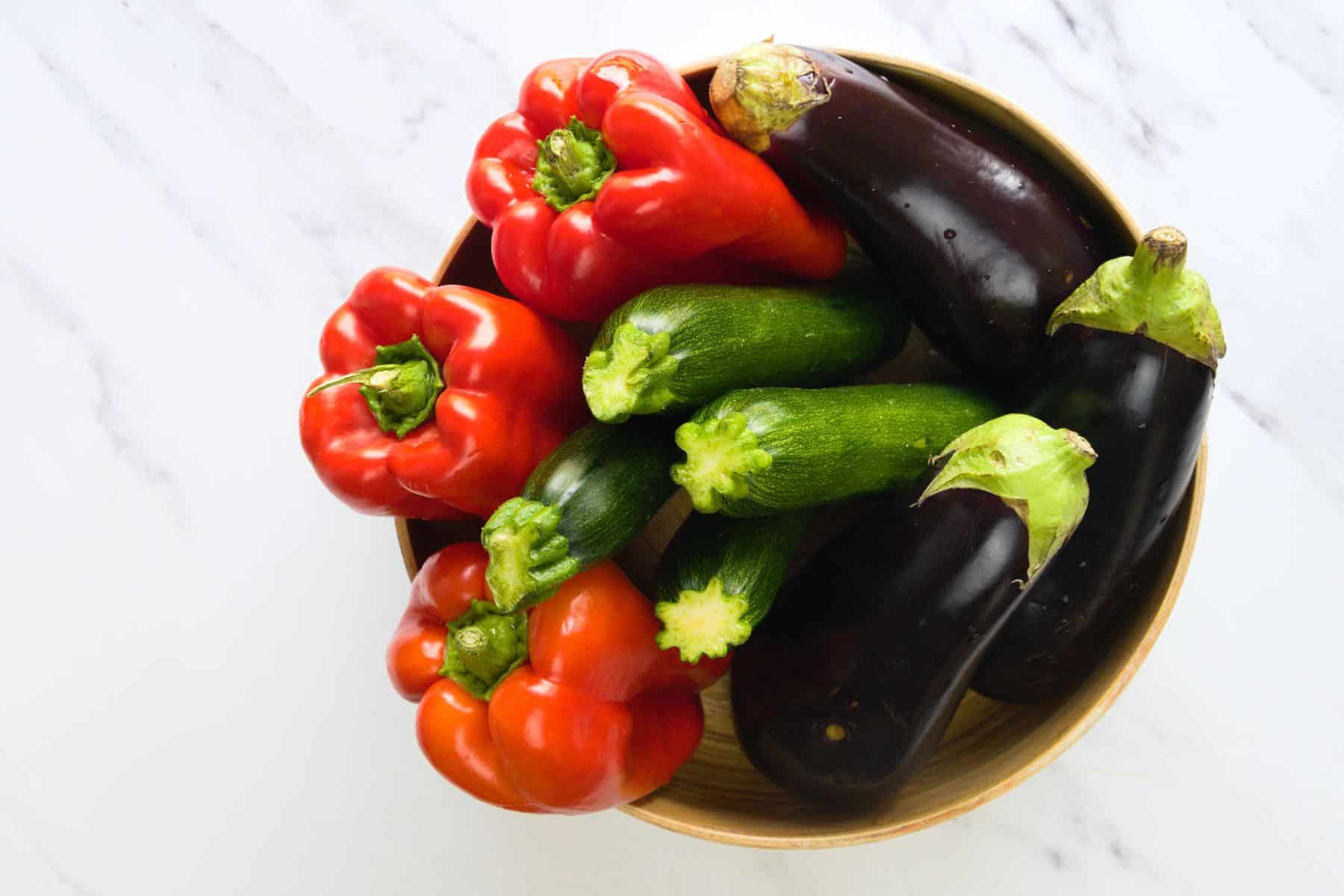
Using the same simplicity of ingredients as the steak, I grill zucchini, eggplants, red peppers, and red onions.
These vegetables, lightly seasoned with coarse sea salt, freshly ground black pepper, and a drizzle of high-quality extra virgin olive oil, complement the steak perfectly.
Step-by-Step Instructions
Prepare the meat
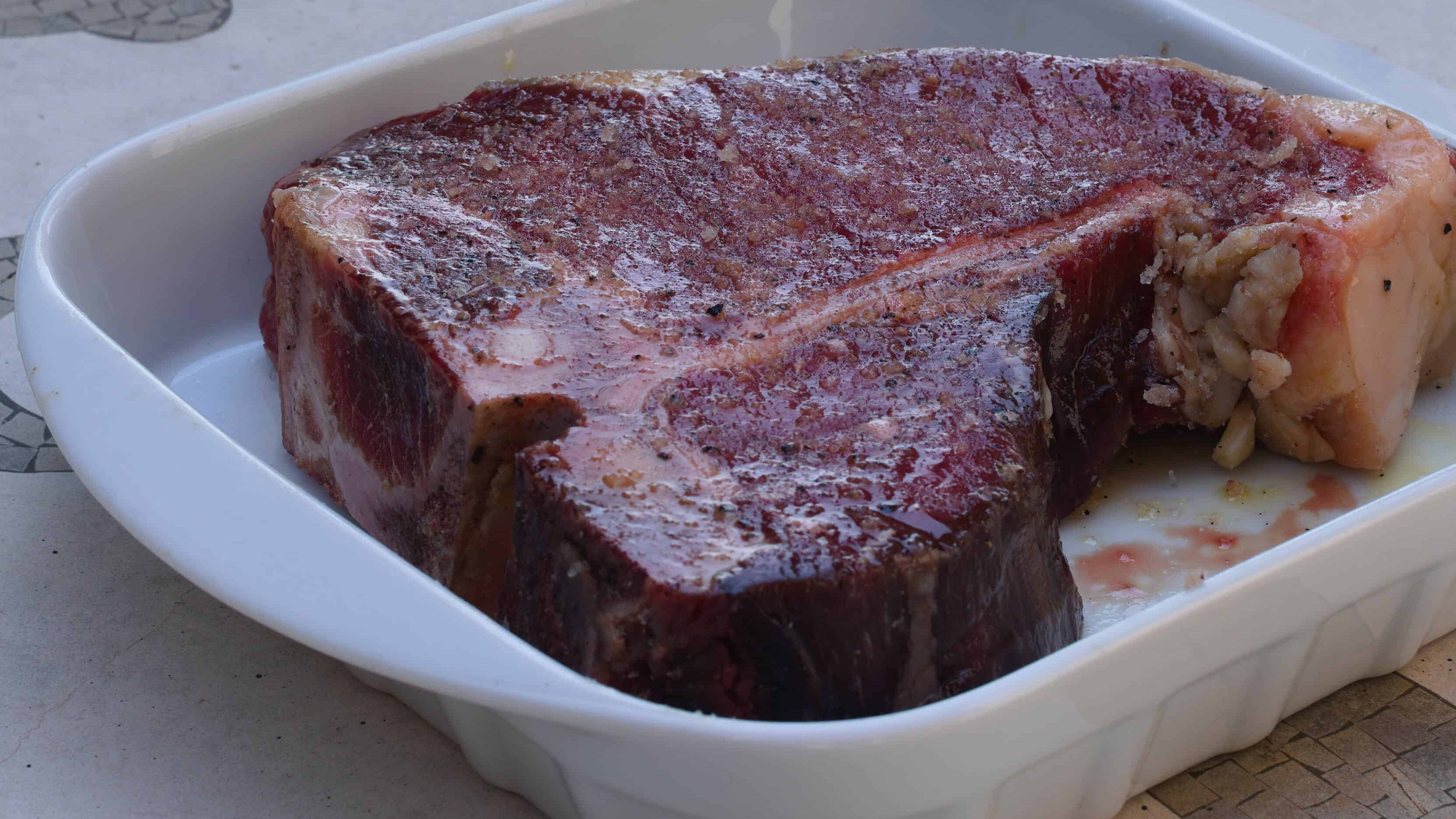
Take the steak out of the refrigerator 6-8 hours before cooking to ensure even cooking and a tender result.
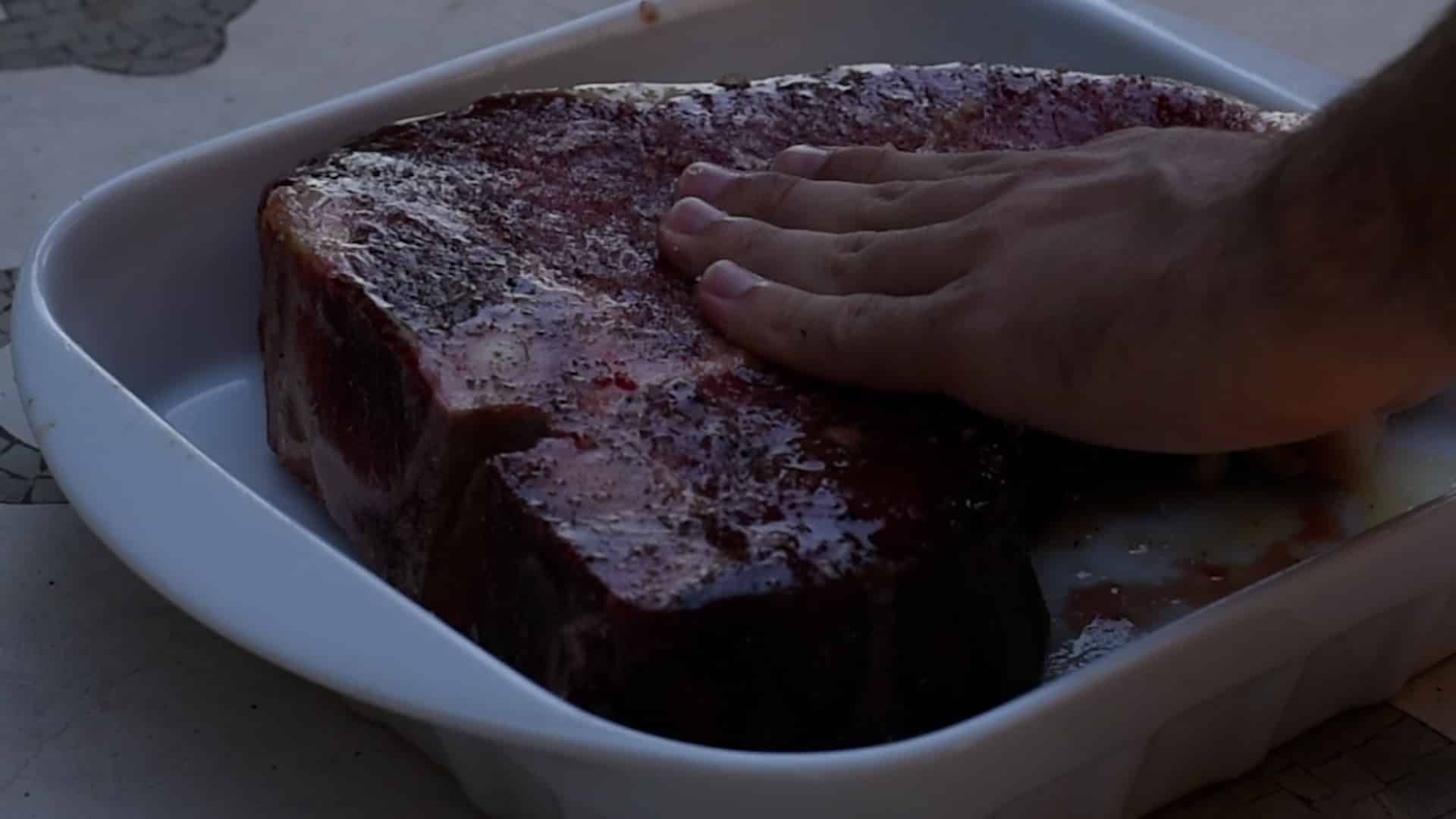
Generously season the steak with coarse sea salt and freshly ground black pepper one hour before grilling.
Traditionally, the meat is salted after cooking, but I take my salt very seriously and prefer to season it beforehand.
I was never a fan of unsalted Tuscan bread-even if it grows on you after a few days-so I'd rather play it safe and salt my beef in advance.
Prepare the Grill
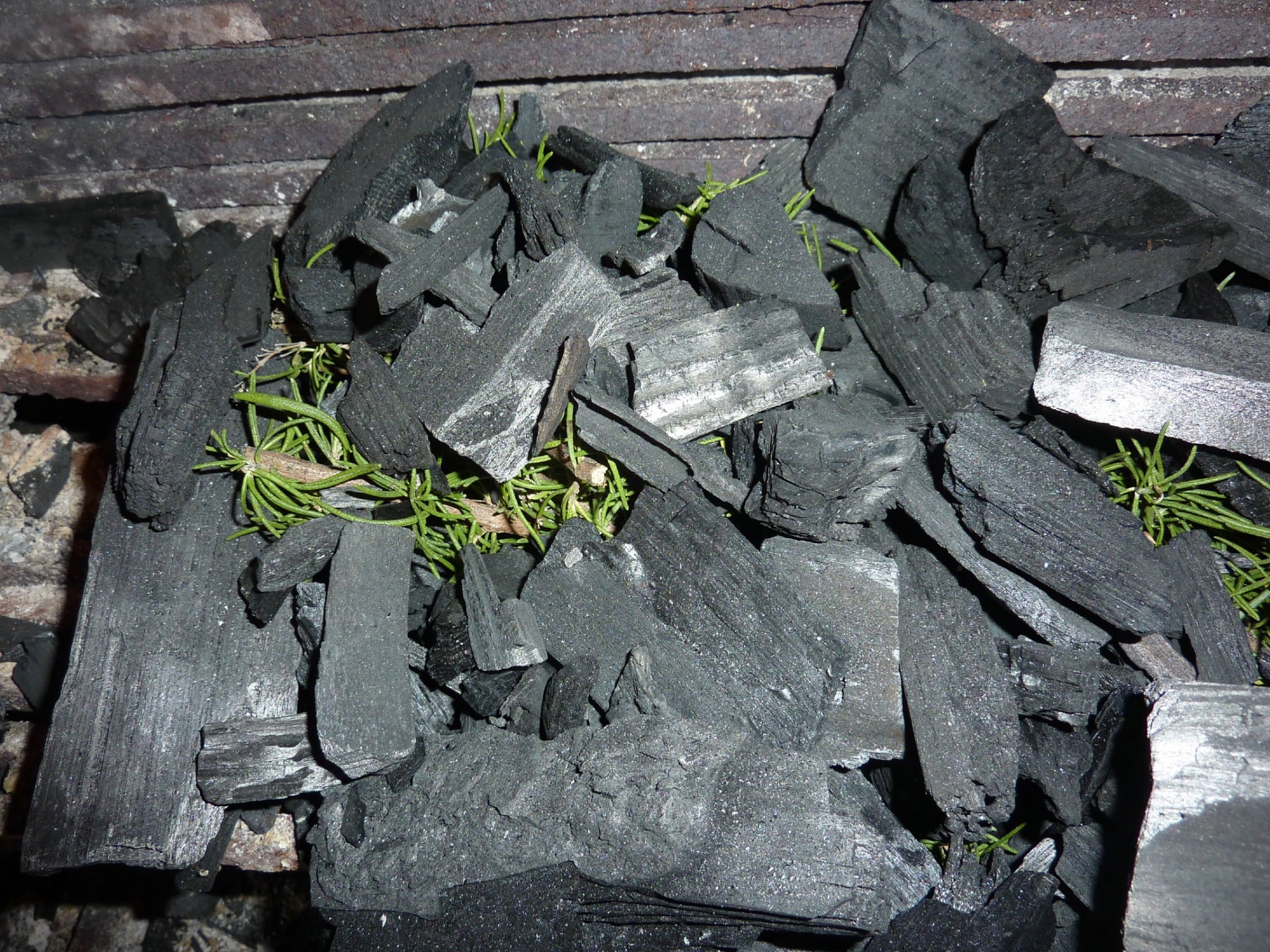
Build a hot wood fire using restaurant-quality charcoal.
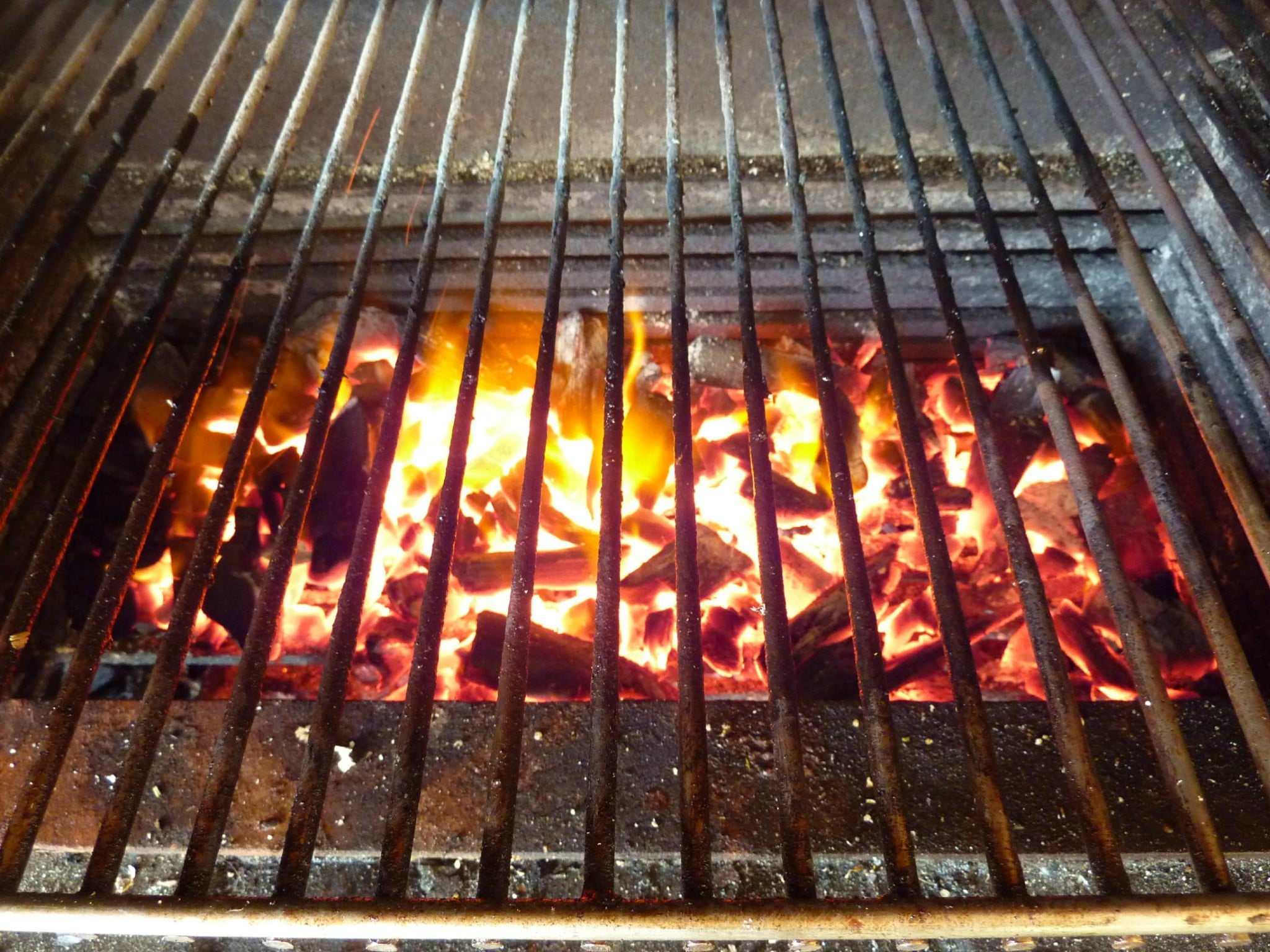
Wait until the flames die down, leaving a bed of hot embers covered with a thin layer of ash for even, high heat.
N.B. Traditionally, it is used oak, olive, or holm oak wood.
Before I Grill the Meat
As the flames settle and the embers form, I prepare the vegetables
Prepare the Vegetables:

Cut zucchini, peeled eggplants, and onions into equal chunks to ensure even cooking.
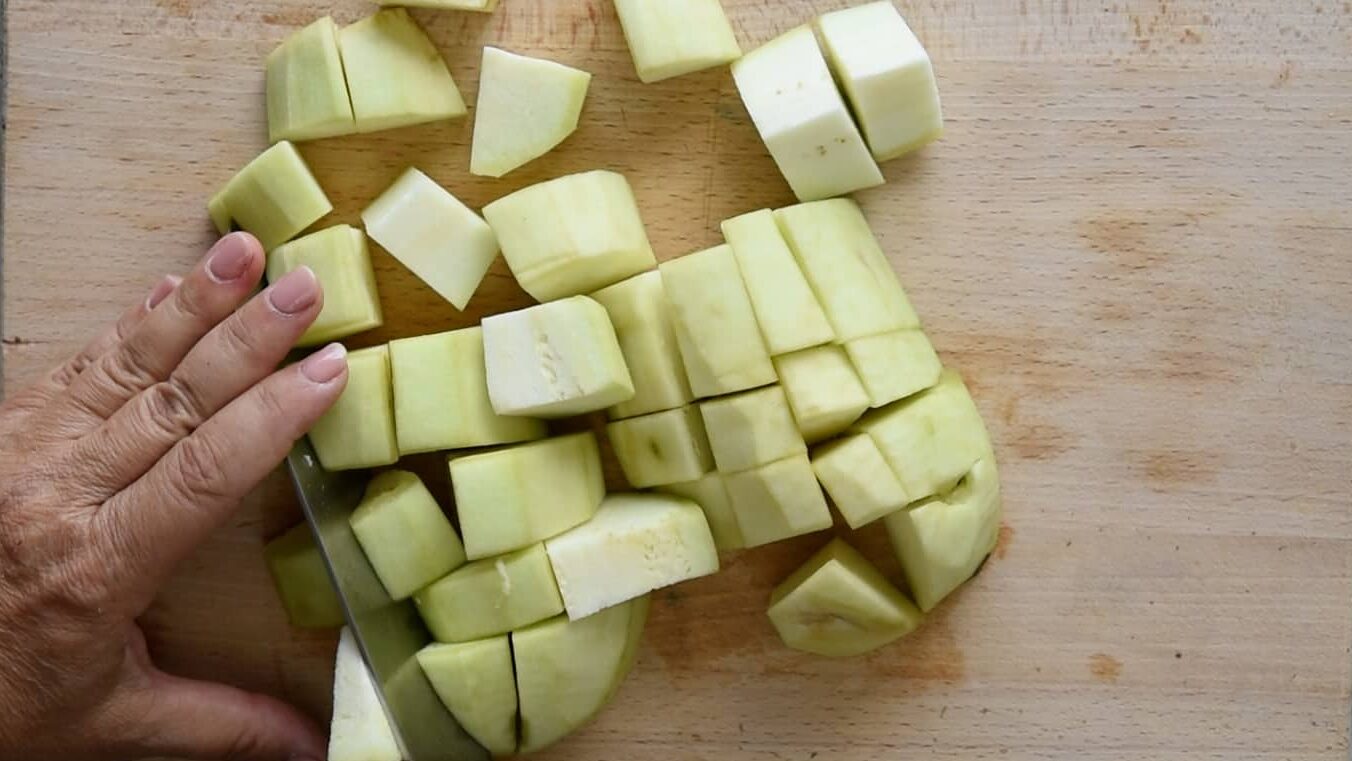
Peeled eggplants
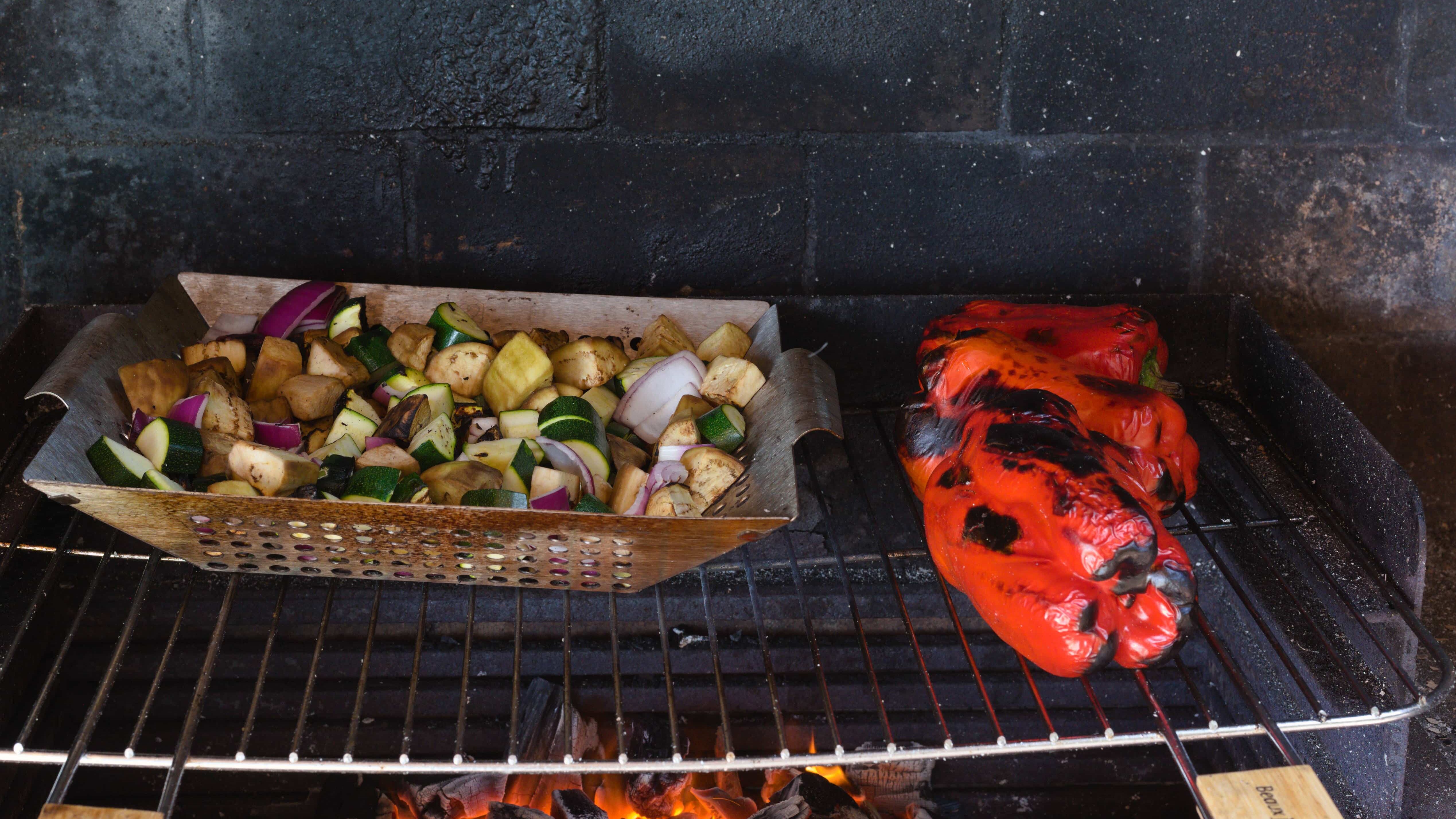
Place the vegetables in a grill basket and stir regularly to cook them evenly.
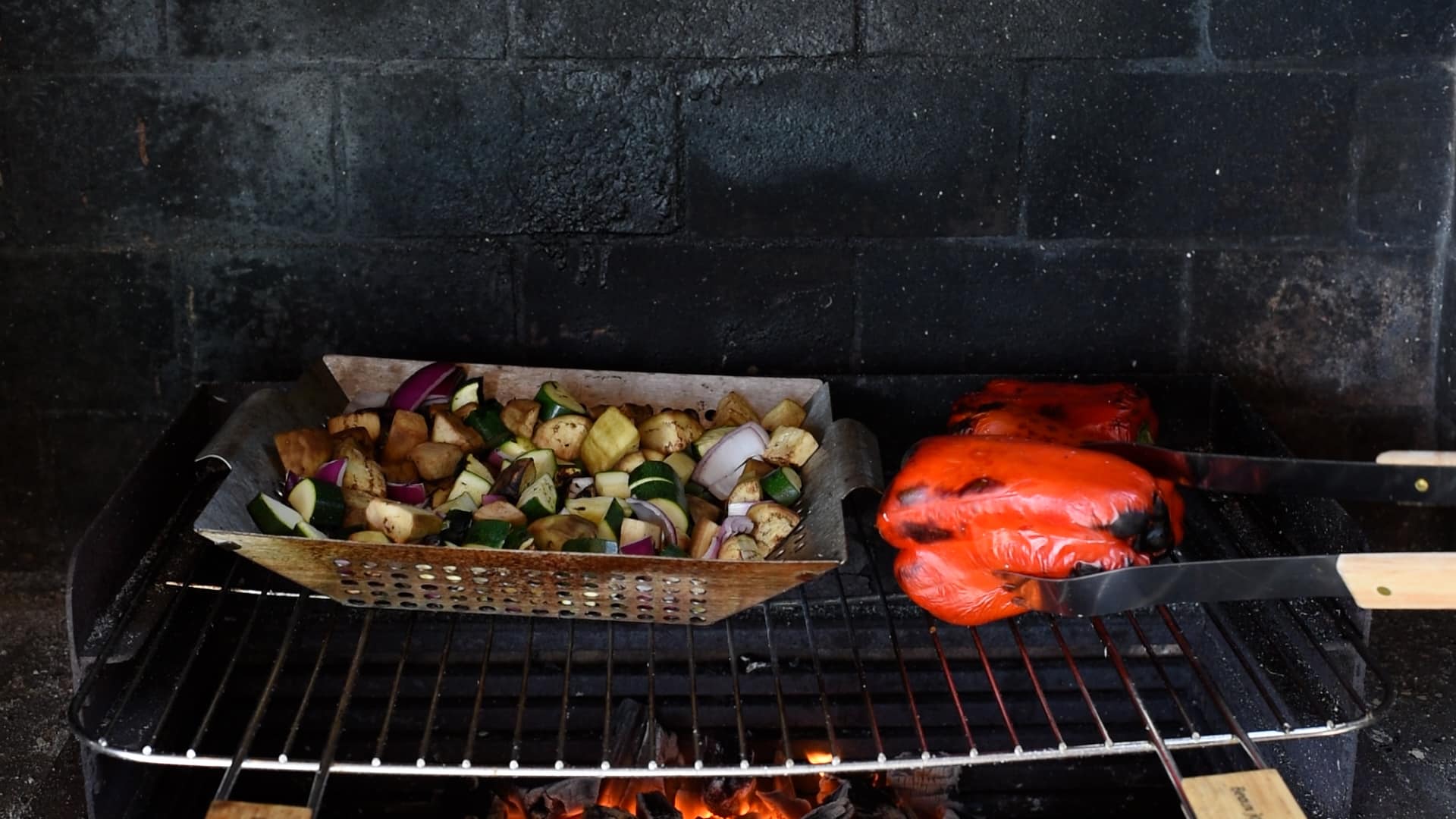
Keep the red peppers whole and grill them separately on the side.
N.B. There is absolutely no need to season the vegetables before grilling
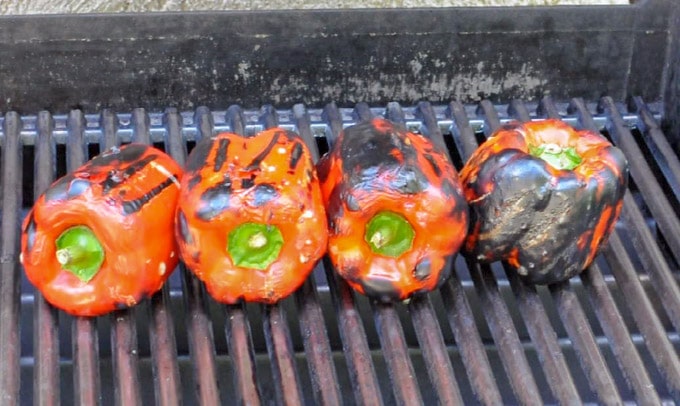
Allow the skin of the peppers to burn slightly while grilling to make it easier to peel.
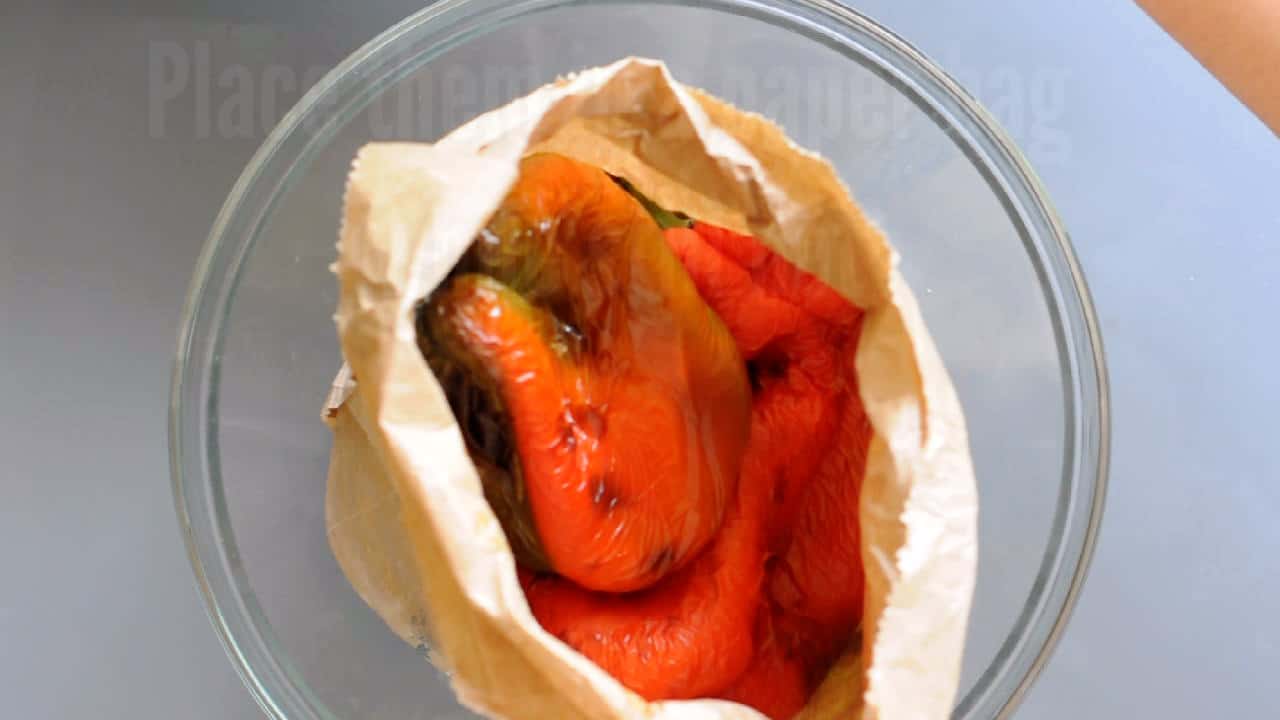
Remove the peppers from the grill and let them cool slightly before handling. Putting them into a paper bag will help release the skin
N.B. You need to make sure that the skin is burned otherwise it will not peel easily
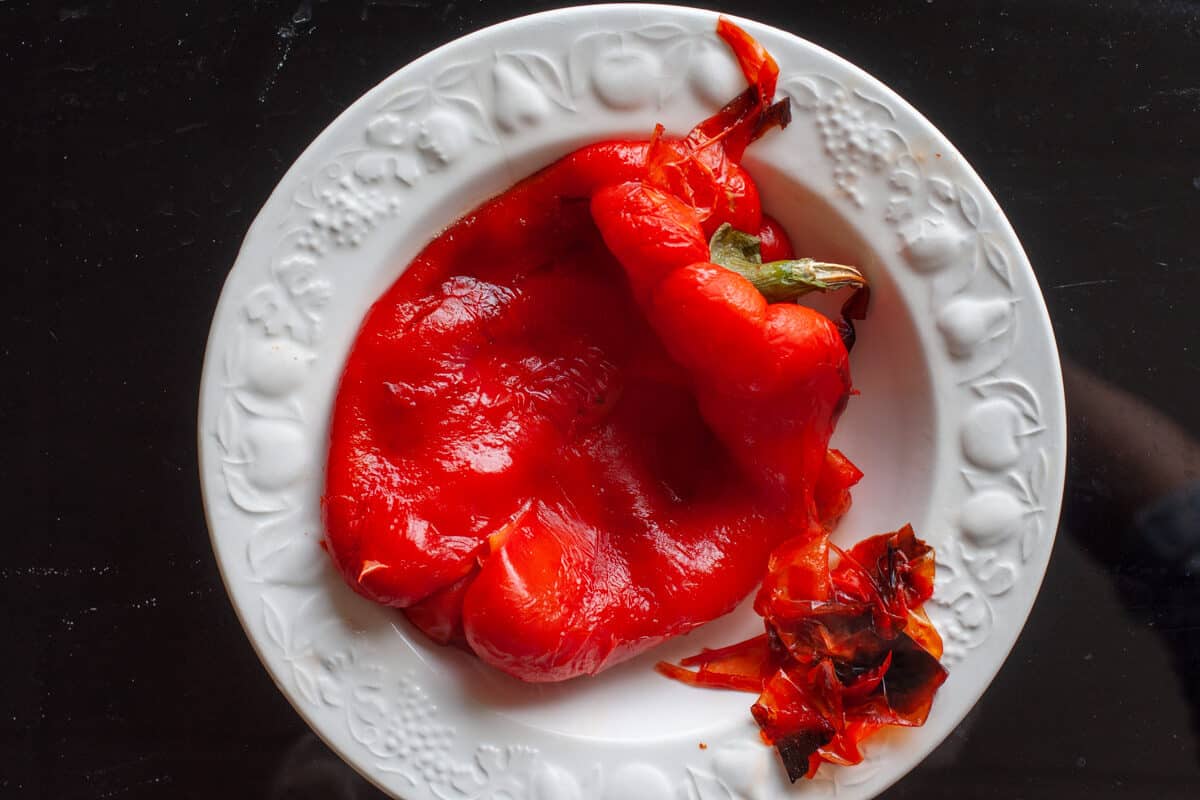
Peel off the skin, open the peppers, and carefully remove the seeds-caution is needed as the insides remain very hot.
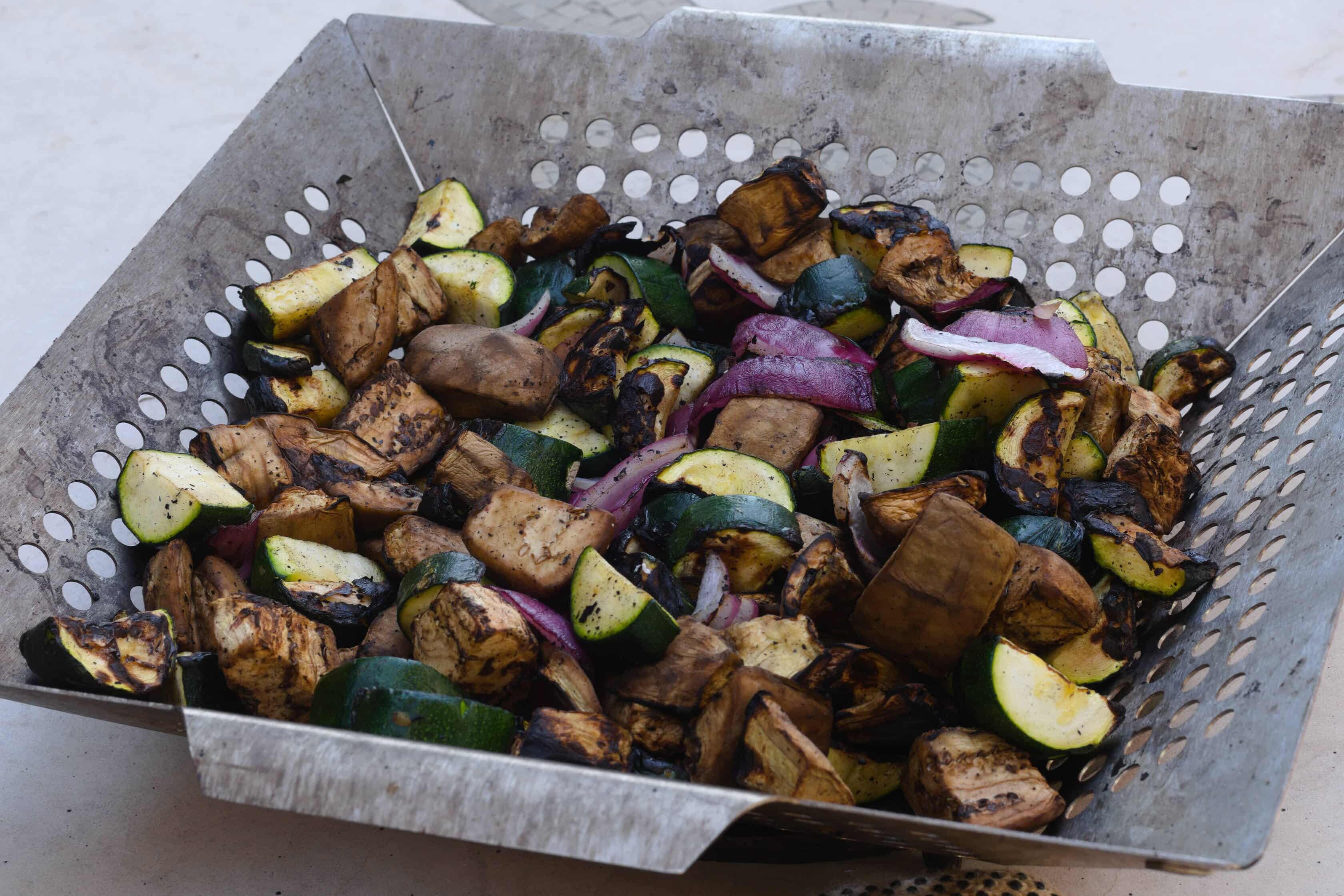
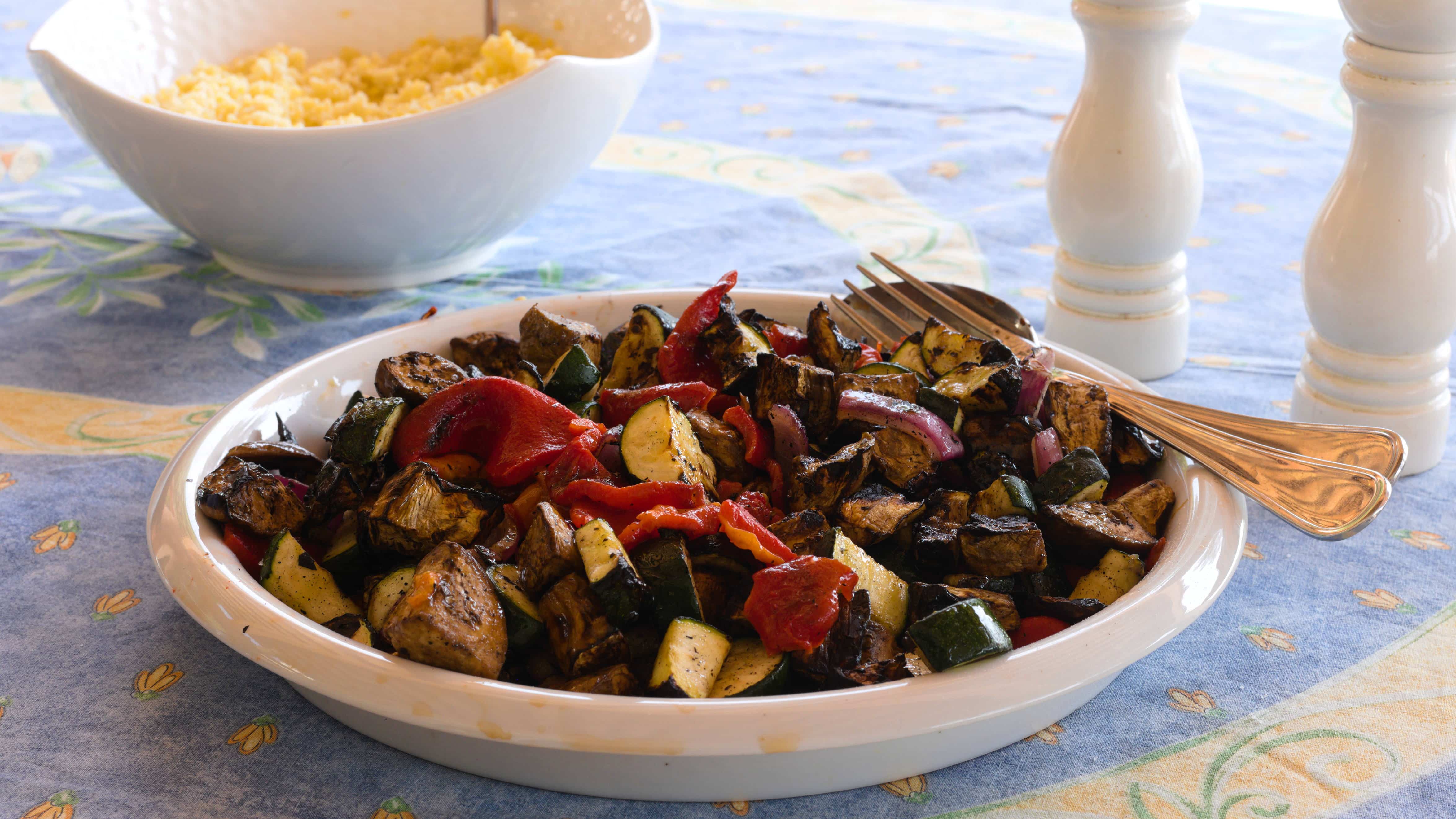
Once the vegetables are done, remove them from the bbq and place them in a serving dish.
Mix the peeled peppers with the rest of the vegetables and season with salt, freshly ground black pepper, and a drizzle of extra virgin olive oil.
Grill the Steak
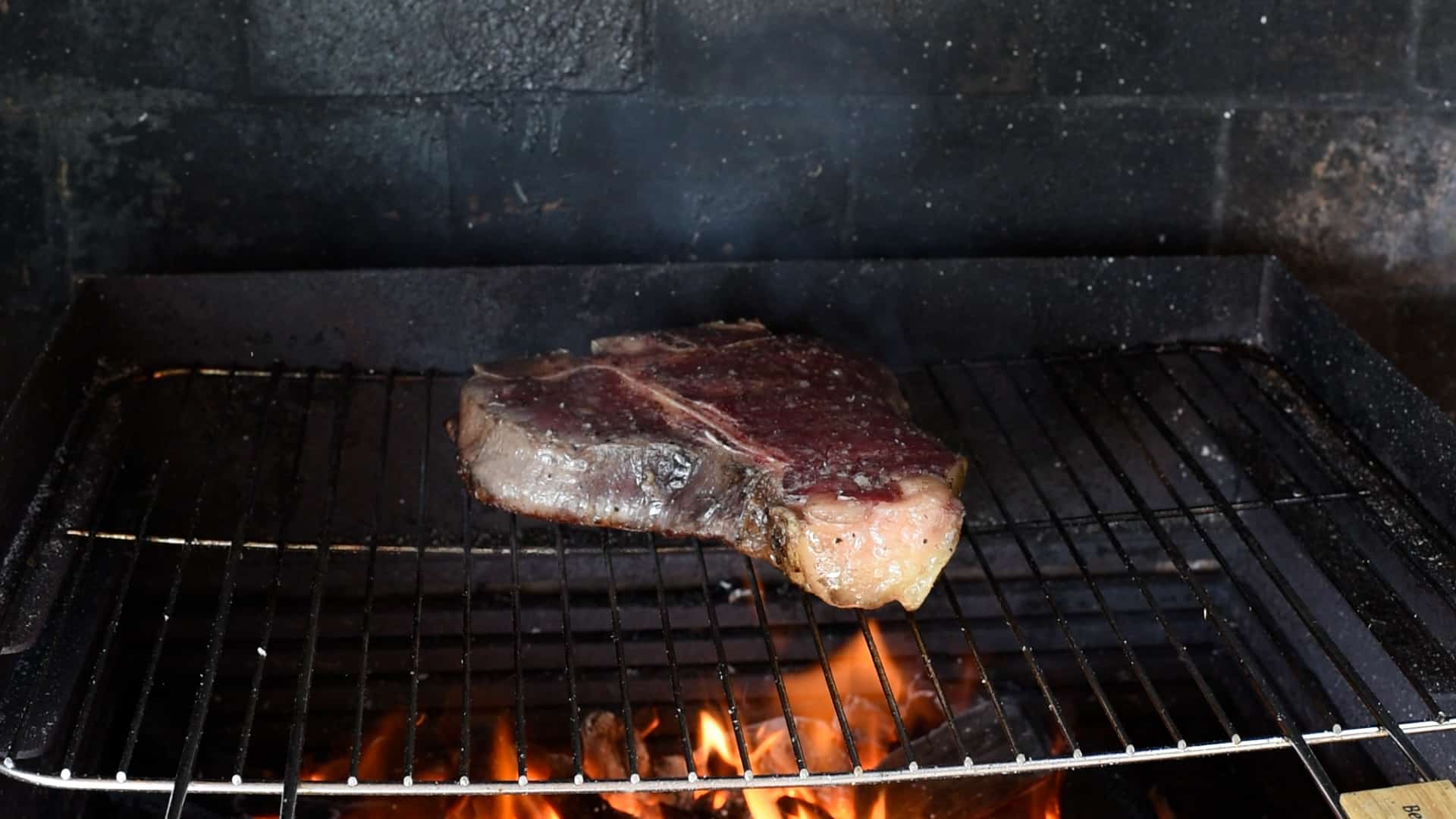
Place the steak on the grill and cook for 3-5 minutes on one side without pressing or piercing it.
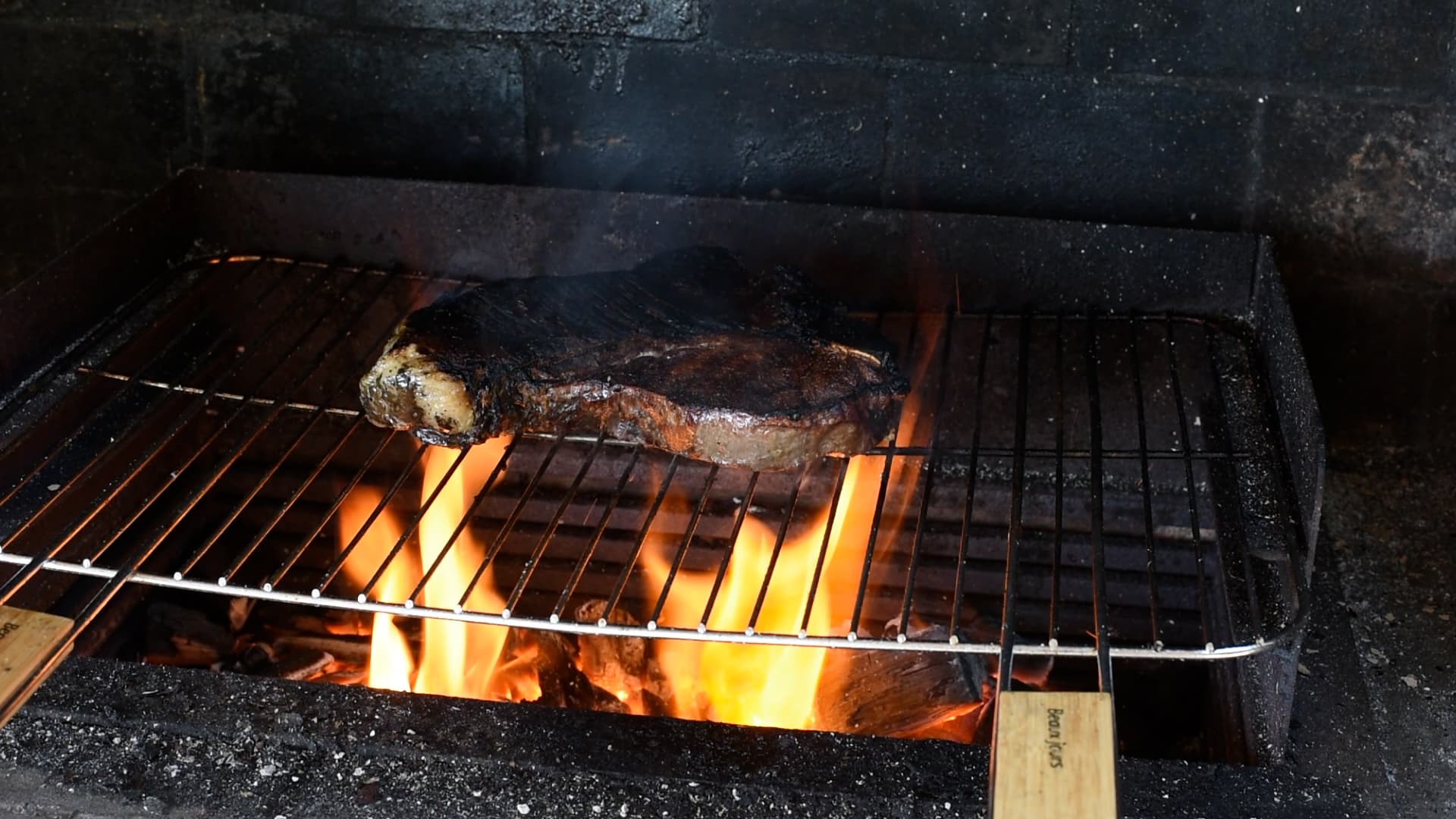
Flip it carefully and cook the other side for an additional 3-5 minutes.
Cook the Bone Side (for perfection)
Stand the steak upright on its bone and cook for 5-7 minutes to ensure the heat reaches the center of the meat evenly.
N.B. The meat is never pierced, flipped repeatedly, or pressed during cooking, preserving its unique texture and flavor.
Rest the Steak
Remove the steak from the grill and let it rest for 10-15 minutes. This crucial step allows the juices to redistribute, resulting in a tender and flavorful steak.
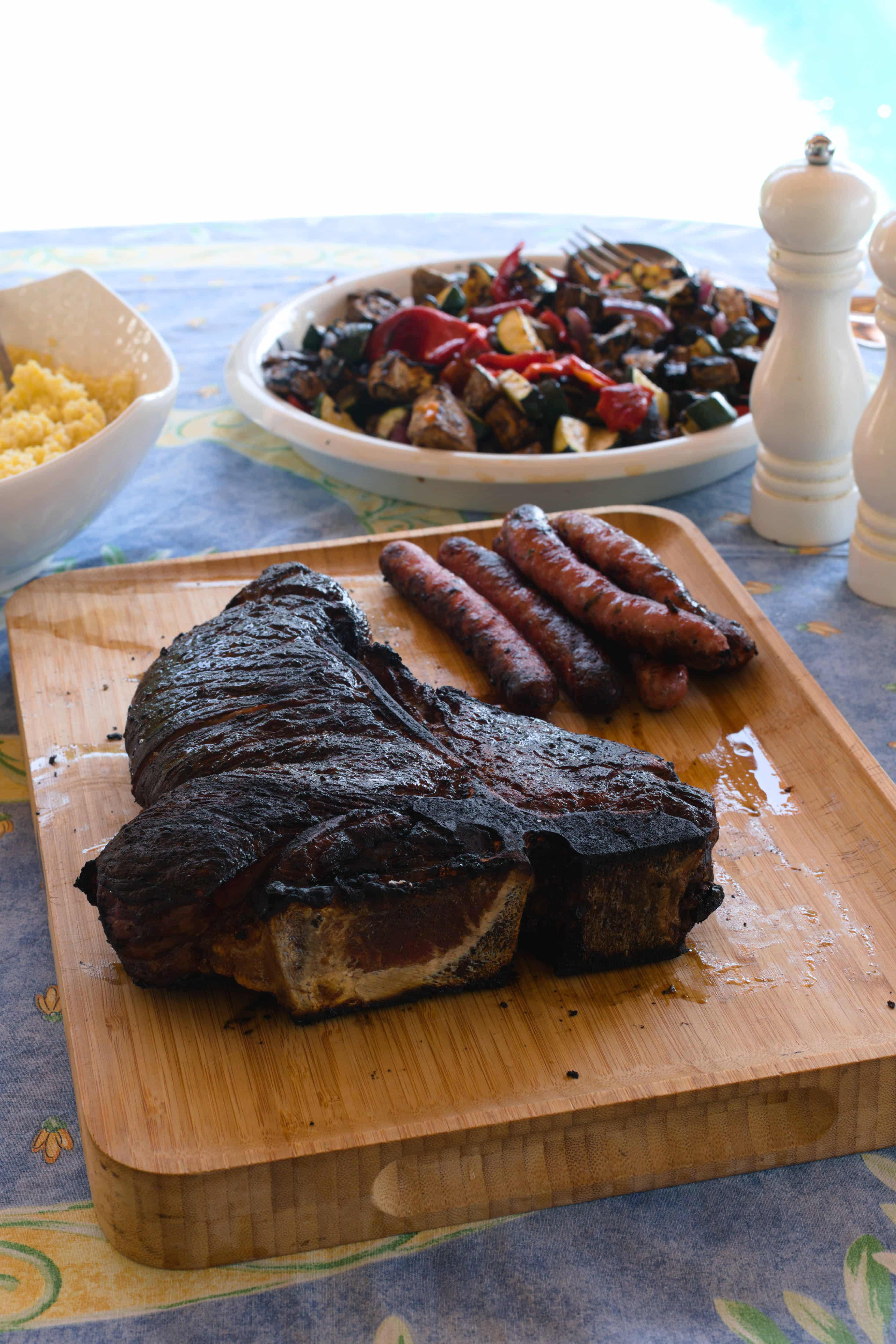
Finish and Serve
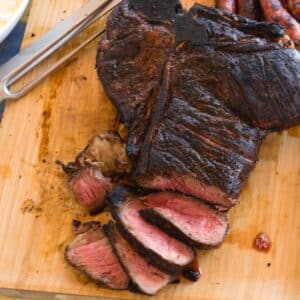
Drizzle the rested steak with high-quality extra virgin olive oil. Carve it off the bone and slice against the grain before serving.
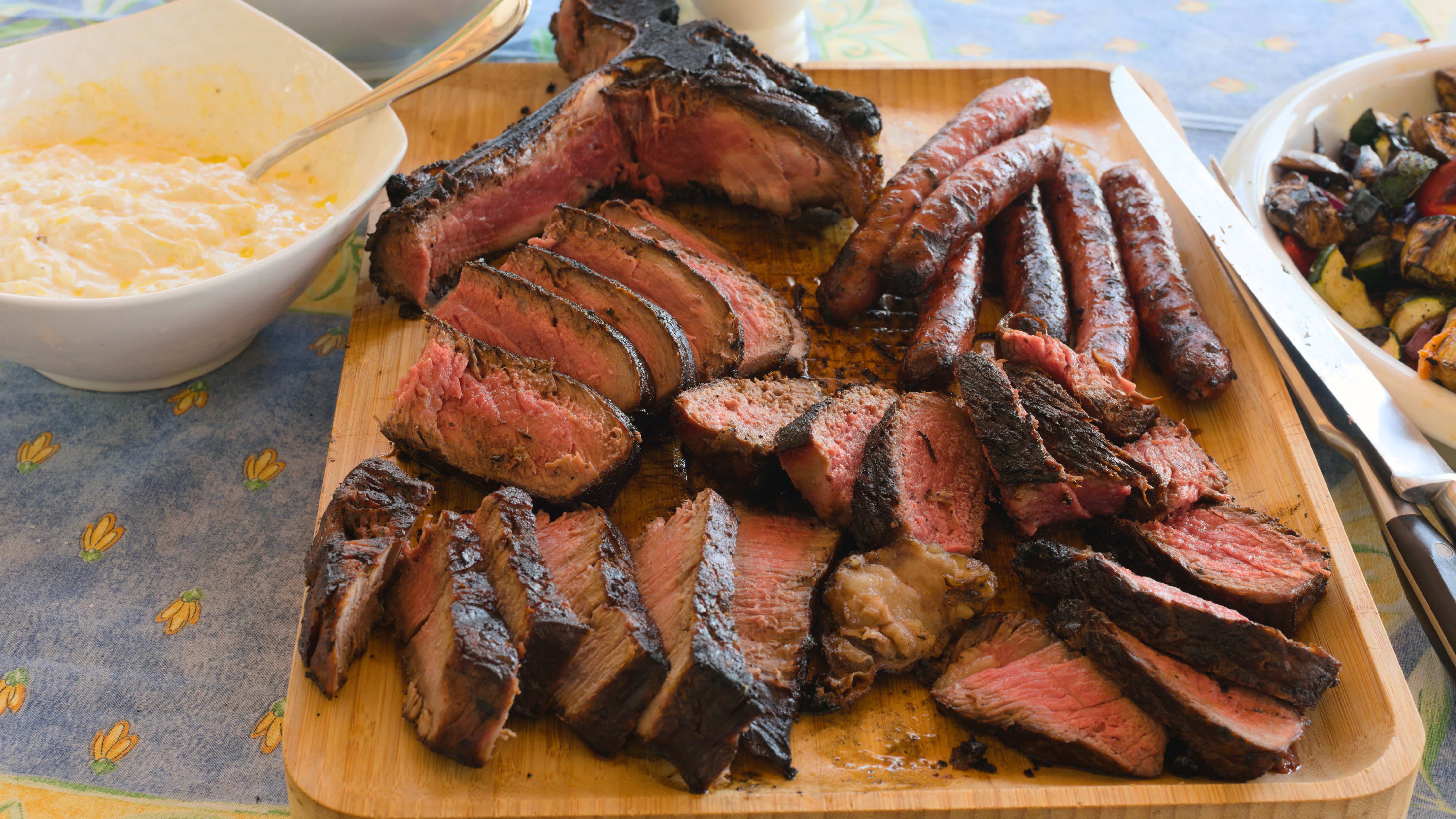
Serving
Once the steak has rested, carve the meat off the bone and slice it against the grain into thick slices to ensure tenderness. Traditionally, Bistecca alla Fiorentina is served rare, with a well-seared crust and a juicy, red center.
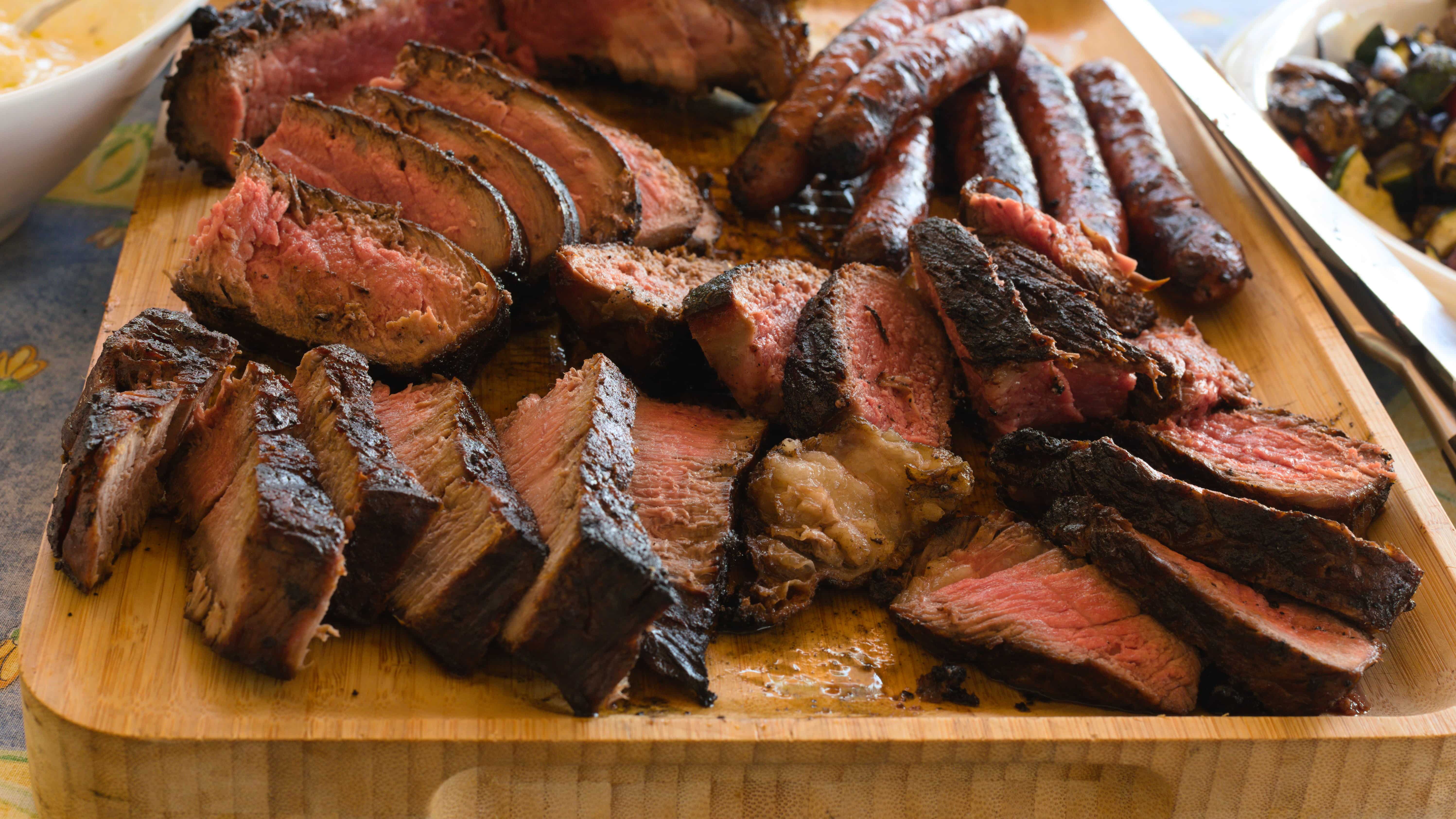
Serve the steak with simple, rustic accompaniments that highlight Tuscan culinary traditions.
Popular sides include creamy cannellini beans, Arugula salad, and crispy roasted potatoes with rosemary.
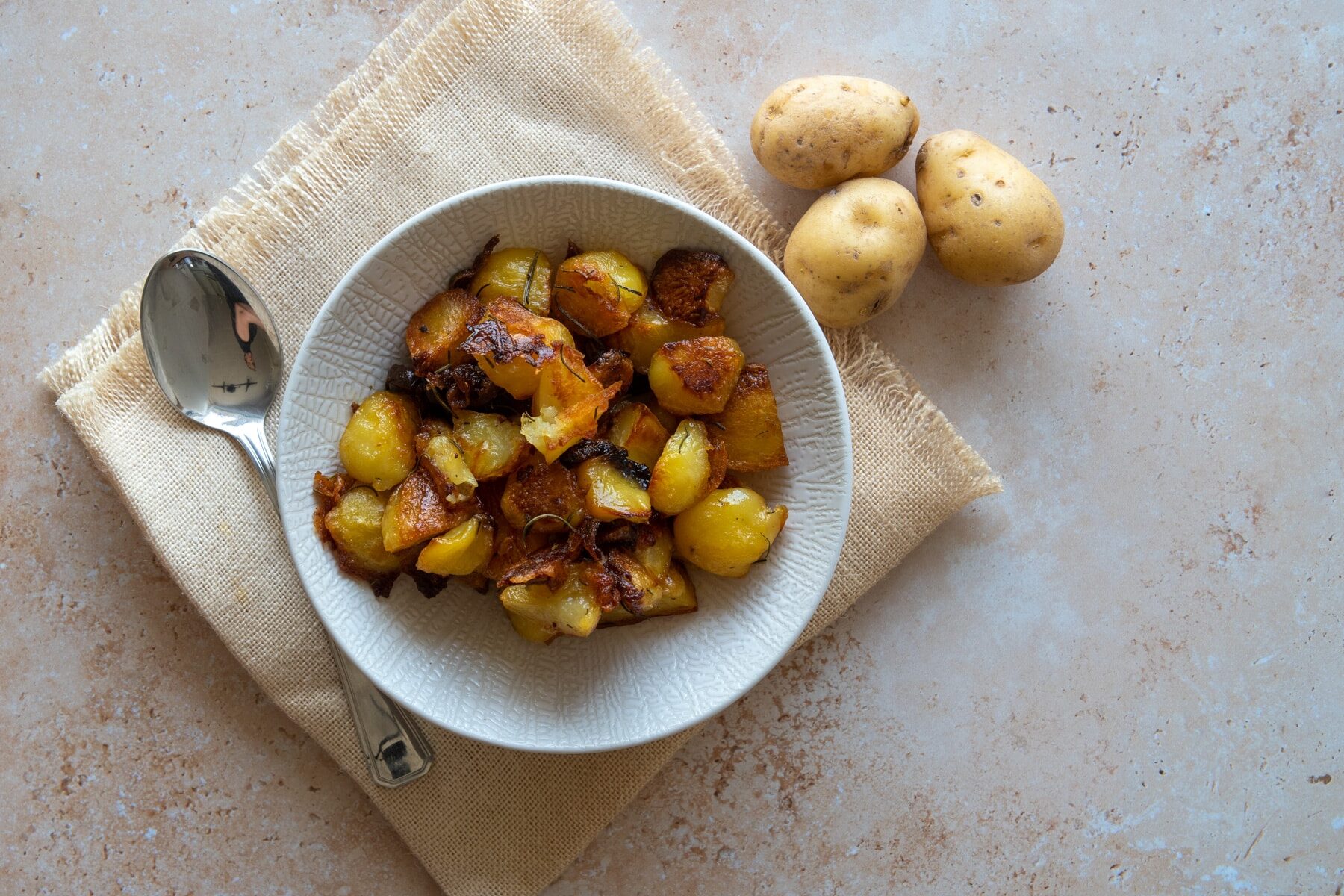
These sides balance the richness of the steak without overpowering its flavor.
Pair the meal with a robust Tuscan red wine, such as Chianti Classico or Brunello di Montalcino, which complements the meat's succulence.
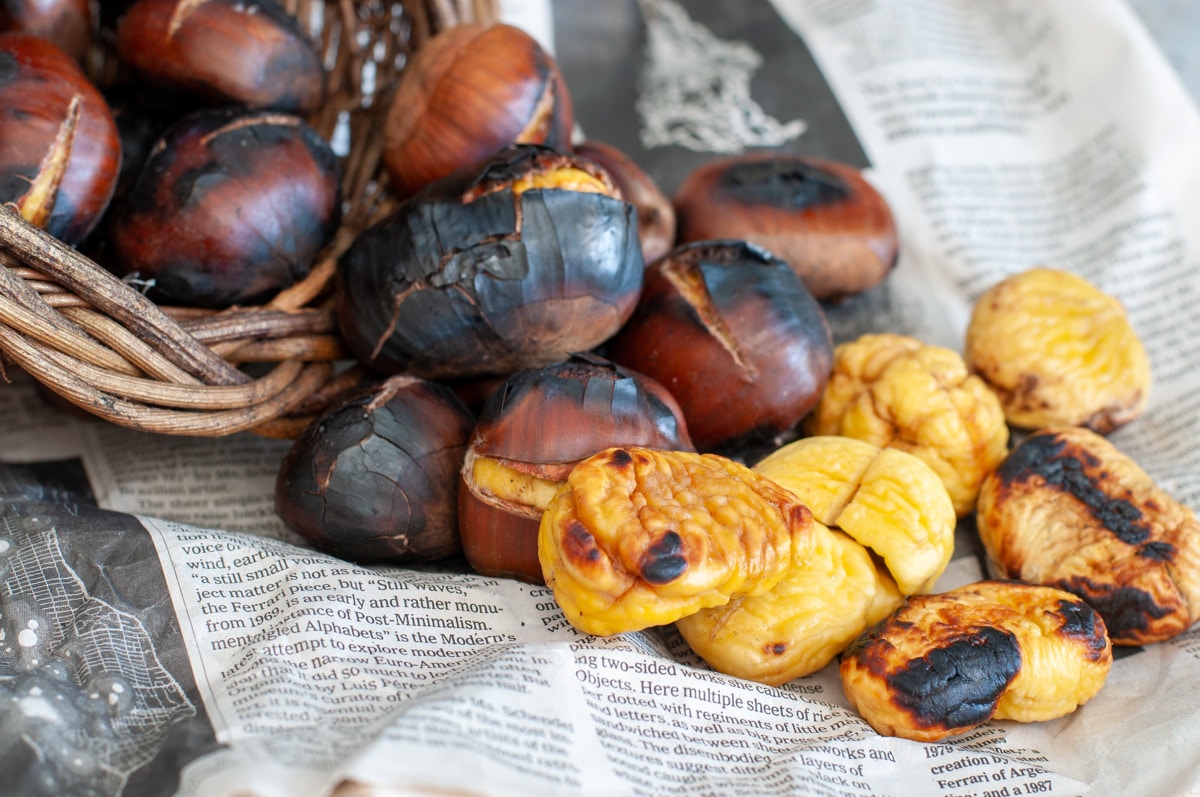
To finish the BBQ at its best, roast the chestnuts on the open fire
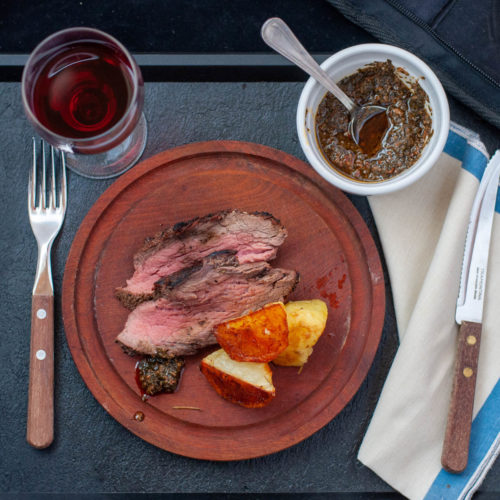
More BBQ recipes
If you are making this Bistecca alla Fiorentina, leave your comment below I would like to hear from you. You can find more delicious ideas if you FOLLOW ME on Facebook, YouTube, Instagram or sign up to my newsletter.
How To BBQ A Bistecca Alla Fiorentina (Florentine Steak)
Verified Culinary AuthorityEquipment
- charcoal
Ingredients
For the Florentine steak
- 4 lb T-bone or Porterhouse 5-6cm / 3-4 inches thick
- salt & pepper
- extra virgin olive oil
For the grilled vegetables
- 3 zucchini
- 3 eggplants
- 3 red peppers
- 2 red onion
- salt & pepper
- extra virgin olive oil
Instructions
Prepare the meat
- Take the steak out of the refrigerator 6-8 hours before cooking to ensure even cooking and a tender result.
- Generously season the steak with coarse sea salt and freshly ground black pepper one hour before grilling
Prepare the Grill
- Build a hot wood fire using restaurant quality charcoal.
- Wait until the flames die down, leaving a bed of hot embers covered with a thin layer of ash for even, high heat.
Prepare the Vegetables:
- Cut zucchini, peeled eggplants, and onions into equal chunks to ensure even cooking
- Place the vegetables in a grill basket and stir regularly to cook them evenly
- Keep the red peppers whole and grill them separately on the side.
- Allow the skin of the peppers to burn slightly while grilling to make it easier to peel.
- Remove the peppers from the grill and let them cool slightly before handling. N.B. You need to make sure that the skin is burned otherwise it will not peel easily
- Peel off the skin, open the peppers, and carefully remove the seeds-caution is needed as the insides remain very hot.
- Once they are done, place all the grilled vegetables in a serving dish
- Season with salt, freshly ground black pepper, and a drizzle of extra virgin olive oil
Grill the Steak
- Placethe steak on the grill and cook for 3-5 minutes on one side without pressing orpiercing it.
- Flip it carefully and cook the other side for an additional 3-5 minutes. Never flip the steak repeatedly or press it down, as this will release the juices
- Stand the steak upright on its bone and cook for 5-7 minutes to ensure the heat reaches the center of the meat evenly.
Rest the Steak
- Removethe steak from the grill and let it rest for 10-15 minutes. This crucial stepallows the juices to redistribute, resulting in a tender and flavorful steak.
Finish and Serve
- Drizzle the rested steak with high-quality extra virgin olive oil. Carve it off the bone and slice against the grain before serving.
- Serve immediately while still warm
Video
Notes
- You need to make sure that the skin of the red peppers is burned, otherwise it will not peel easily
- The meat is never pierced, flipped repeatedly, or pressed during cooking, preserving its unique texture and flavor.
Nutrition

Leave a Reply