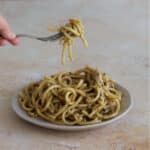
Cacio E Pepe (Tonnarelli Cheese And Black Pepper)
Growing up in Rome, Pasta Cacio e Pepe was the ultimate student meal when the fridge was almost empty. Using just two simple staples—pecorino and pepper—we could create this classic dish in minutes. The challenge was to make the creamy cheese sauce, but if we mastered the technique when we were teenagers, so can you.
Servings 2 people
Calories 744kcal
Ingredients
- 10 oz Tonnarelli spaghetti
- 2 tablespoon peppercorns
- 1 cup freshly grated Pecorino Romano
- 1 tablespoon salt for pasta
Instructions
- Grate the Pecorino Romano using a fine grater to create a light, airy pile.
- Fill a large pot with cold water and add coarse salt as it begins to heat so the pasta is seasoned correctly.
- Crack the whole black peppercorns using a pestle, a meat pounder, or an electrical spice grinder.
- Toast the freshly cracked black pepper in a large pan over low heat for a minute to release its oils. Be careful not to burn it.
- Cook the pasta for one minute less than the package directions to ensure it remains al dente.
- To drain the pasta, lift it directly from the pot using a spaghetti spoon, as we need the starchy water for the sauce
- Transfer it into the pan with the toasted pepper, allowing some of the starchy water to follow.
- Lower the heat to prevent the cheese from curding and add the freshly grated Pecorino directly into the pan.
- Stir vigorously and constantly, adding more starchy water if needed, until the cheese emulsifies into a velvety cream that coats every strand.
- Serve immediately, as Cacio e Pepe must be eaten hot before the cheese begins to set.
Video
Nutrition
Calories: 744kcal | Carbohydrates: 114g | Protein: 35g | Fat: 16g | Saturated Fat: 9g | Polyunsaturated Fat: 1g | Monounsaturated Fat: 4g | Cholesterol: 52mg | Sodium: 4099mg | Potassium: 493mg | Fiber: 7g | Sugar: 4g | Vitamin A: 262IU | Calcium: 608mg | Iron: 3mg
