
Growing up in Rome, Pasta Cacio e Pepe was the ultimate student meal when the fridge was almost empty. Using just two simple staples-pecorino and pepper-we could create this classic dish in minutes. The challenge was to make the creamy cheese sauce, but if we mastered the technique when we were teenagers, so can you.
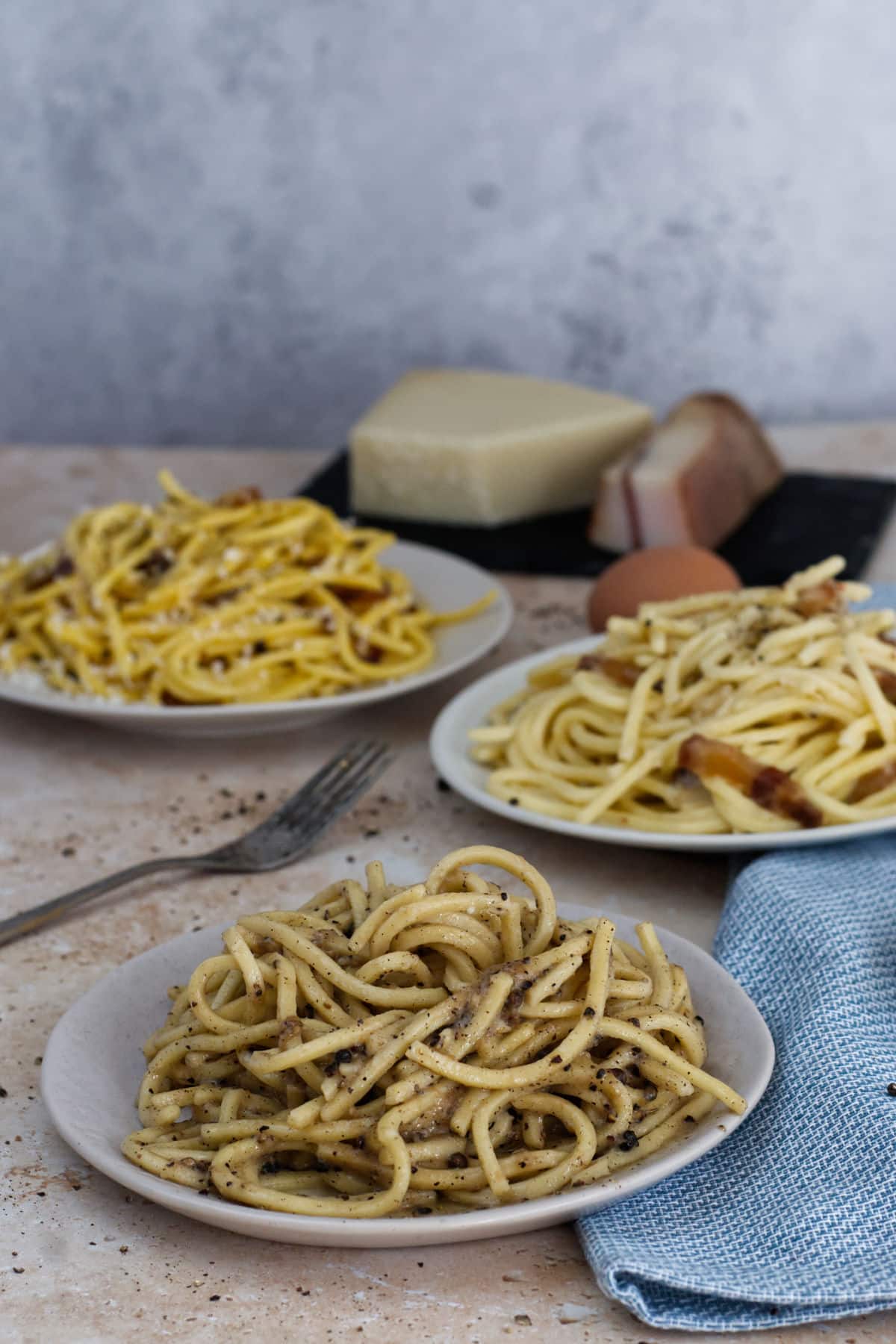
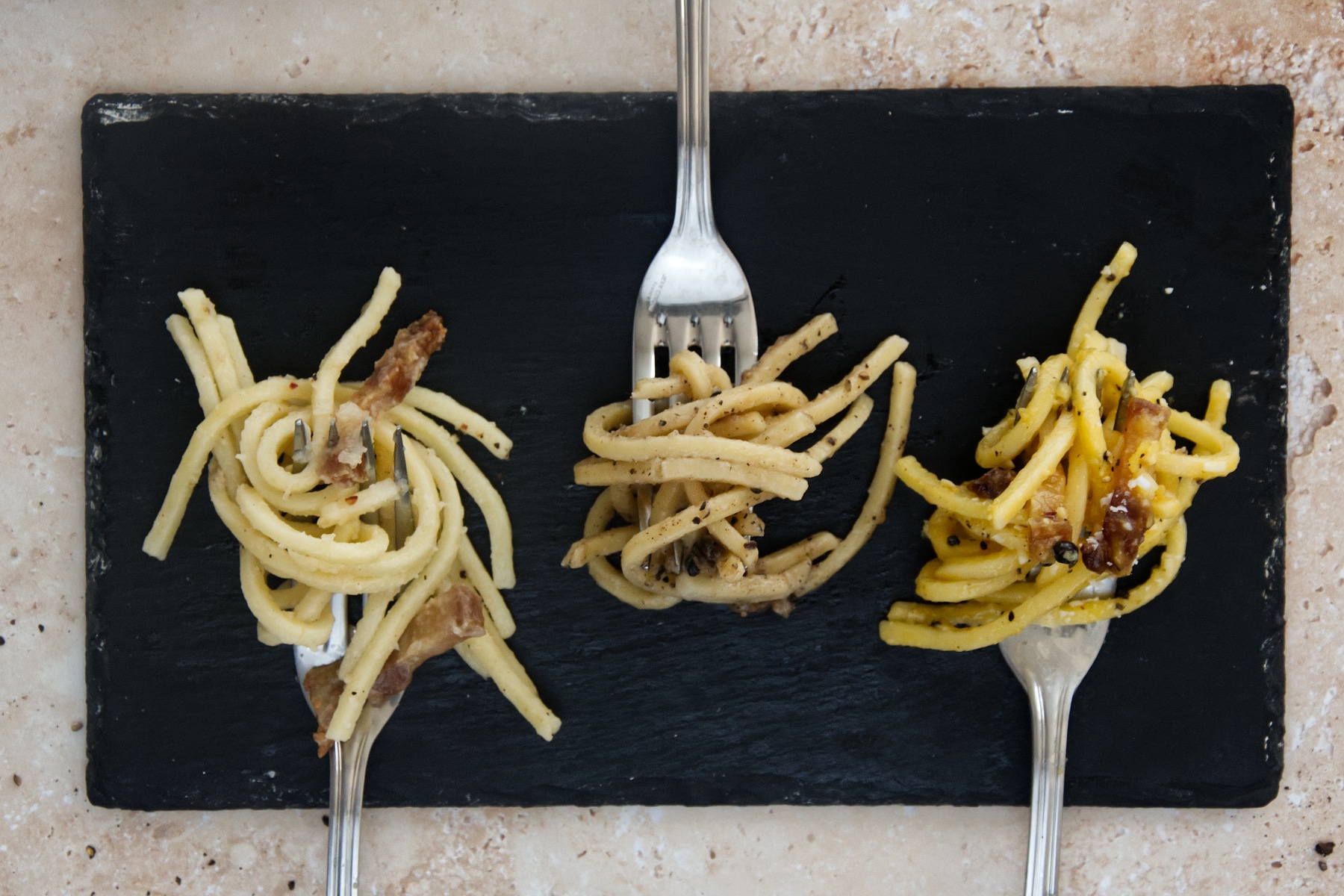
While many people outside of Italy are familiar with Carbonara, in Rome we often turned to Gricia or Cacio e Pepe.
Pasta Cacio e Pepe is essentially the vegetarian version of Pasta alla Gricia, relying on the same sharp flavors without the pork.
These recipes were a regular part of my life, especially when friends came over at the last minute while we were studying.
We wouldn't ask my mother to cook, so we relied on the staples we always had on hand in our family home.
This dish is actually more challenging than a simple Carbonara because the Pecorino can curd. If the cheese hits a temperature that is too high, it becomes stringy rather than melting into a smooth sauce.
I remember the first times it was not perfect, but with practice, we learned how to perfectly balance the technique.
This recipe represents the authentic way we cooked as students: fast, simple, and exactly how we really ate.
Because I have lived in Rome for most of my life, I know that real Italian cuisine is shaped by what is fresh and available in the moment.
Cacio e Pepe is a perfect example of how a few quality ingredients, like those found in the Historic Roman Markets, can be transformed into a satisfying meal without any pre-planning.
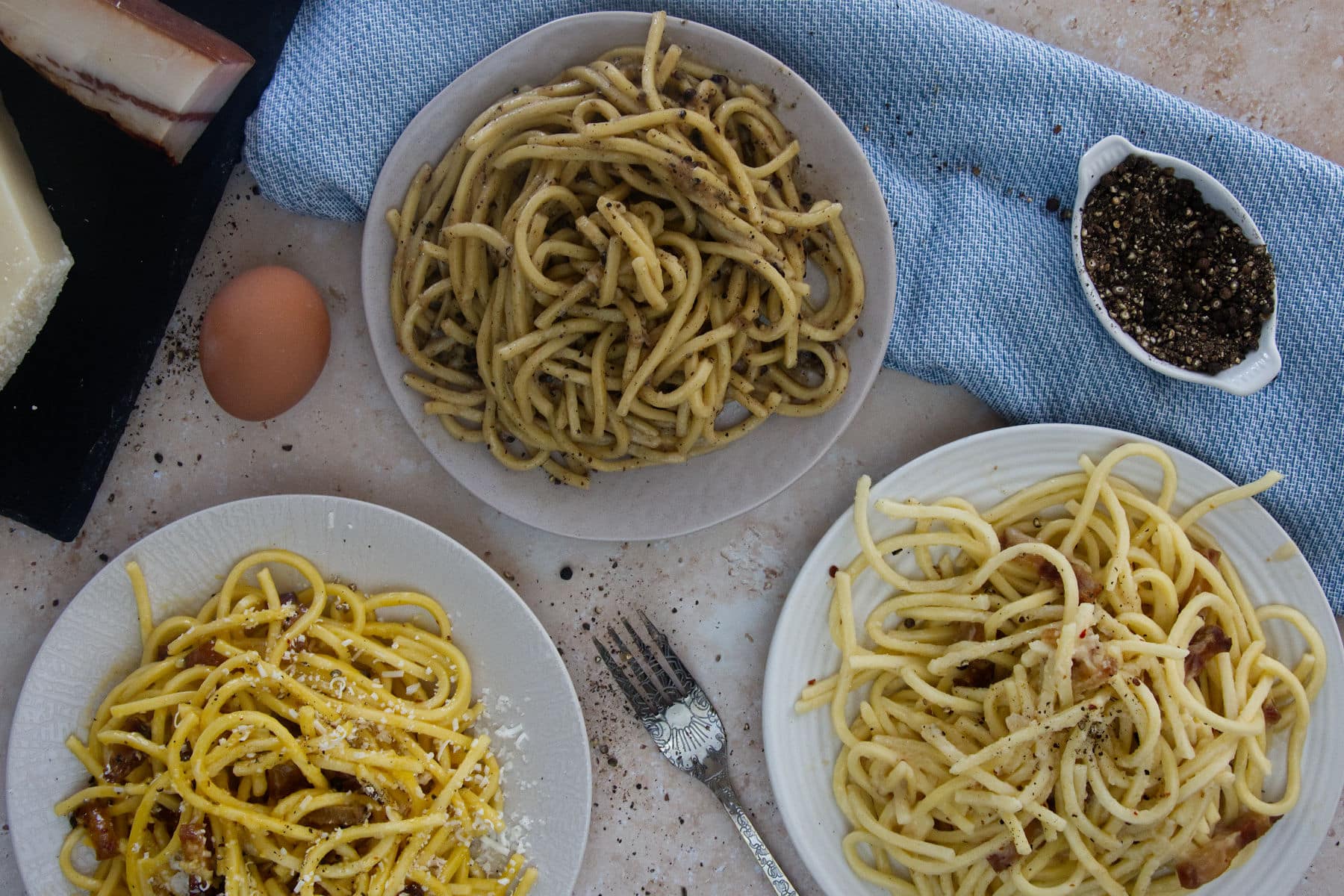
For more recipes you can make last minute with whatever you have in the fridge, you can check out: Carbonara, Gricia, Stroncatura, Pasta and Potatoes.
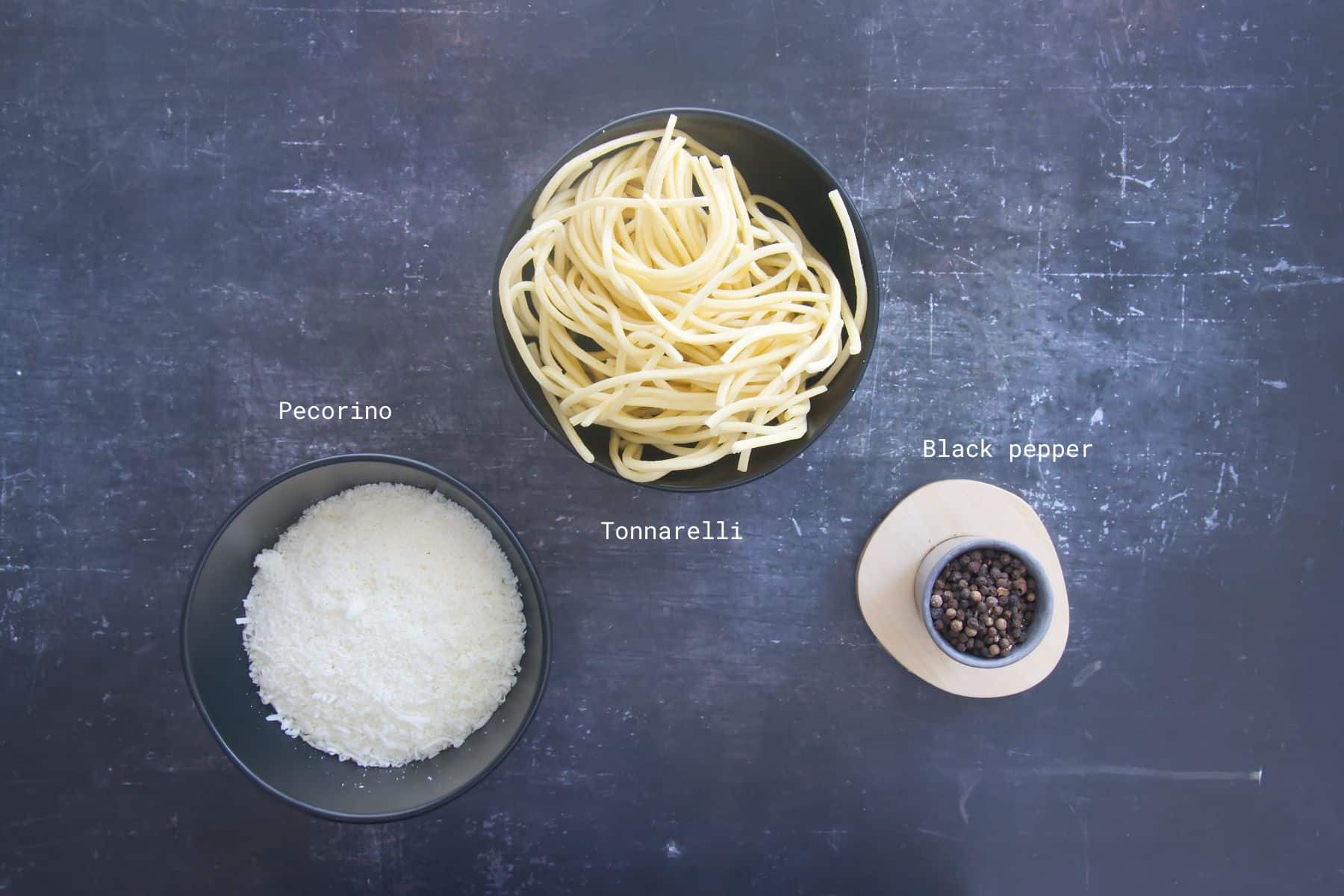
Ingredients
- Tonnarelli or Spaghetti: In Rome, we love to serve it with tonnarelli, a thick, square-cut egg pasta known for its firm, porous texture. However, spaghetti or rigatoni are excellent alternatives if tonnarelli are hard to find.
- Pecorino Romano: This cheese offers the sharp finish traditional to Rome.
- Black Pepper: Use whole peppercorns to crack yourself; it is important not to use the one already grated as they lose their essential oils and aroma.
- Starchy Pasta Water: The water used to boil the pasta is full of starch and acts as the essential "bridge" to turn the cheese into a sauce.
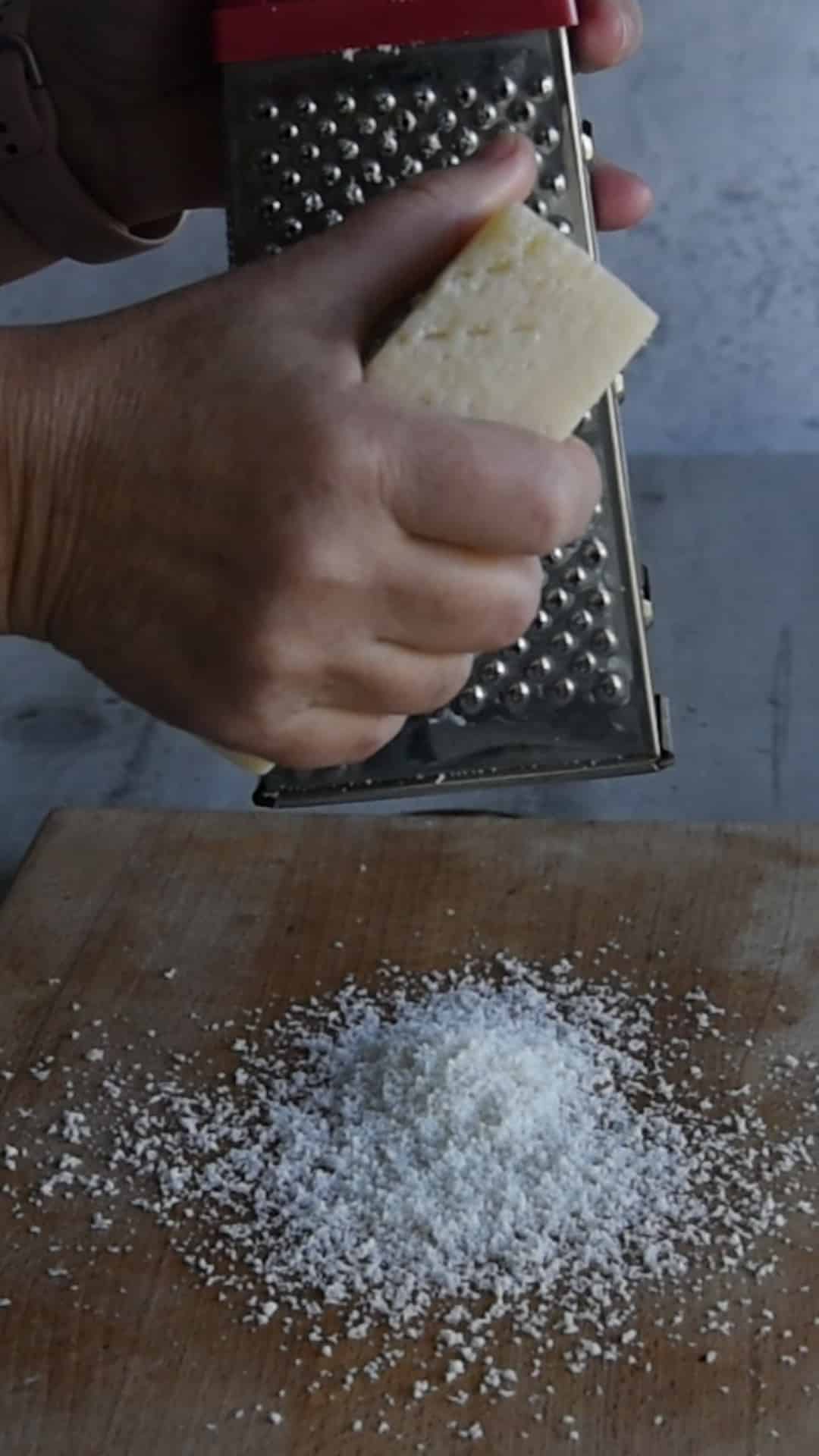
Before you start, grate the Pecorino Romano using a fine grater to create a light, airy pile.
This texture is what allows the cheese to melt perfectly into a creamy sauce.
Do not use pre-grated cheese, as it is never as good as the fresh one.
Step-by-Step Instructions
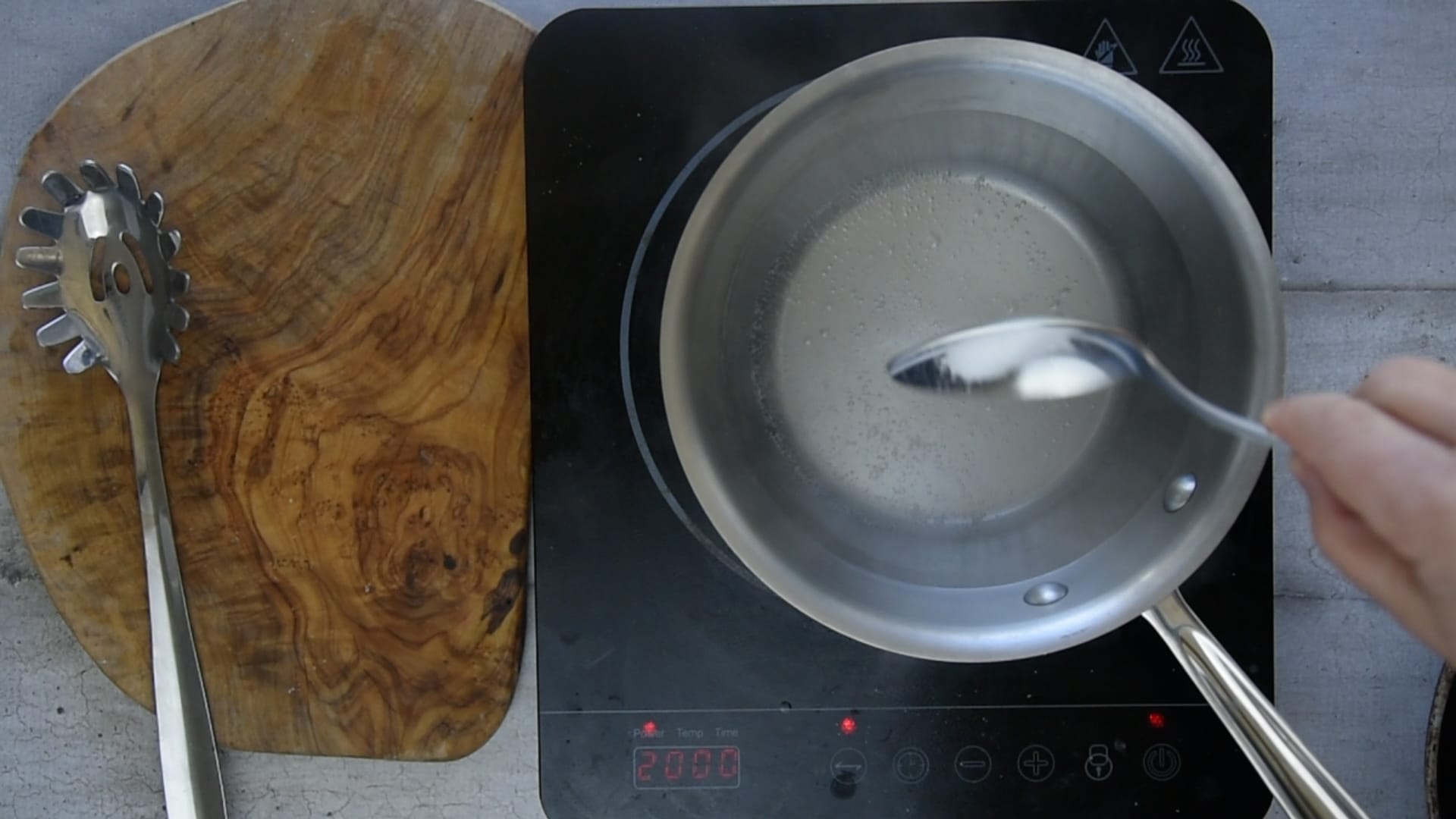
- Fill a large pot with cold water and add coarse salt as it begins to heat so the pasta is seasoned correctly.
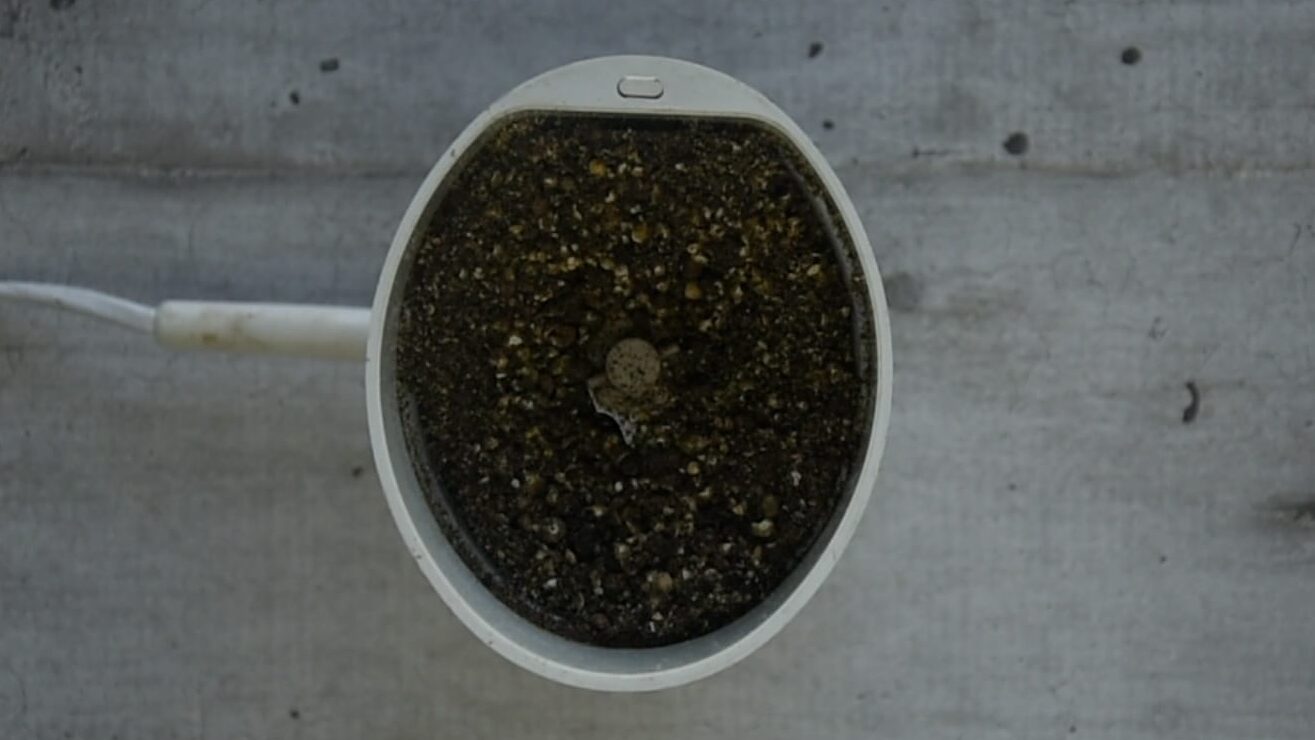
- Crack the whole black peppercorns using a pestle, a meat pounder, or an electrical spice grinder.
NB: It is vital not to use pre-grated pepper, as freshly cracked kernels provide the punchy flavor necessary for the dish.
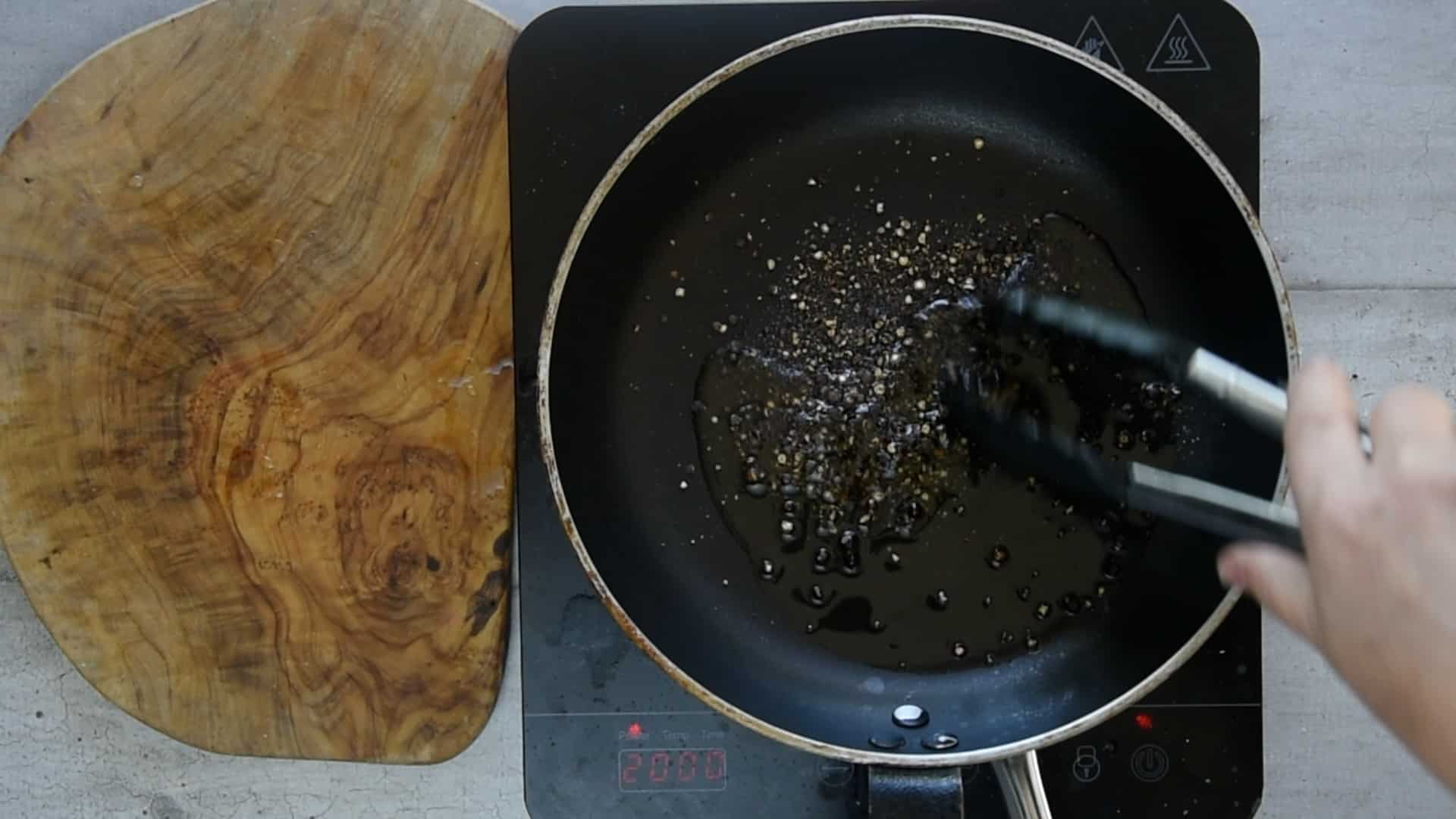
- Toast the freshly cracked black pepper in a large pan over low heat for a minute to release its oils. Be careful not to burn it.
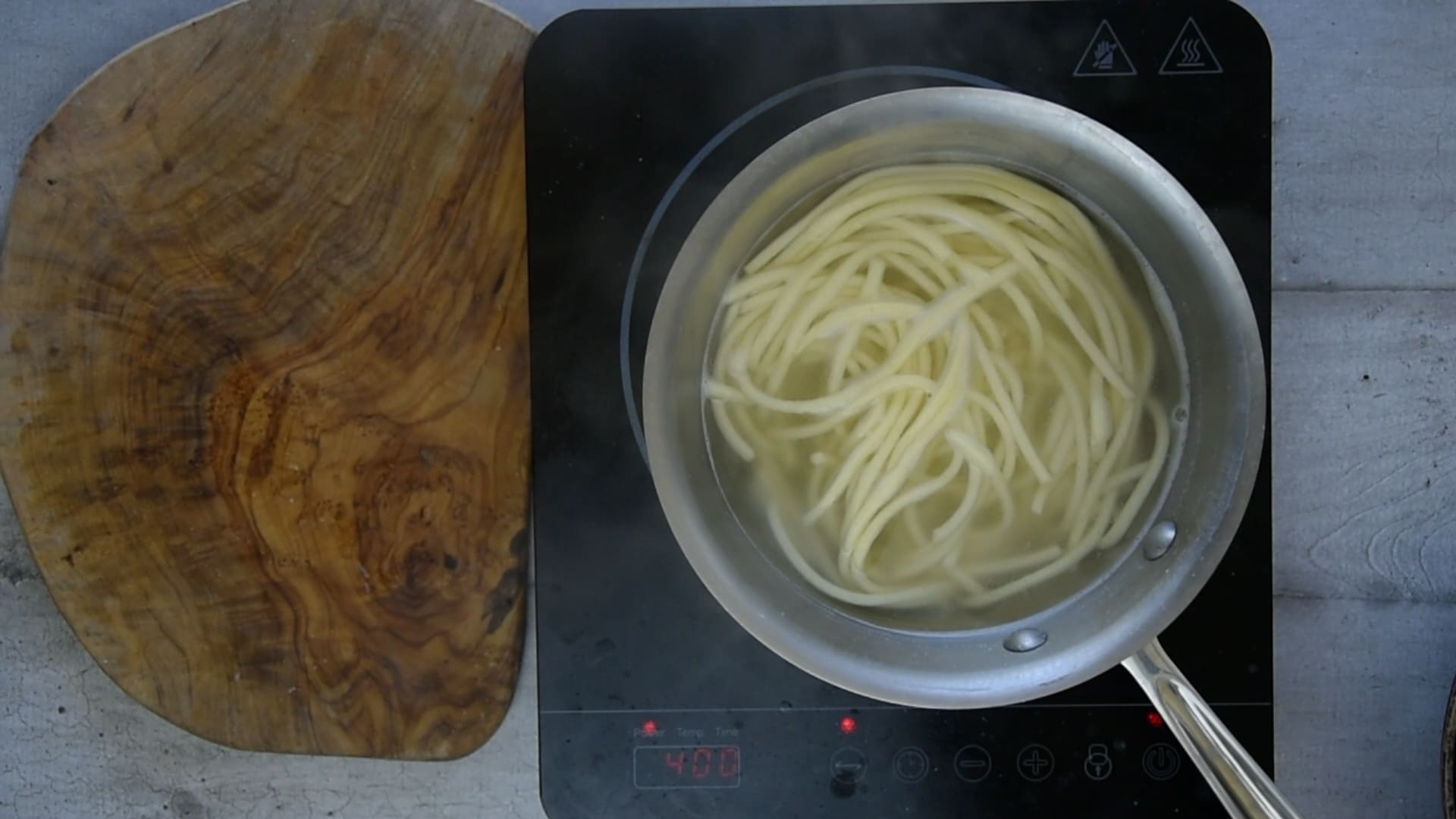
- Cook the pasta for one minute less than the package directions to ensure it remains al dente.
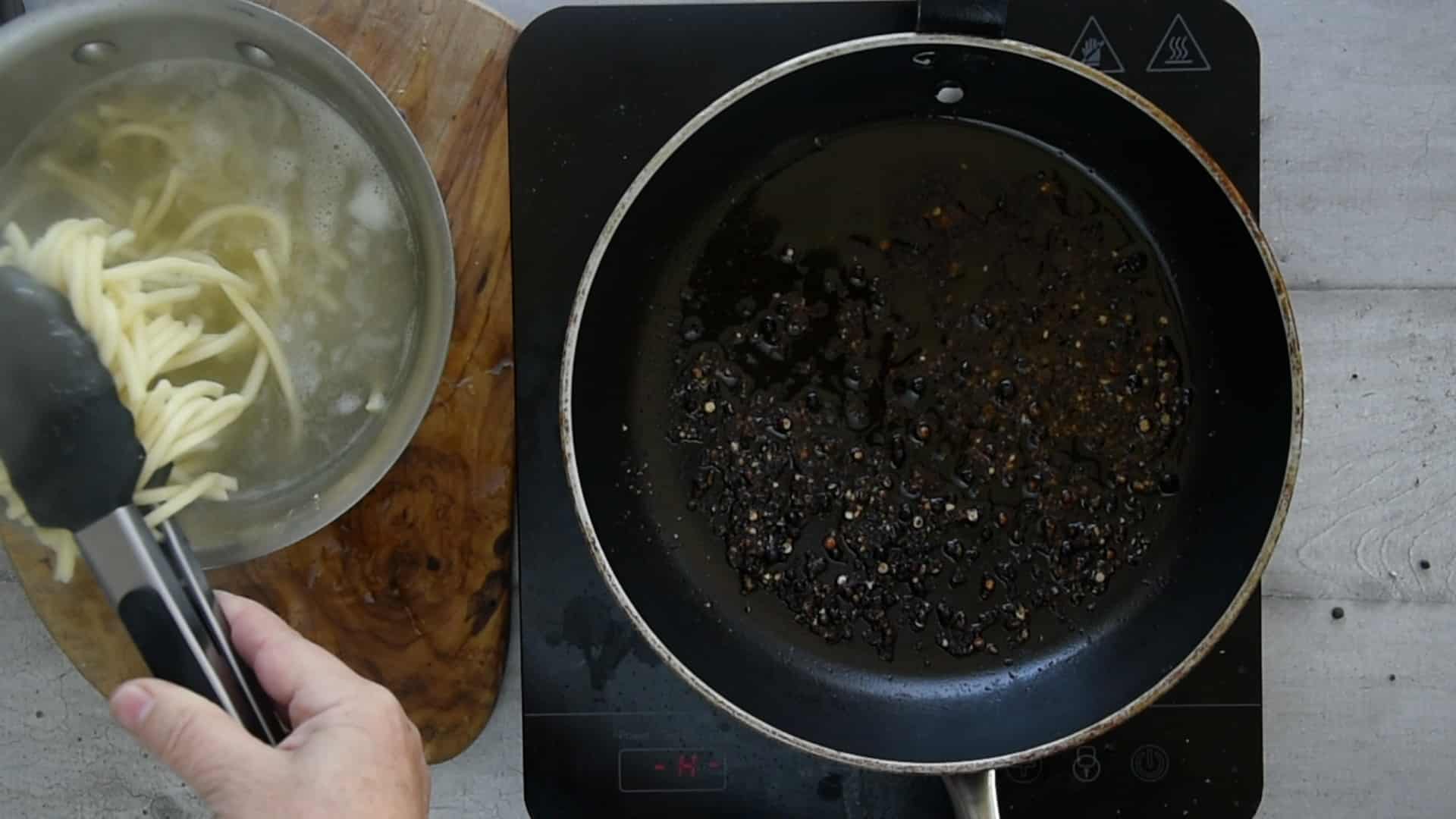
- To drain the pasta, lift it directly from the pot using a spaghetti spoon, as we need the starchy water for the sauce
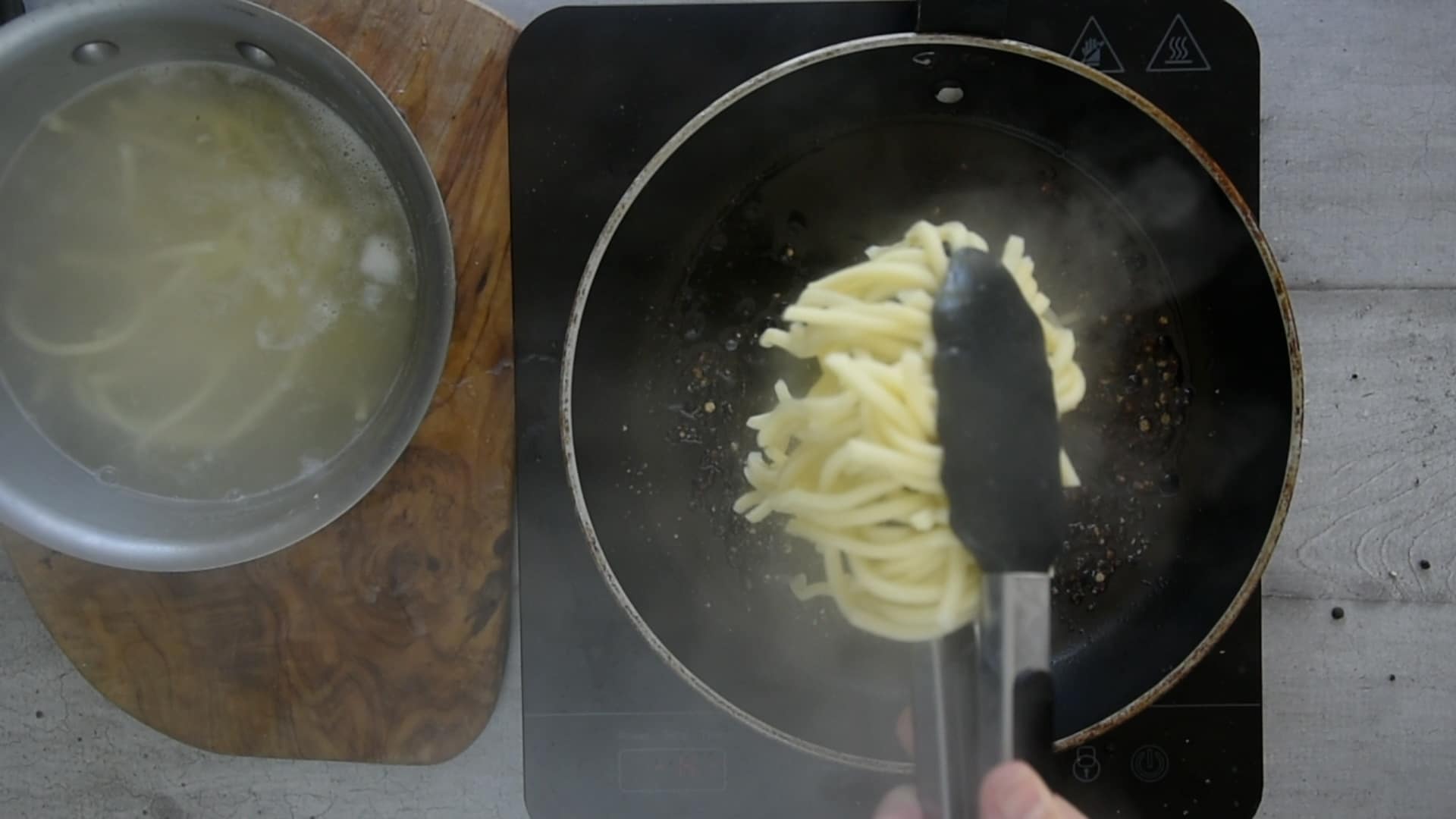
- Transfer it into the pan with the toasted pepper, allowing some of the starchy water to follow.
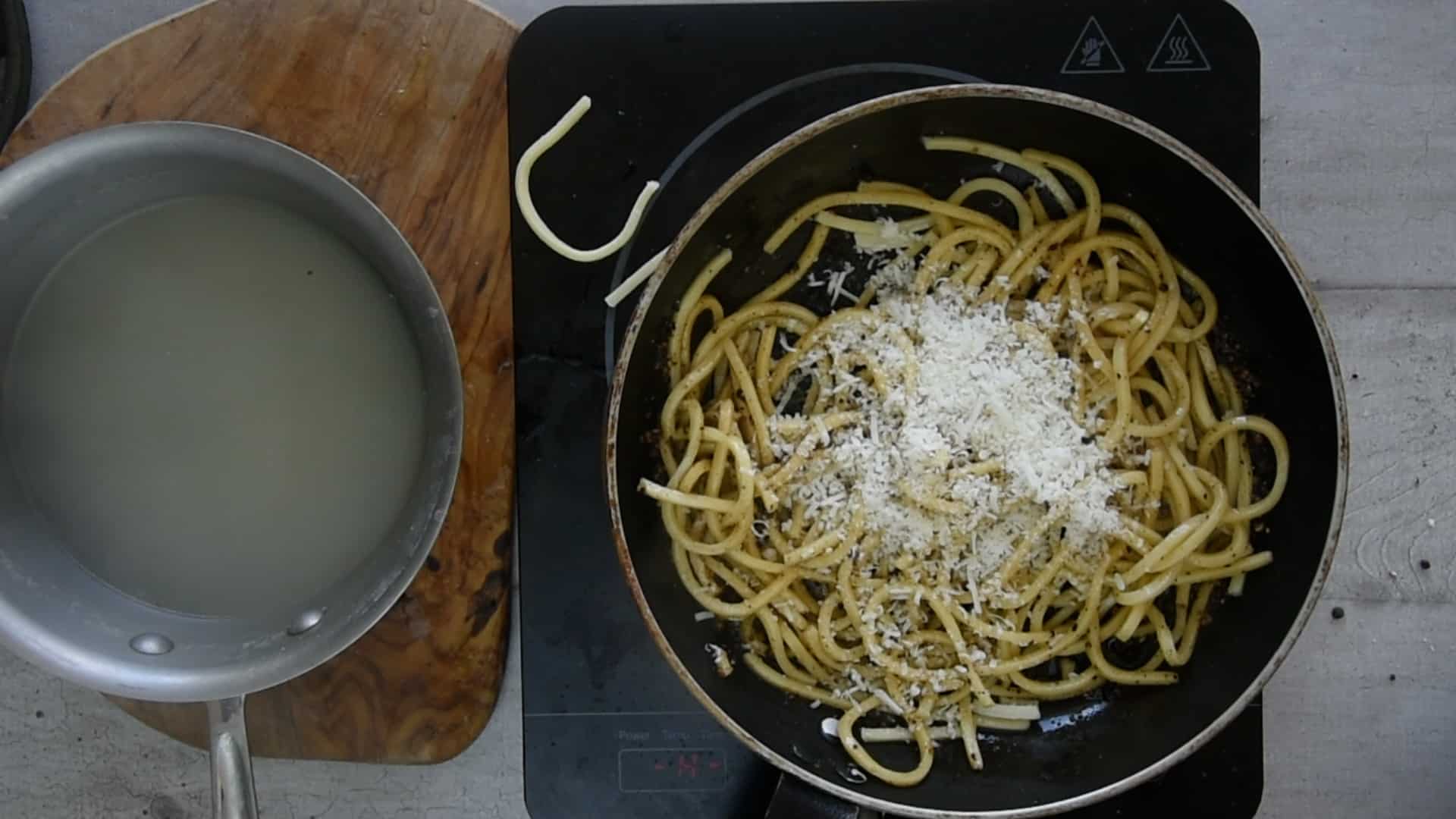
- Lower the heat to prevent the cheese from curding and add the freshly grated Pecorino directly into the pan.
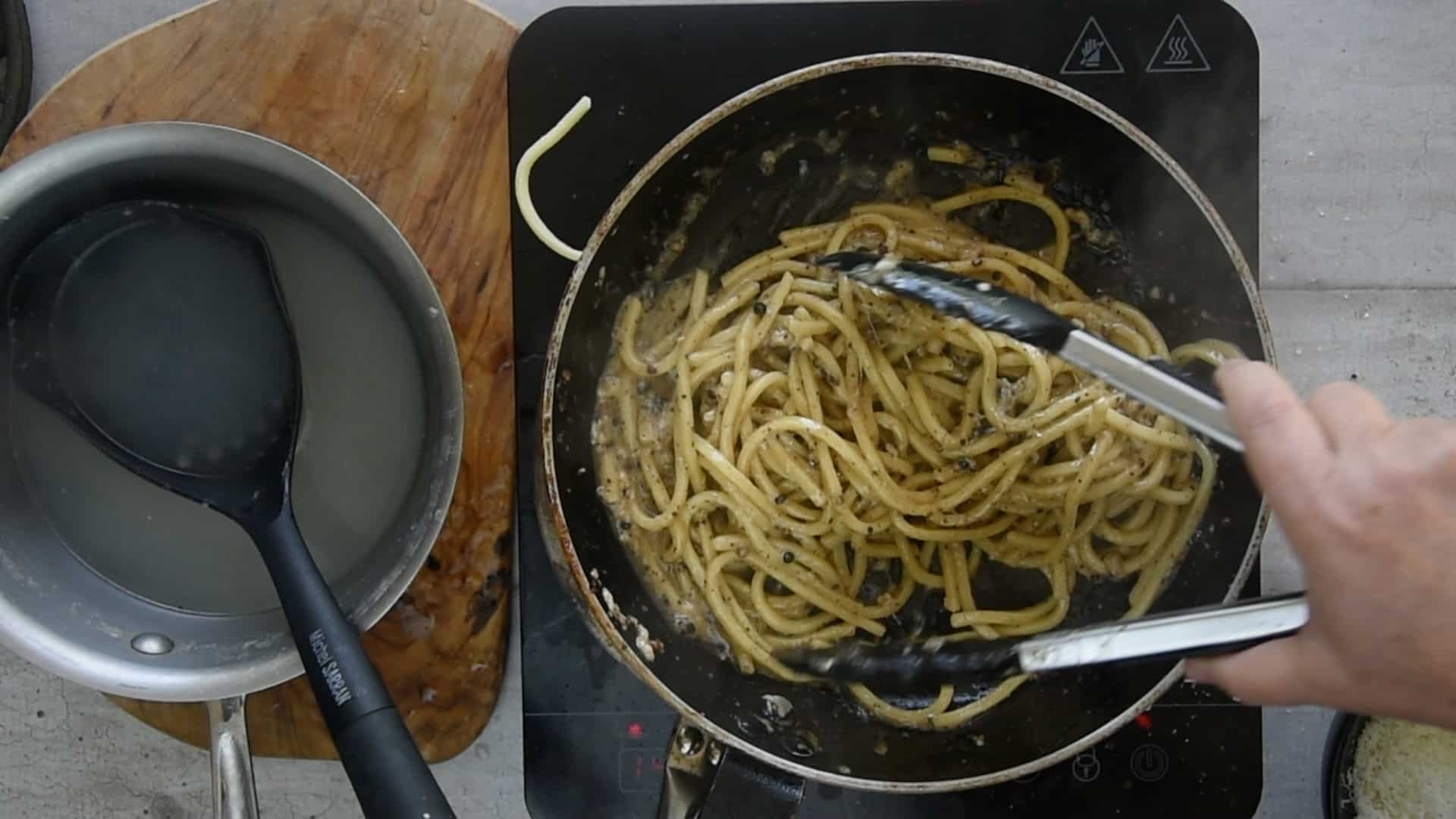
- Stir vigorously and constantly, adding more starchy water if needed, until the cheese emulsifies into a velvety cream that coats every strand.
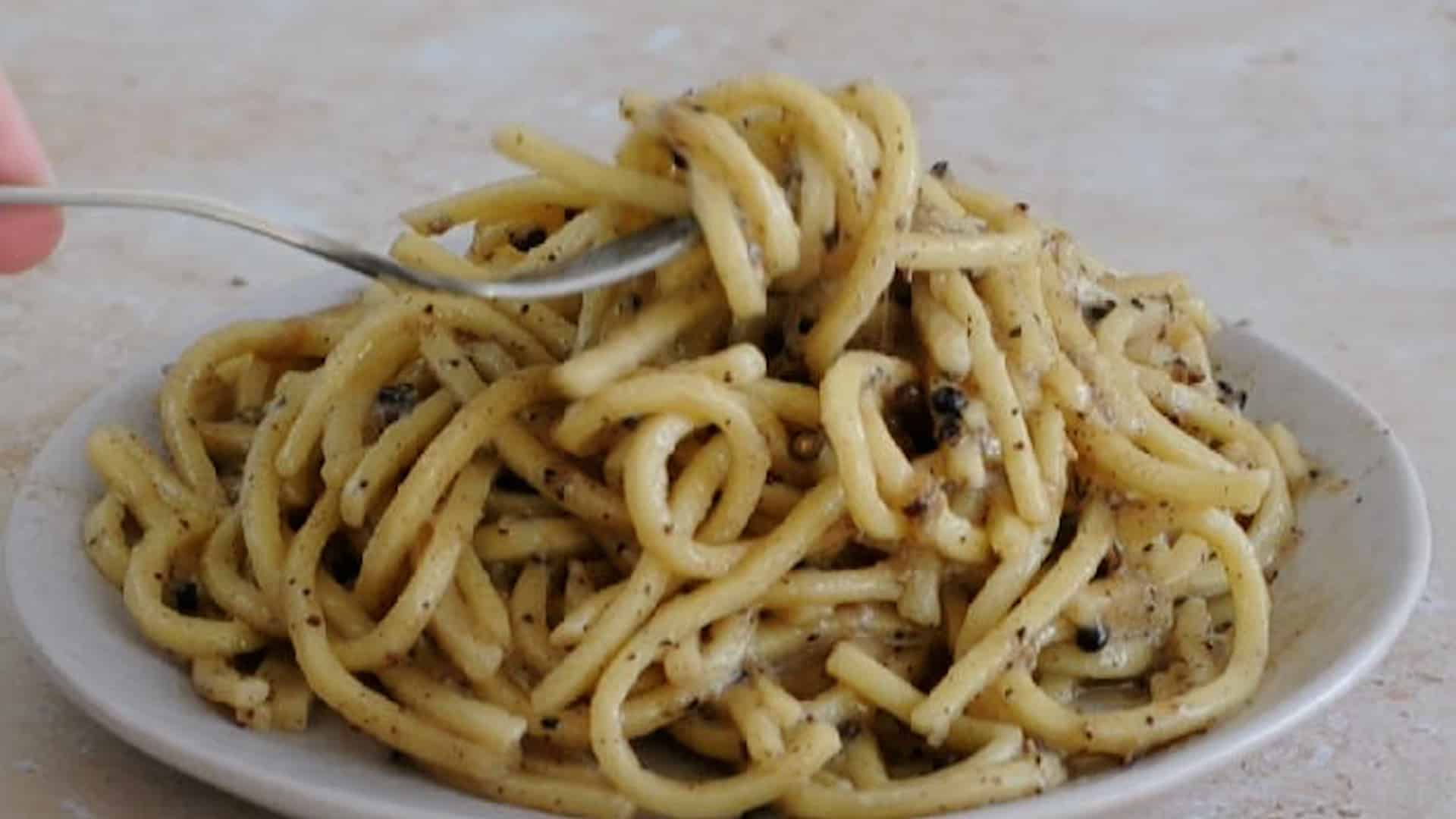
- Serve immediately, as Cacio e Pepe must be eaten hot before the cheese begins to set.
Serving Suggestions
This is a complete, one-dish meal that captures the simple way we ate as students.
To finish the meal properly, we would always close with a coffee made in a Moka Bialetti.
But if we were still hungry, you can pair it with the classic tiramisu we used to make in the 80s
More roman recipes
If you are making these Tonnarelli Cacio e Pepe, leave your comment below I would like to hear from you. You can find more delicious ideas if you FOLLOW ME on Facebook, YouTube, Instagram or sign up to my newsletter.
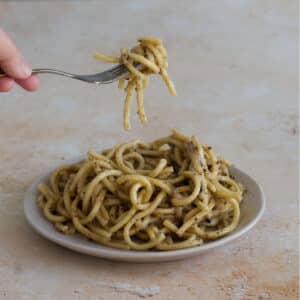
Cacio E Pepe (Tonnarelli Cheese And Black Pepper)
Verified Culinary AuthorityVideo
Ingredients
- 10 oz Tonnarelli spaghetti
- 2 tablespoon peppercorns
- 1 cup freshly grated Pecorino Romano
- 1 tablespoon salt for pasta
Instructions
- Grate the Pecorino Romano using a fine grater to create a light, airy pile.
- Fill a large pot with cold water and add coarse salt as it begins to heat so the pasta is seasoned correctly.
- Crack the whole black peppercorns using a pestle, a meat pounder, or an electrical spice grinder.
- Toast the freshly cracked black pepper in a large pan over low heat for a minute to release its oils. Be careful not to burn it.
- Cook the pasta for one minute less than the package directions to ensure it remains al dente.
- To drain the pasta, lift it directly from the pot using a spaghetti spoon, as we need the starchy water for the sauce
- Transfer it into the pan with the toasted pepper, allowing some of the starchy water to follow.
- Lower the heat to prevent the cheese from curding and add the freshly grated Pecorino directly into the pan.
- Stir vigorously and constantly, adding more starchy water if needed, until the cheese emulsifies into a velvety cream that coats every strand.
- Serve immediately, as Cacio e Pepe must be eaten hot before the cheese begins to set.
Nutrition
.




Leave a Reply