
Maiale al latte, pork cooked in milk, was my favorite Sunday meal at my aunt's farm near Grosseto in Tuscany. The pork simmers gently in whole milk until it is tender, and I finish the sauce with truffle butter and serve it with polenta.

Jump to:
Maiale al latte is a traditional slow-cooked dish from Central Italy, often associated with the rustic cuisines of Emilia-Romagna and Tuscany.
It is deeply connected to my childhood weekends at my aunt's farm in Tuscany.
Growing up, we would travel there every weekend from Rome, and this slow-cooked pork was always on the table for our Sunday meal.
In that setting, the dish was made with fresh milk from the farm, giving the sauce an unmatched richness.

This recipe, based on the slow-cooking stracotto technique, is special because it takes a tougher cut, like the pork shoulder or loin, and makes it incredibly soft and succulent.
A stracotto is a long, gentle, and completely immersive cooking method; the meat is always covered by the liquid, unlike a brasato, where the food is only partially submerged.
My spezzatino in bianco is also cooked as a stracotto.
My aunt would finish the sauce simply with lemon zest, but in this recipe I used truffle butter and I serve it with polenta.
It's a simple, honest dish of substance that transforms a few ingredients into true comfort food.

Ingredients
- Pork Loin or Shoulder: A large, solid piece of pork, preferably a tougher cut, that benefits from the long cooking time of the stracotto technique.
- Whole Milk: The primary cooking liquid. You'll need enough to submerge the pork completely, so the quantity depends on the size of your pot. The milk breaks down during cooking, tenderizing the meat and forming the base of the final sauce.
- Butter: Used for the initial browning of the pork to build flavor and create an aromatic base.
- Sage and Thyme: Essential aromatics, used as whole sprigs or leaves, to infuse the meat and milk sauce with a classic, savory Central Italian flavor.
- Salt and Black Pepper: Necessary for seasoning the pork before cooking and for adjusting the final flavor of the sauce.
- Truffle Butter or Lemon Zest: Used to finish the dish, providing either an earthy richness (truffle butter) or a bright acidity (lemon zest).
To know how to choose a good truffle butter made with real truffle, you can read my Black and White Italian Truffles: A Buying Guide.
You can find the measurements in the recipe card below.

Choosing the Right Pot
The success of a stracotto relies heavily on slow, stable, and low-temperature cooking, which means the pot is a critical component.
For this technique, you need a container that retains heat for an extended period and releases it gradually, preventing sudden temperature fluctuations.
The classic choice for stracotto and brasatura is a heavy cast-iron pot with high sides.
Cast iron is a poor conductor of heat, which is a major advantage for slow cooking because once it's heated, it maintains a constant temperature for a long time, guaranteeing uniform cooking without thermal shock.
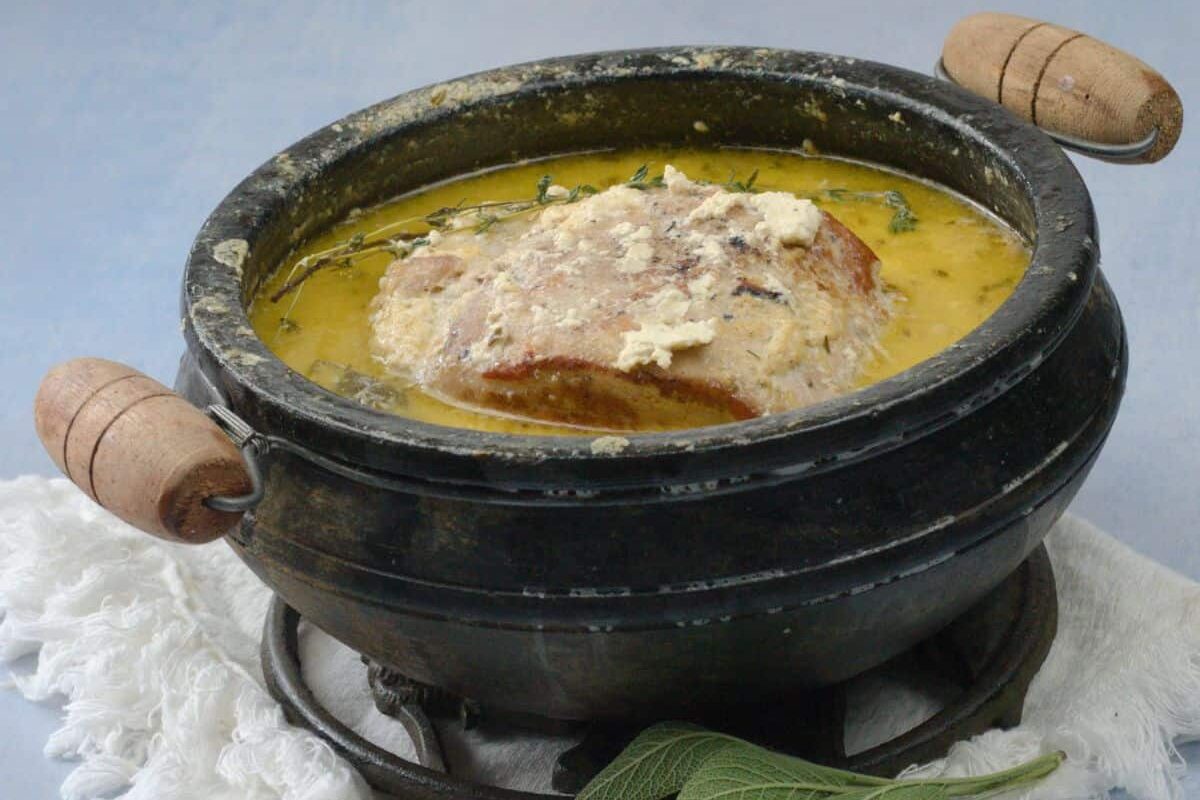
For this recipe, I use a Brazilian soapstone pot. Soapstone is a naturally occurring material, a type of metamorphic rock rich in talc.
It is an excellent choice for slow cooking because it can handle extreme heat but, like cast iron, retains and distributes that heat very evenly and gently.
The pot I use is perfect for all kinds of slow-cooked stews and braises, as it holds warmth long after it's been taken off the flame, ideal for keeping a Sunday dinner hot at the table.
Step-by-Step Instructions

- Season the pork loin or shoulder generously on all sides with salt and freshly cracked black pepper.

- This is best if done the day before to allow the flavors to penetrate the meat.

- In a heavy-bottomed pot, such as a cast-iron pot, melt the butter over medium heat. The pot should have high sides.

- Sear the pork on all sides to create a golden-brown crust.
This browning is crucial for developing complexity and transferring flavor compounds to the sauce later.

- Once browned, pour the whole milk over the pork until the meat is completely covered.

- Add the sprigs of sage and thyme to the pot. If using lemon zest, add it now.

- Bring the liquid just to a boil, then immediately reduce the heat to very low.

- Cover the pot with a heavy lid.
The goal is to achieve a slow, low simmer that resembles a gentle "borbottio," or muttering sound.

- Let the pork cook on the stovetop for around 1 hour, maintaining the very gentle, steady simmer. The time depends on the cut of pork; if you are using a pork shoulder, you can cook it for a longer time.

- The meat is done when it is fork-tender and easily shreds. The long cooking transforms the tough connective tissue into a soft, succulent texture. At the end, the milk looks curdled, and this is normal.
- Remove the pork from the pot and set it aside to rest on a cutting board.

- Remove the sage, thyme, and lemon zest (if used) from the cooking liquid. I don't blend the sauce; I serve it as it is.
- Slice the pork thickly. Place the meat on a serving platter.

- If using truffle butter, stir it into the warm sauce now, off the heat, until it is fully incorporated.
- Pour a small amount of the sauce over the sliced pork before serving.

Serving Suggestions
Maiale al latte is rich and flavorful, making it ideal with simple accompaniments.
Pair the dish with a creamy carbohydrate to absorb the milk sauce, such as polenta, pilaf rice, or a simple mashed potato.
For vegetables, accompany the rich meat with hearty sides like broccoli and carrots or simple sautéed mushrooms.
Offer the remaining milk sauce on the side for guests to add as they wish.

Frequently asked questions
Why is pork cooked in milk?
The milk breaks down during cooking, tenderizing the meat and forming the base of the final sauce. It takes a tougher cut, like the pork shoulder or loin, and makes it incredibly soft and succulent.
Is it normal for the milk to curdle?
Yes, at the end of the cooking the milk looks curdled. I don't blend the sauce; I serve it as it is.
What is the difference between a stracotto and a brasato?
A stracotto is a long, gentle, and completely immersive cooking method; the meat is always covered by the liquid, unlike a brasato, where the food is only partially submerged. Maiale al latte is a stracotto.
Which cut of pork is best for maiale al latte?
You can use pork loin or pork shoulder. I cook it for around 1 hour, but the time depends on the cut of pork; if you are using a pork shoulder, you can cook it for a longer time.
Can I use lemon zest instead of truffle butter?
Yes. My aunt would finish the sauce simply with lemon zest. Add the zest with the sage and thyme, and remove it with the herbs at the end. The truffle butter goes into the warm sauce off the heat, just before serving.
Can I make maiale al latte ahead?
Yes, you can make it ahead. It keeps in the fridge for 3 days.
What do you serve with maiale al latte?
I serve it with polenta, as it absorbs the milk sauce. Pilaf rice or a simple mashed potato work too, with broccoli and carrots or sautéed mushrooms on the side.
More recipes with pork


If you are making this pork cooked in milk, leave your comment below and give it a rating, I would like to hear from you. You can find more delicious ideas if you FOLLOW ME on Facebook, YouTube, Instagram or sign up to my newsletter.
Maiale al Latte: Italian Pork Cooked in Milk with Truffle Butter
Verified Culinary AuthorityVideo
Ingredients
- 2 lb Pork loin or shoulder
- 4 cup Milk The quantity depends on the size of your pot. The pork should be completely covered
- 1 sprig sage leaves
- 1 sprig Thyme
- 2 tablespoon butter
- 2 tablespoon truffle butter or 1 lemon zest
- Salt and black pepper to taste
Instructions
- Season the pork loin or shoulder generously on all sides with salt and freshly cracked black pepper. This is best if done the day before to allow the flavors to penetrate the meat.
- In a heavy-bottomed pot, such as a cast iron pot, melt the butter over medium heat. The pot should have high sides.
- Sear the pork on all sides to create a golden-brown crust.
- Once browned, pour the whole milk over the pork until the meat is completely covered.
- Add the sprigs of sage and thyme to the pot. If using lemon zest, add it now.
- Bring the liquid just to a boil, then immediately reduce the heat to very low.
- Cover the pot with a heavy lid.
- Let the pork cook on the stovetop for around 1 hour, maintaining the very gentle, steady simmer. The time depends on the cut of pork.
- The meat is done when it is fork-tender and easily shreds. Remove the pork from the pot and set it aside to rest on a cutting board.
- Remove the sage, thyme, and lemon zest (if used) from the cooking liquid.
- Slice the pork thickly. Place the meat on a serving platter.
- If using truffle butter, stir it into the warm sauce now, off the heat, until it is fully incorporated.
- Pour a small amount of the sauce over the sliced pork before serving




Leave a Reply