


Fried polenta is a traditional side dish popular in Northern Italy that is made with leftover polenta. Buttery, crispy outside and creamy inside, this pan-fried polenta is an easy, gluten-free, delicious side dish to serve with saucy dishes like ragu, meat, or vegetable stew. Traditionally, these polenta fries are served with cheese and mushrooms, but can also be a great appetizer with a cheesy dipping sauce.

Jump to:
This recipe provides steps for the authentic, long-stir method starting with Polenta Taragna, but if you're short on time, you can jump directly to the frying section by using store-bought, already-made polenta tube (polenta pronta) as a quick shortcut.
For me, there's nothing better than coming in after an exhausting day of skiing in the Alps and having a hot plate of these polenta cakes ready to go, especially if they are topped with melted Taleggio cheese and a truffle dipping sauce.

Looking for the full story? Dive into our article: Polenta in Italy: A Regional Guide to Serving, Pairings, Types, and Dark History.
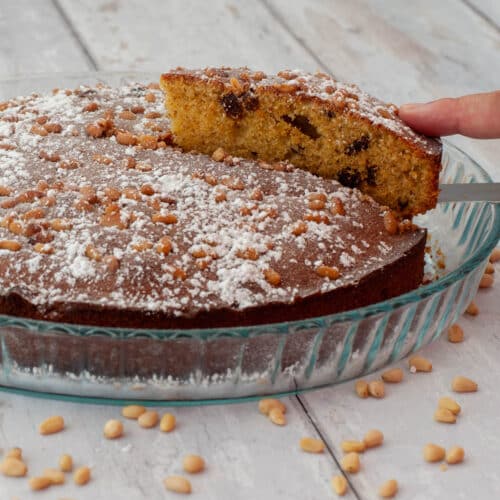
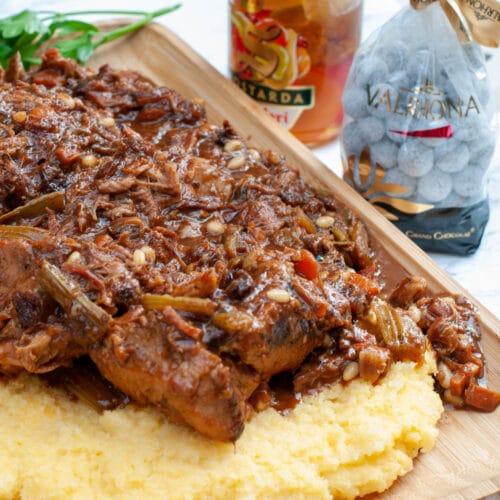
For more recipes with polenta, you can check chocolate wild boar, sweet polenta cakes.
Ingredients
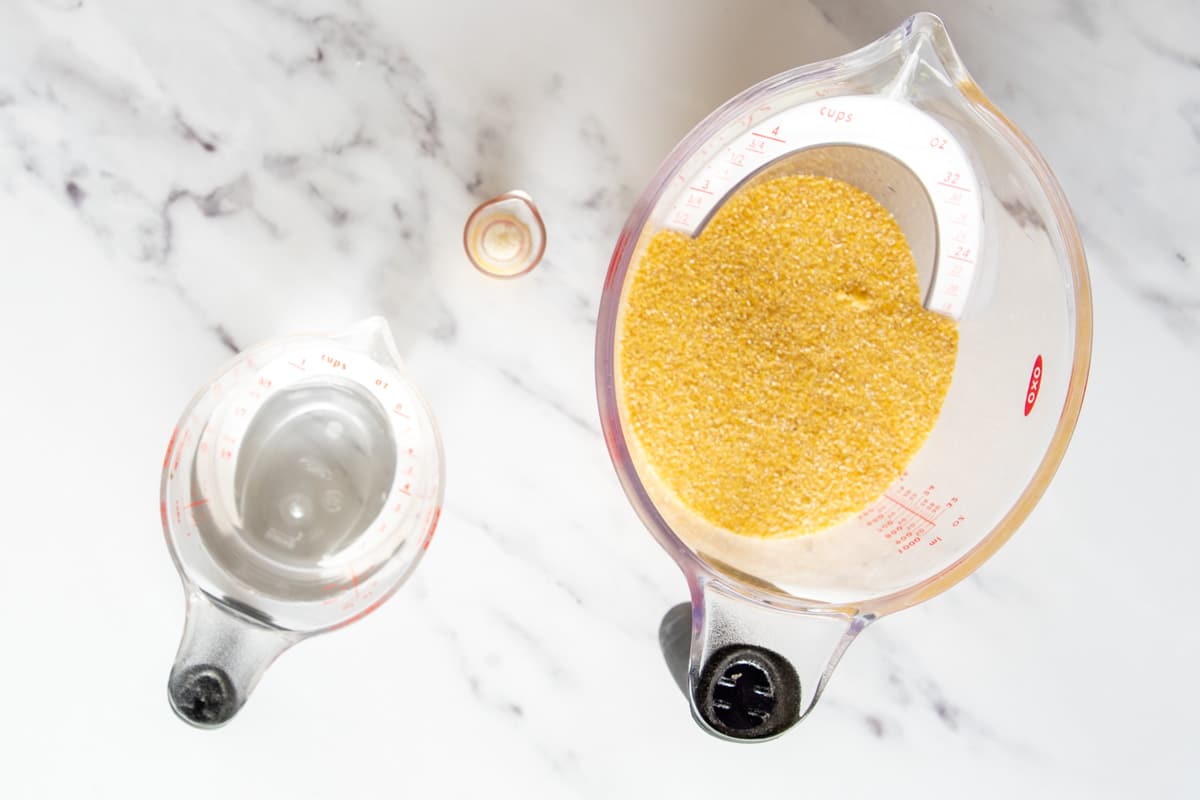
1. To make Polenta (Traditional Method Base)
- Polenta Taragna: or use coarse-grind Bramata for best slicing
- Water
- Salt
2. To Fry, Finish, and Shortcut Base
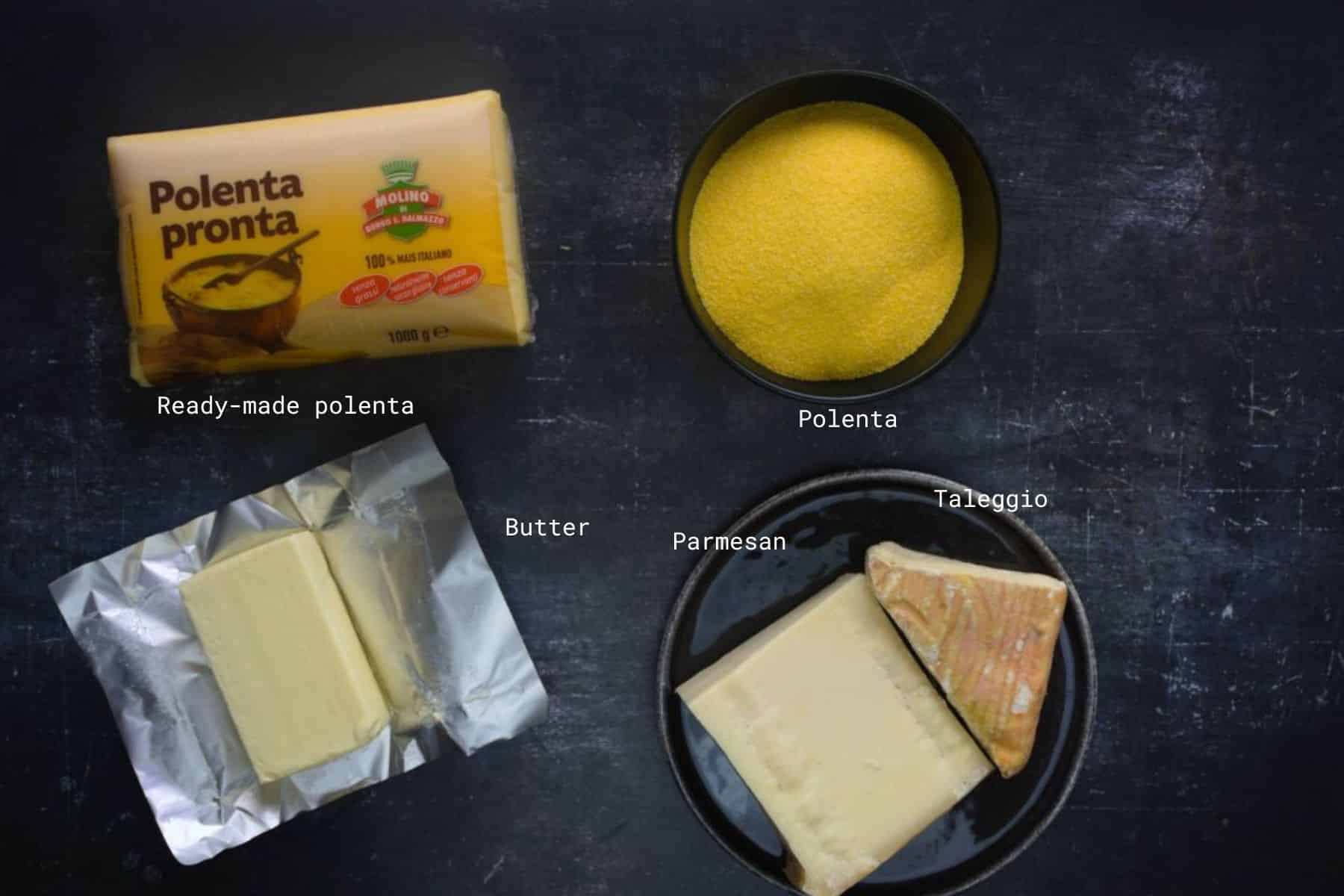
- Store-bought Polenta Tube (Polenta Pronta): Required if skipping the Traditional Method
- Butter or olive oil: for frying
- Freshly grated Parmesan cheese: for initial sprinkling
3. For the Alps-Inspired Taleggio and Truffle Sauce
- Taleggio Cheese: or similar soft cheese like Fontina, cut into cubes
- Truffle Butter (optional)
- Butter or milk: for melting the Taleggio
See the recipe card for quantities.
Step-by-Step instructions
Shortcut Start: Using Polenta Pronta
If using a store-bought polenta tube: Skip Steps 1 and 2 entirely. Remove the tube polenta from its packaging, slice it into sticks (about 3 inches long by 1.5 inches wide), and proceed directly to Step 3: Fry the Cakes.

1. Make the Polenta
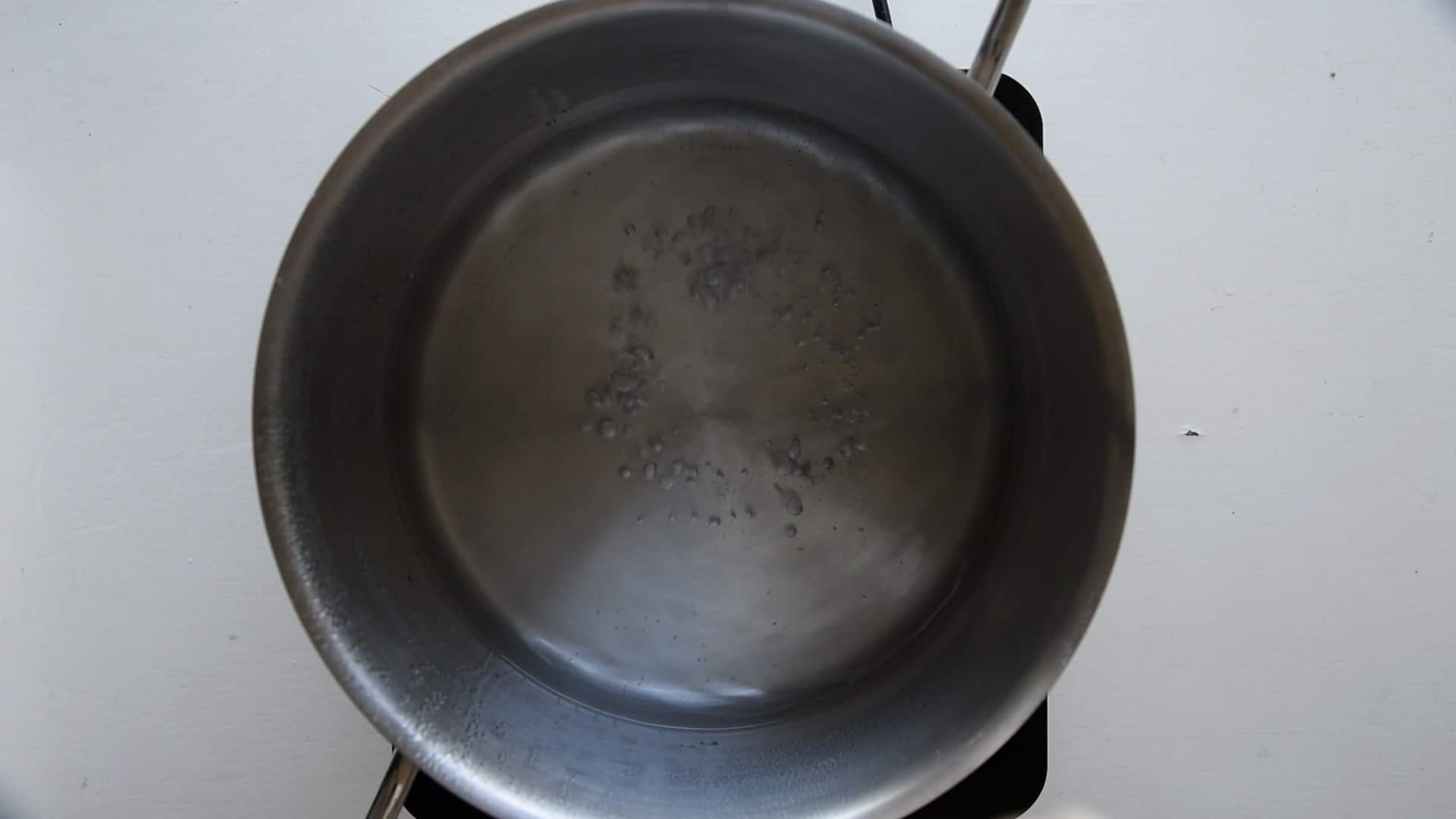
- Combine the water and salt in a large, heavy-bottomed pot (or a copper Paiolo). Bring it to a rolling boil.
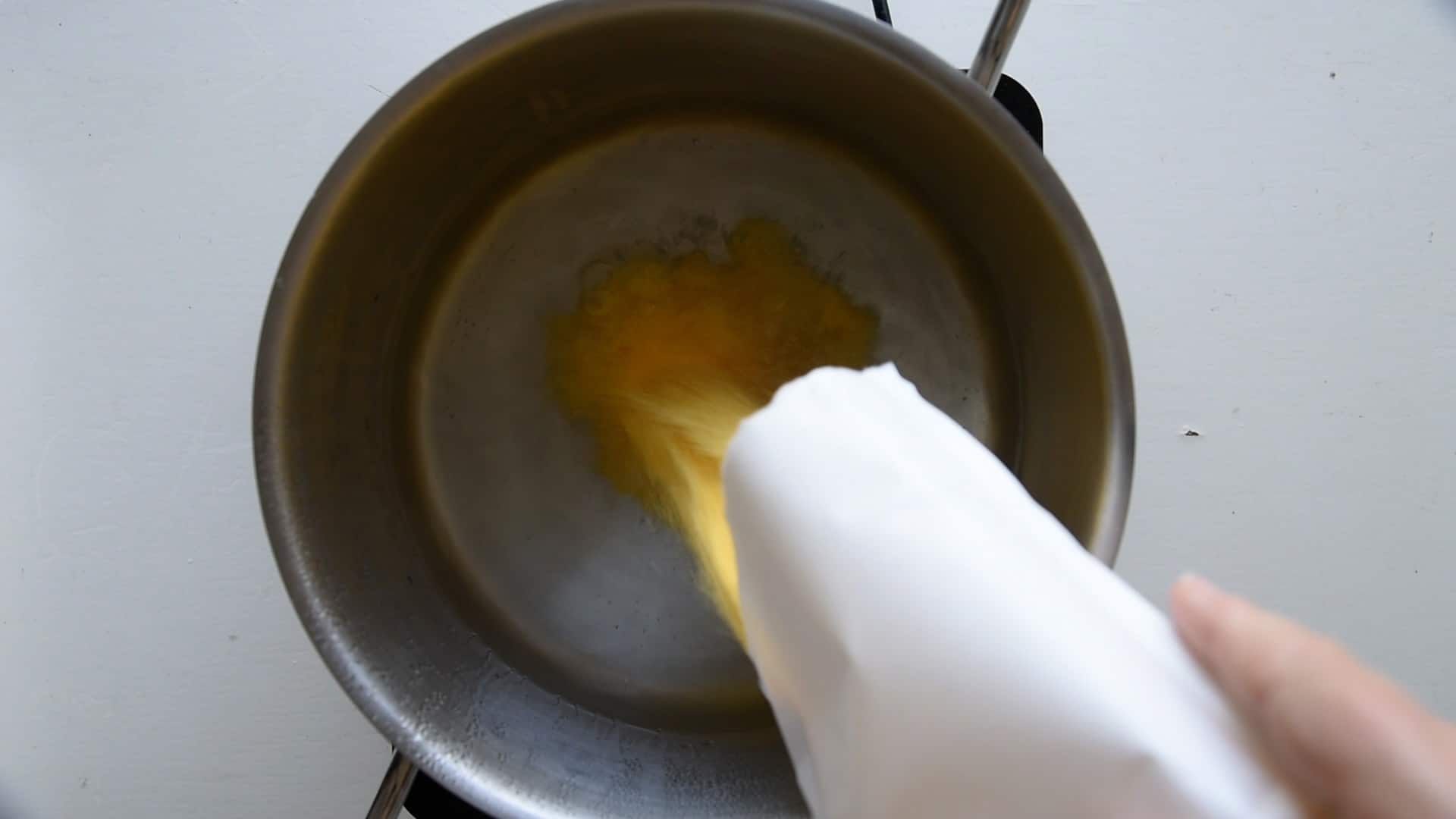
- Reduce the heat to medium-low. Slowly pour the polenta into the water in a thin, steady stream while whisking constantly. This stops lumps from forming.
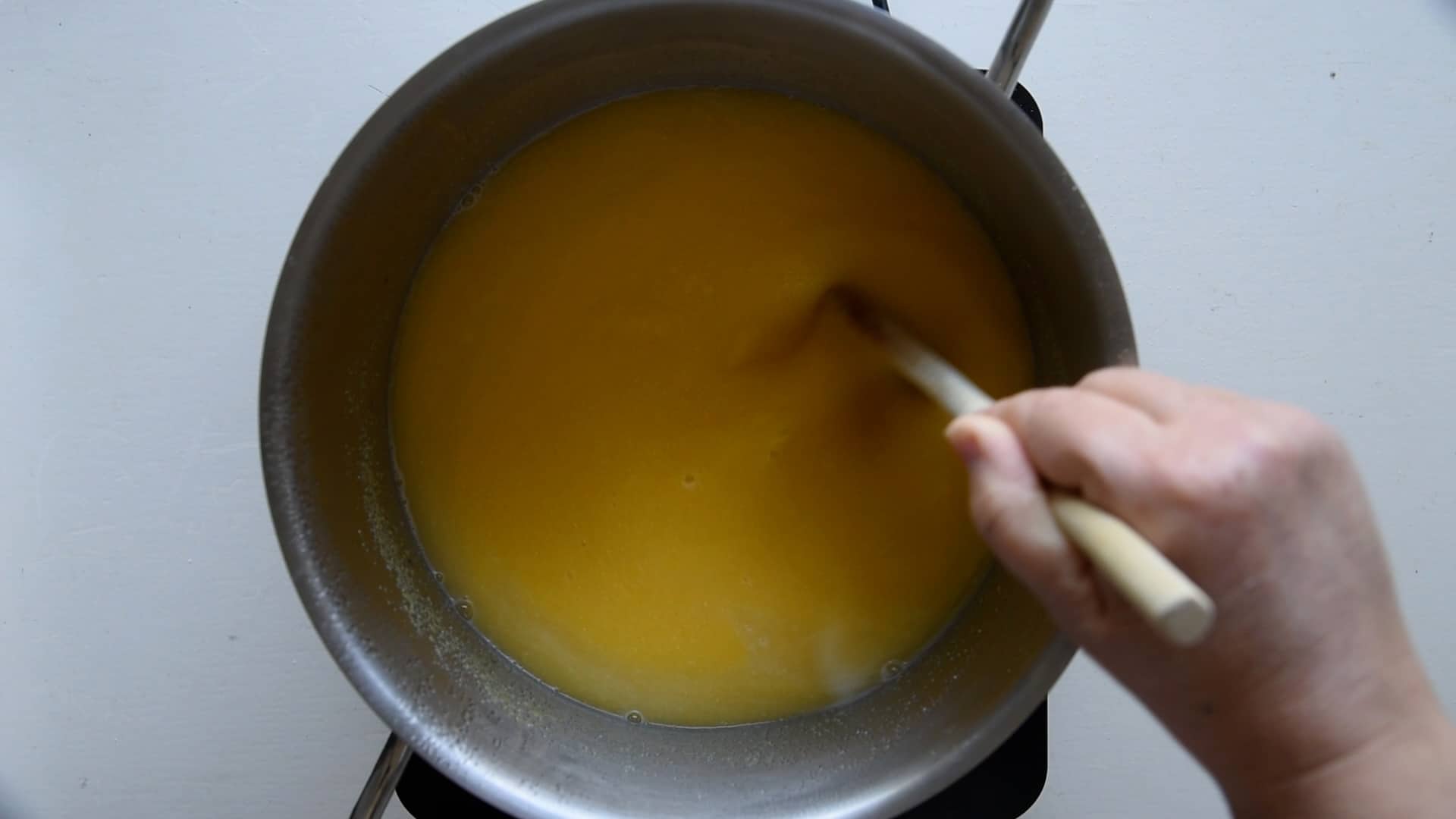
- Continue cooking and stirring vigorously for 50-60 minutes. Scrape the bottom and sides often to prevent burning.
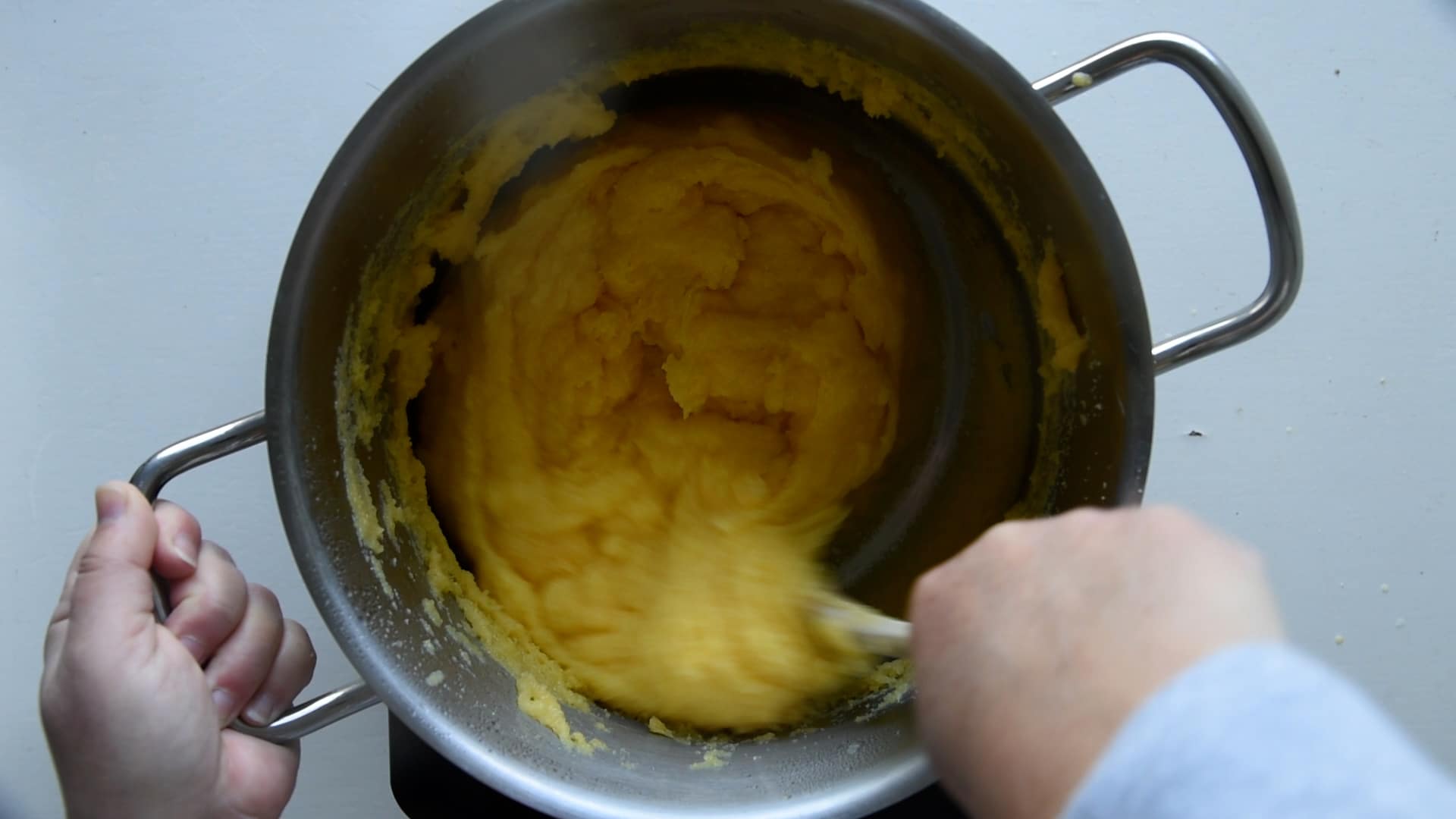
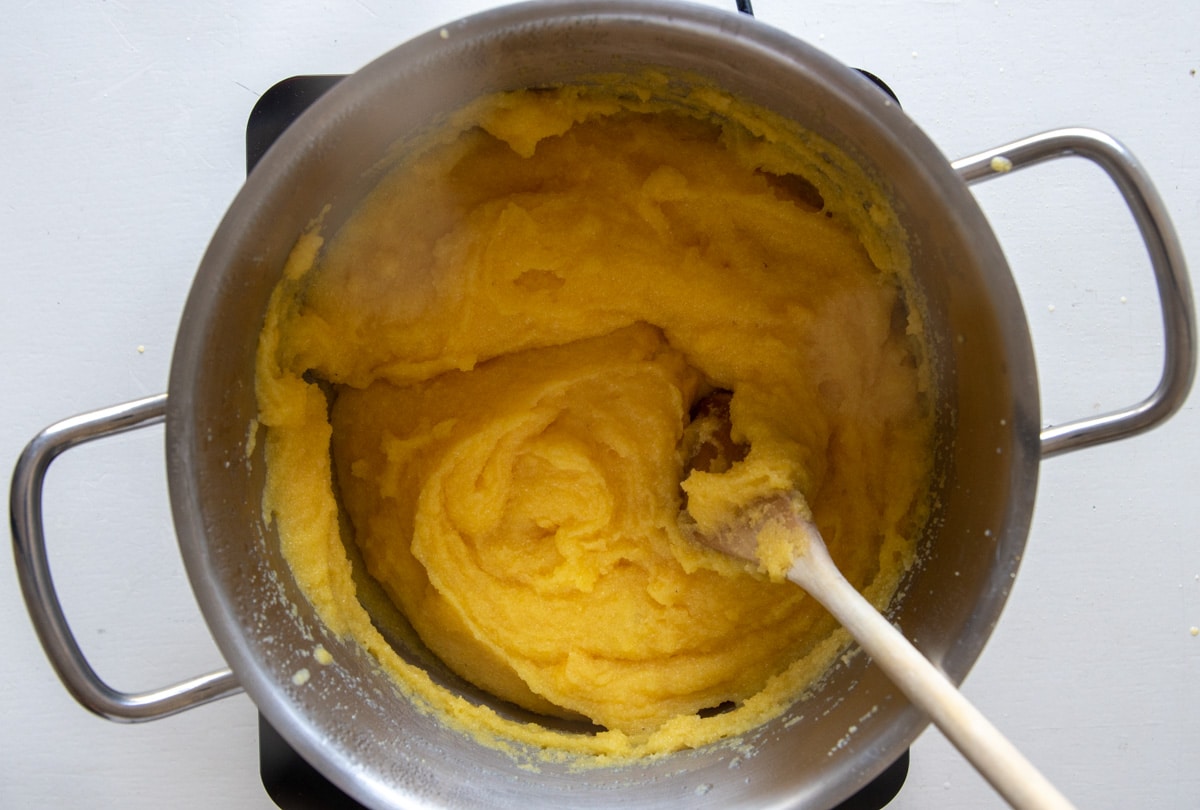
- The polenta is done when the mixture pulls away cleanly from the pot walls.
- Stir in the 1 tablespoon of olive oil and 1 tablespoon of butter.
2. Cool and Cut
- Lightly grease a large aluminium foil or baking sheet with olive oil.
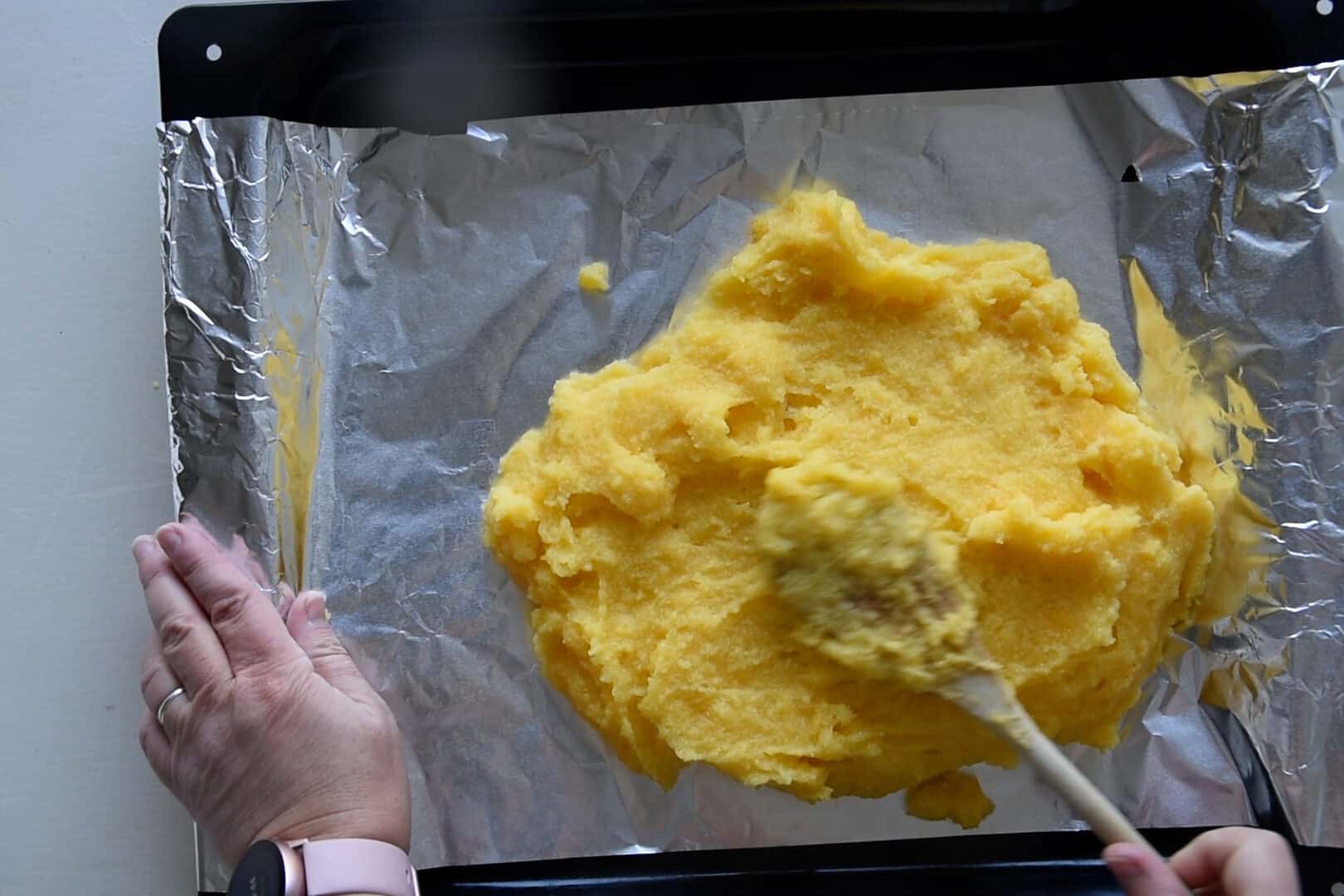
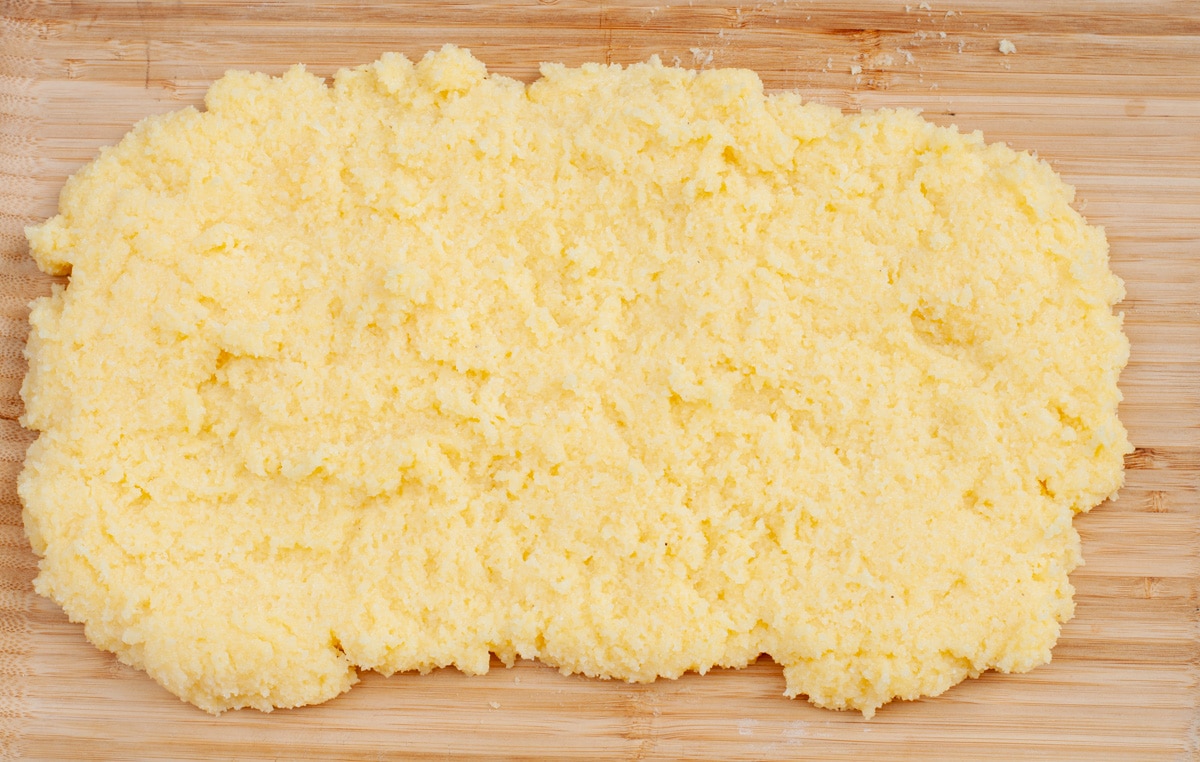
- Spread the cooked polenta into an even layer, about ½ inch thick.
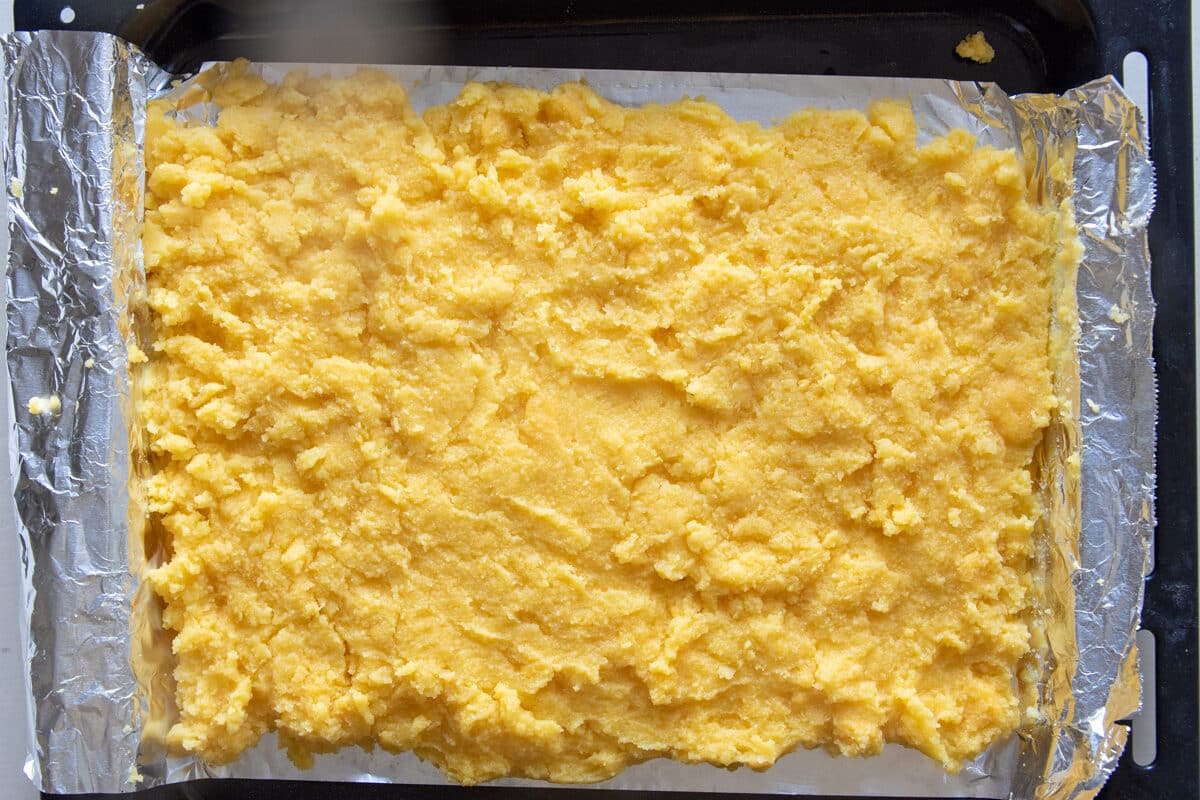
- Let the polenta cool completely and firm up for at least 1 hour at room temperature, or chill it (covered) for 30-45 minutes. It must be completely firm before you cut it.
- Use a sharp, slightly damp knife to cut the firm polenta into rectangular sticks (about 3 inches long by 1.5 inches wide).
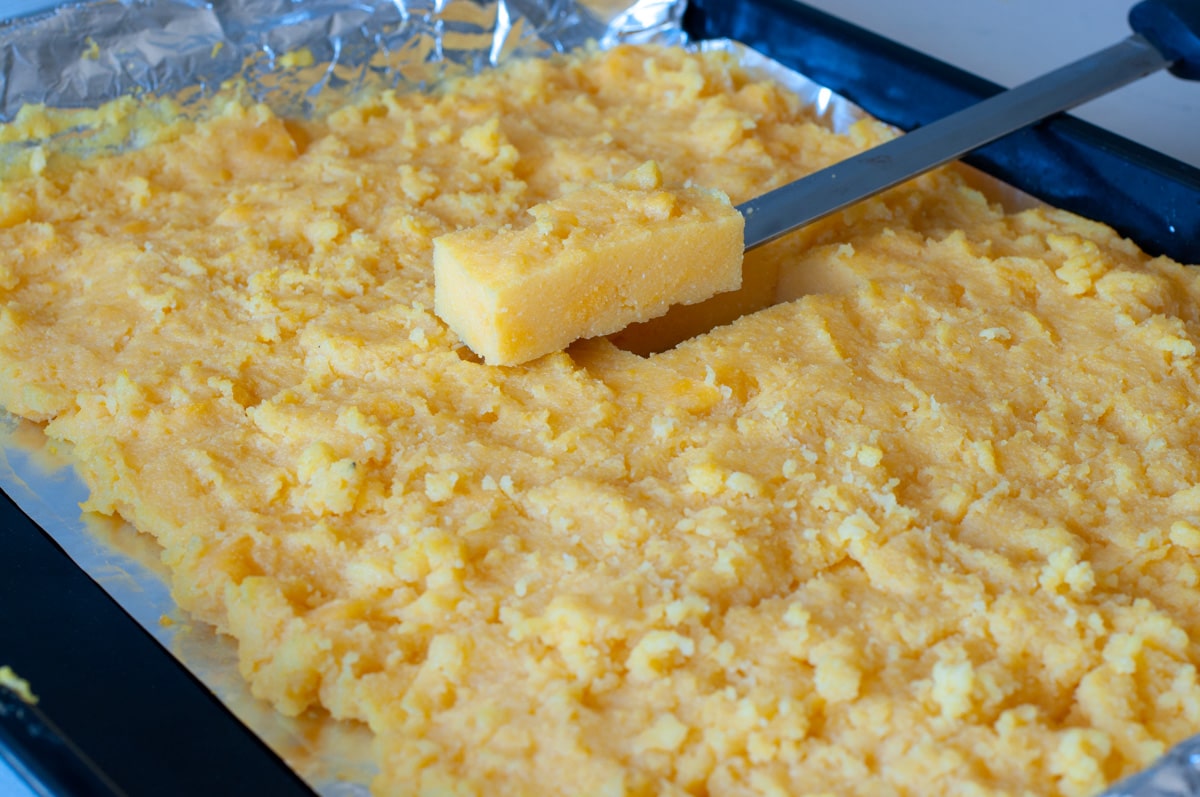
3. Fry the Cakes

- Combine the olive oil and butter in a large, heavy-bottomed skillet and heat over medium heat.
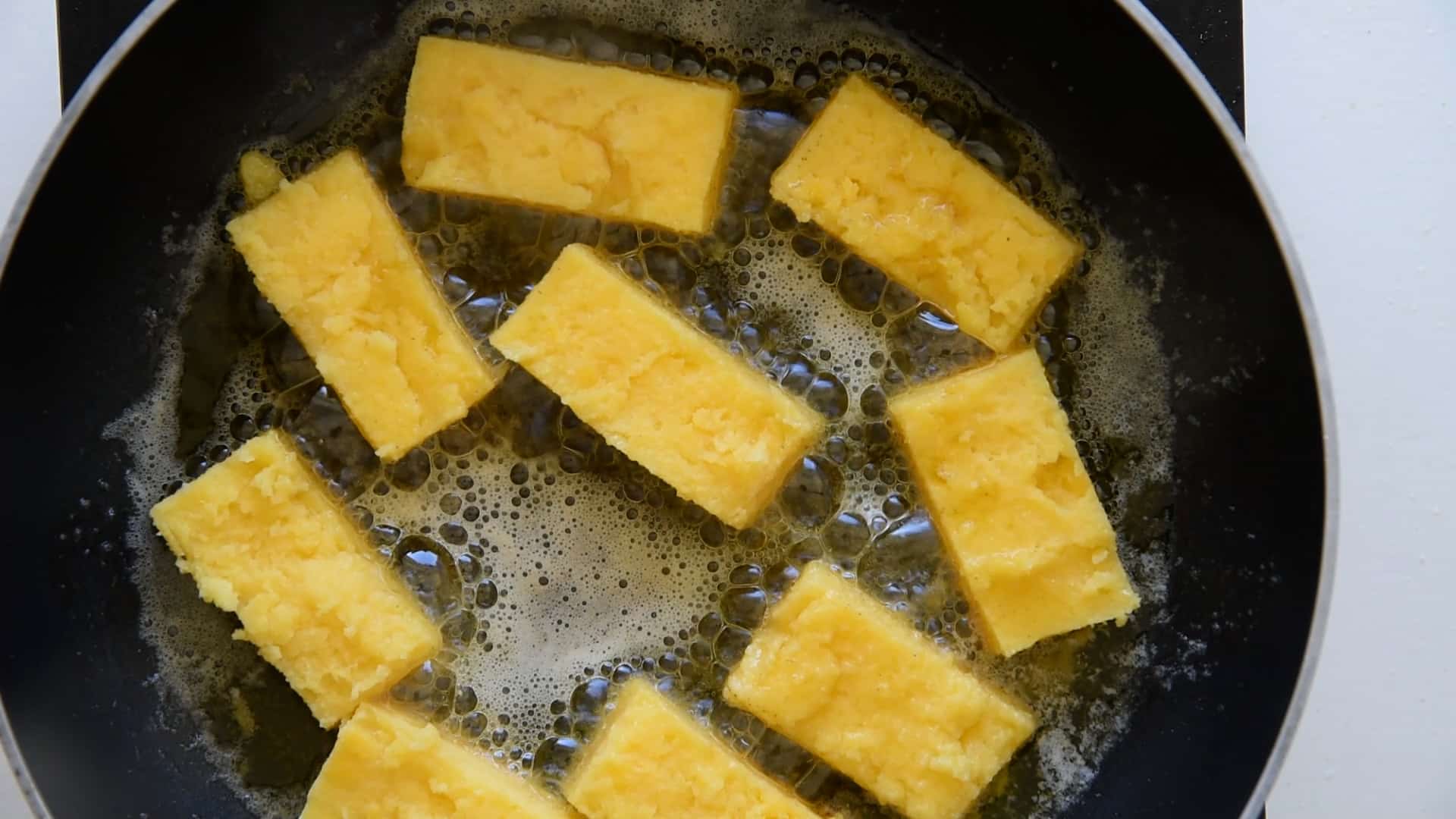
- Carefully place the polenta sticks in the hot skillet. Do not overcrowd the pan; work in batches if needed.
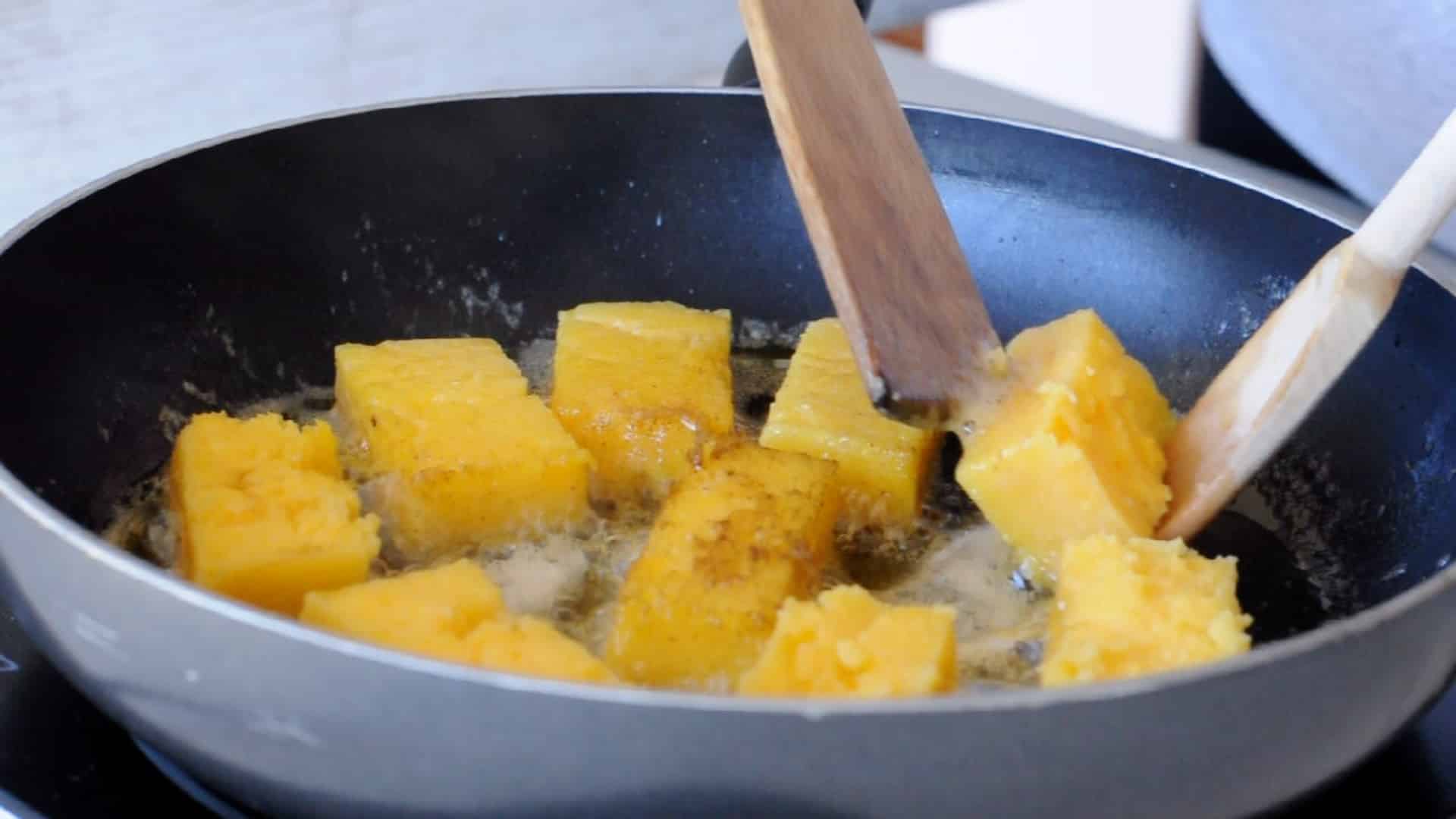
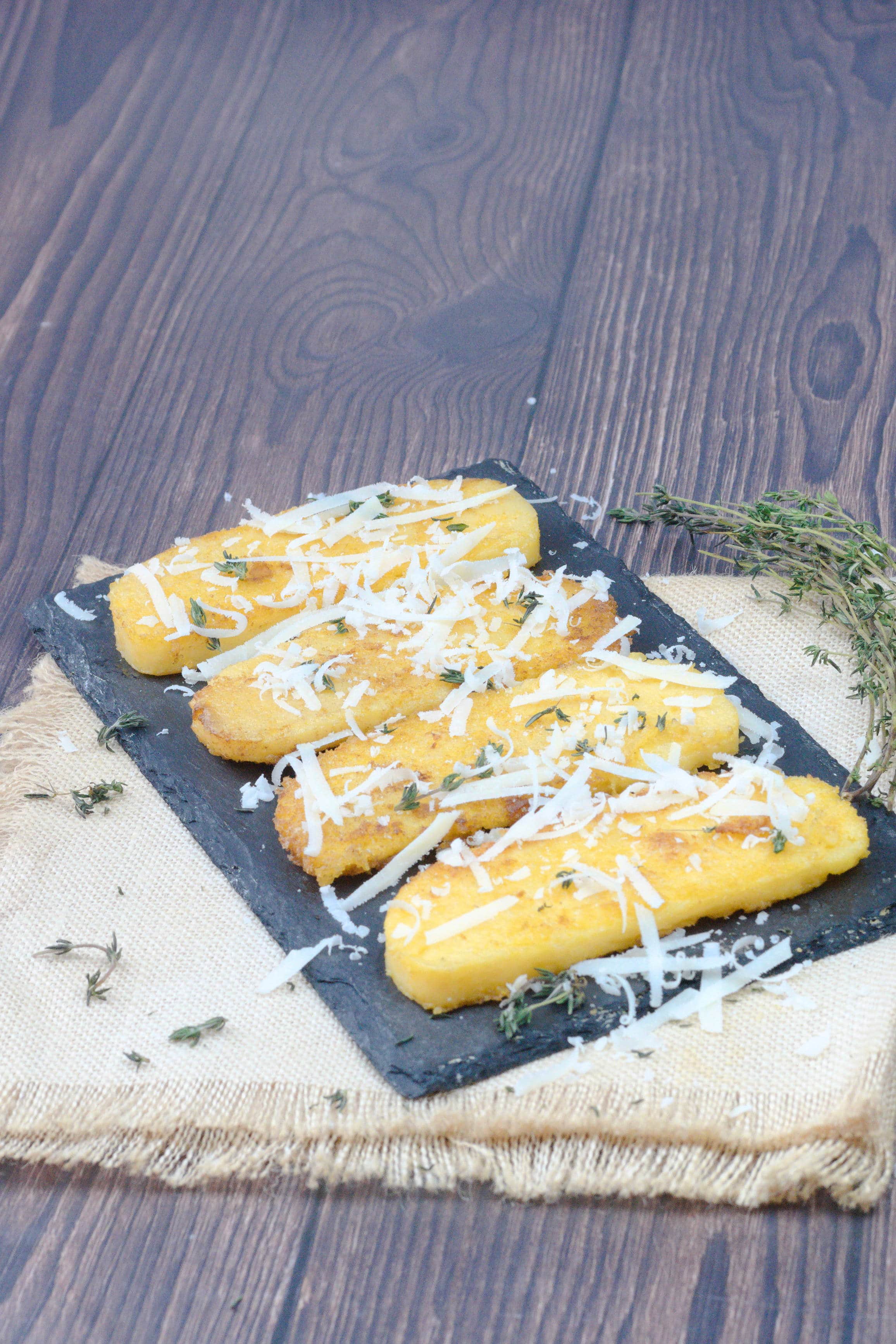
- Fry for 4-5 minutes per side, until golden brown and crispy. Adjust the heat to avoid burning.
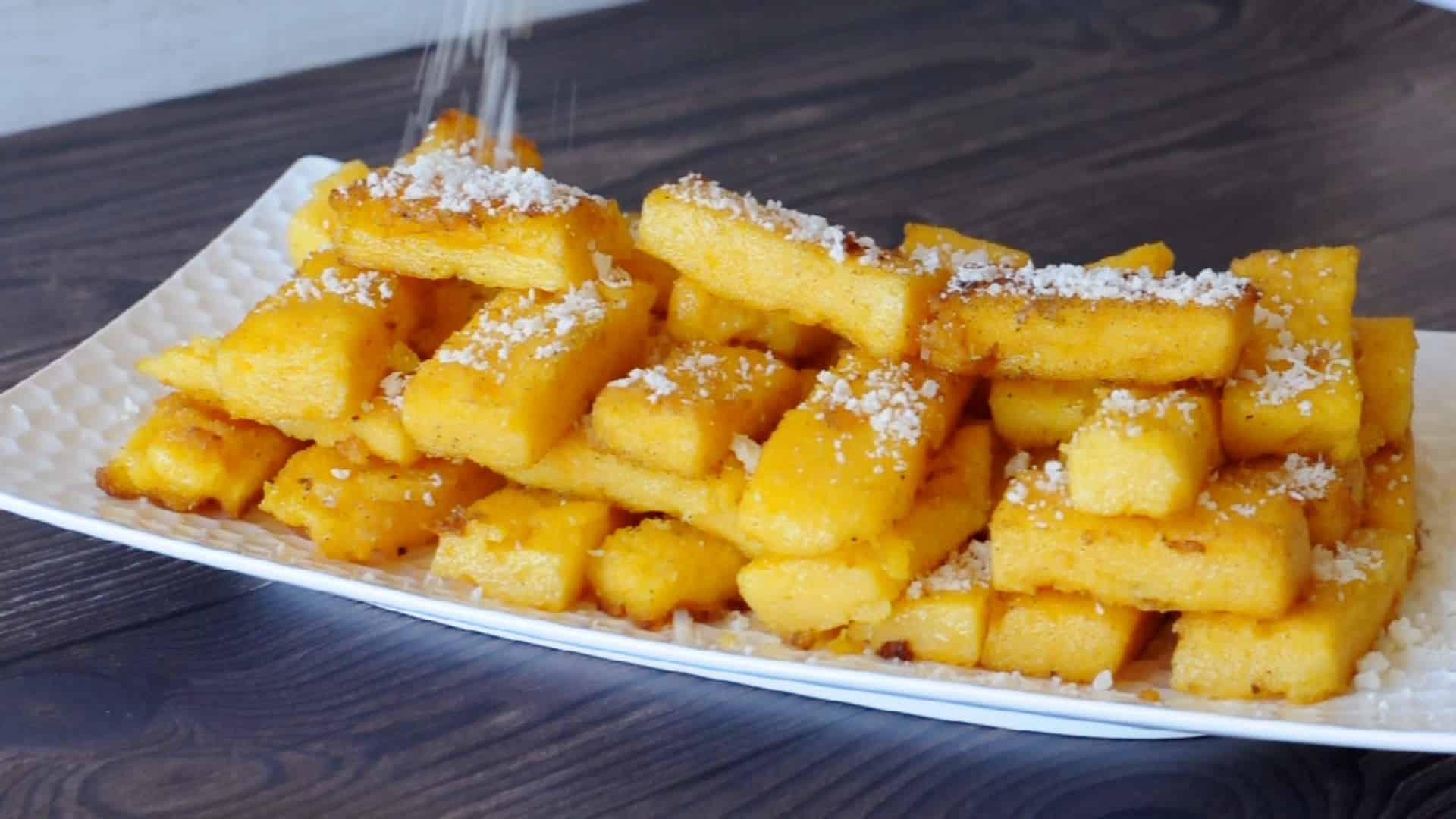
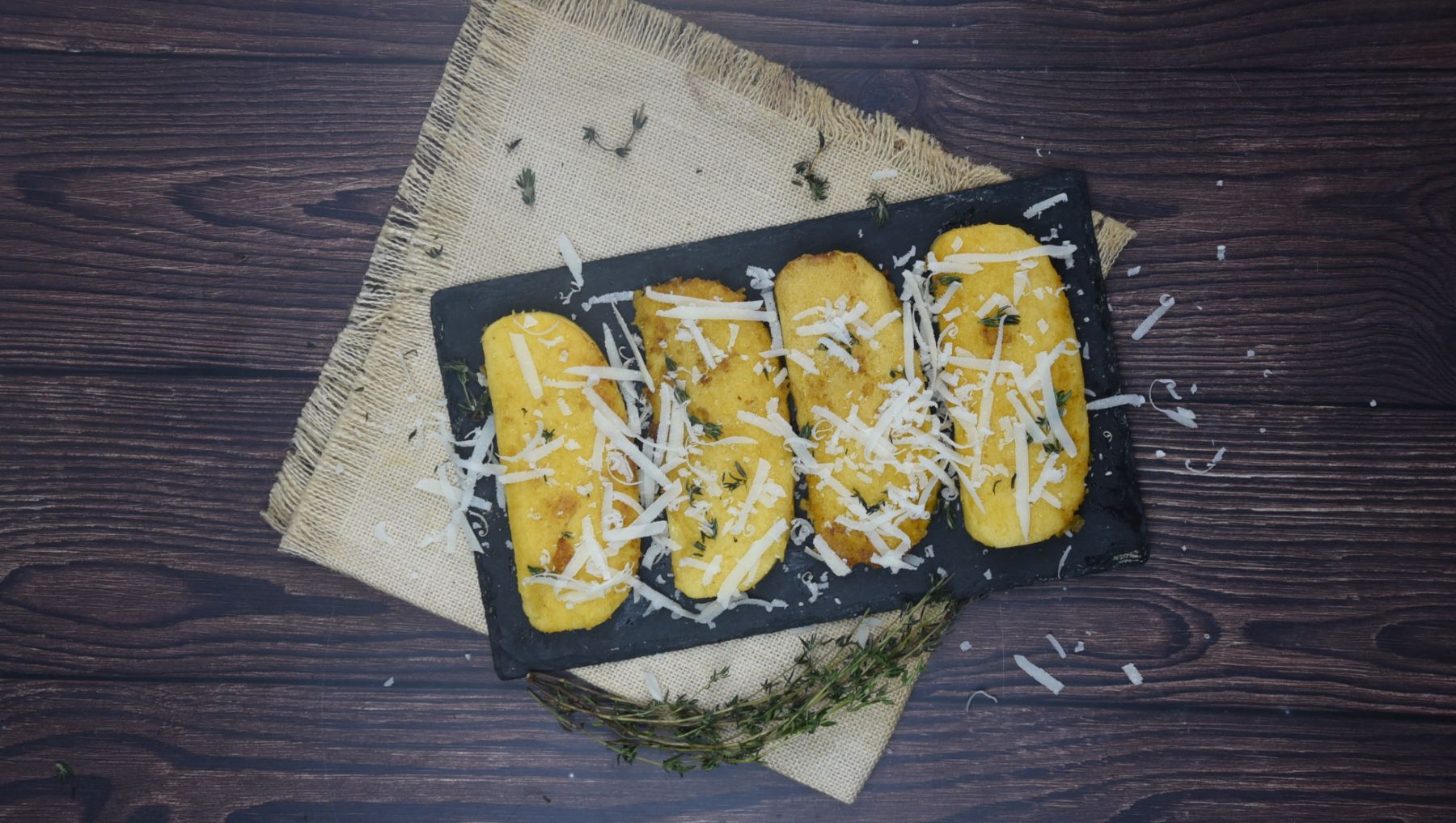
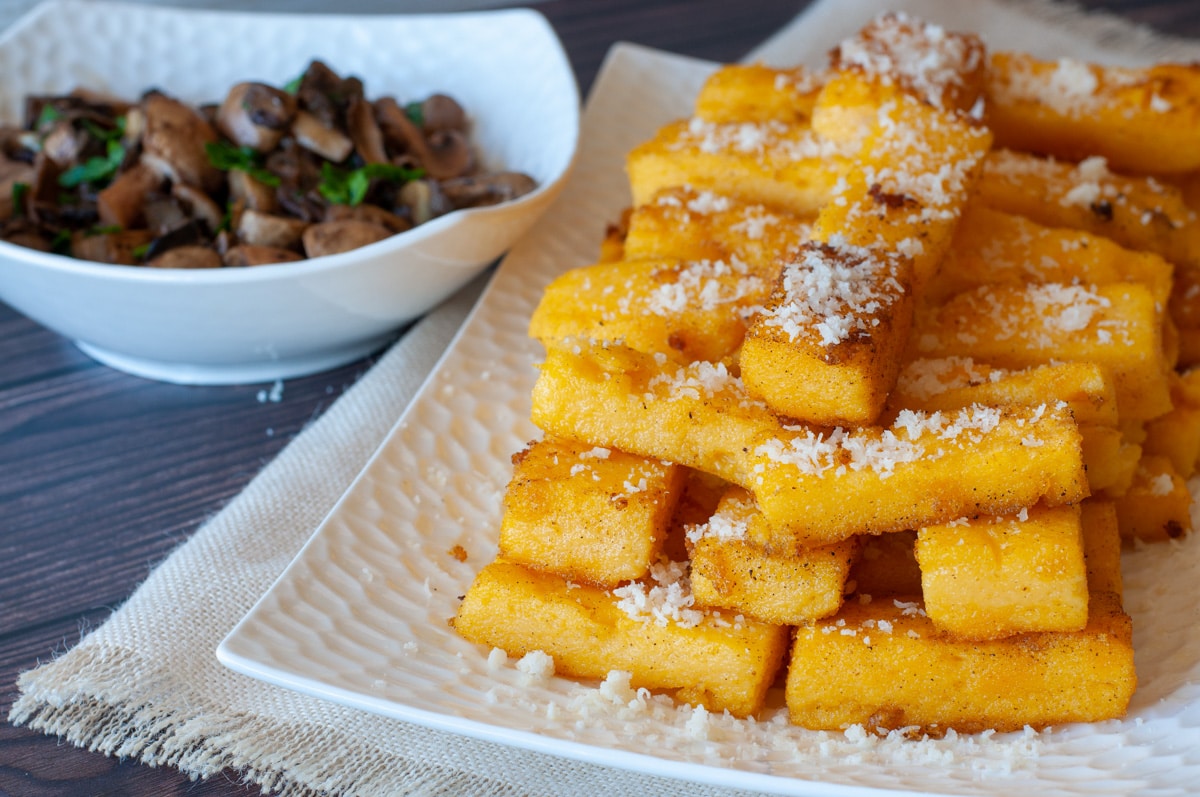
- Remove the fried polenta and place on a serving plate. Immediately sprinkle with freshly grated Parmesan cheese and serve hot.
Hint: I like to fry the polenta with a mix of olive oil and butter, as using both gives the polenta more flavor. If you prefer, you can use only one or the other or use vegetable oil for a milder flavor.
Make Taleggio and Truffle Sauce
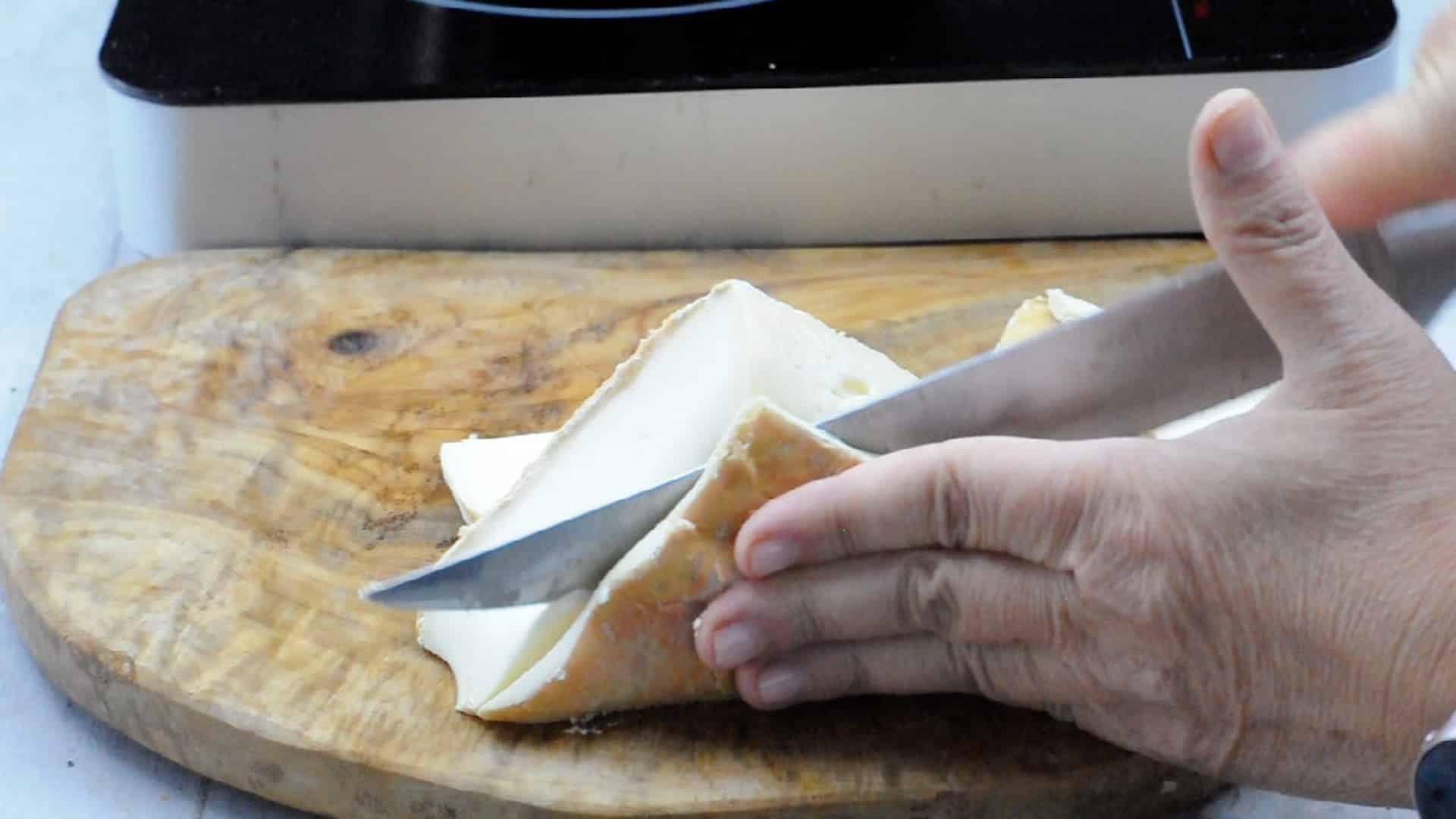
- Cut the Taleggio cheese into cubes and remove the rind/skin.
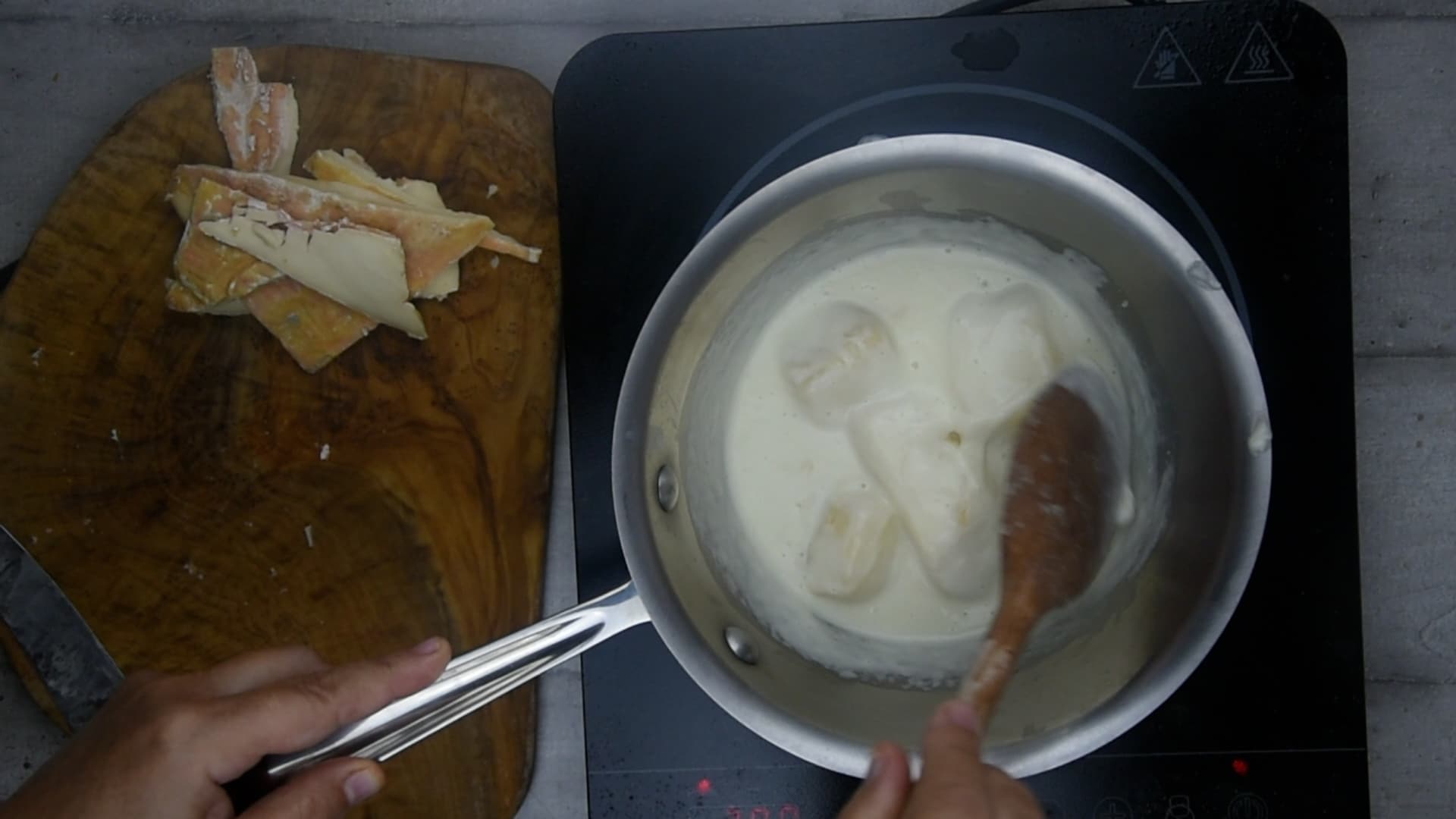
- Place the cubed Taleggio and a splash of milk in a saucepan and heat gently, stirring continuously until the cheese is completely melted and the sauce is smooth.
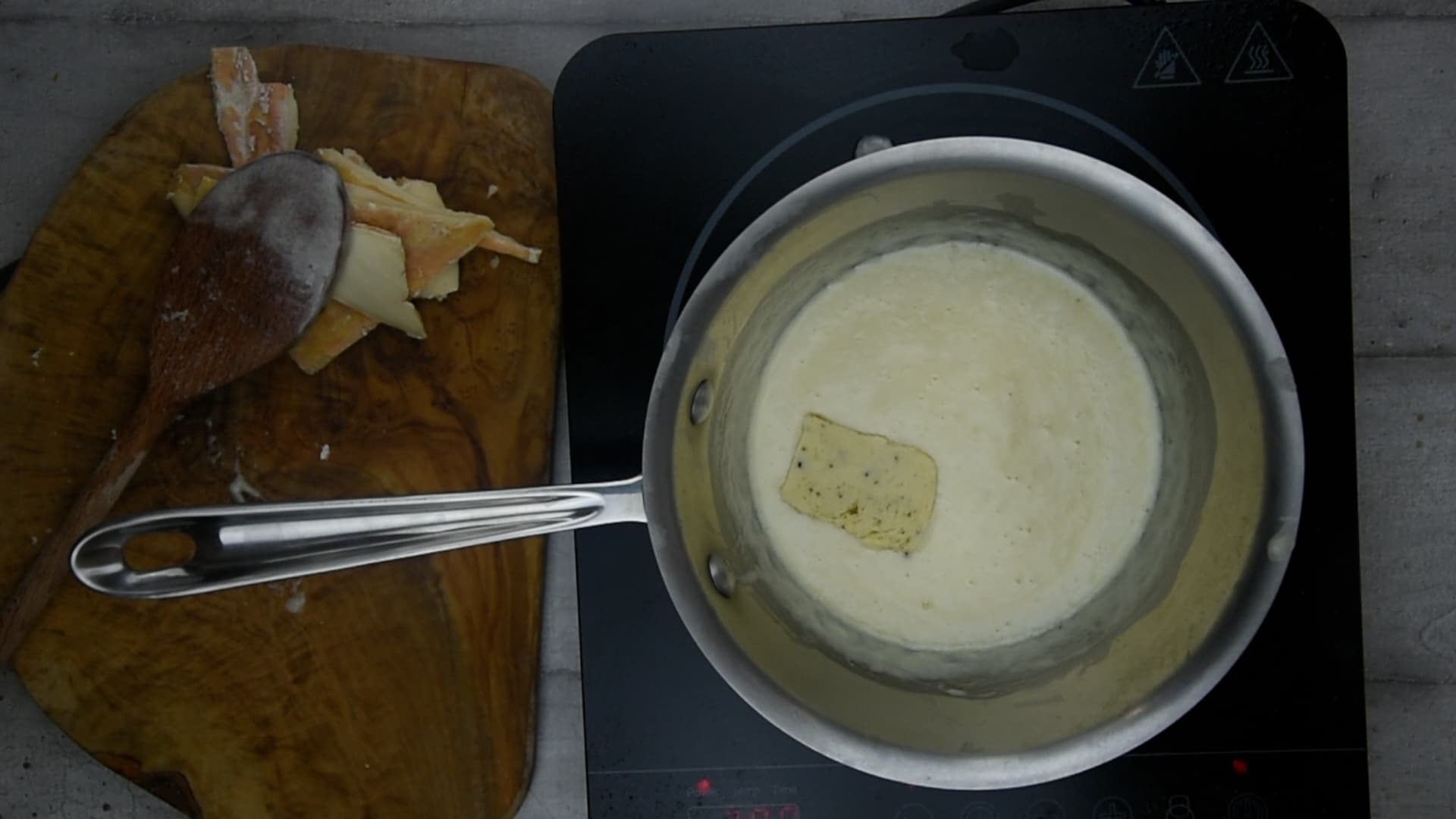
- Remove from the heat and stir in the Truffle Butter for a rich, aromatic flavor boost.
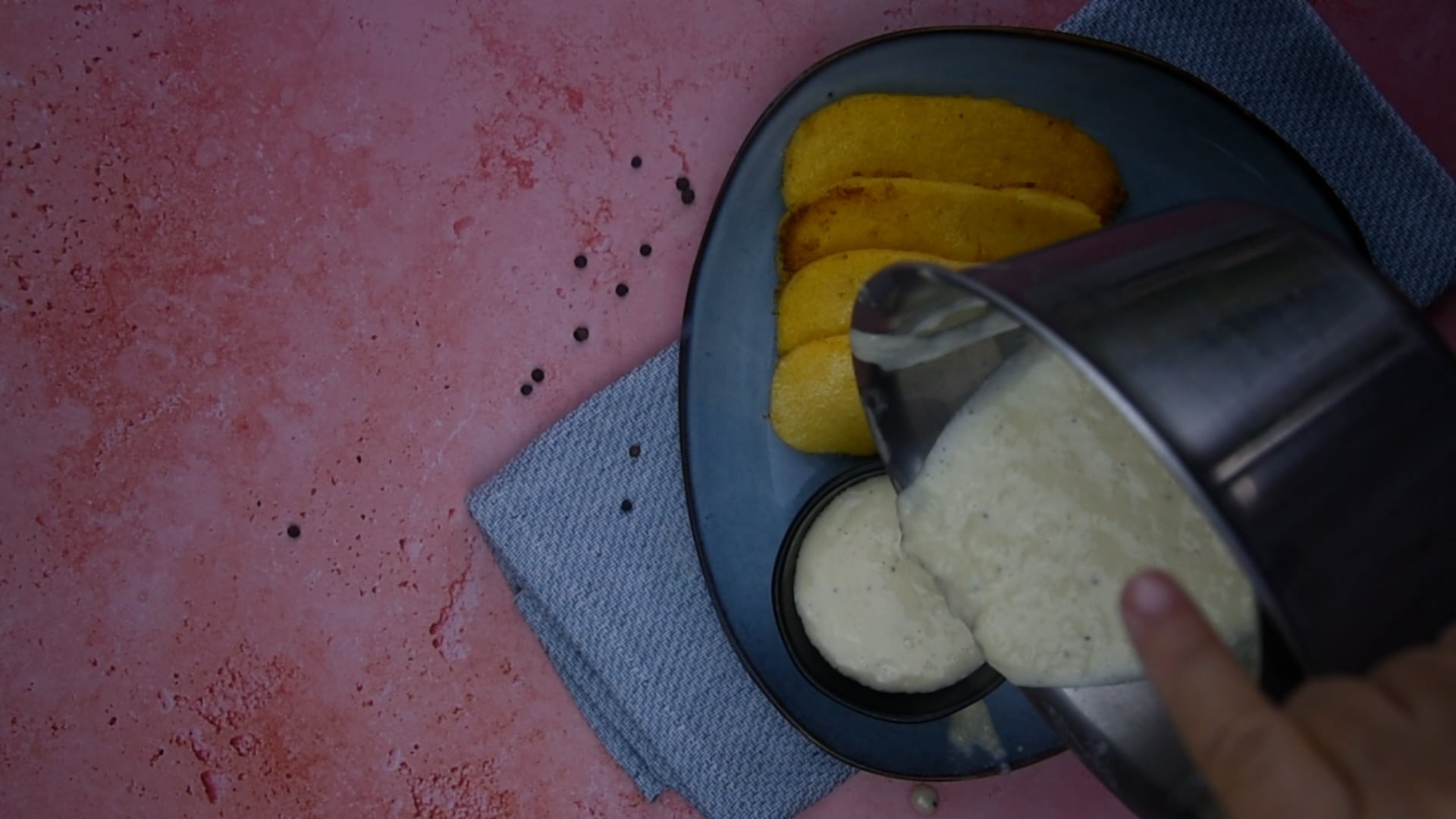
- Serve the sauce immediately in a small bowl for dipping.
How to serve it
For Italians, polenta fries are usually made with leftover polenta and served as a side dish to accompany a juicy main dish, usually stew, a stracotto or meat sauce like lamb ragu.
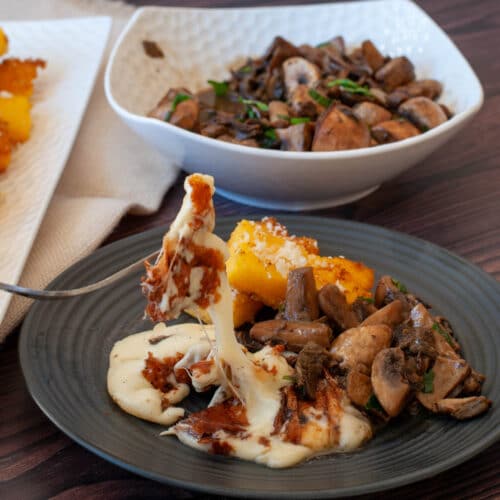
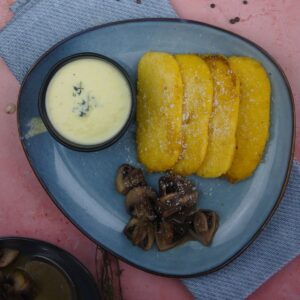
Also, fried polenta is often served as a quick meal with melted cheese and sauteed mushrooms.
I serve the fried polenta with grilled Scamorza cheese, stir-fried porcini, and white button mushrooms.
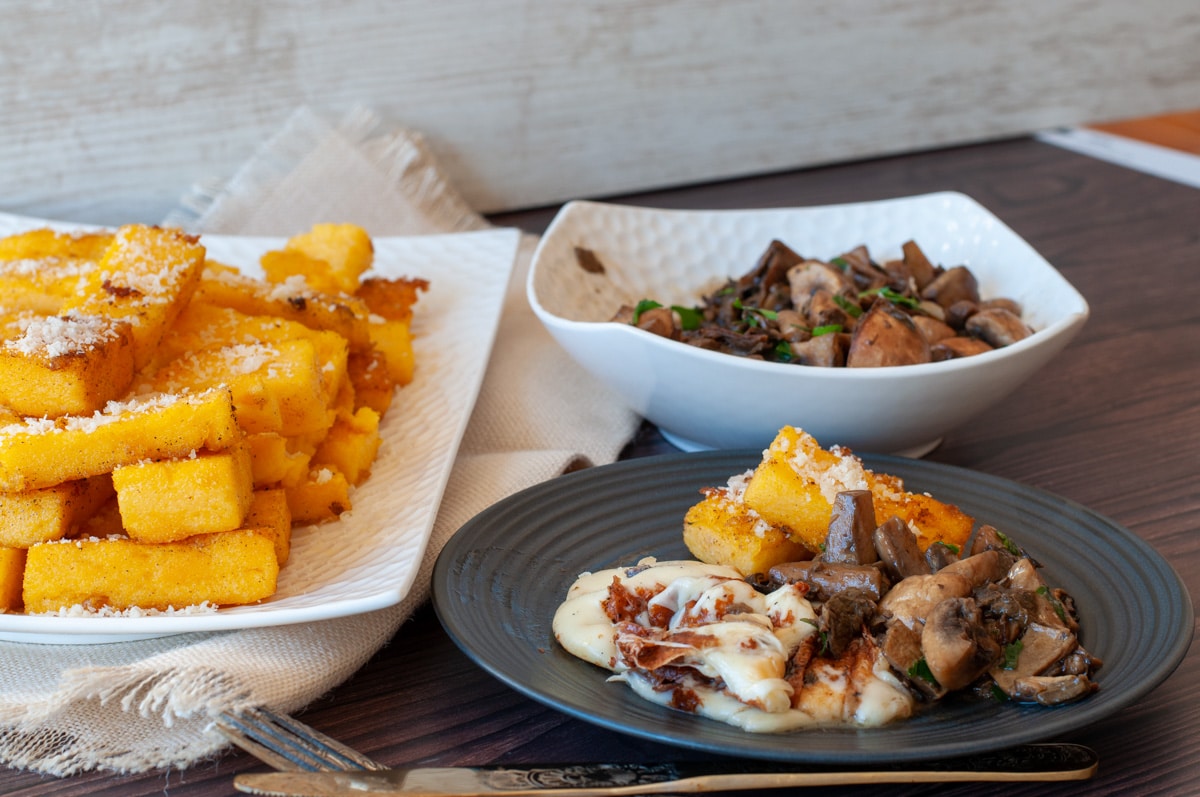
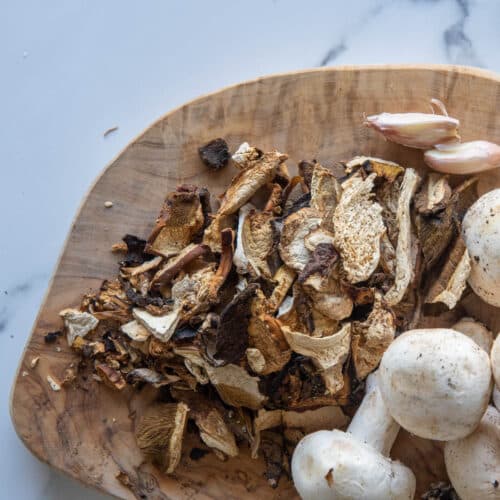
If it is not porcini season now, you can use dry porcini and you can find instructions in this article: How to use dried porcini mushrooms
It is normally served for dinner on a cold winter day or after an exhausting day of skiing in the Alps.
If you want to serve it with something fancy, serve it with wild bore with chocolate sauce, daube Provencal, or duck in orange sauce.
Italians would not have it at breakfast, as the traditional Italian breakfast is mainly sweet.
However, it is an excellent vegetarian breakfast.
Substitutions
Polenta is vegan and gluten-free, so it is suitable for many diets.
You can substitute polenta with semolina (NOT semolina flour).
While polenta is made from yellow corn, semolina is made with durum wheat.
Polenta has a crumblier and coarser grind, while semolina is finer, smoother, and easier to digest.
A great remedy for an upset stomach.
Some Italians don't like semolina as they associate it with being sick.
You can check the recipe: Semolina gnocchi
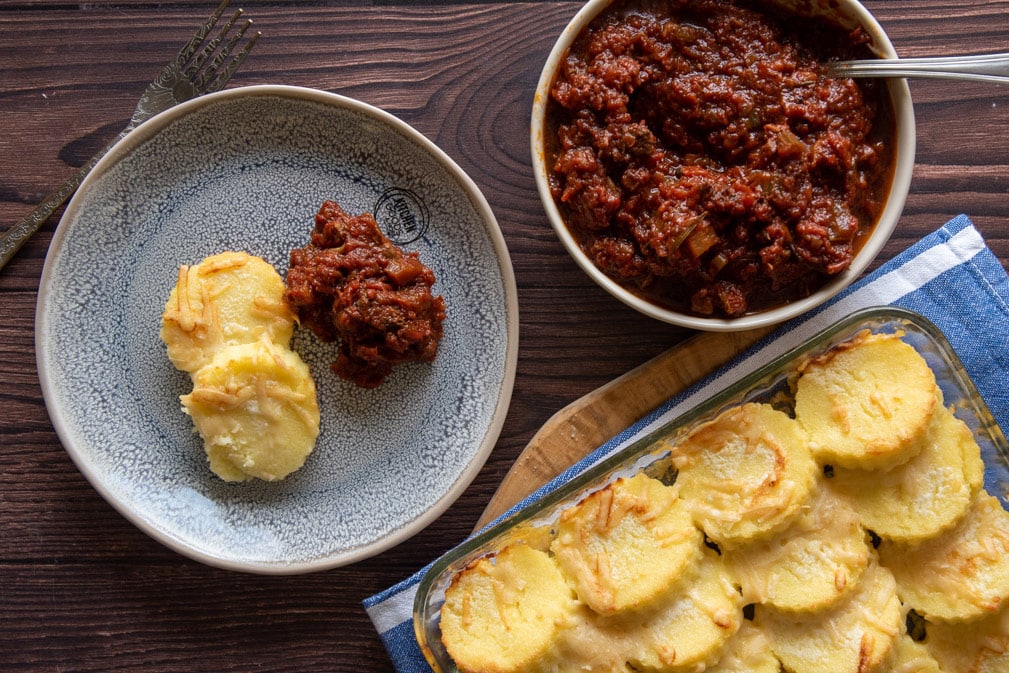
Variations
You can also make this recipe using:
- Pre-cooked polenta, or instant polenta, is cornmeal that has been partially cooked and dried. This process allows for quick preparation at home, reducing cooking time significantly. To prepare, you add the pre-cooked polenta to boiling water or broth and stir until it reaches the desired consistency, which usually takes a few minutes. It's a convenient option for making polenta dishes without the longer cooking time required for traditional polenta.
- Tubed Polenta-You can buy ready-cooked polenta shaped into tubes. You only need to cut it into slices and fry them. It's a great shortcut, but of course, the flavor of homemade polenta is much better.
- Deep fry - instead of frying the polenta in a pan, you can use a deep fryer or an air fryer
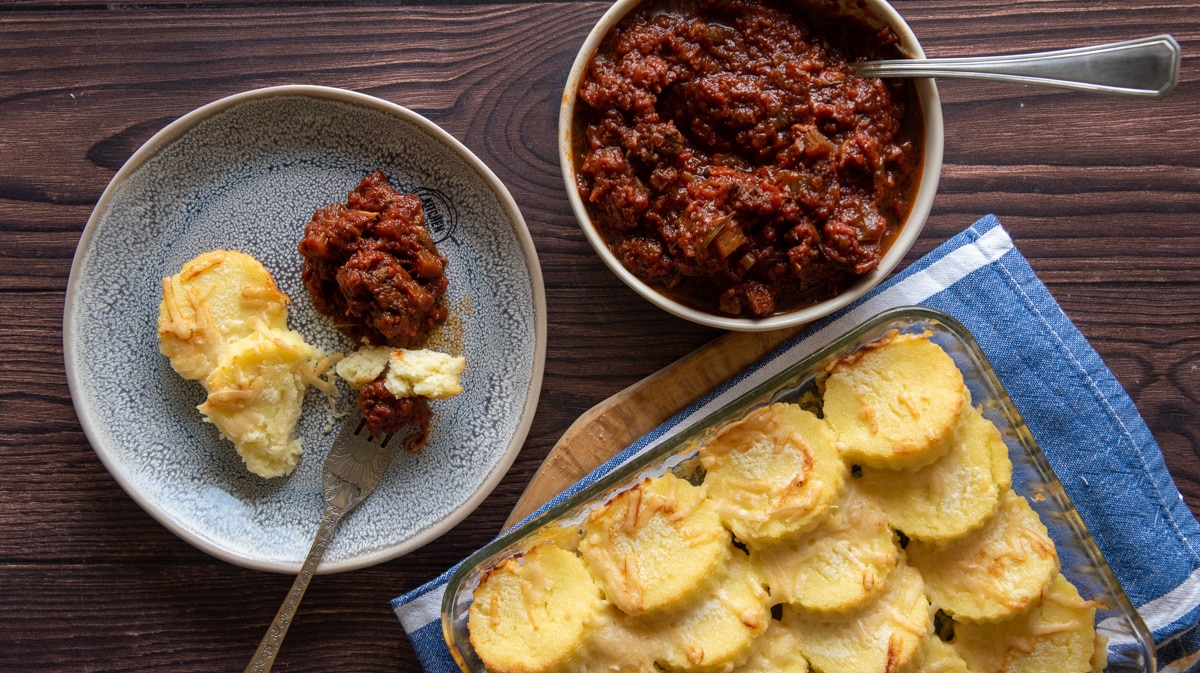
- Baked polenta-For a healthier option, you can bake the polenta. Place the polenta cakes into a baking dish in a single layer and top them with butter and Parmesan cheese so they form a nice, crunchy crust.
Time saving tips
Traditionally, polenta was cooked in a cauldron "Paiolo" over the fire and stirred constantly for an hour with a wooden spoon called "cannella".
As you need to stir polenta for a long time, I have Oxo wooden spoons which have comfortable handles.
The Paiolo is usually a copper cauldron, as it is a great heat conductor.
It cooks the polenta thoroughly without altering its flavor and prevents the polenta from sticking to the bottom of the pan.
If you do not want to stir for an hour, you can buy an electric copper cauldron.
Once cooked, the polenta is placed over a wooden cutting board and served with the meal.
Recipes using polenta
If you are making the Italian crispy pan fried polenta, leave your comment below I would like to hear from you. You can find more delicious ideas if you FOLLOW ME on Facebook, YouTube, Pinterest and Instagram or sign up to my newsletter.
📋 Italian Crispy Pan Fried Polenta With Taleggio And Truffle Sauce
Verified Culinary AuthorityVideo
Equipment
Ingredients
Make the polenta
- 2 cup Polenta Taragna
- 4 cup water
- ½ tablespoon salt
- 2 lb Polenta pronta shortcut alternative
- 1 tablespoon olive oil
- 1 tablespoon butter
- freshly grated Parmesan to sprinkle on top
Taleggio truffle sauce
- 10 oz Taleggio cheese
- ¼ cup milk
- 1 tablespoon truffle butter
Instructions
Make the polenta
- Combine water and salt in a large, heavy-bottomed pot or cauldron (at least 4-quart capacity). Bring to a rolling boil over high heat. Using a heavy-bottomed pot helps prevent scorching.4 cup water, ½ tablespoon salt
- Reduce the heat to medium-low. Slowly pour the Polenta Taragna into the boiling water in a thin, steady stream while constantly whisking with a sturdy wooden spoon or a heat-resistant silicone spatula. Whisking continuously during this step is crucial to prevent lumps from forming.2 cup Polenta Taragna
- Continue to cook the polenta over medium-low heat, stirring constantly and vigorously, for 50-60 minutes. Scrape the bottom and sides of the pot frequently to prevent sticking. The polenta is done when it pulls away cleanly from the sides of the pot and is very thick (it will stay attached when you lift the spoon). You may need to reduce the heat slightly if the polenta begins to sputter aggressively.
- Lightly grease a large baking sheet (approximately 13x18 inches) or a large wooden cutting board with olive oil. Alternatively, line the baking sheet with parchment paper and lightly grease the parchment paper. This will prevent the polenta from sticking.
- Using a lightly oiled spatula or the back of a spoon, spread the poured polenta into an even layer, about ½ inch thick.
- Allow the polenta to cool completely and become firm. This will take at least 1 hour at room temperature, or you can speed up the process by refrigerating it (covered) for 30-45 minutes. The polenta must be completely firm before cutting and frying.
Frying the polenta or polenta pronta
- Once the polenta is completely firm, use a sharp knife (a slightly damp knife can help prevent sticking) to cut it into rectangular sticks, approximately 3 inches long by 1.5 inches wide (or your desired size). (3'X1.5' - 8cm X 4cm)
- Combine olive oil and butter in a large, heavy-bottomed skillet (cast iron is ideal) and heat over medium heat. The oil and butter combination provides flavor and a higher smoke point.1 tablespoon olive oil, 1 tablespoon butter
- Carefully place the polenta sticks in the hot skillet, ensuring not to overcrowd the pan. Work in batches if necessary. Fry for 4-5 minutes, or until golden brown and crispy on the first side.
- Carefully flip the polenta sticks using a spatula. Fry for another 4-5 minutes, or until the second side is also golden brown and crispy. Adjust the heat as needed to prevent burning.
- Remove the fried polenta sticks from the skillet and place them on a serving plate, preferably lined with paper towels to absorb any excess oil.
- Immediately sprinkle the hot, fried polenta with freshly grated Parmesan cheese and serve.freshly grated Parmesan
Notes
- As a shortcut, you can either buy instant polenta which needs only 15 minutes to make, or the already made tube polenta
- If you want to make it perfectly flat cover it with parchment paper and roll it with a rolling pin.
- I like to fry the polenta with a mix of olive oil and butter as they give more flavor. If you prefer you can use only one or the other or use vegetable oil for a milder flavor.
Storage
You can store fried polenta in the fridge for up to 3 days and seal it into an airtight container as it tends to dry out. You can heat it in the oven before serving it to make it crispy again. Polenta is not suitable for the freezer as it retains too much water.Nutrition
More easy side dish for juicy mains
When you're preparing a juicy main course, having the right side dishes can elevate your meal to a new level.
Here are some easy-to-make options that pair beautifully with any succulent main.
Gnocchi alla Romana is a traditional Italian dish made from semolina flour, milk, butter, Parmesan cheese, and eggs, baked to a creamy, cheesy delight with a crispy top.
Microwaving potatoes until tender and then baking them ensures fluffy insides with a crispy exterior, perfect for a quick and easy side.
Rice pilaf, sautéed with onions and simmered in broth, is a versatile and elegant side dish that pairs well with any main.
Italian roasted potatoes, tossed with olive oil, garlic, rosemary, and sea salt, are roasted until golden and crispy, making a flavorful accompaniment.
Yorkshire pudding, made from a simple batter of flour, eggs, and milk, bakes into light, airy puffs that are perfect for soaking up gravy.
FAQ
Make sure that you use a pan with high heat thermal conductivity such as copper or cast iron. DO NOT use steel pots.
Anything juicy: sauces, melted cheese, meat, and vegetable stews.
Instant polenta is not as good as the regular polenta but I know that stirring for 1 hour can be exhausting. So, it is up to you, knowing you miss out on flavor. Alternatively, you can buy an electric cauldron.




William Stewart
I thought semolina was made from durum wheat, not from white corn. Is there such a product called semolina?
Laura
Yes, sorry. The name got lost in translation. It is durum wheat, although it should not be confused with Semolina flour which is fine semolina. What in Italy is called Semolino is coarse semolina
Carla
I tried to pan fry my cut up polenta with a mix of butter and olive oil and it did not brown but got mushy and stuck to the pan. I made sure the pan was sizzling. My polenta was in the refrigerator for two days so it was firm. What am I doing wrong? I LONG for fried polenta and I keep trying but with no success.
Laura
Hi Carla, for what you say it could be that you do not use the right polenta mix. Why don't you try with a tube polenta and see if that works. The affiliate link here below:
https://amzn.to/47E3eiI
JoannaNYC
Semolina has nothing to do with polenta or grits. Polenta is corn meal and grits are hominy corn that was treated with alkali, while semolina is flour ground from hard durum wheat. Oddly enough most hard wheat for semolina is imported from Montana to Italy and then shipped back as 00 flour or pasta.
Carla, you need to reduce the liquid from 4:1 to 3:1 ratio for it to hold up better when frying.
Laura
Thank you for your comment. Yes, Semolina has nothing to do with polenta, I am not sure where you read that. However in Italy we have some recipes where polenta tubes or semolina tubes can be use interchangeably when baked in the oven like the gnocchi alla Romana. I am talking about Semolina, NOT semolina flour. They are two different things.
Semolina:
https://www.dececco.com/gb_en/product/semolino/
Semolina flour:
https://www.dececco.com/gb_en/product/farina-di-grano-duro/