


Sicilian Cannoli are known for their crisp shell and creamy ricotta filling. Growing up in Italy, especially in the South, I have eaten so many versions and varieties that I developed a highly discerning palate. This homemade recipe is my favorite because it's simple, fresh ingredients are optimized for superior crispness and creamier filling. Its mini cannoli size makes it easier to prepare them fresh at home and eat them mess-free.
Jump to:
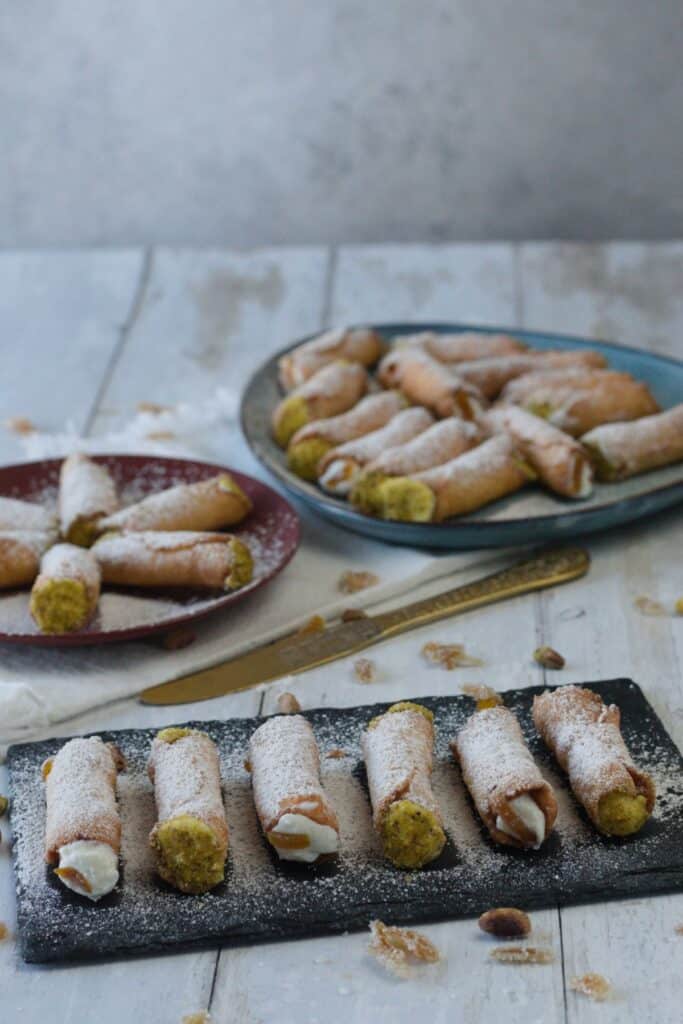
Sicilian Cannoli desserts are round, crunchy fried dough shells shaped as tubes filled with ricotta cream, sugar, and vanilla.
They can be coated with chocolate, nuts, or powdered sugar icing, and the cream can be mixed with chocolate chips, orange peel or candied fruit.
In Sicily, where I found them in any sweet bakery, Pasticceria, selling the best Cannoli is a point of pride.
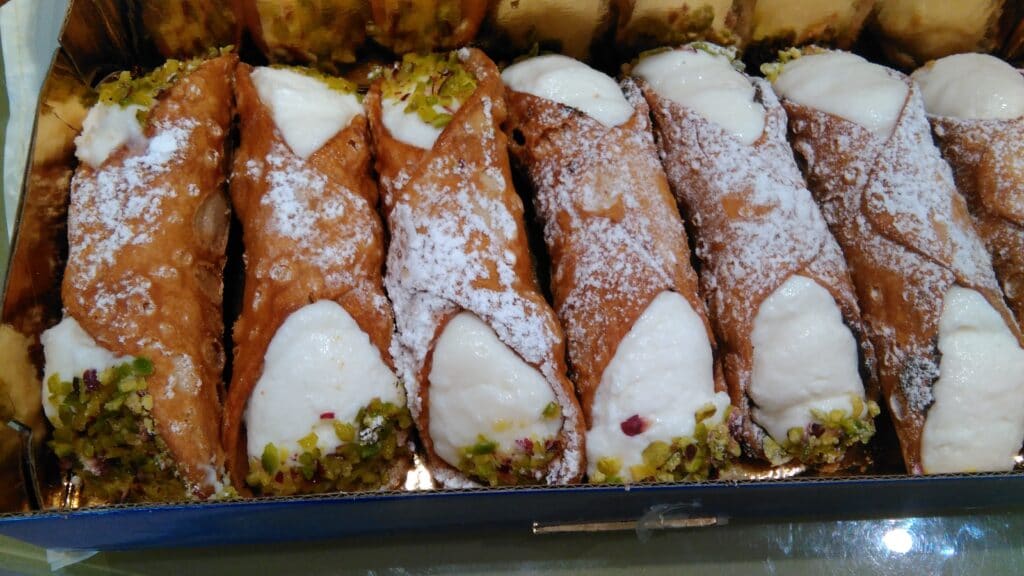
The shells must be crunchy, and the filling creamy and made with good quality sheep's ricotta.
If a bakery serves mushy Cannoli, it is a bad sign.
This is the recipe my mother learned during her Cordon Bleu classes, and it is one of the best versions I have ever tried.
I use this detailed technique to ensure the shells achieve the light, airy crispness expected by experts.
The shell dough uses simple ingredients-flour, lard, sugar, eggs, and white wine-giving them a mild and delicate flavor.
I choose a plain shell without too many aromas, unlike some recipes that add cinnamon, cocoa, or Marsala wine, as I want the excellent ricotta to be the dominant flavor.
This homemade method results in a fresh, natural taste that prevails.
I focus on making the mini cannoli because they are easier to make and serve, as the shells are more resistant and will not break as easily as the large ones
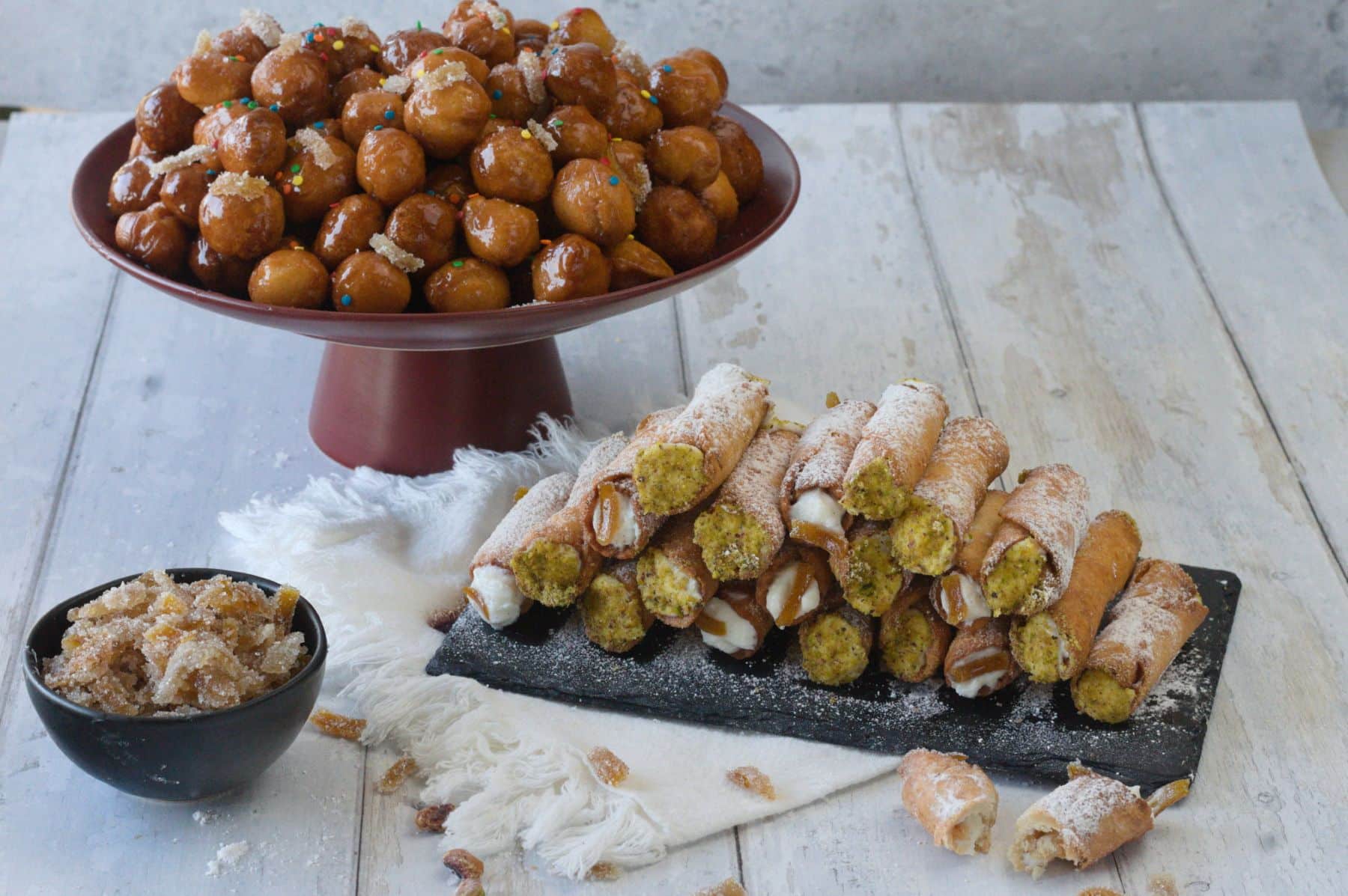
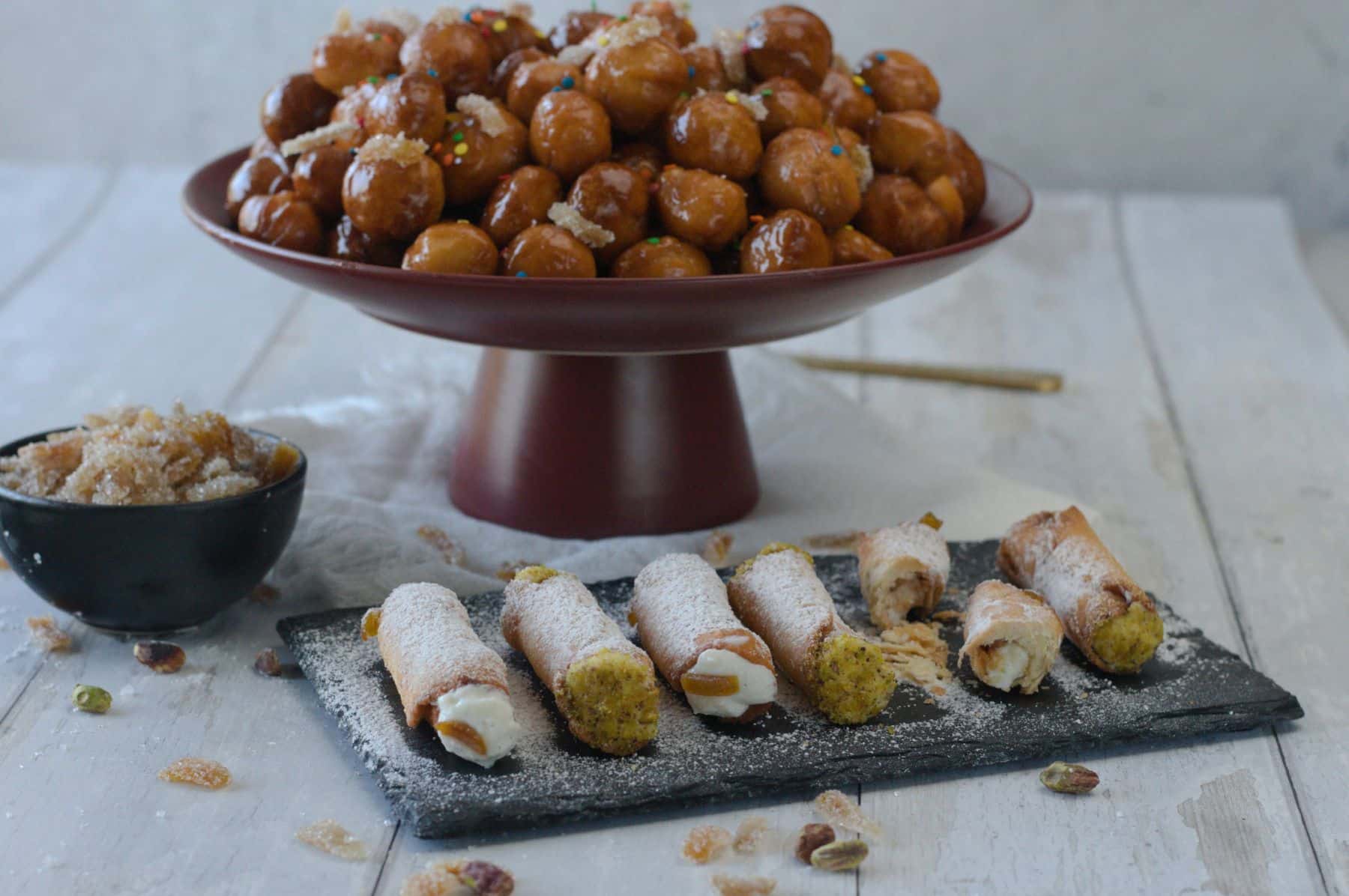
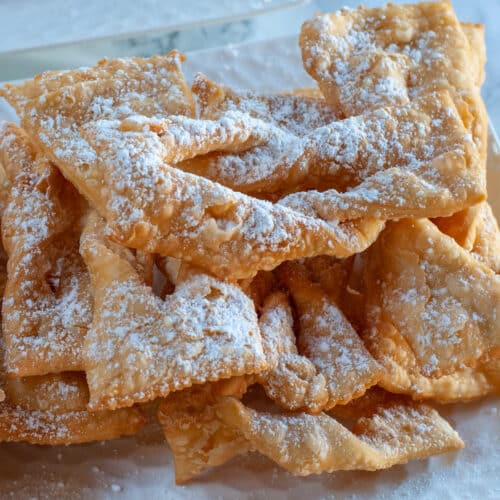
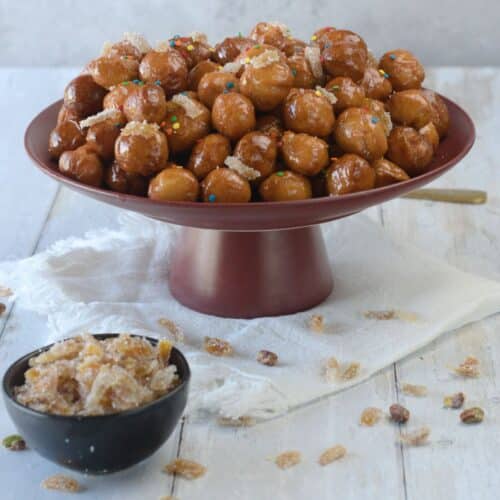
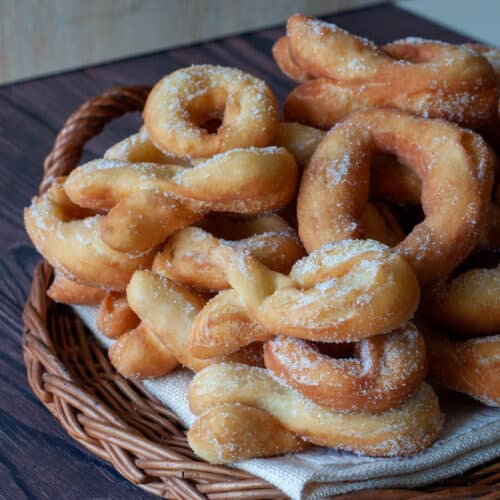
Other fried Italian desserts popular during Carnival are Italian fried bow-tie cookies, struffoli, Italian donuts Graffe.
Ingredients
For the mini pastry shells
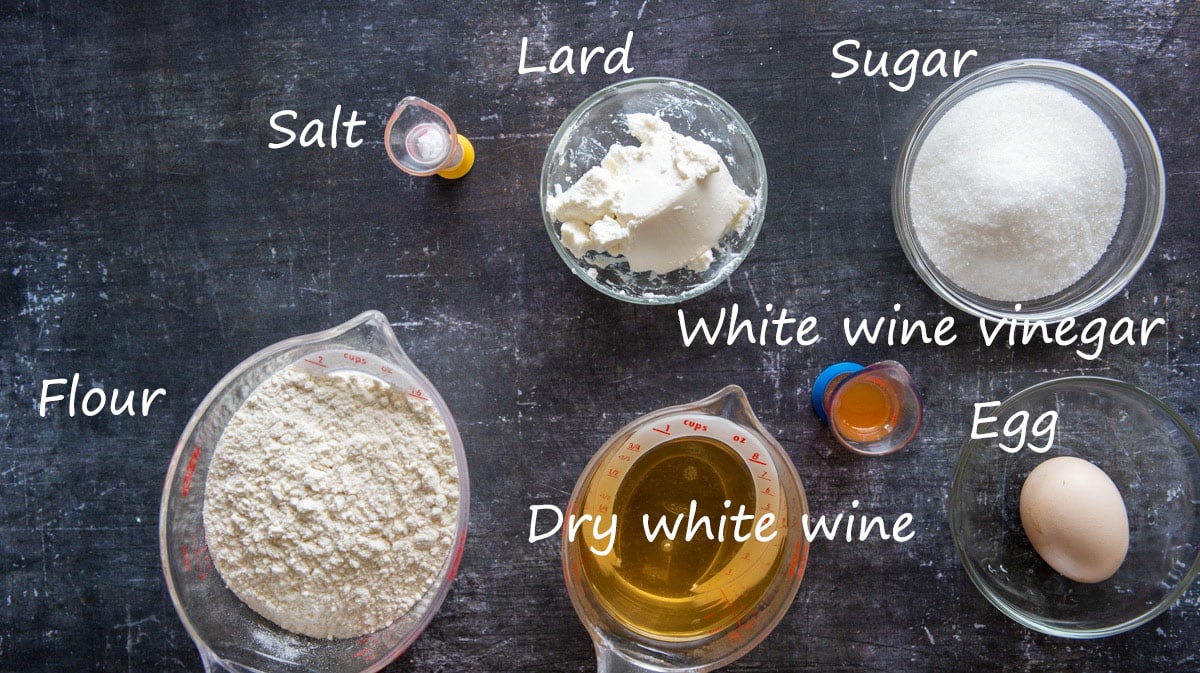
- Flour (regular pastry or all-purpose): The structural base for the shell.
- Lard: Essential for achieving the best texture. I use lard because it contains less water than butter, which is critical for achieving the characteristic bubbly, crispy, and non-soggy shell when frying.
- Castor sugar: Used to sweeten the shell dough.
- Salt: A pinch to balance the flavor.
- White wine vinegar: Helps the dough tenderize and create light, crispy shells.
- Dry white wine: Adds flavor and helps balance the richness of the dough.
The measurements are in the recipe card
Fresh egg: Used only for the egg wash to seal the dough around the molds; it does not go into the main dough mixture.
For the filling
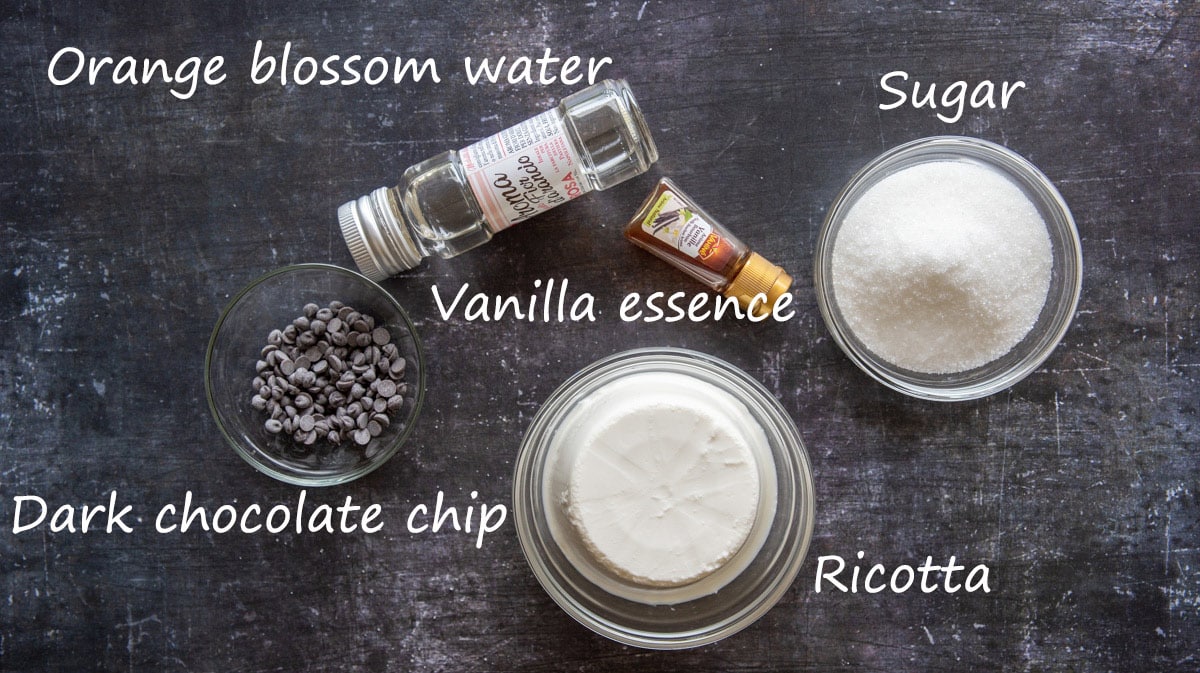
- Fresh ricotta cheese: The classic filling ingredient. I recommend sheep's milk (if you can find it) ricotta for desserts, as it is traditional in Sicily and yields a superior creamy texture.
- Vanilla essence: For fragrance and flavor.
- Sugar: Used to sweeten the creamy ricotta filling.
- Orange blossom water or orange zest: Traditional flavoring for the ricotta cream.
Coating and Decoration
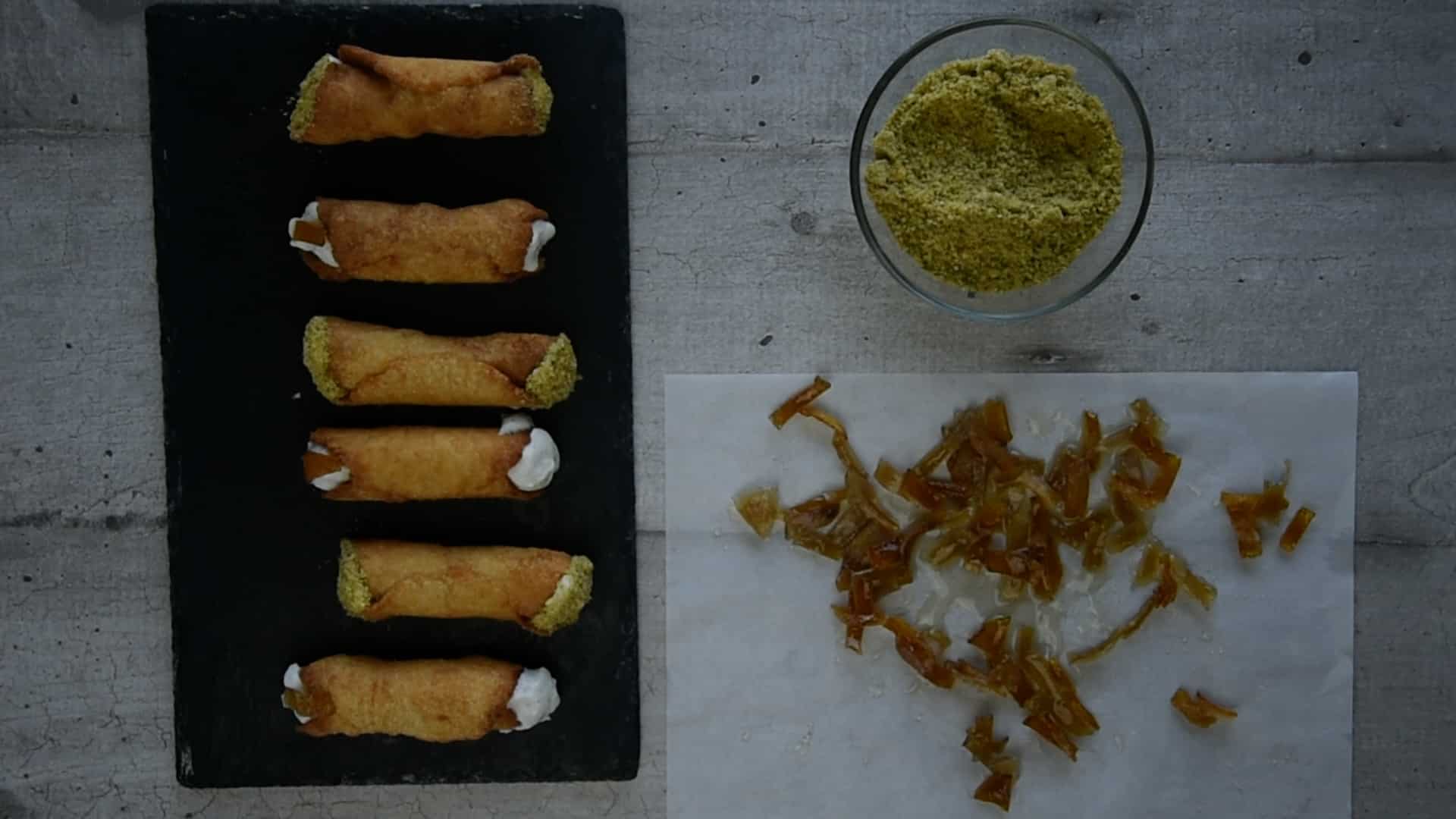
Dark chocolate chips, cocoa, pistachios, Candied fruits, or orange peels: Used for garnishing the ends of the cannoli.
Making the Ricotta Filling
This step is prioritized because the ricotta requires time to drain and the filling benefits from chilling.
- Ensure the ricotta cheese is thoroughly drained of excess water. This is crucial to prevent the filling from becoming runny and causing soggy shells.
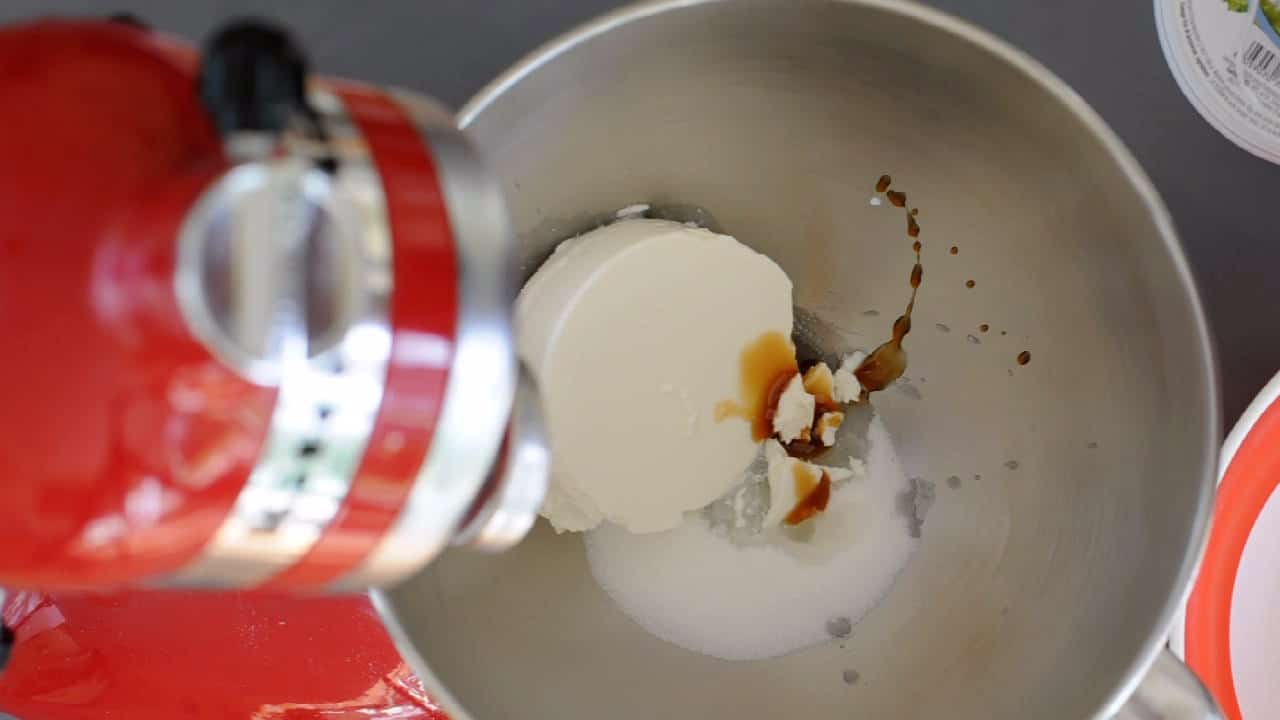
- Mix the drained ricotta, sugar, vanilla essence, and flavoring (orange blossom water or zest) with a blender or electric mixer until smooth.
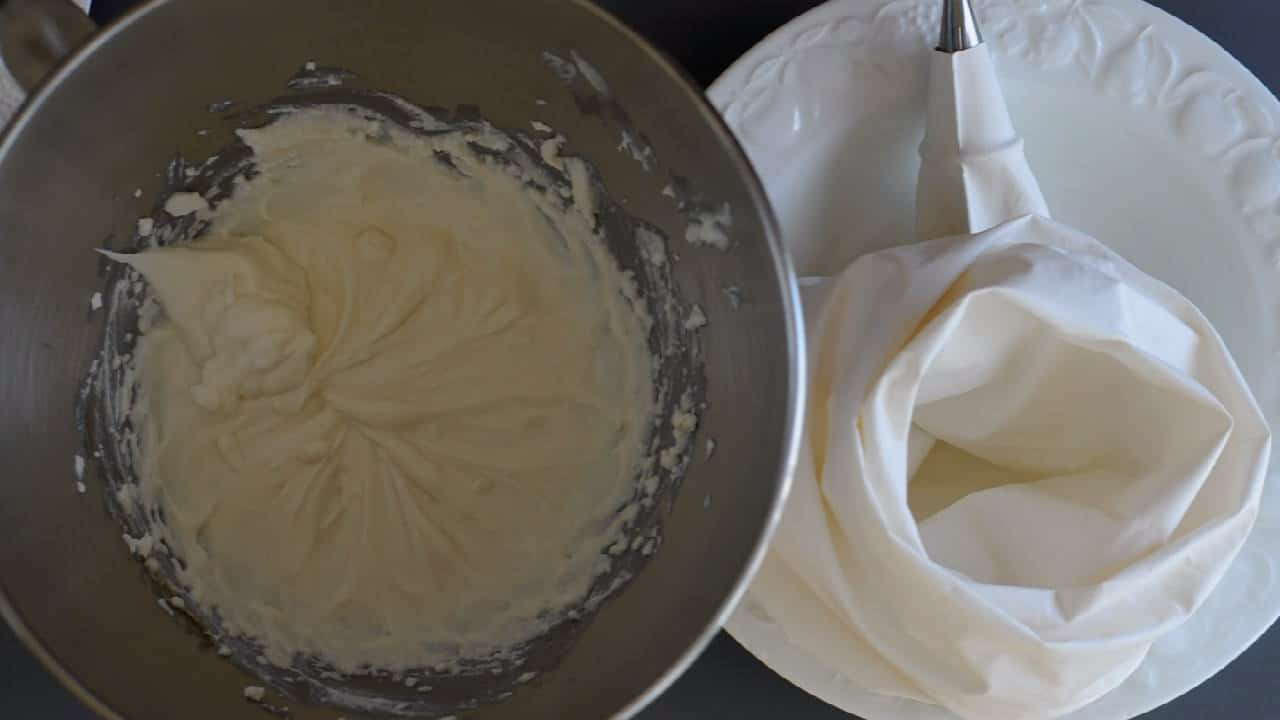
- Place the filling into a large bowl and let it rest in the fridge for a few hours.
Hint: You can prepare the shells and filling the day before, but keep them separate.
Expert Sourcing: Choosing the Best Ricotta
Ricotta is a cheese made by re-cooking (ri-cotta in Italian) the whey serum left over after the milk has been curdled.
- Sheep's Milk Ricotta: This is the authentic choice used for desserts in Southern Italy. I recommend it because it is traditional in Sicily and yields a superior creamy texture.
- Cow's Milk Ricotta: This is the most common variety found in supermarkets. It is lighter and has a milder flavor, making it perfectly acceptable for desserts.
- Goat's Ricotta: This variety is much stronger in flavor and has a higher fat content, making it a poor choice for desserts.

Frying & Shell Technique
Why are mini cannoli better than large ones
I focus on making mini cannoli because they are easier to make and serve, as the shells are more resistant and will not break as easily as the large ones.
- Regular: 4.3 in - 11 cm long
- Mini: 2.5 in - 6.5 cm long
The mini size is a more suitable portion for an after-dinner dessert and is much easier to handle and eat mess-free.
Making the Shell Dough
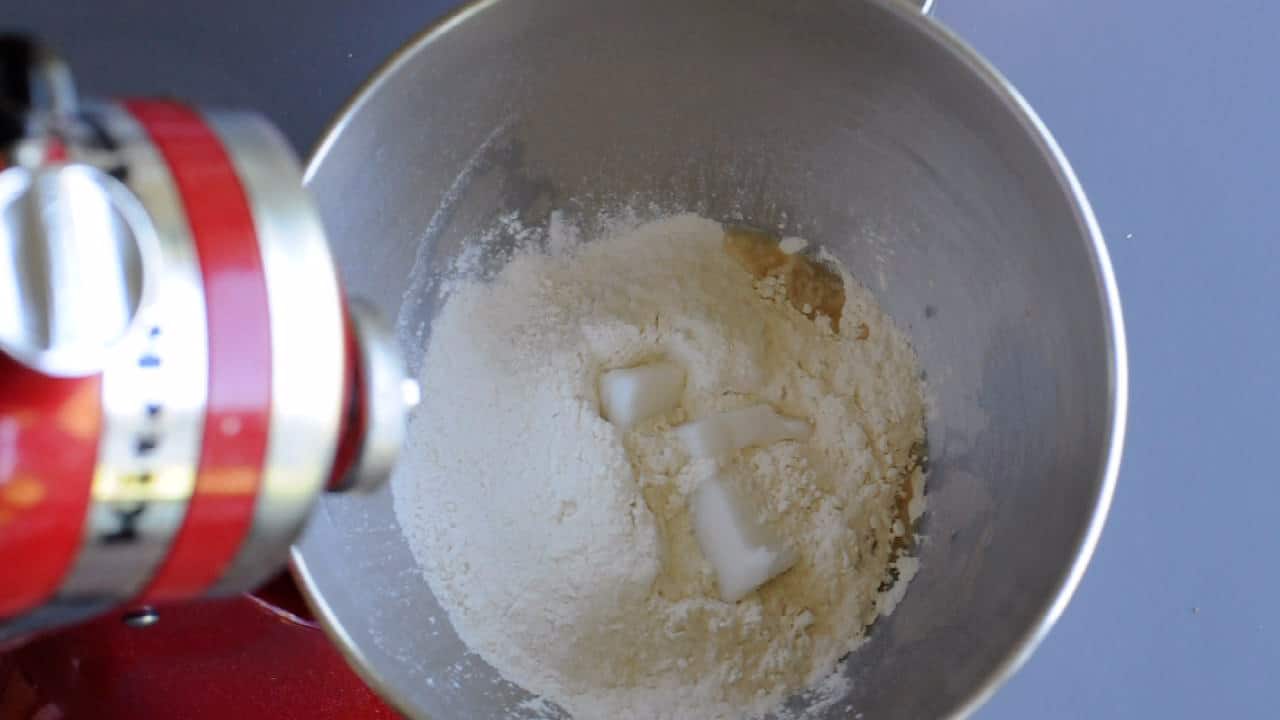
- Combine the flour, lard, sugar, salt, white wine vinegar, and dry white wine in a food processor or blender until you have a smooth and elastic dough.
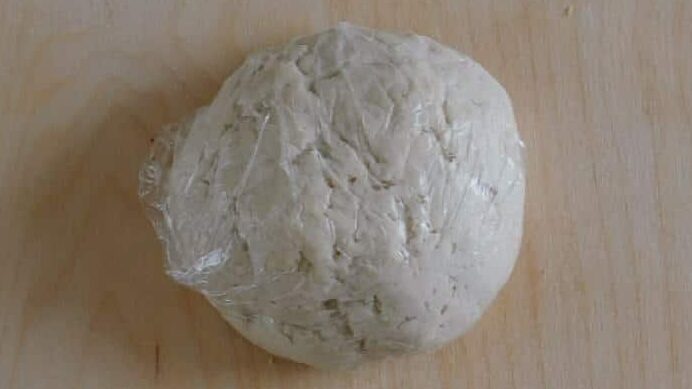
- Wrap the dough in plastic wrap and let it rest for 10 minutes.
Shaping the Shells
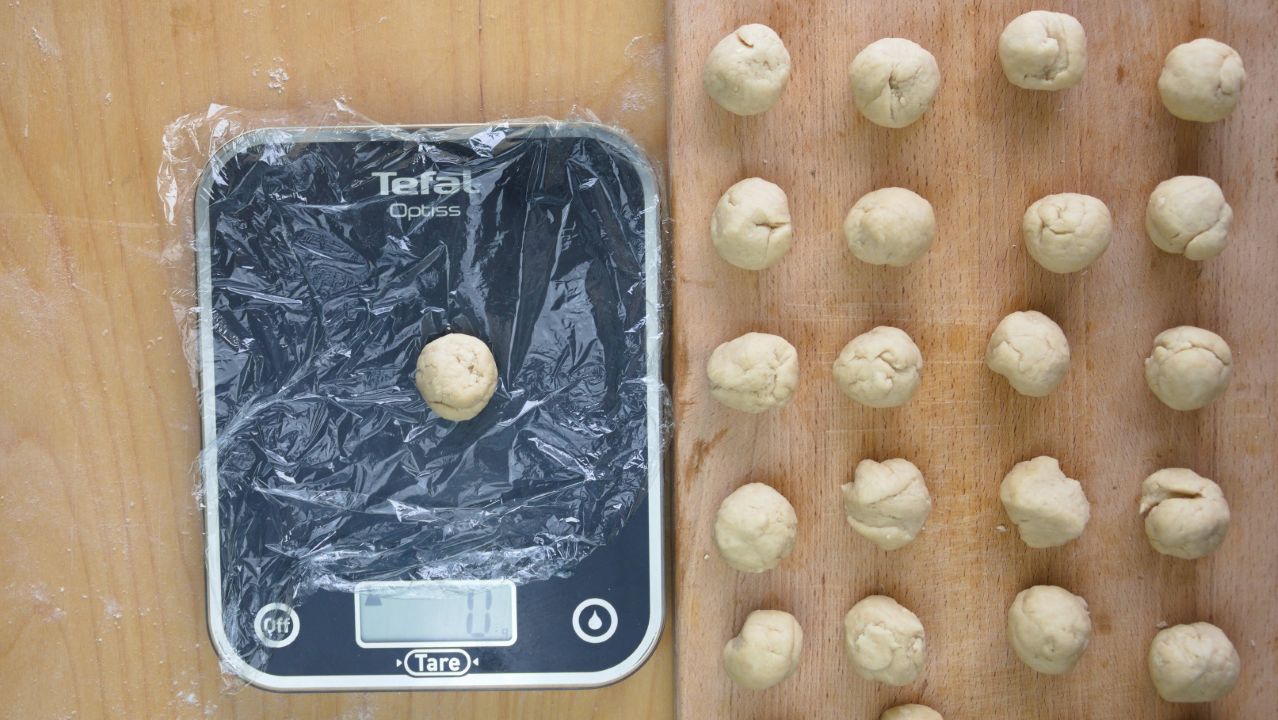
- I divide the dough into 20 equal balls (weighing each one approx. 16 grams, 0.5 oz).
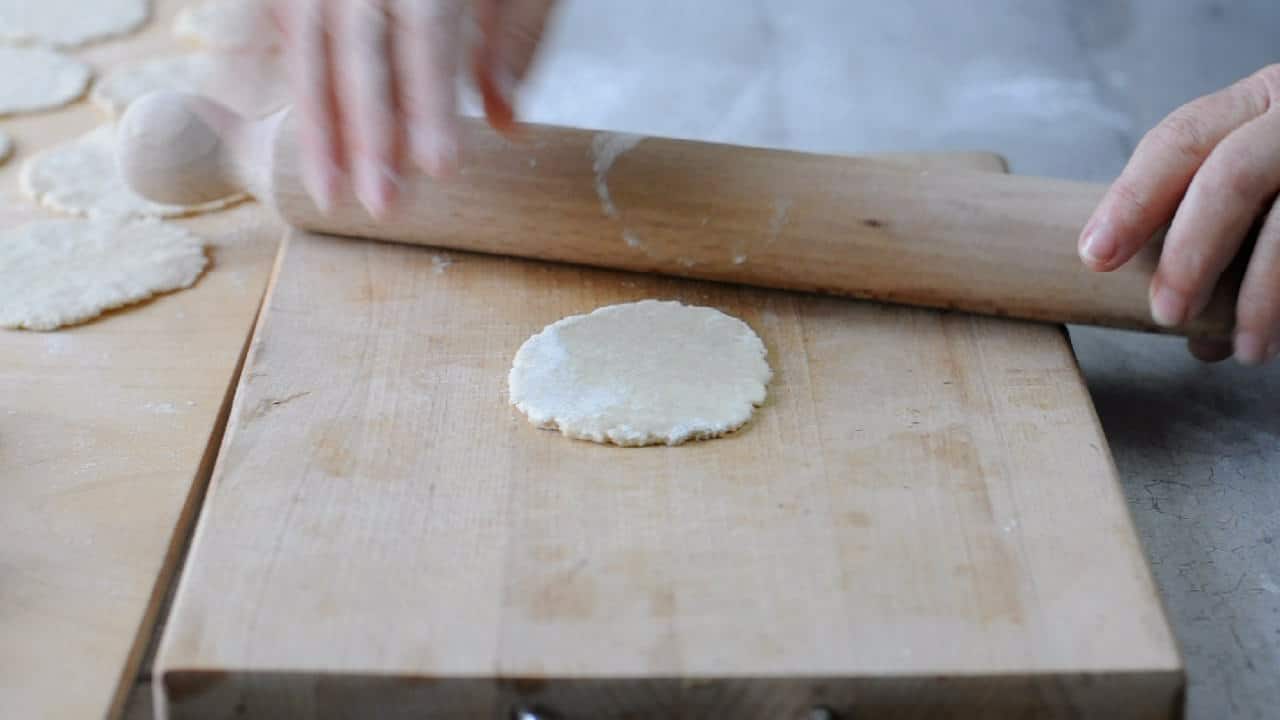
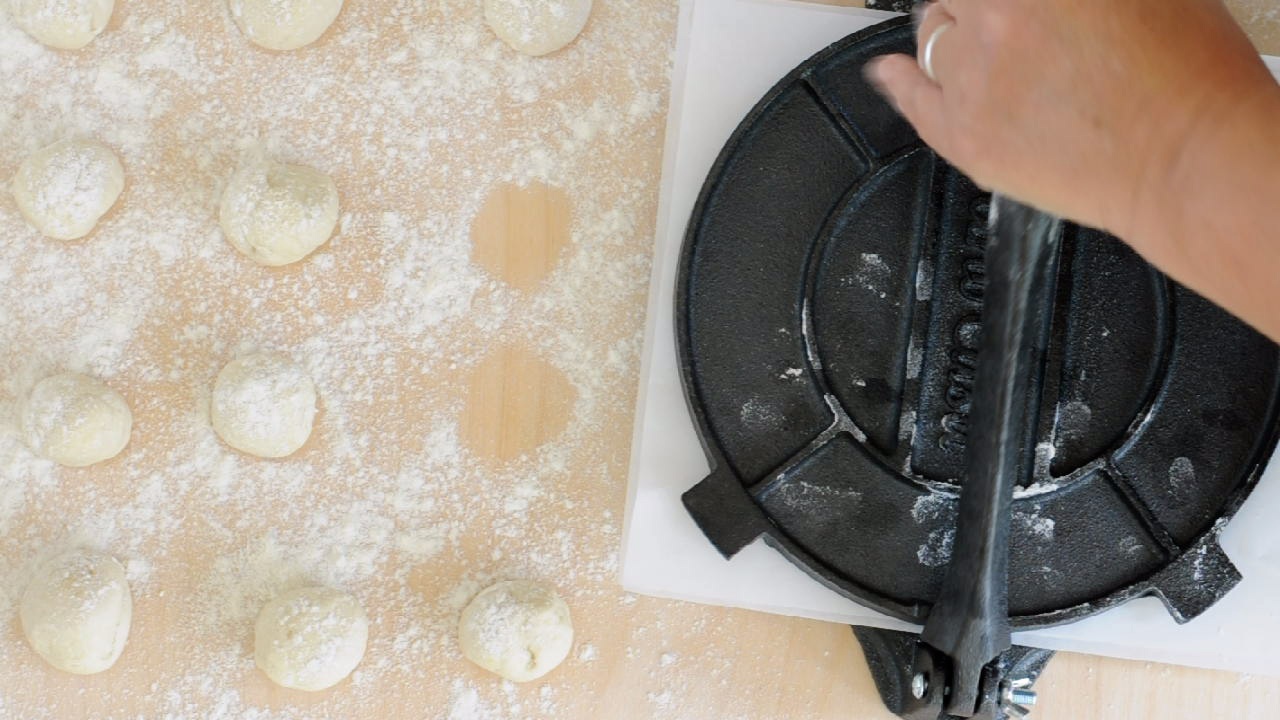
- Use a rolling pin, pasta machine, or dough press to roll the dough out until very thin.
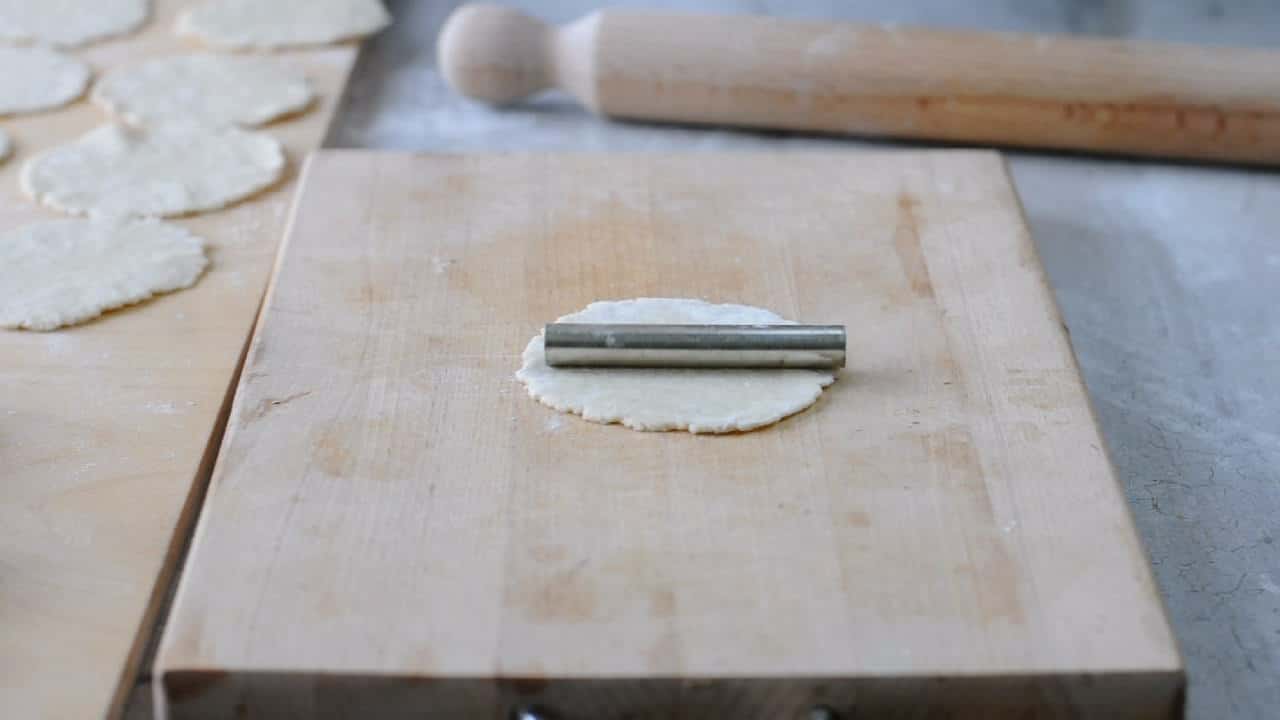
- Roll the dough ball out until it reaches the diameter of the cannoli mold.
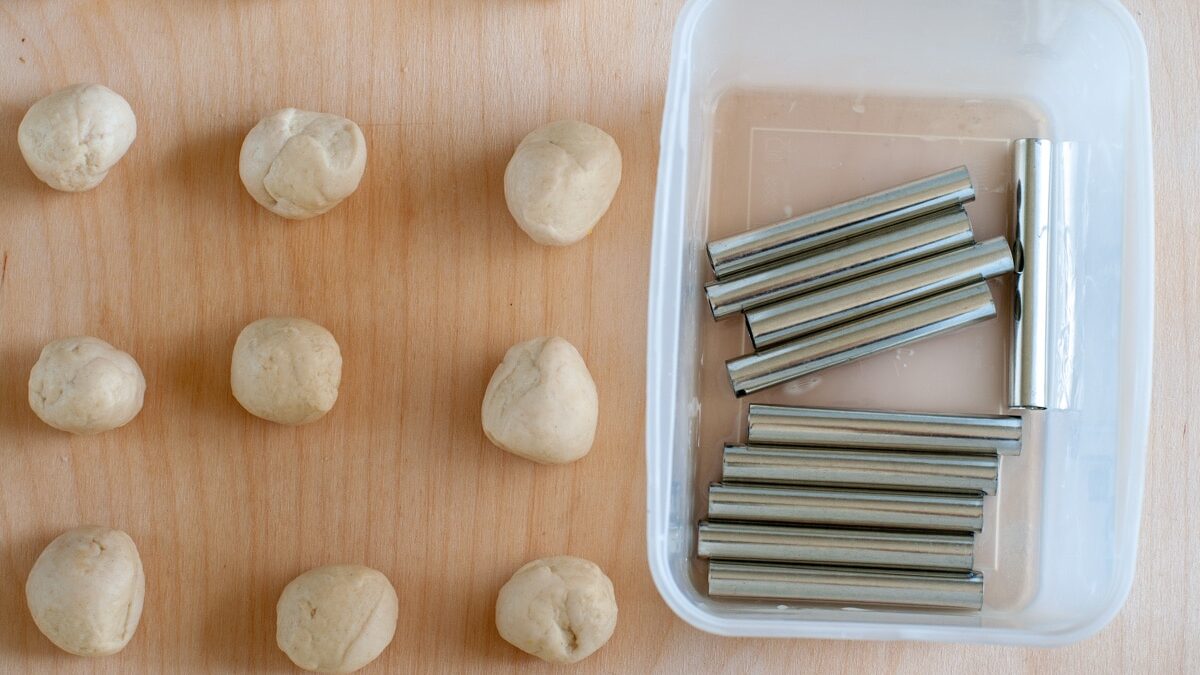
- Coat the cannoli molds with vegetable oil.
This two-step process (weight then diameter) is the most effective method because it guarantees uniform thickness across all shells, ensuring consistent crispness. If the dough is too thick, it will not cook properly, resulting in a poor texture.
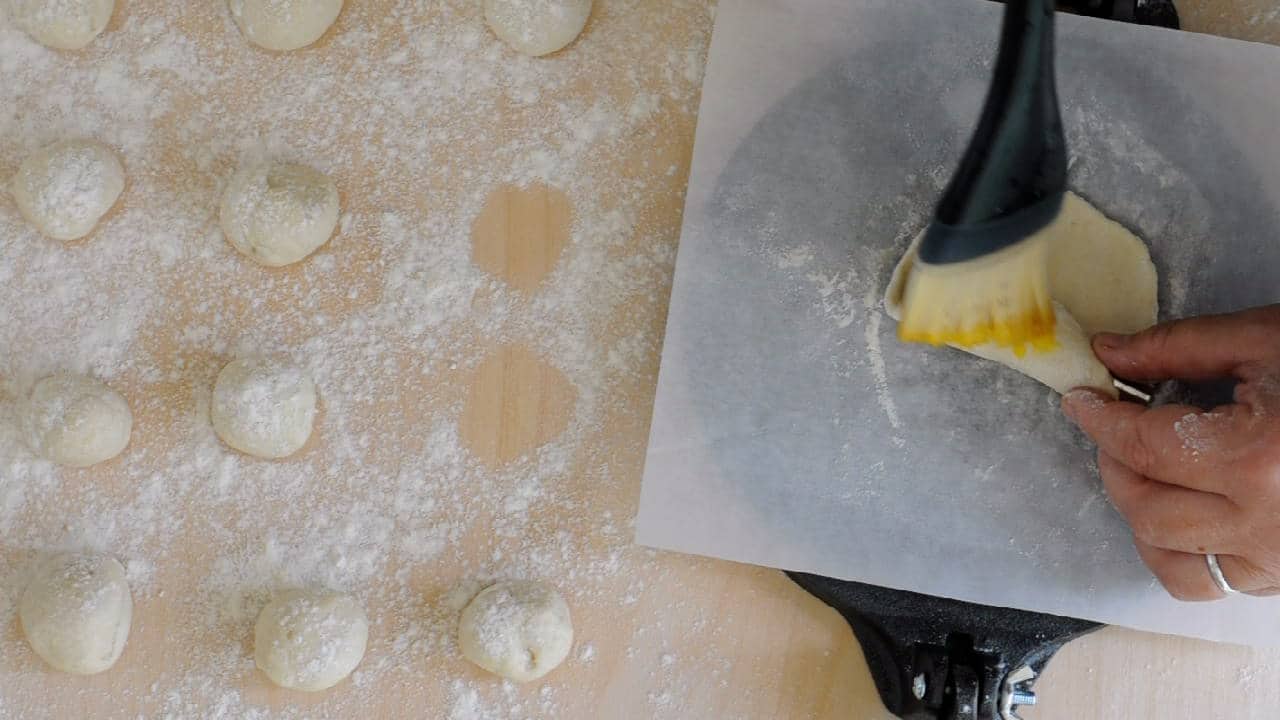
- Place a mold in the center of a dough round, fold one side, and brush the edge with whipped egg yolk (egg wash).
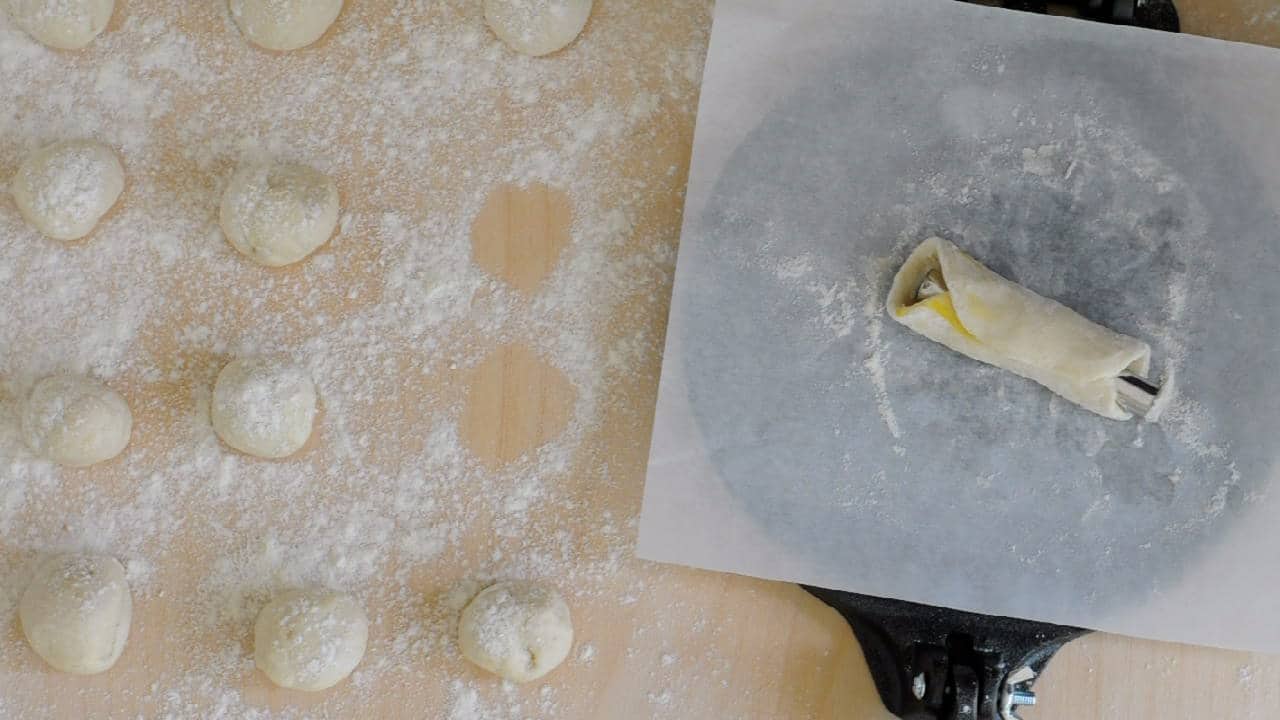
- Fold the other side over and press to seal the two ends tightly.
Frying the shells
Prepare the deep fryer or pot filled with cooking oil.
Frying Temperature: The oil should be heated to 180°C (350-375°F). This temperature is critical for ensuring the shells bubble up without absorbing too much oil.
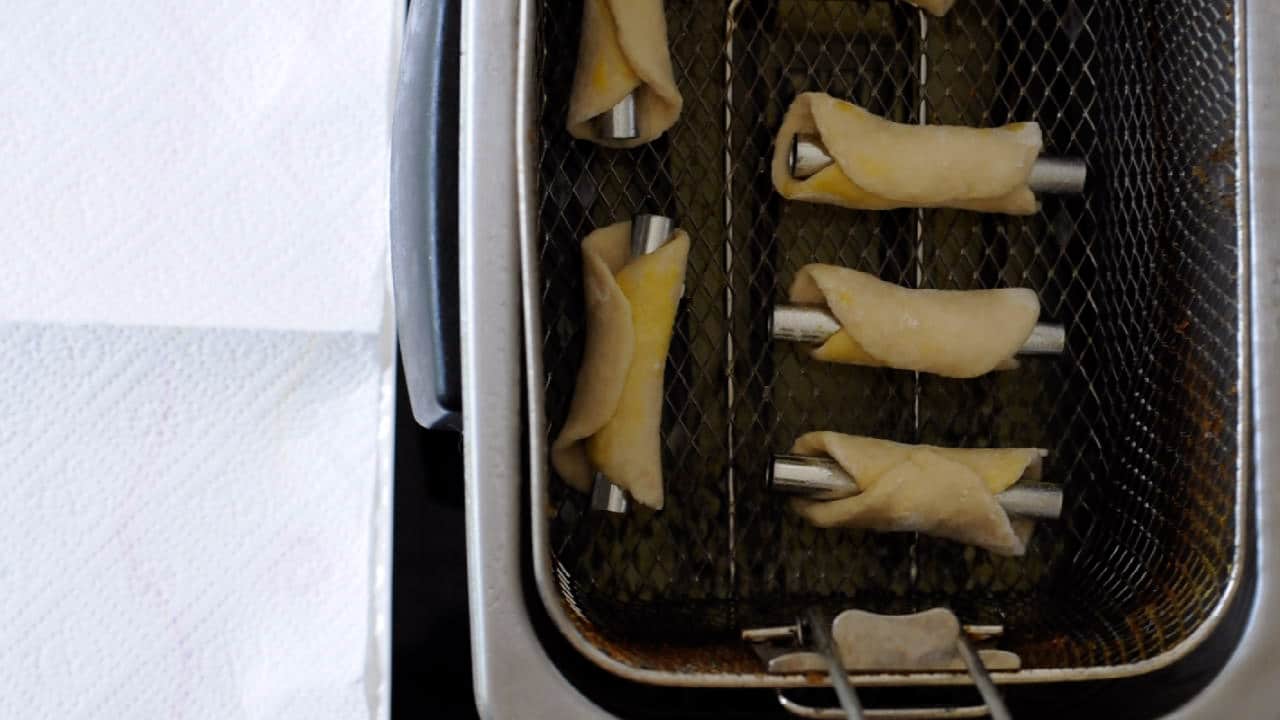
- Carefully place the shells into the hot oil and fry until they turn golden brown.
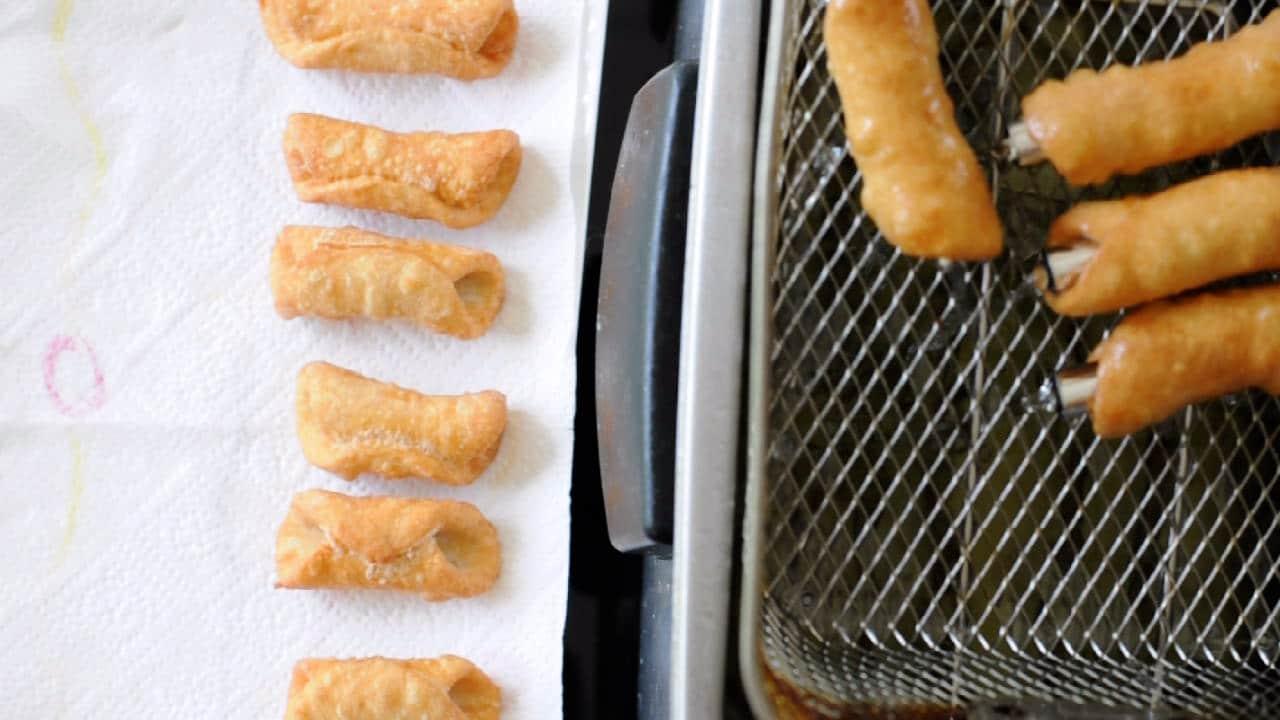
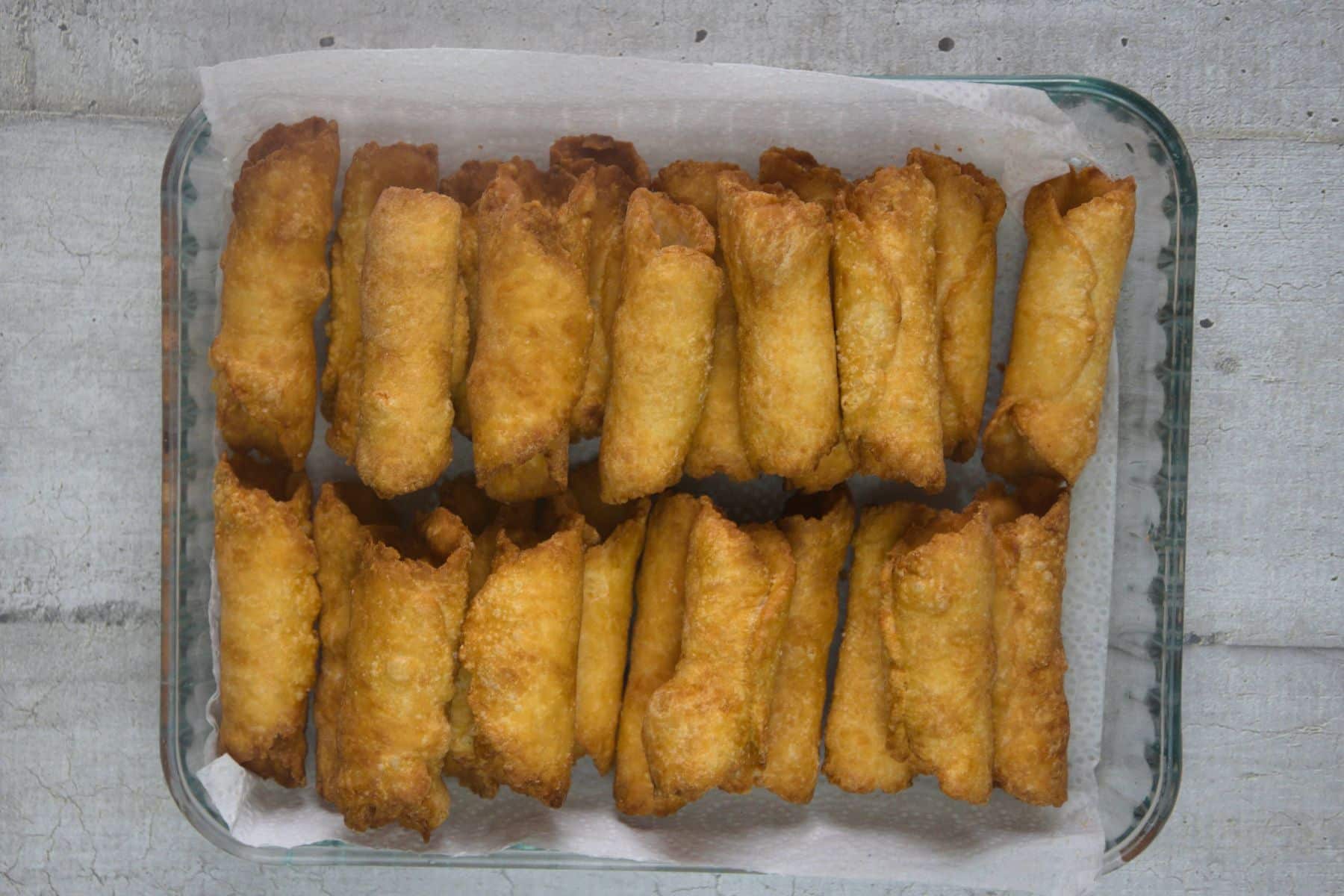
- Remove from the oil and drain excess oil on paper towels.
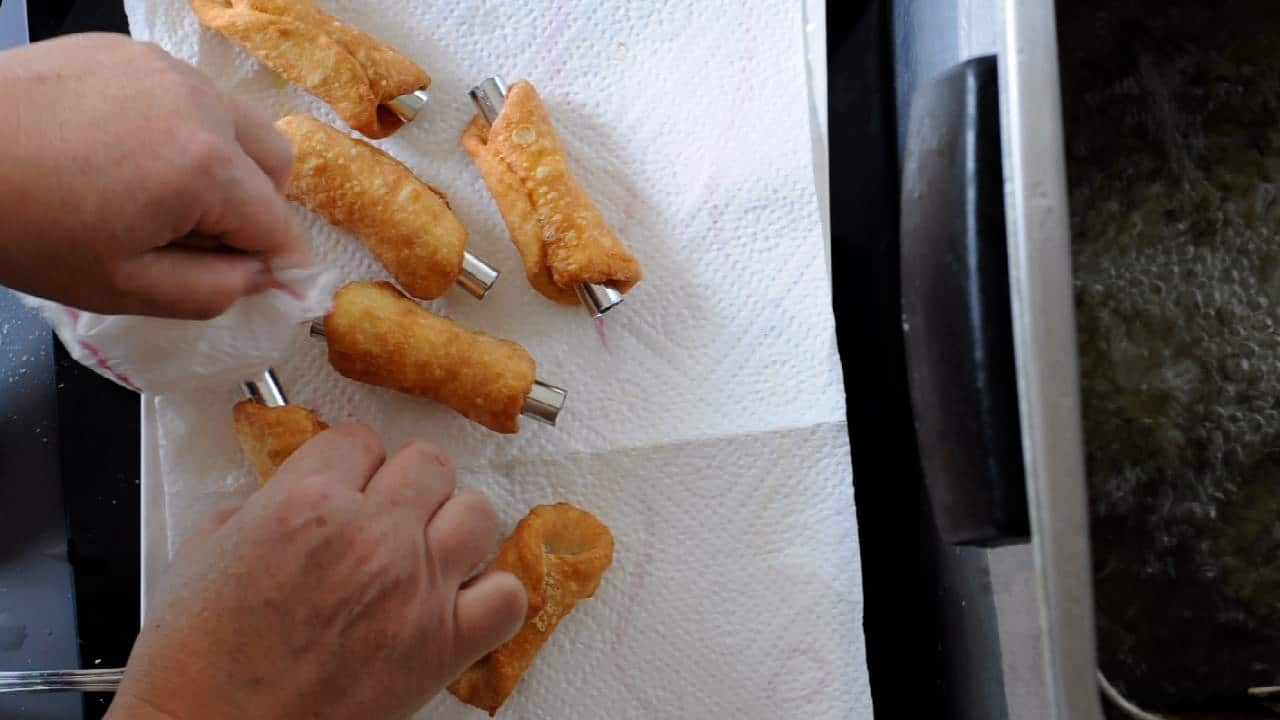
- While holding the tube with kitchen paper, gently slide the shell off the mold. Let the molds cool before using the next batch.
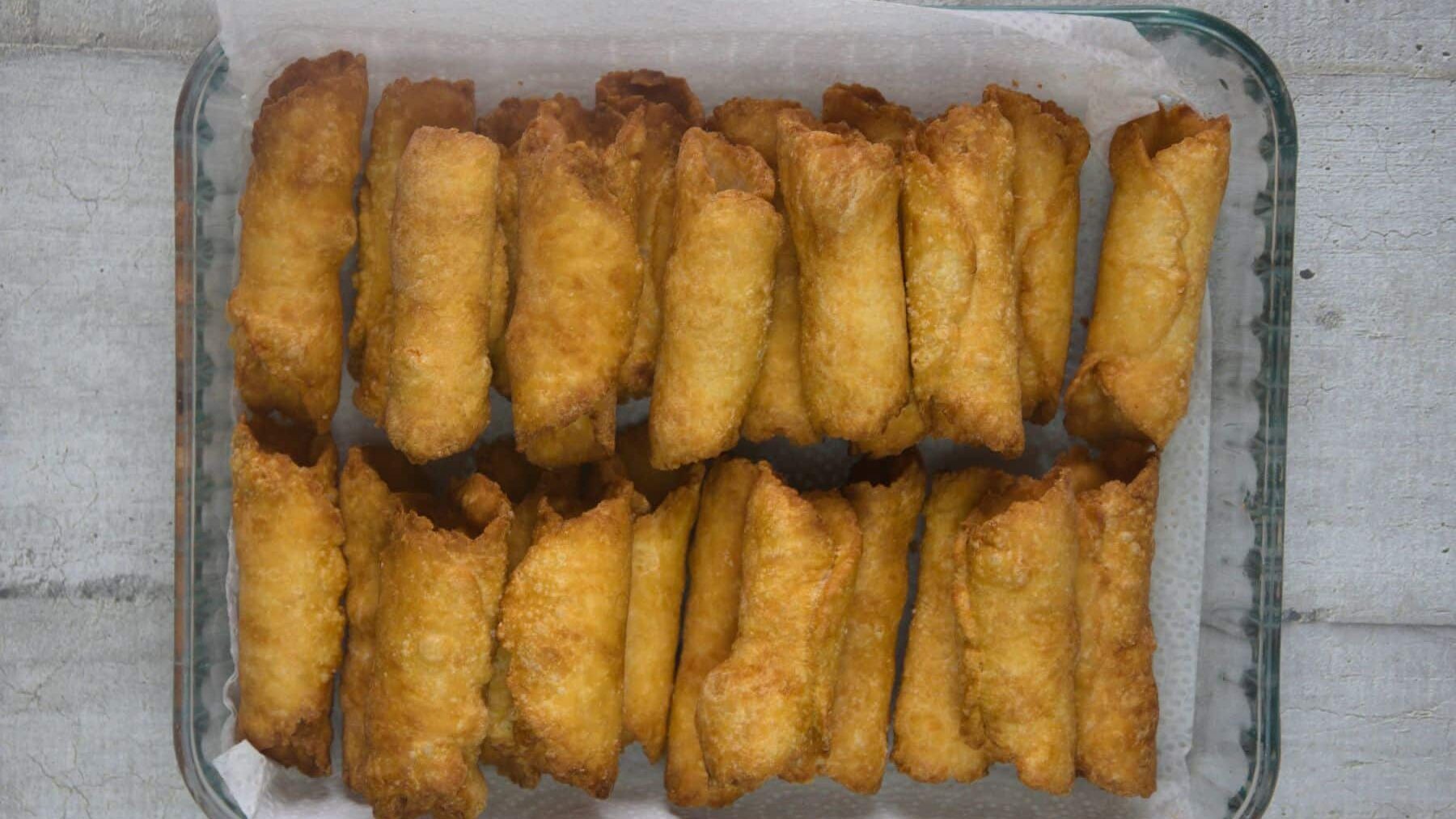
- Once the shells are at room temperature, you can store them in an airtight container for a few days until ready to fill.
Assembling the Cannoli
Crucial Step: Cannoli must be filled just before serving to prevent the shells from becoming soggy.
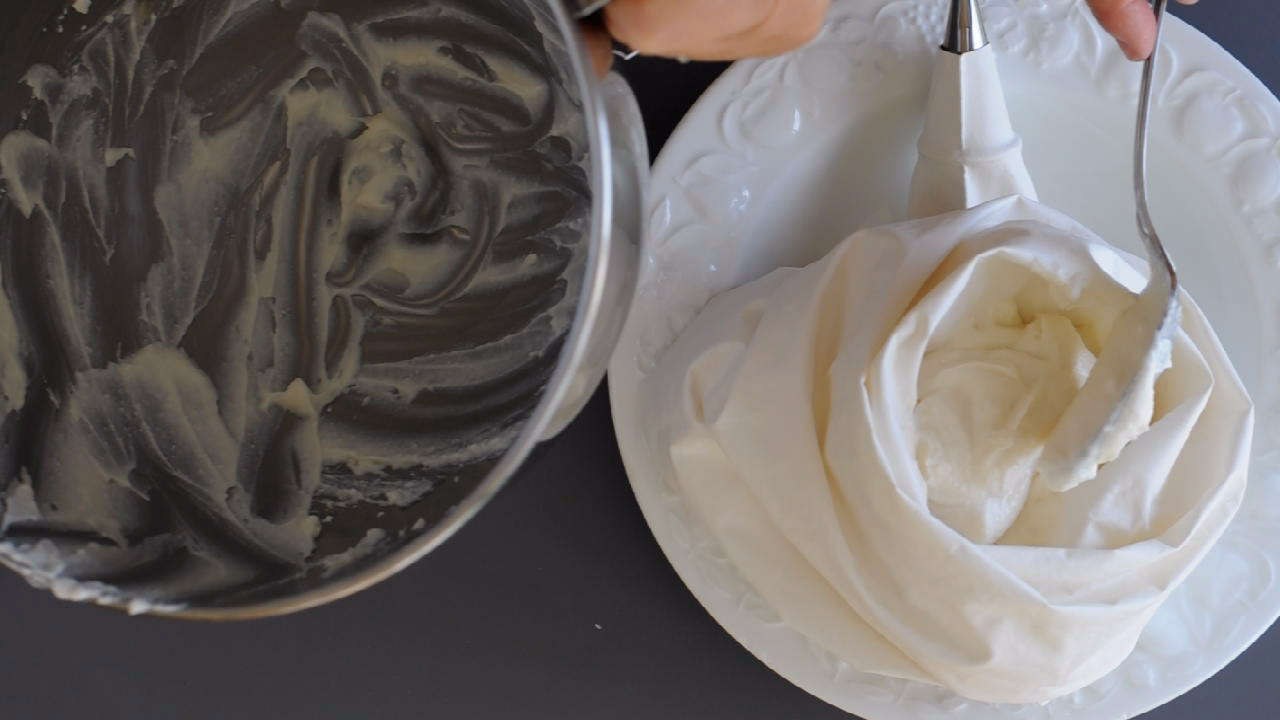
- Place the ricotta filling into a piping pastry bag, ensuring all air pockets are pushed out.
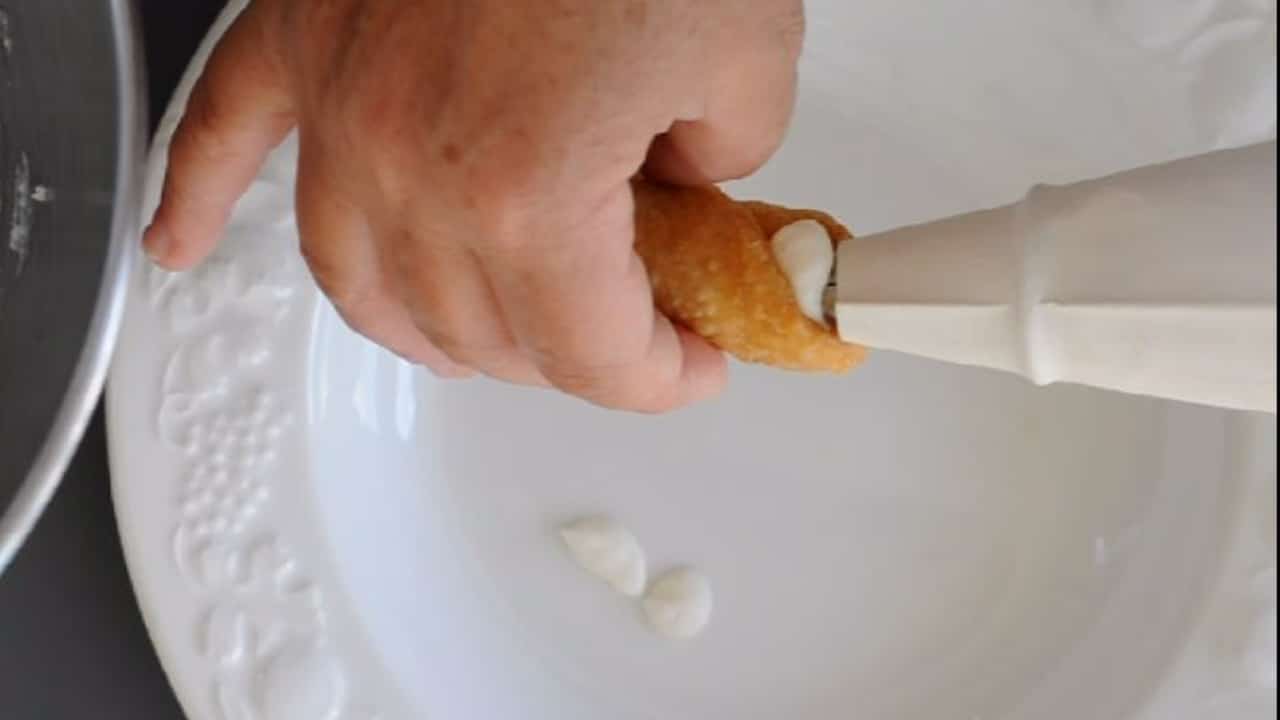
- Pipe the cream into the shell from each side until the center is filled.
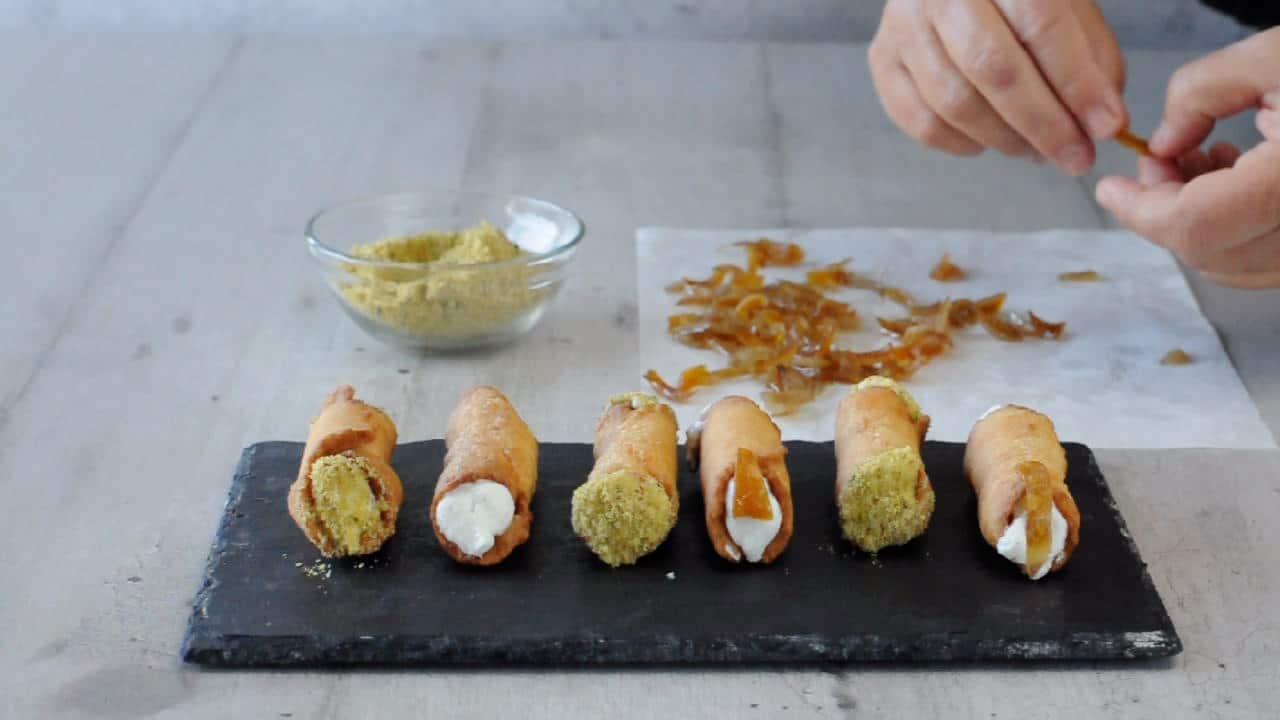
- Decorate the sides with toppings like chocolate chips or grated toasted pistachios.

- Dust with icing sugar.
Troubleshooting & Tools
How to Prevent Soggy Shells
The cannoli must be filled at the last minute, just before serving them.
Mushy Cannoli means they have been sitting out too long.
Some bakeries cover the inside of the cannoli shells with chocolate to create a protective layer, but I choose the authentic plain Cannoli without chocolate coating.
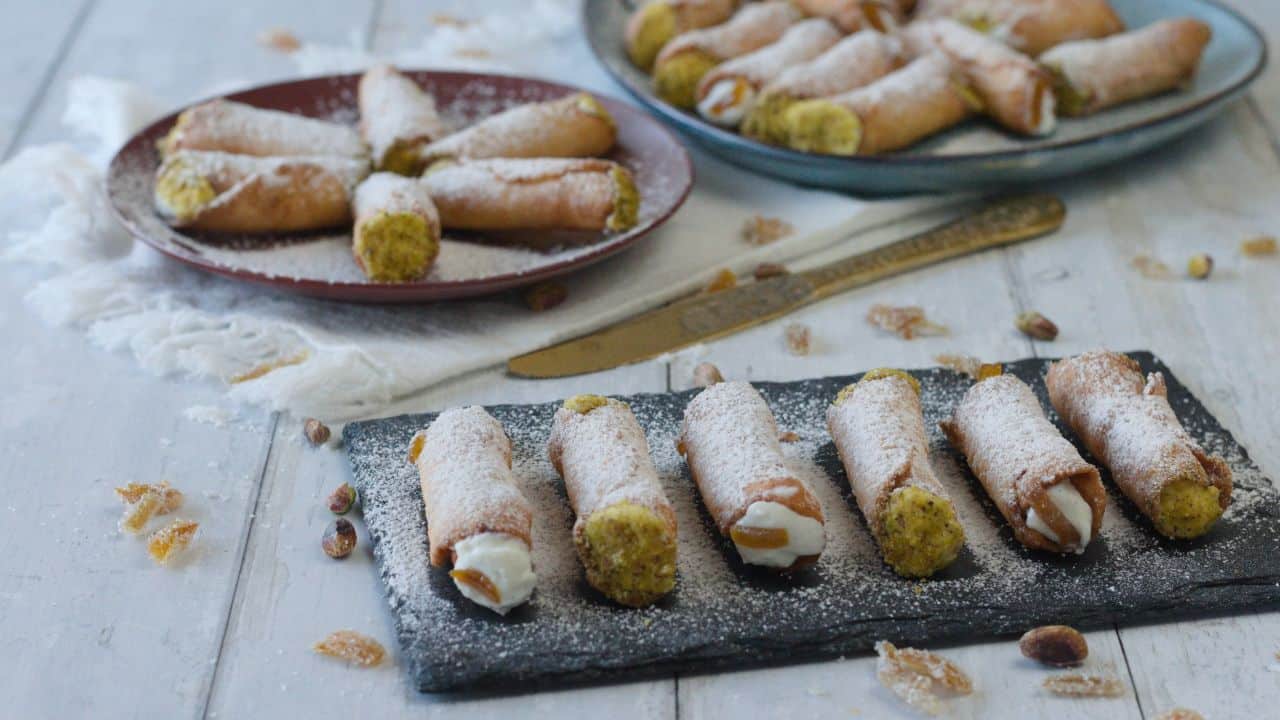
Tools You Need to Make Cannoli
To make them, you need specific tools:
- You can either make the dough by hand or use an electric mixer. You can use the mixer also to make the ricotta cream.
- To shape the rounds for the shells, I use a dough press, but a rolling pin or pasta maker roll will also work.
- Cannoli tube molds 2.5 in - 6.5 cm or 4.3 in - 11 cm.
- Pastry brush to seal the shells with egg wash.
- Deep fryer or a regular pan for frying the shells.
- Piping bag to fill in the shells with the ricotta cream.
Serving Suggestions
Serve mini cannoli after a traditional Italian family meal, such as a hearty pasta or a fish dish, or offer them as a simple dessert at parties.
I can customize the look by dipping the ends in melted dark chocolate or use Bronte pistachios to honor the Sicilian tradition.
These two-bite desserts pair perfectly with a strong espresso or a limoncello.
FAQ
Cannoli is a traditional Sicilian dessert. As many Sicilians moved north looking for jobs, Sicilian pastries became very popular everywhere in Italy. Many Sicilian pastry shops opened around the country selling Sicilian pastries like Cannoli, Cassate, Marzipan and many more. Cannoli may be called Italian, but they are originally from Sicily.
Traditionally, the cannoli filling is made with cow's milk ricotta as it has a milder flavor than sheep or goat's milk ricotta. It is mixed with sugar and flavored with orange blossom water, vanilla extract, or lemon zest. the filling is usually mixed with candied fruits and chocolate chips
More fried dessert recipes
If you are making this authentic Cannoli recipe with ricotta filling, leave your comment below I would like to hear from you. You can find more delicious ideas if you FOLLOW ME on Facebook, YouTube, Pinterest and Instagram or sign up to my newsletter.

📋 Mini Cannoli Shells With Ricotta Filling
Verified Culinary AuthorityVideo
Equipment
Ingredients
For the shell
- 2 cups flour
- 2 tablespoon lard
- ½ tbsp sugar
- 1 pinch salt
- 1 tablespoon white wine vinegar
- ½ cup dry white wine
For sealing and frying
- 1 fresh eggs for sealing the shells
- vegetable oil for frying
For the ricotta filling
- 17 oz ricotta
- 1 drop vanilla essence
- ½ cup sugar
- 2 drops orange blossom water or orange zest
- 3.5 oz dark chocolate chip
- 2 oz candied fruits optional
Instructions
Making the ricotta filling
- Before you make the ricotta cream, make sure the ricotta is well drained from the water17 oz ricotta
- Mix the drained ricotta, sugar, vanilla essence, and flavoring (orange blossomwater or zest) with a blender or electric mixer until smooth1 drop vanilla essence, ½ cup sugar, 2 drops orange blossom water
- Place the filling into a large bowl and let it rest in the fridge for a few hours
Making the Shell Dough
- Combine the flour, lard, sugar, salt, white wine vinegar, and dry white wine in a food processor or blender until you have a smooth and elastic dough
- Wrap the dough in plastic wrap and let it rest for 10 minutes
Shaping the Shells
- I divide the dough into 20 equal balls (weighing each one approx. 16 grams, 0.5 oz).
- Use a rolling pin, pasta machine, or dough press to roll the dough out until very thin.
- Roll the dough ball out until it reaches the diameter of the cannoli mold.
- Coat the cannoli molds with vegetable oil.
- Place a mold in the center of a dough round, fold one side, and brush the edge with whipped egg yolk (egg wash).
- Fold the other side over and press to seal the two ends tightly.
Frying the shells
- Prepare the deep fryer or pot filled with cooking oil.
- Frying Temperature: The oil should be heated to 180°C (350-375°F). This temperature is critical for ensuring the shells bubble up without absorbing too much oil.
- Carefully place the shells into the hot oil and fry until they turn golden brown.
- Remove from the oil and drain excess oil on paper towels.
- While holding the tube with kitchen paper, gently slide the shell off the mold. Let the molds cool before using the next batch.
- Once the shells are at room temperature, you can store them in an airtight container for a few days until ready to fill.
Assembling the Cannoli
- Crucial Step: Cannoli must be filled just before serving to prevent the shells from becoming soggy.
- Place the ricotta filling into a piping pastry bag, ensuring all air pockets are pushed out.
- Pipe the cream into the shell from each side until the center is filled.
- Decorate the sides with toppings like chocolate chips or grated toasted pistachios.
- Dust with icing sugar.
Notes
- The Cannoli should be filled at the last minute, just before serving them so the shell does not have time to absorb the humidity from the filling.
- Some bakeries cover the inside of the cannoli shells with chocolate to create a protective layer that will prevent the shells from getting soaking wet.
- The classic Sicilian desserts are made with sheep's milk ricotta, which is not as easy to find outside Italy. You can use cow's milk ricotta
- Once the shells are ready they will keep for few days stored in an air-thigh container until you are ready to fill them with the ricotta cream.
- Before you make the ricotta cream, make sure you ricotta is well drained from the water
- Since the cannoli needs to be filled just before serving, you can make both the cream and the shells the day before


Claudia Lamascolo
The step by step is fantastic bravo to you! I make them all the time but I have to say yours look so much better so I am trying your recipe!
Laura
Thank you, let me know how they compare
Kelli
My husband is Italian and grew up in Connecticut with some of the best Italian bakeries. He's always complained since moving to Colorado that he can't find a good cannoli anywhere. Well thanks to this recipe he can now have the real thing at home! Used orange zest and they turned out perfect!
Laura
Fantastic, I am glad he can now enjoy them
Kara
I grew up just North of Boston. This post reminds me of cannoli I would see piled high in the Italian Bakeries in the North End. After reading this post, I have a new appreciation for the work that goes into them! These look absolutely delicious!
Laura
Thank you, yes they are a lot of work but the final result pay off
Beth Sachs
My kids love cannoli ever since we took them to Rome for the weekend. I'm definitely going to give this recipe a try at home with them.
Laura
Great, I am sure they will love them
Kacie Morgan
I love Italian cannoli but I have never made them myself at home before. They look so impressive and no doubt they'd go down well with the whole family!
Laura
Thank you, I am sure they will
Danielle Wolter
These were so delicious! I used the orange zest as I cound't find orange blossom water and they came out perfect!
Laura
Thank you, orange zest goes very well