
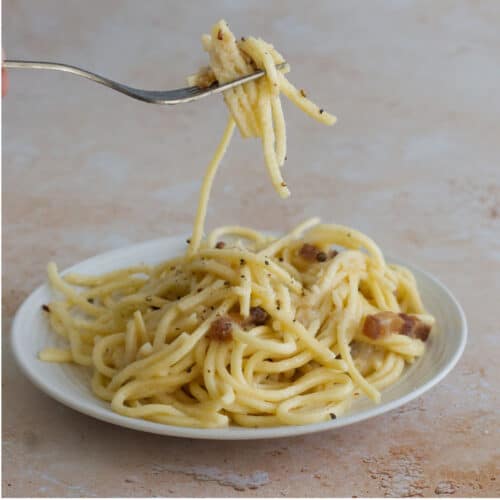
Growing up in Rome, pasta alla carbonara was an easy meal we could make ourselves during our teenage years. We made it with simple staples always found in the fridge-eggs, cheese, and cured pork-creating a rich, velvety sauce without ever needing to add cream.
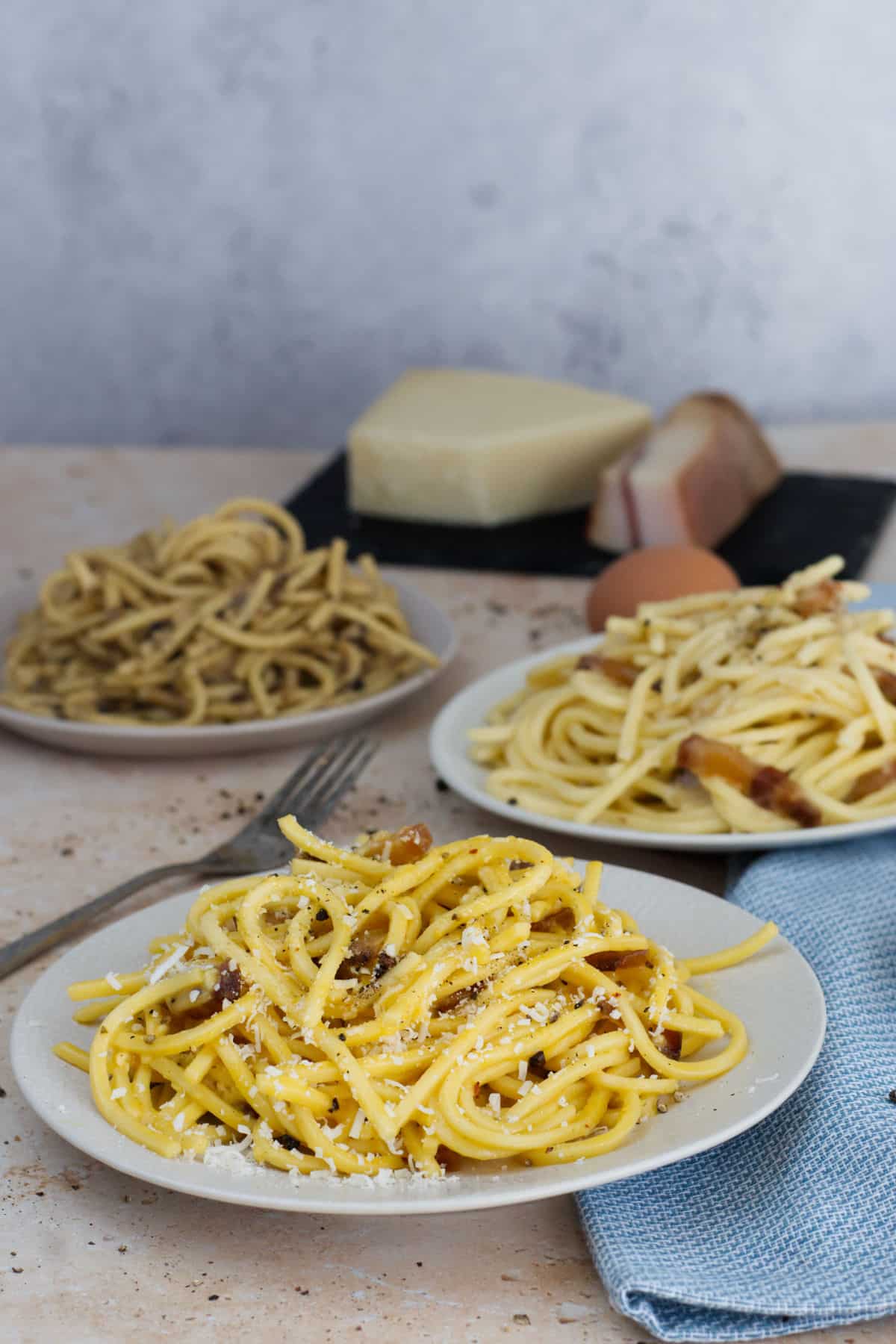
Growing up in Rome, pasta alla carbonara was an easy meal we could make ourselves during our teenage years.
My friends and I would often gather at my family home to study, and when we needed a break, we wanted something quick and filling.
Carbonara was the perfect solution because it required no pre-planning-the ingredients were staples we always had in the fridge.
In the 1970s, I do not remember having those strict rules like guanciale versus bacon or pecorino versus parmigiano.
While I do appreciate the better taste from the fat of the guanciale and the sharper taste of the pecorino, the reality is that we made it with whatever we had in the fridge.
We never used cream because it wasn't a standard ingredient in our Roman homes.
Also, there was no need, as it was easy to achieve its velvety texture through an easy technique, not cream.
This recipe represents the authentic way we cooked as students: fast, simple, and deeply rooted in the way Italians really eat.
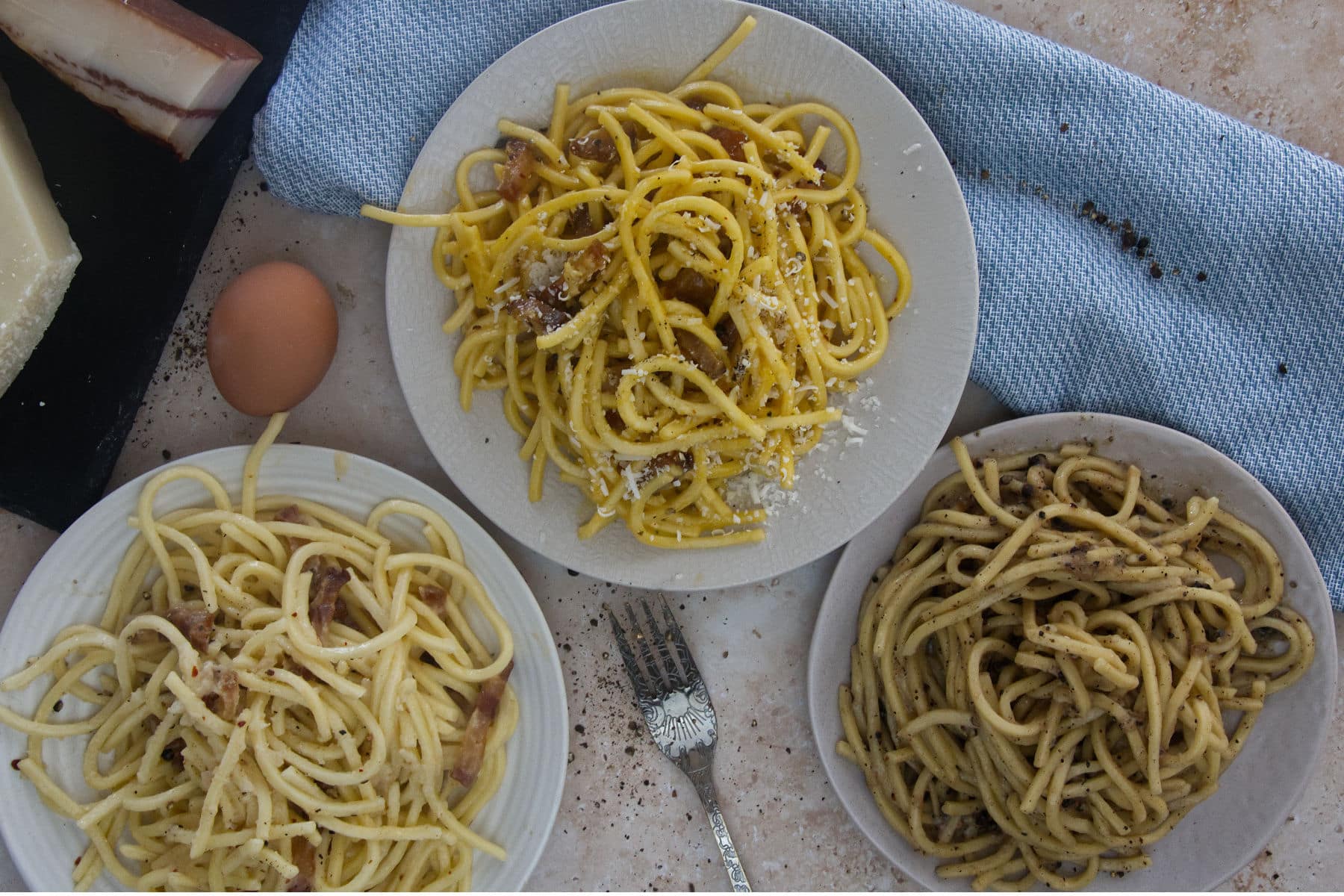
For more recipes you can make last minute with whatever you have in the fridge, you can check out: Cacio e pepe, Gricia, Stroncatura, Pasta and Potatoes.
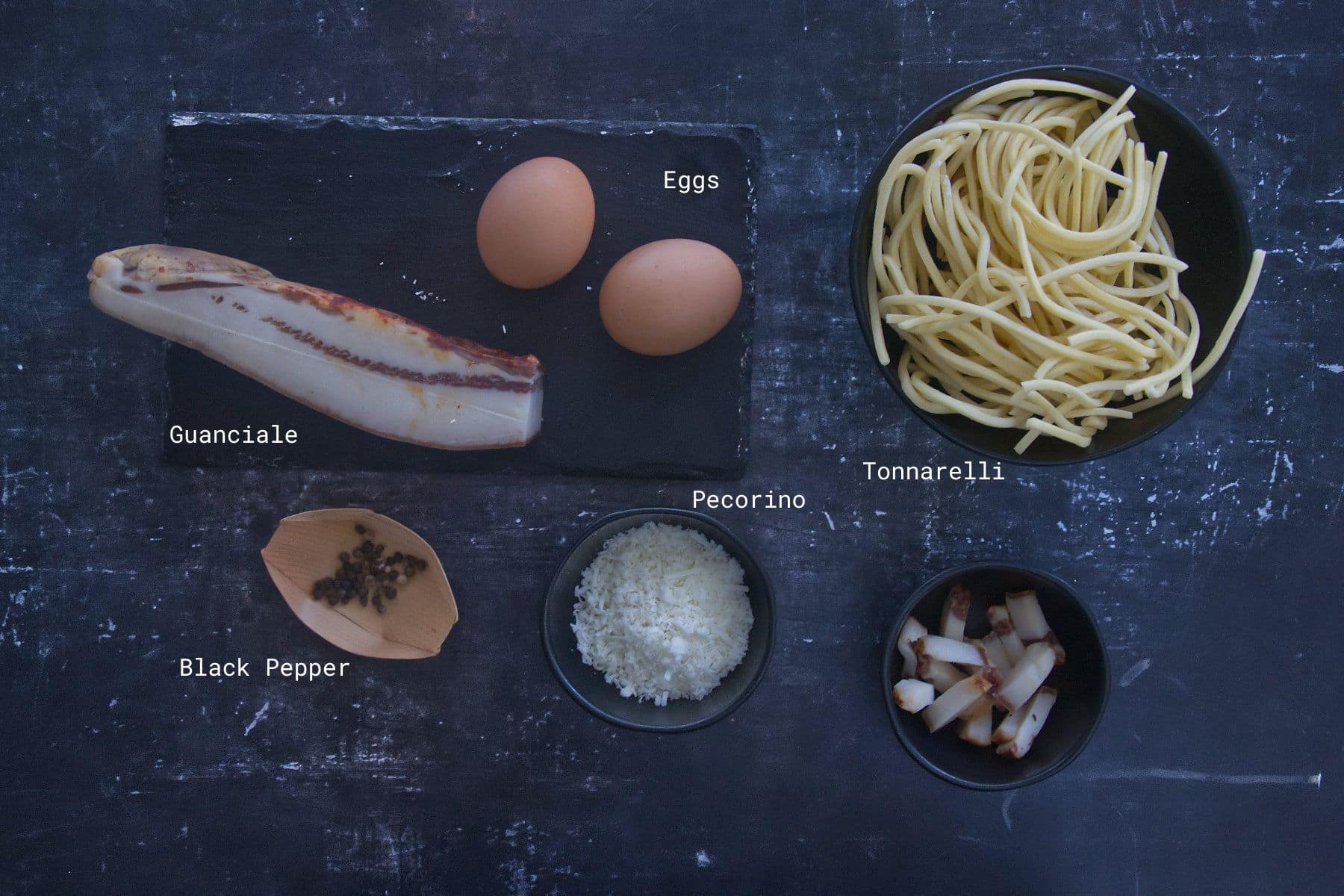
Ingredients
- Tonnarelli or Spaghetti: In Rome, we love to serve it with tonnarelli, a thick, square-cut egg pasta known for its firm, porous texture. However, spaghetti or rigatoni are excellent alternatives if tonnarelli are hard to find.
- Guanciale: This provides the rich fat and essential saltiness that defines the dish. If you only have bacon in the fridge, it is not a big deal; it was a practical staple we often used instead.
- Pecorino Romano: This cheese offers the sharp, savory finish traditional to Rome. However, if you use Parmesan instead, it is not a big deal; we used whichever of these two was available in the fridge.
- Eggs: Fresh eggs are the heart of the recipe, creating a creamy emulsion without needing dairy.
- Black Pepper: Freshly cracked pepper adds a vital spicy note that balances the richness of the pork and eggs.
Note: You will get an even better, richer result if you use a combination of whole eggs and some extra yolks only, though if you do not aim for perfection this is entirely optional.
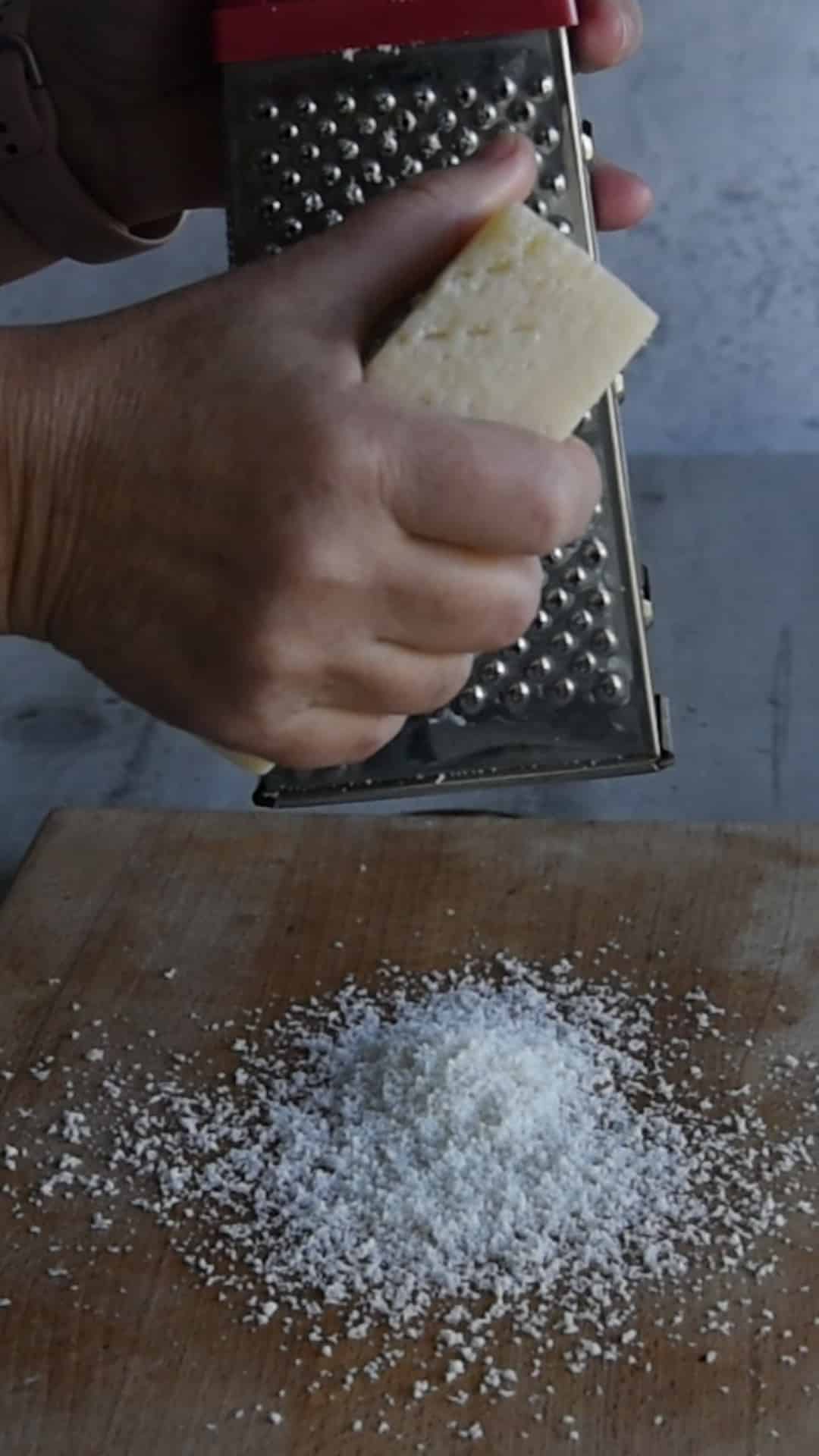
Before you start, grate the Pecorino Romano using a fine grater to create a light, airy pile.
This texture is what allows the cheese to melt perfectly into a creamy sauce.
Do not use pre-grated cheese, as it is never as good as the fresh one.
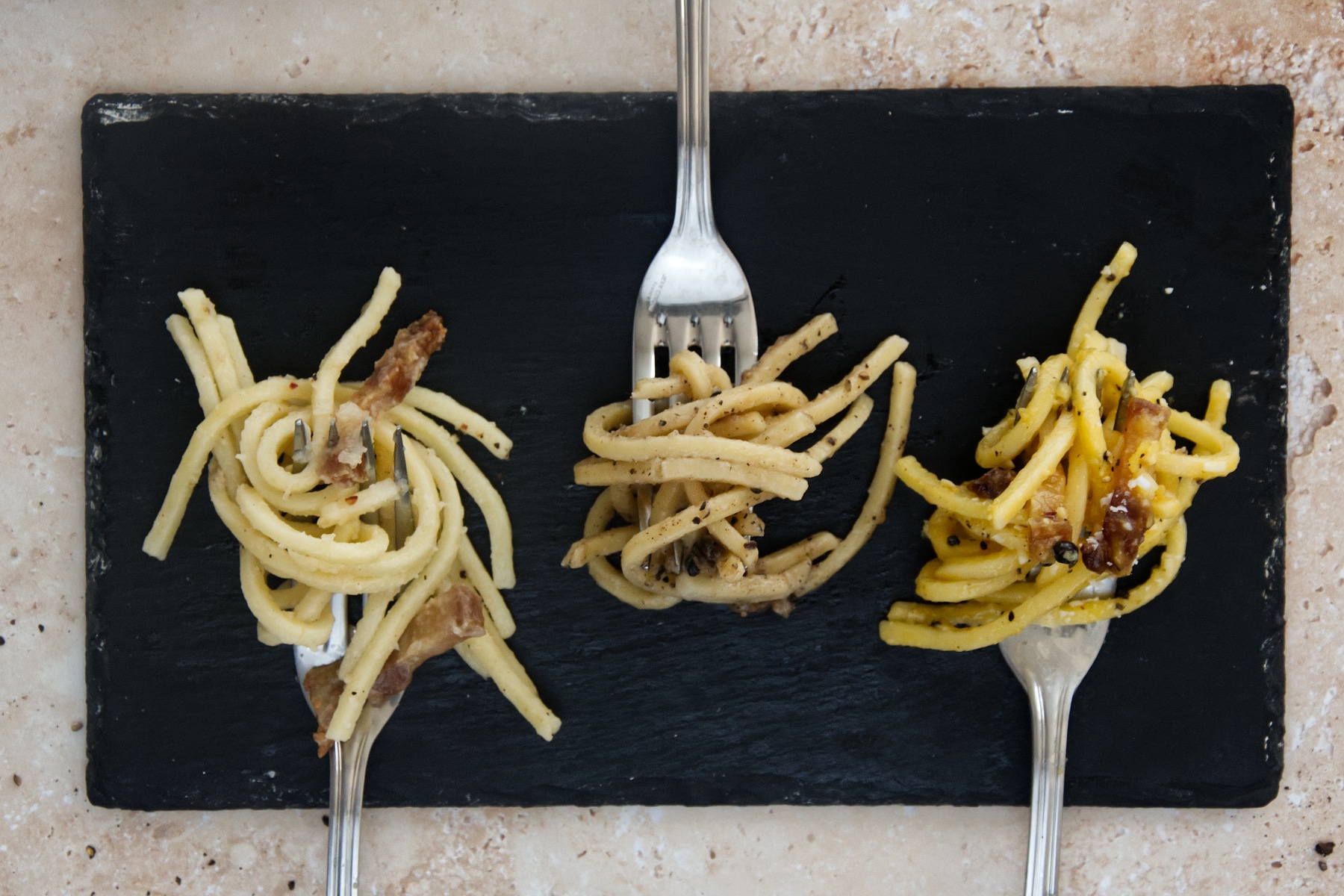
Step-by-Step Instructions
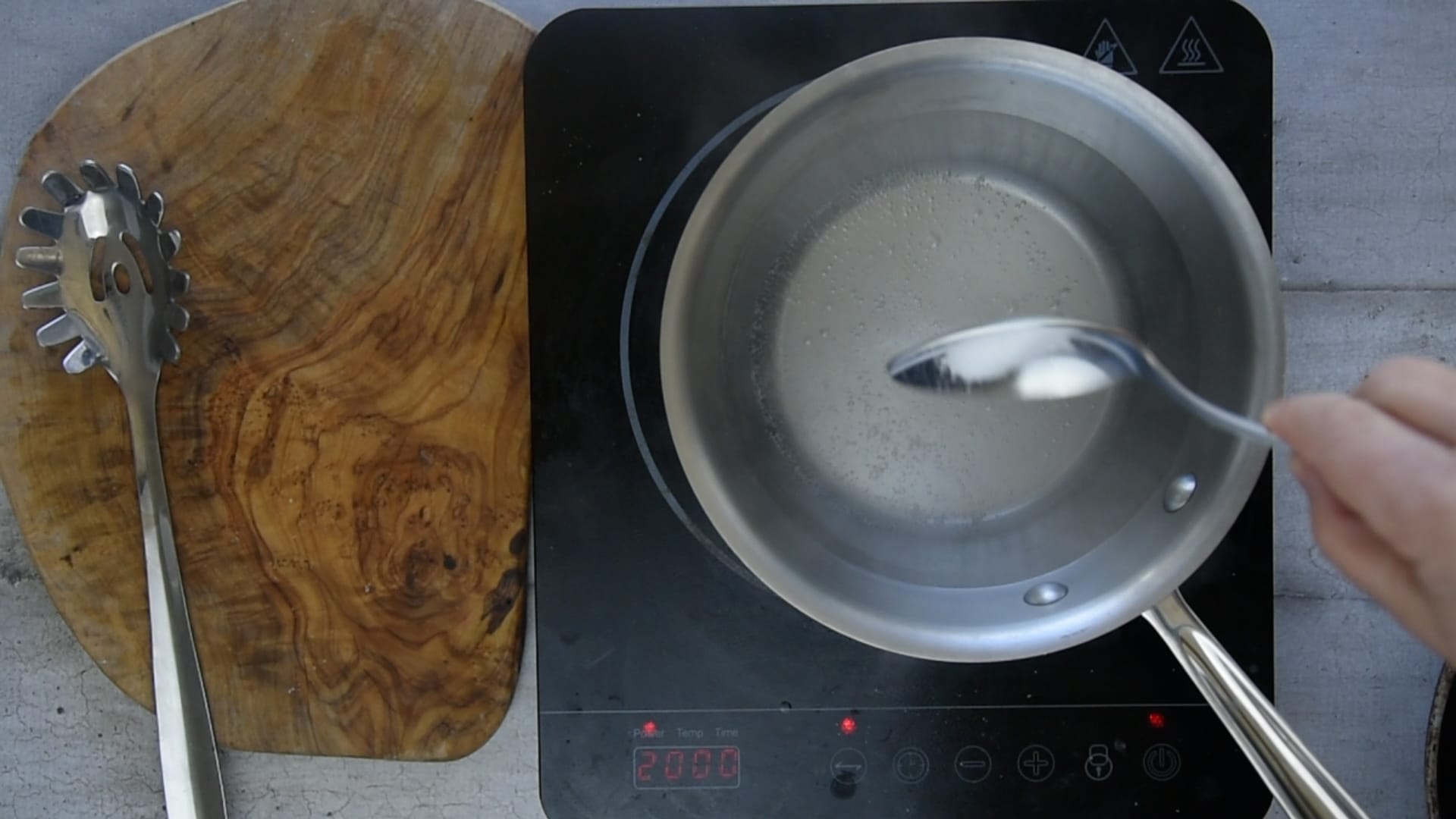
- Fill a large pot with cold water and add coarse salt as it begins to heat so the pasta is seasoned correctly.
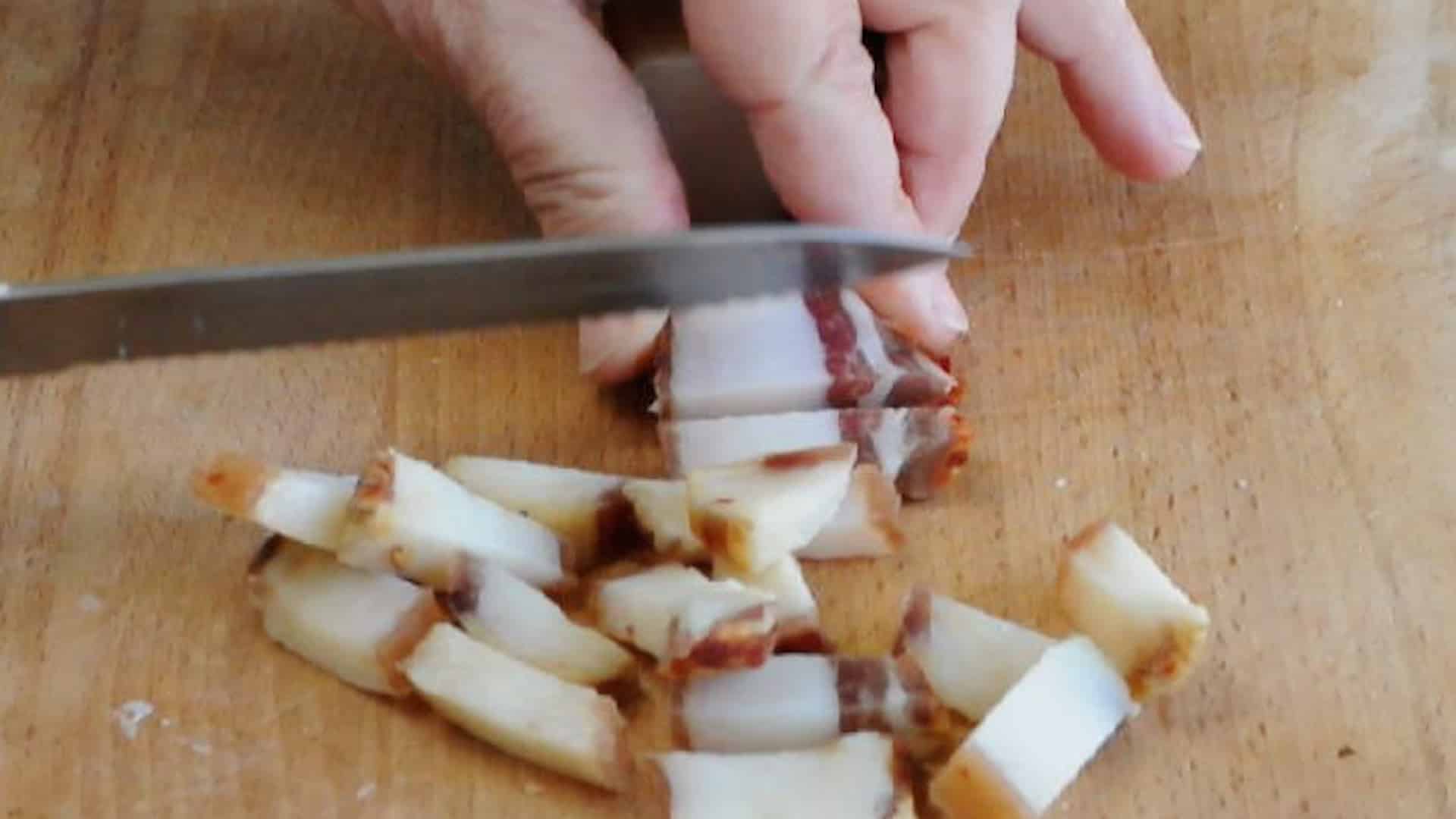
- Cut the guanciale into small strips or cubes and place them in a pan over medium heat.
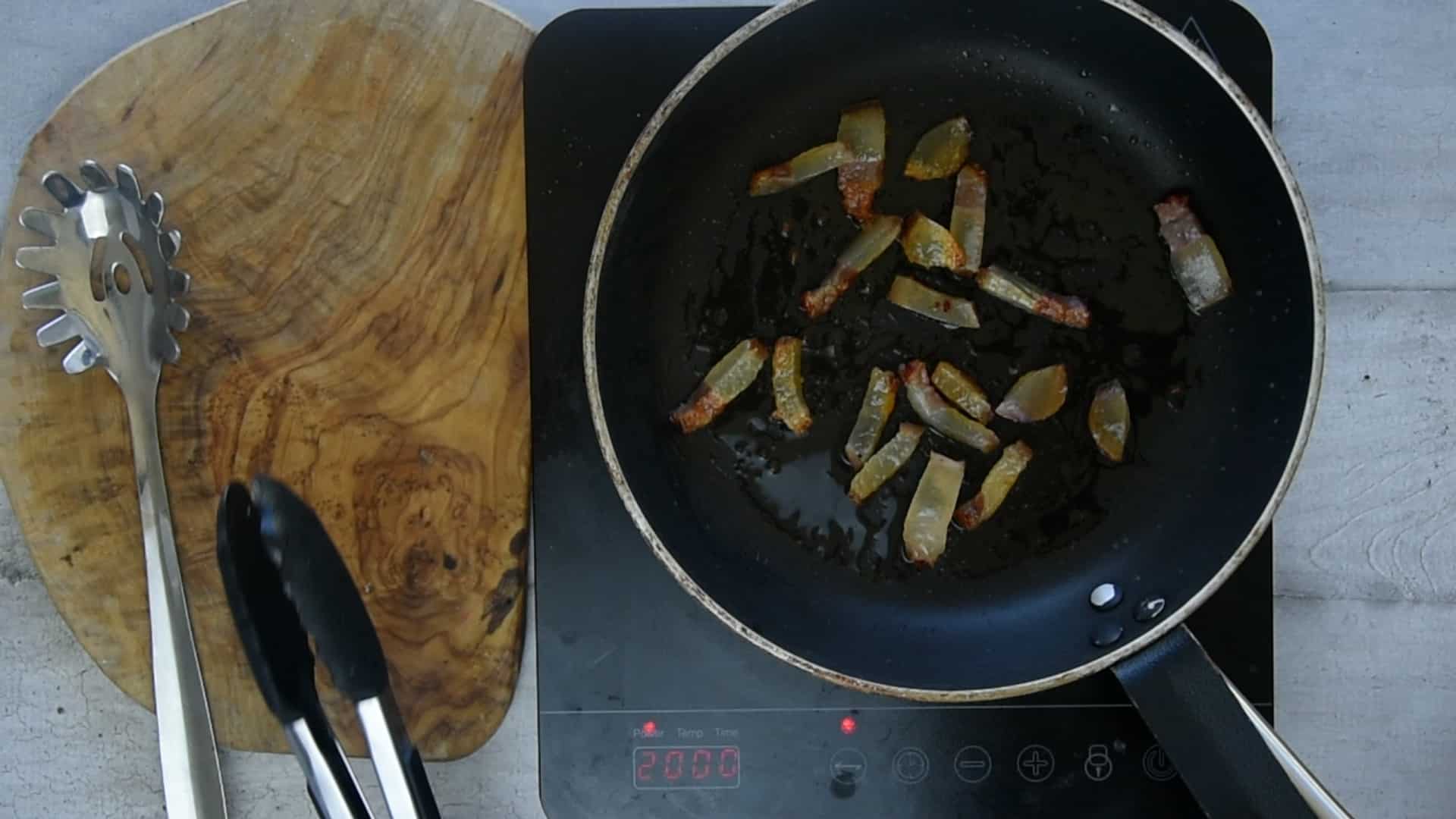
- Fry until the fat has rendered and the pork is golden and crunchy, then remove from the heat.
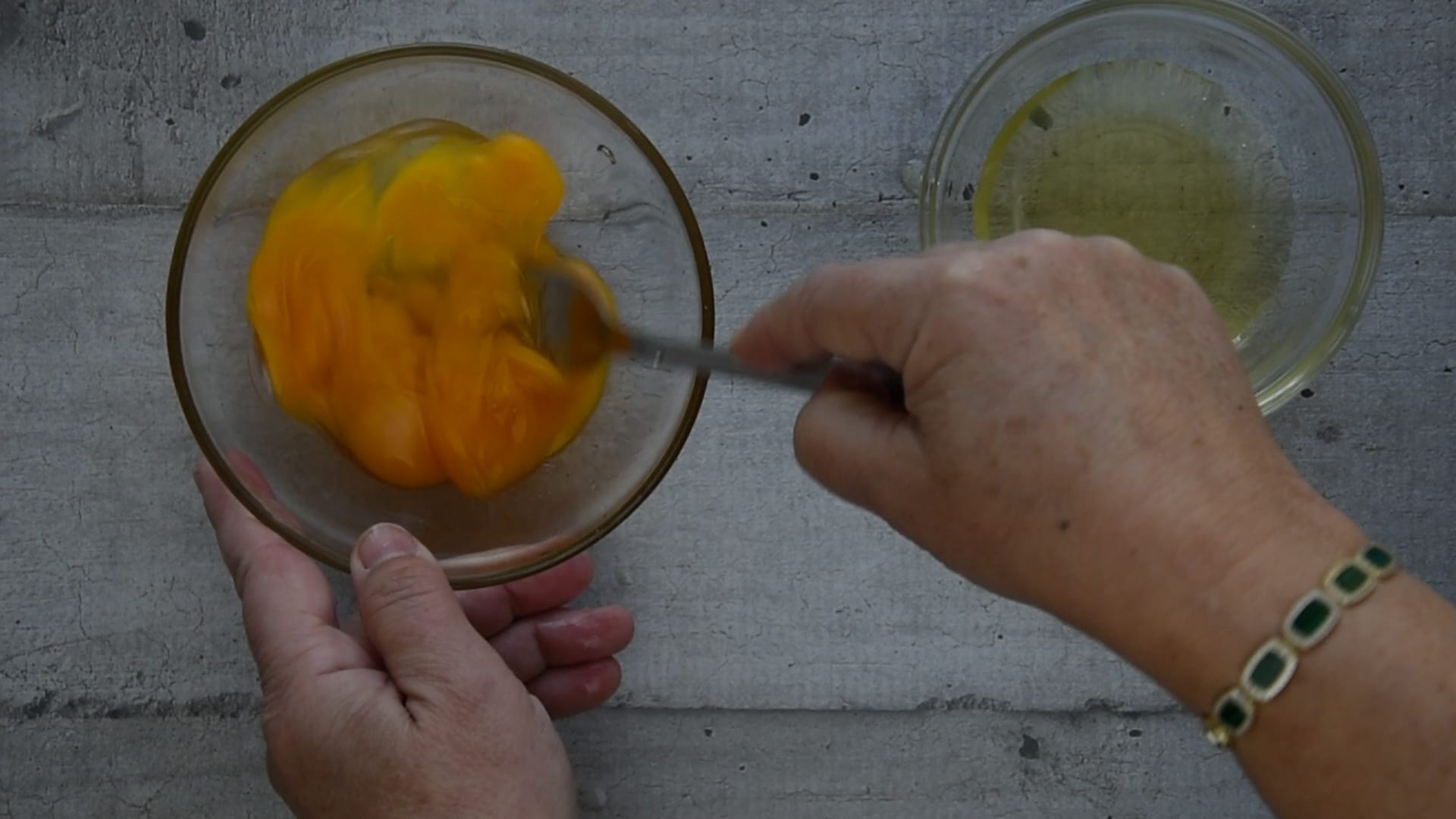
- While the water reaches a rolling boil, whisk the eggs in a bowl.
NB: for an even better, richer result, you can use a combination of whole eggs and some extra yolks only, though this is optional.
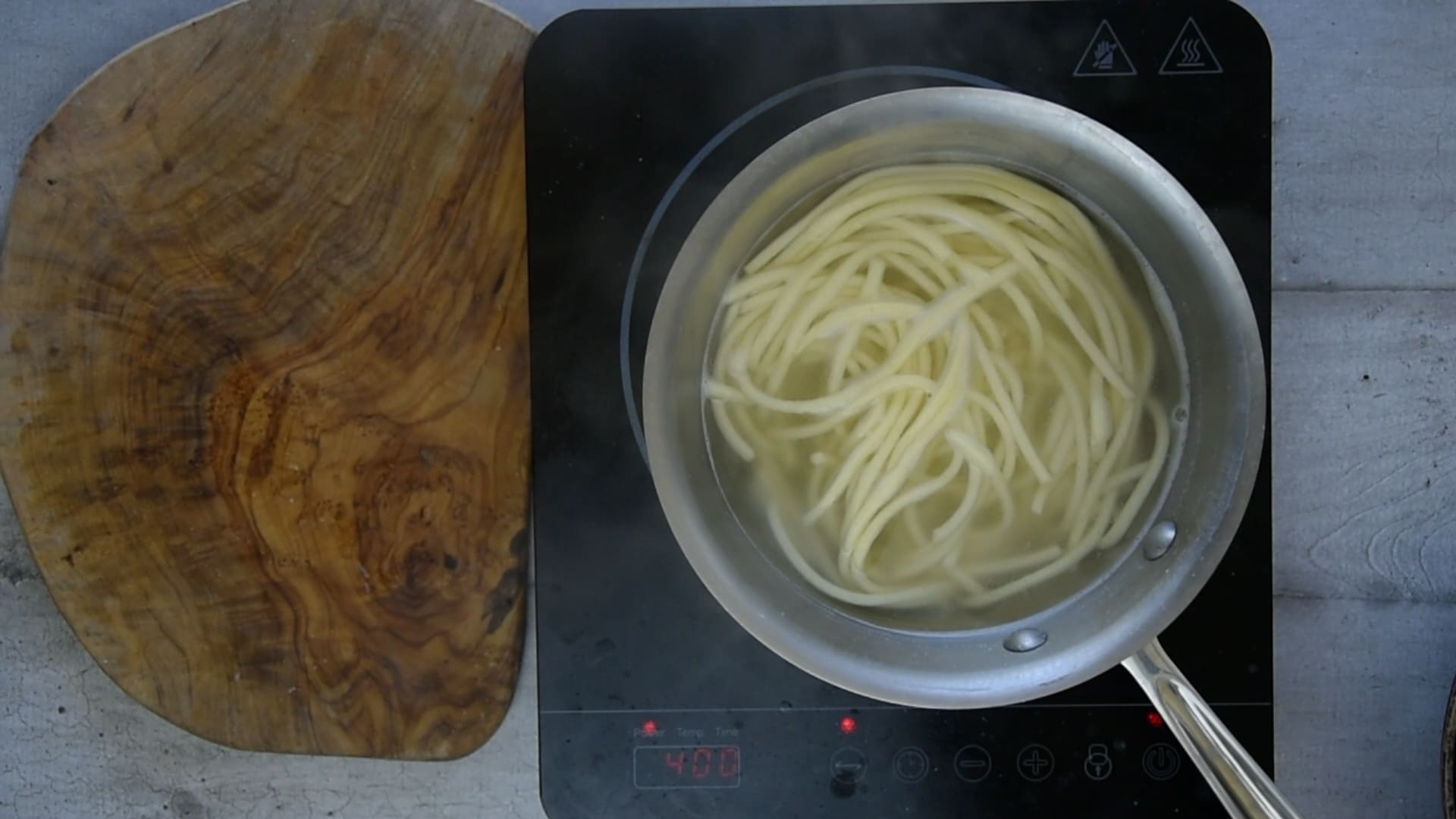
- Cook the pasta for one minute less than the package directions to ensure it remains al dente.
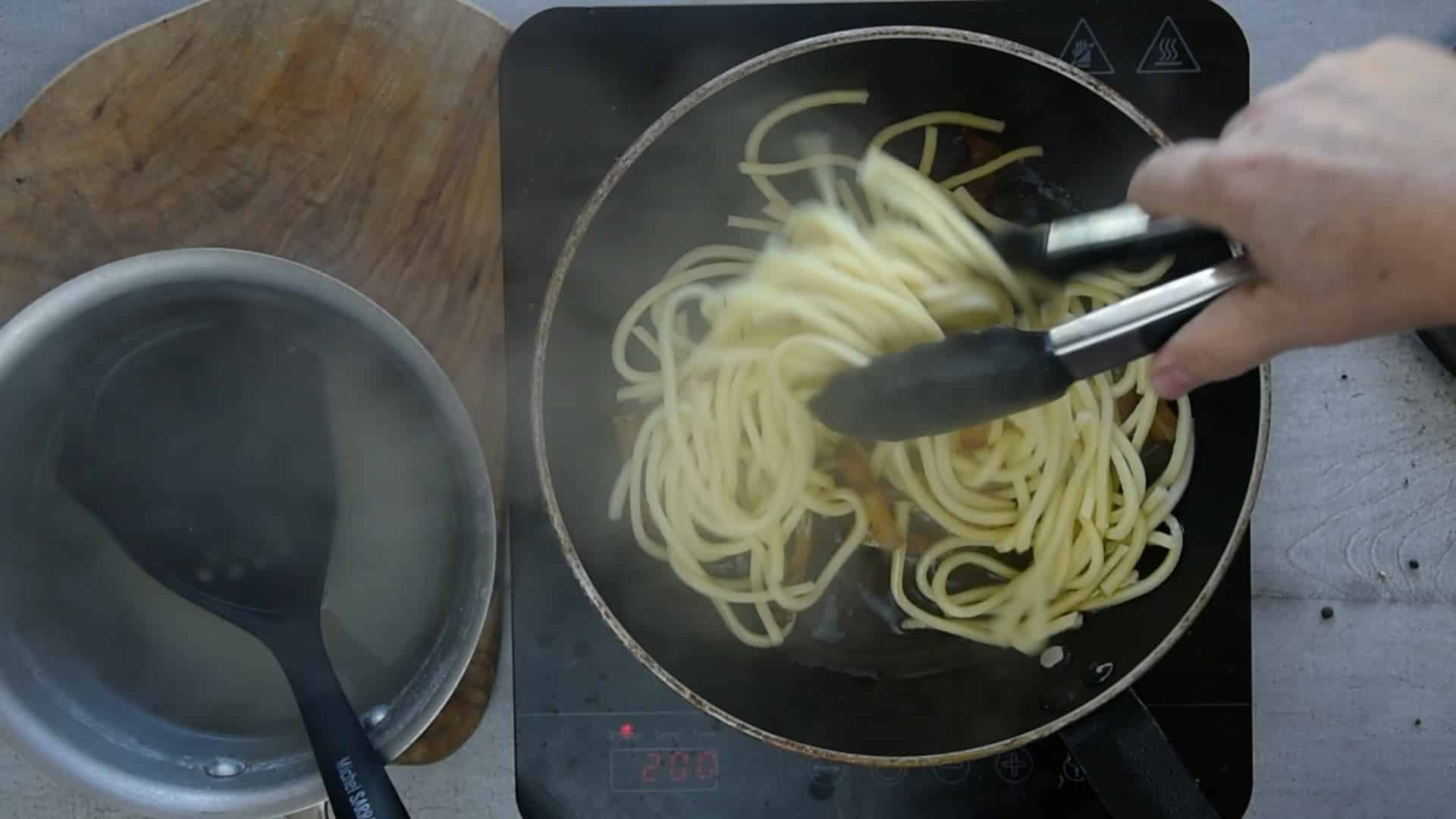
- To preserve the starchy water, remove the pasta from the pot and transfer it directly to the pan using a spaghetti fork.
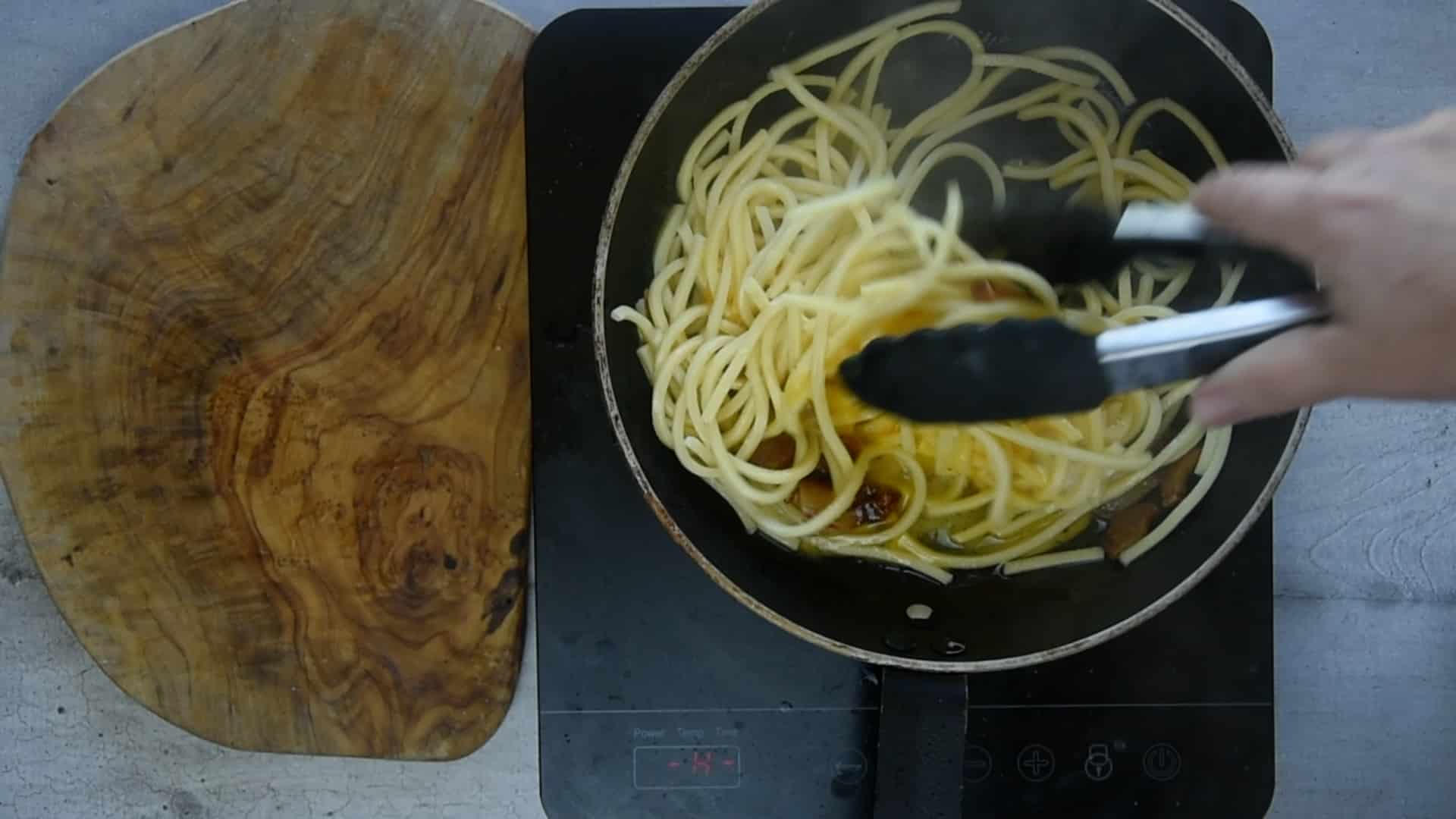
- Immediately stir the pasta in the pan with the fried pork to coat the noodles in the fat.
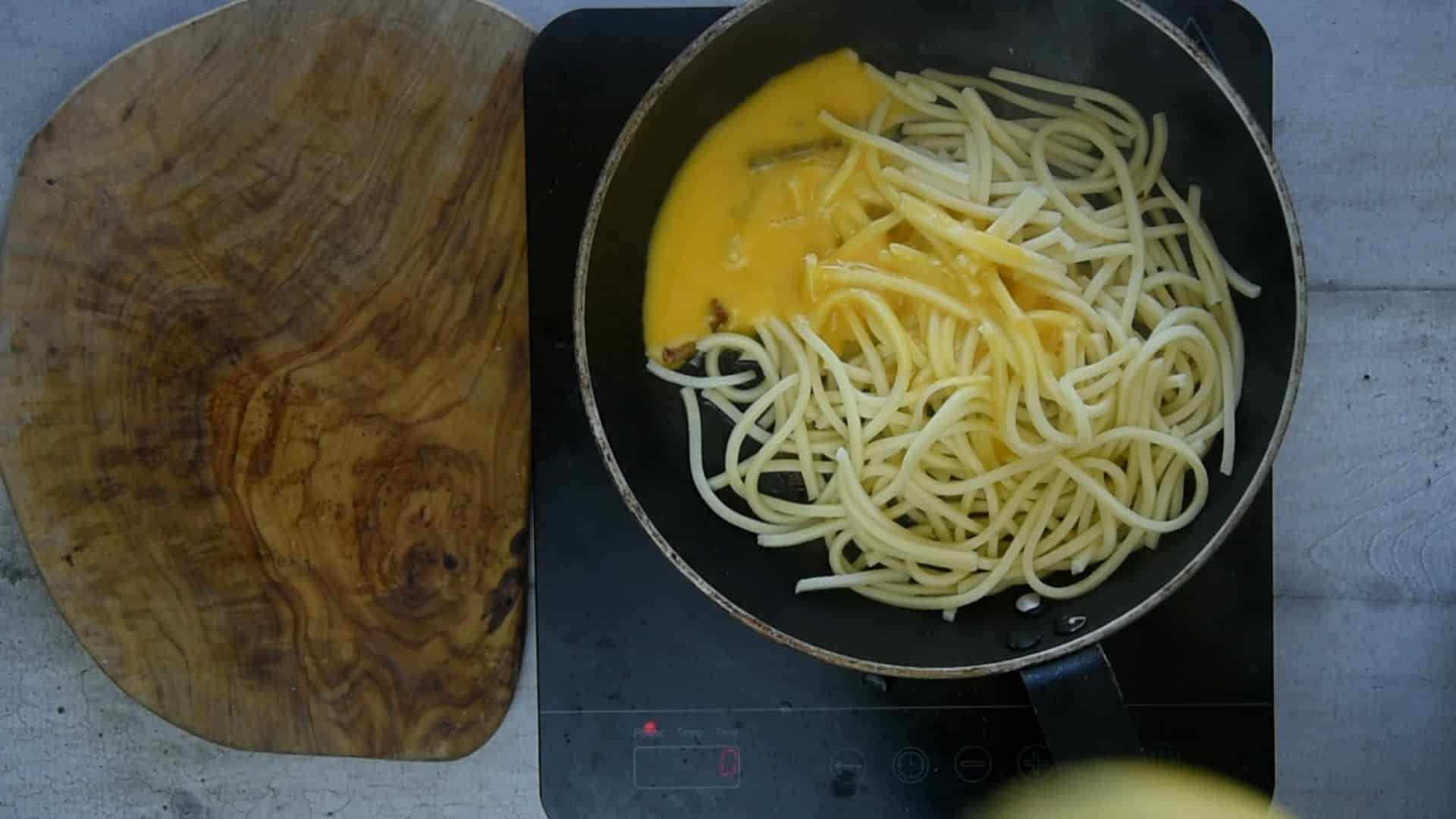
- Pour the eggs and the grated cheese over the hot pasta and stir.
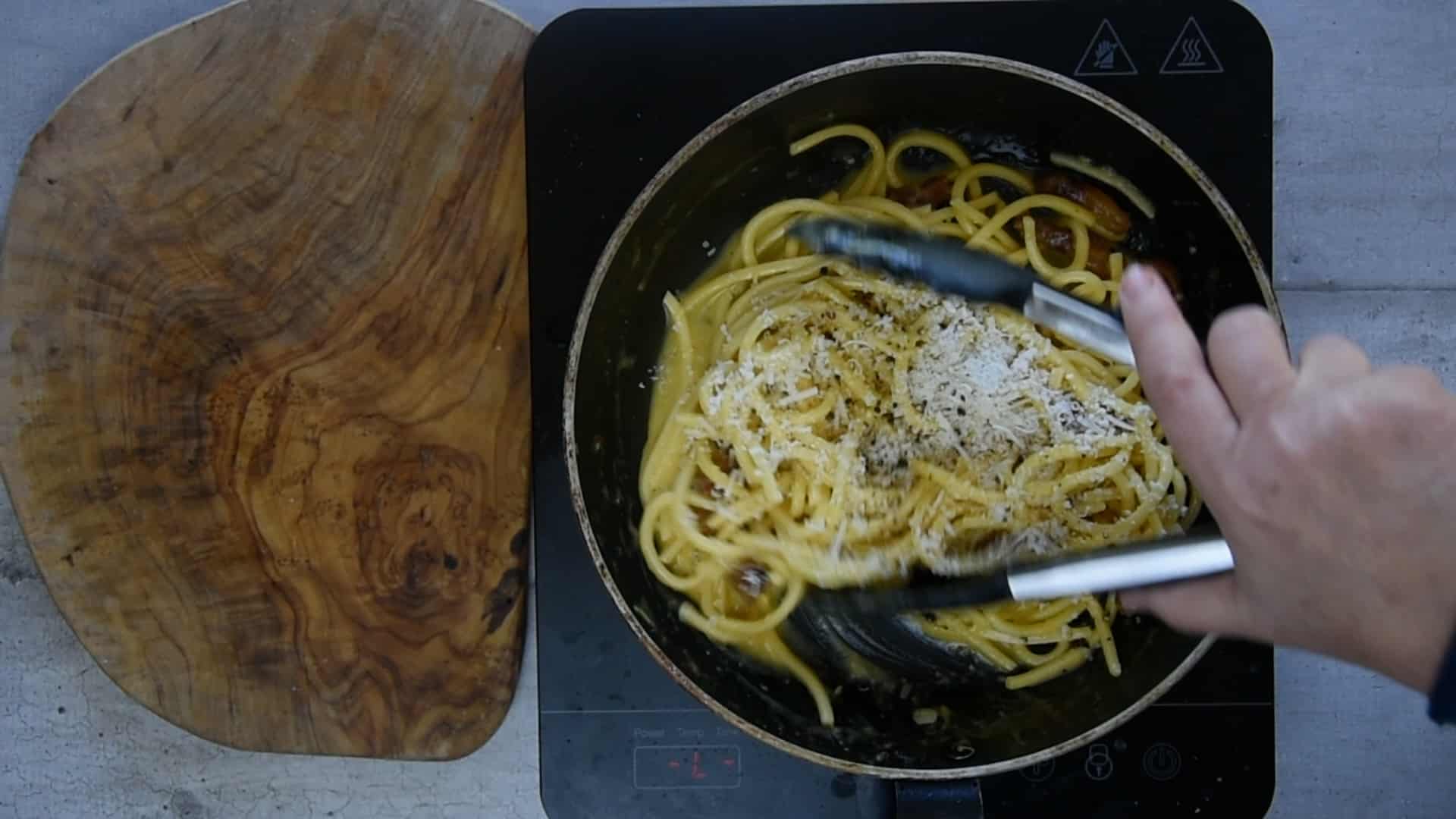
- The residual heat will transform the eggs into a velvety sauce; do not return the pan to the heat, or the eggs will scramble.
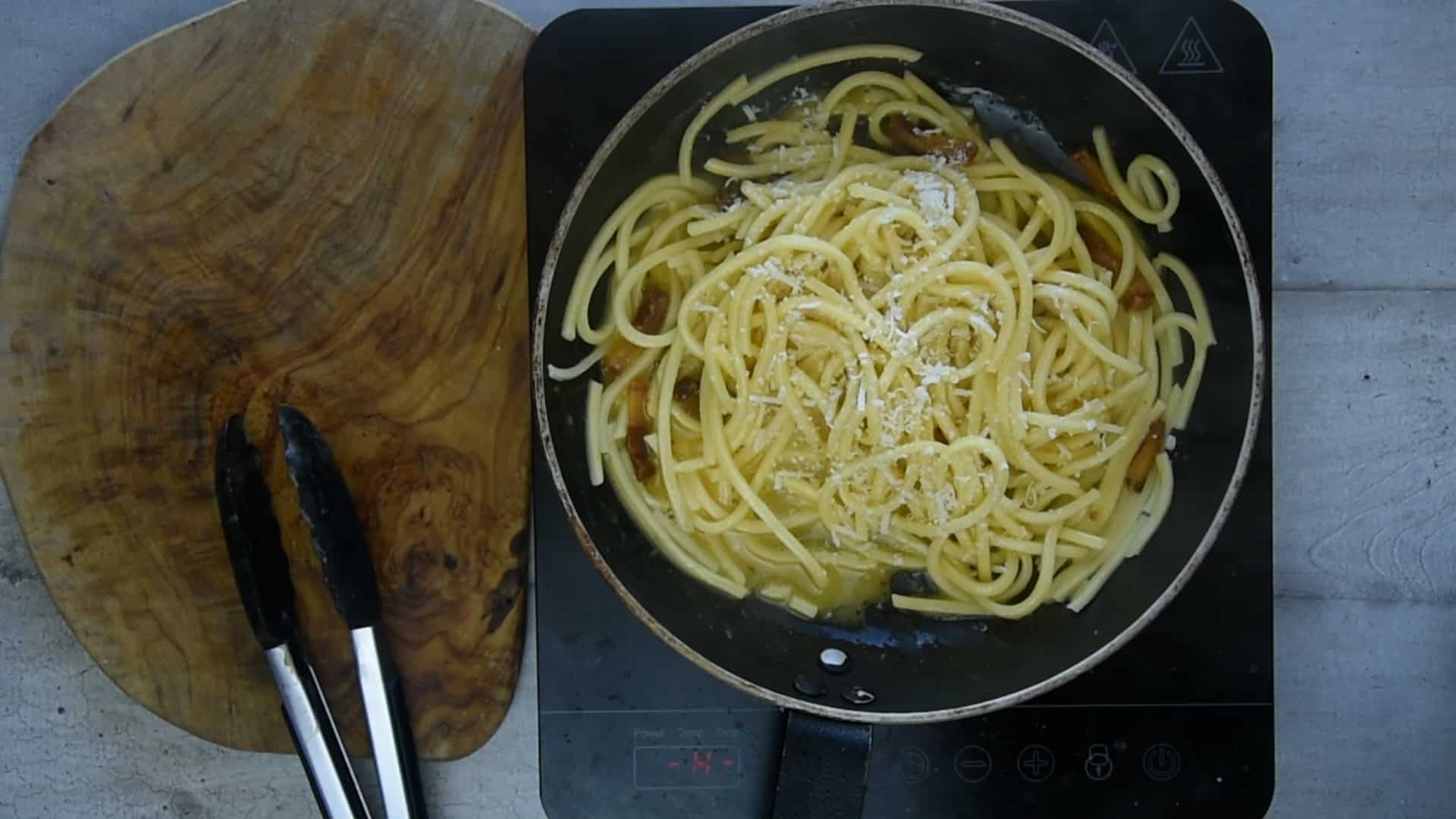
- If the sauce appears too thick, add a spoonful of the reserved starchy water and toss until the consistency is smooth and creamy.
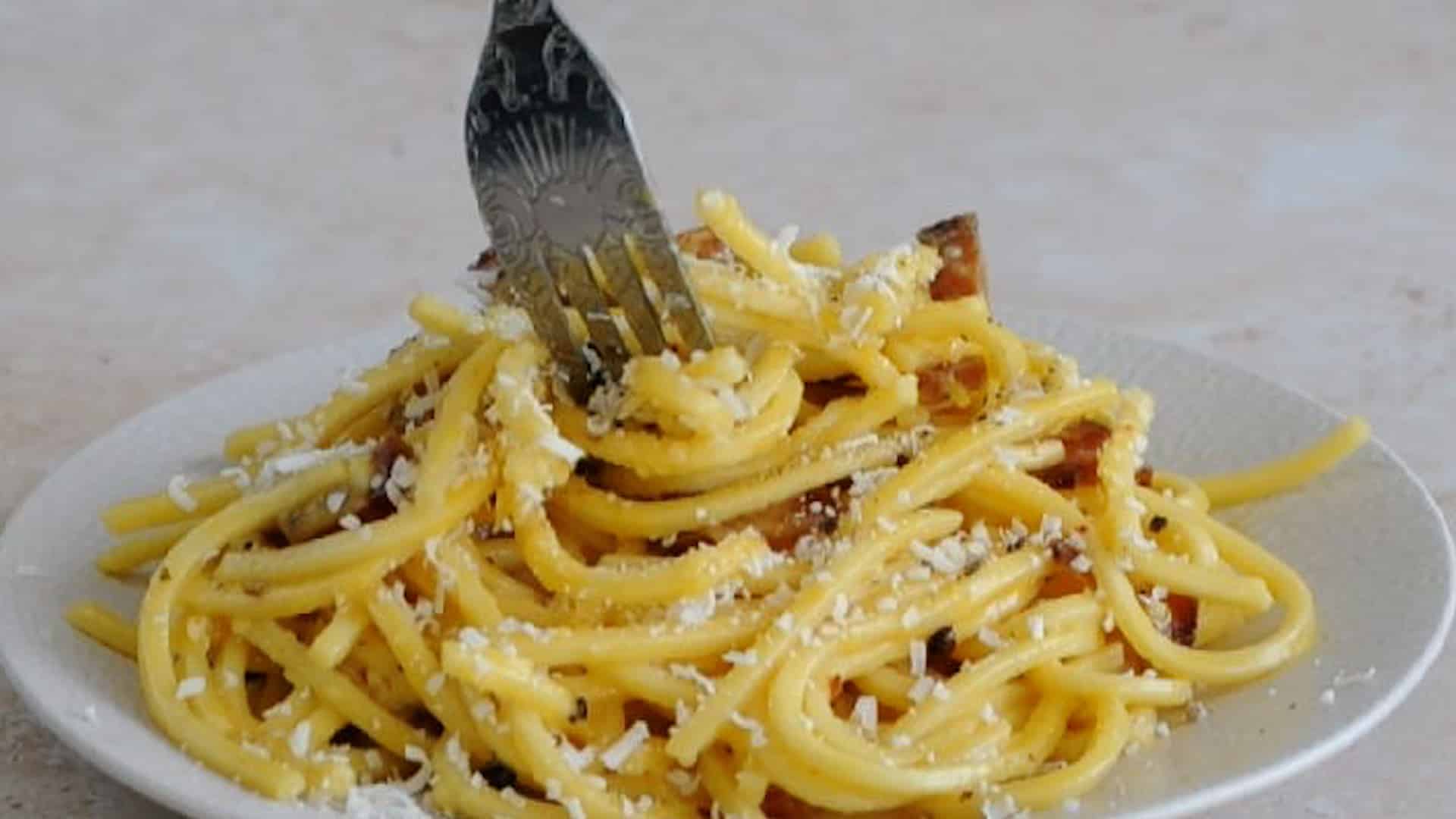
- Serve immediately in warm bowls, as pasta must be eaten the moment it is ready.
Serving Suggestions
To complete this Roman experience, serve the carbonara immediately while it is at its creamiest. I suggest placing a bowl of extra grated Pecorino on the table so everyone can add a little more if they like.
This is a complete, one-dish meal that captures the simple way we ate as students.
To finish the meal properly, we would always close with a coffee made in a Moka Bialetti.
But if we were still hungry, you could pair it with the classic tiramisu we used to make in the 80s.
More Roman Recipes
If you are making this pasta alla carbonara, leave your comment below I would like to hear from you. You can find more delicious ideas if you FOLLOW ME on Facebook, YouTube, Instagram or sign up to my newsletter.
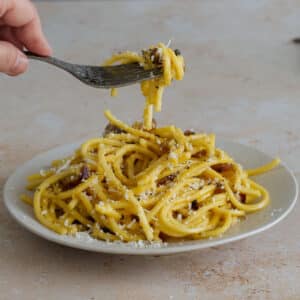
The Carbonara We Made In Rome in the 70s
Verified Culinary AuthorityVideo
Ingredients
- 10 oz Tonnarelli or Spaghetti
- 2 oz Guanciale
- 2 eggs
- 3 tablespoon freshly grated Pecorino
- 1 pinch black pepper
- 1 tablespoon salt for pasta
Instructions
- grate the Pecorino Romano using a fine grater to create a light, airy pile.
- Fill a large pot with cold water and add coarse salt as it begins to heat so the pasta is seasoned correctly.
- Cut the guanciale into small strips or cubes and place them in a pan over medium heat.
- Fry until the fat has rendered and the pork is golden and crunchy, then remove from the heat.
- While the water reaches a rolling boil, whisk the eggs in a bowl.
- NB: for an even better, richer result, you can use a combination of whole eggs and some extra yolks only, though this is optional.
- Cook the pasta for one minute less than the package directions to ensure it remains al dente.
- As we need to preserve the starchy water, remove the pasta from the pot and move it directly to the pan with a spaghetti fork.
- Immediately stir the pasta in the pan with the fried pork to coat the noodles in the fat.
- Pour the eggs and the grated cheese over the hot pasta and stir.
- The residual heat will transform the eggs into a velvety sauce; do not return the pan to the heat or the eggs will scramble.
- If the sauce appears too thick, add a spoonful of the reserved starchy water and toss until the consistency is smooth and creamy.
- Serve immediately in warm bowls, as pasta must be eaten the moment it is ready.


Leave a Reply