
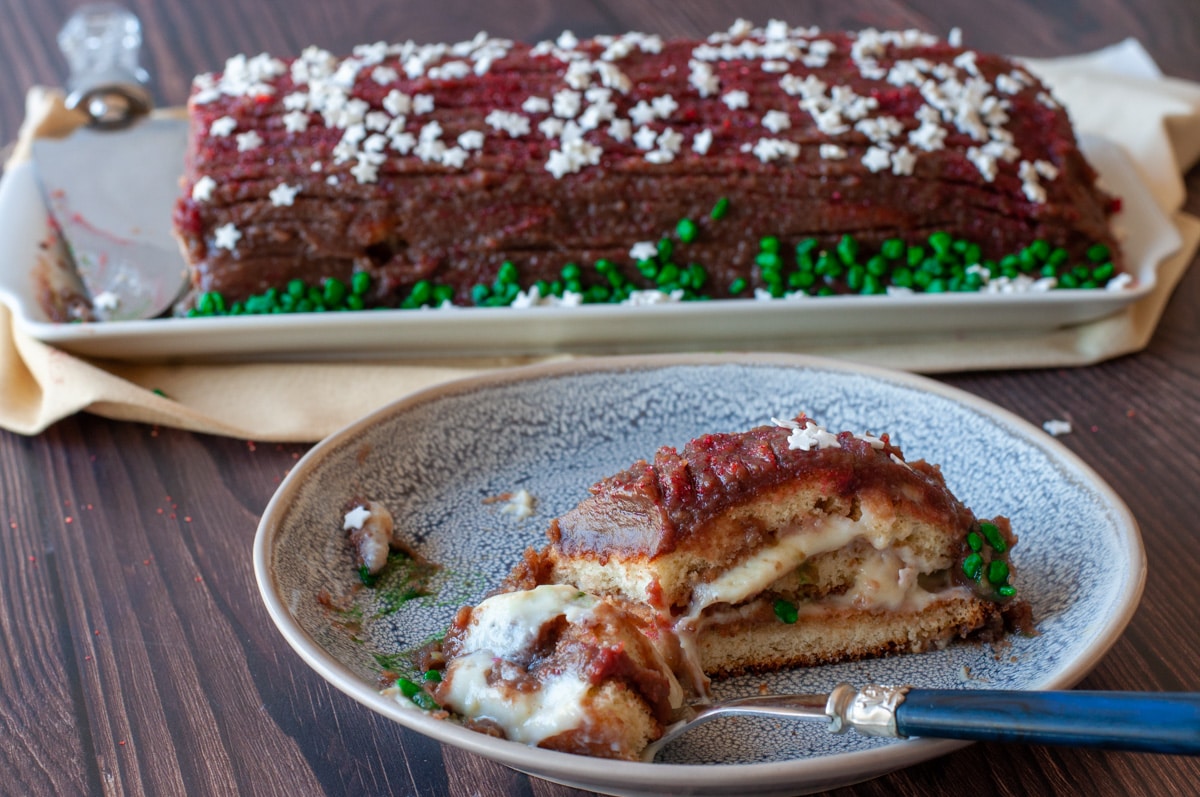
This Tronchetto di Natale is the Italian Tiramisu holiday version of a Yule log. A traditional Christmas dessert I discovered in the La Cucina Italiana archive from the 1970s, this recipe has become a holiday staple. Inspired by this classic, I created a reproduction using a Genovese sponge cake as a light base, a creamy mascarpone filling, and a decadent maron mousse frosting. Made from scratch, this recipe is designed to be challenging but rewarding, perfect for those wanting to master authentic Italian pastry techniques.

In Italy, Christmas is always a "cooking marathon" where family gatherings of at least 15 to 20 people are the norm.
Since I was little, while my mother was busy managing the complex main menu, I loved to practice and express my creativity with sweet edible nativity masterpieces.
I would build landscapes of crepes filled with cream and little houses made with mini meringues; it was during these moments that I mastered the Tronchetto di Natale.
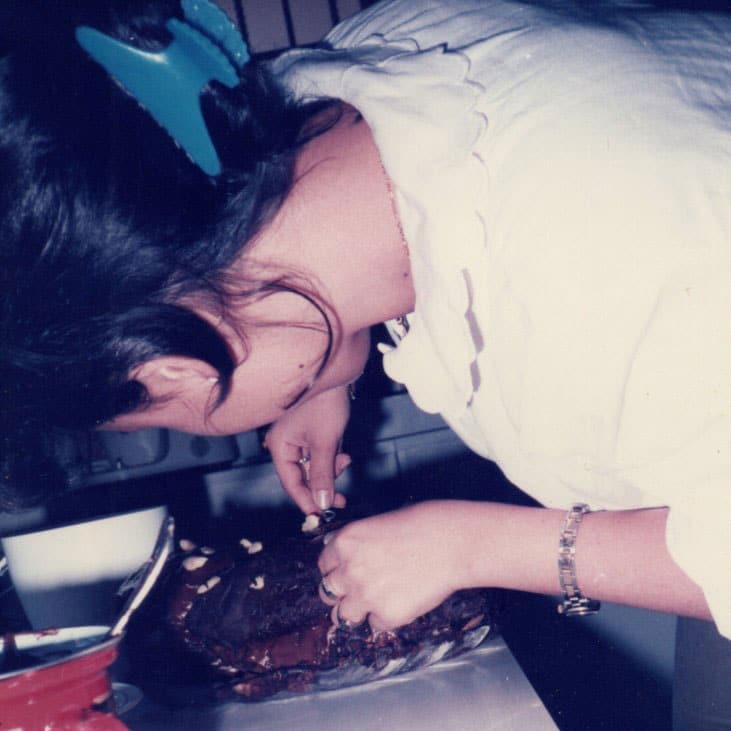
When I came across the version of this recipe in the La Cucina Italiana archive, it was a true epiphany, and I had to make it again.
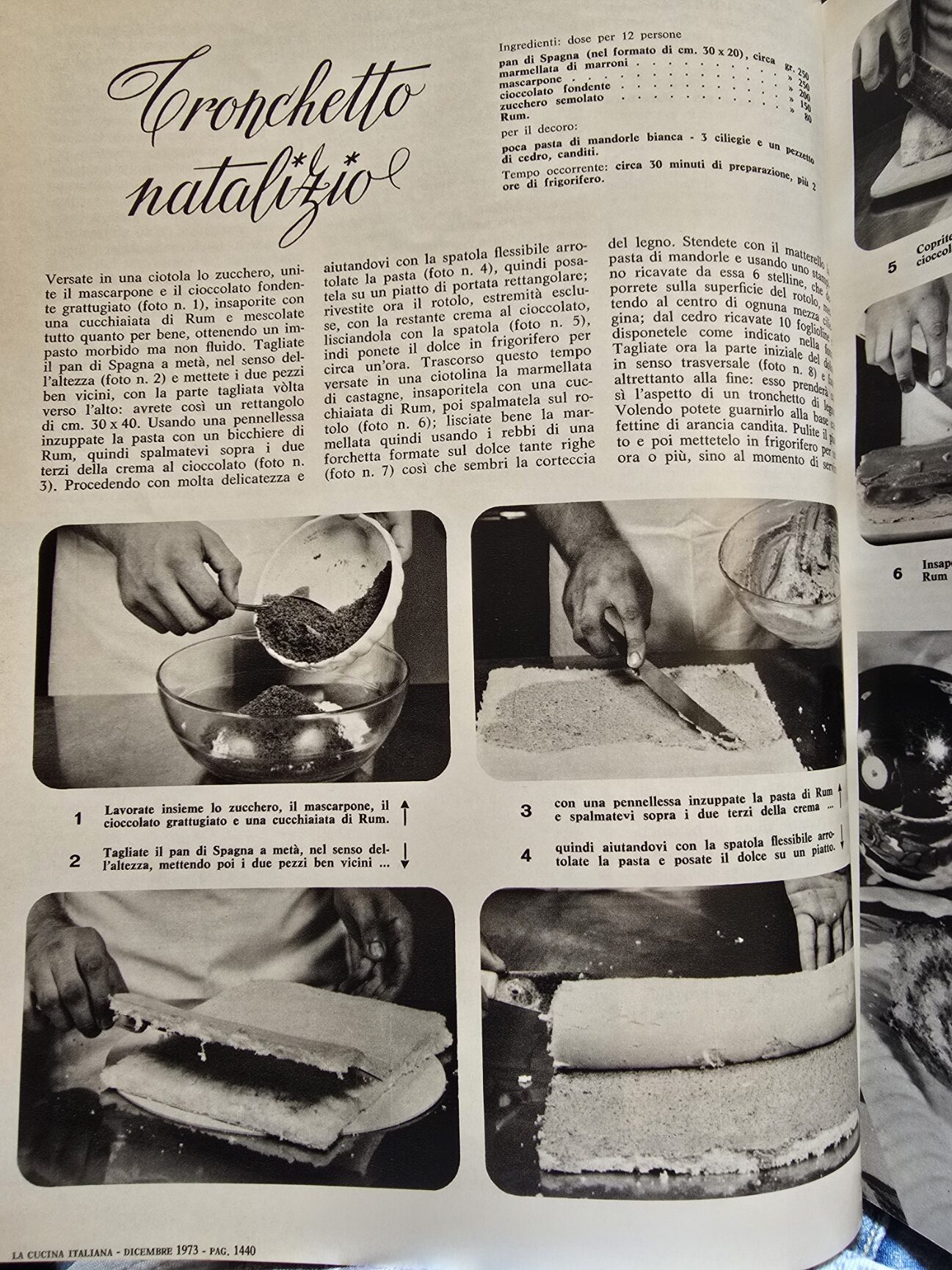
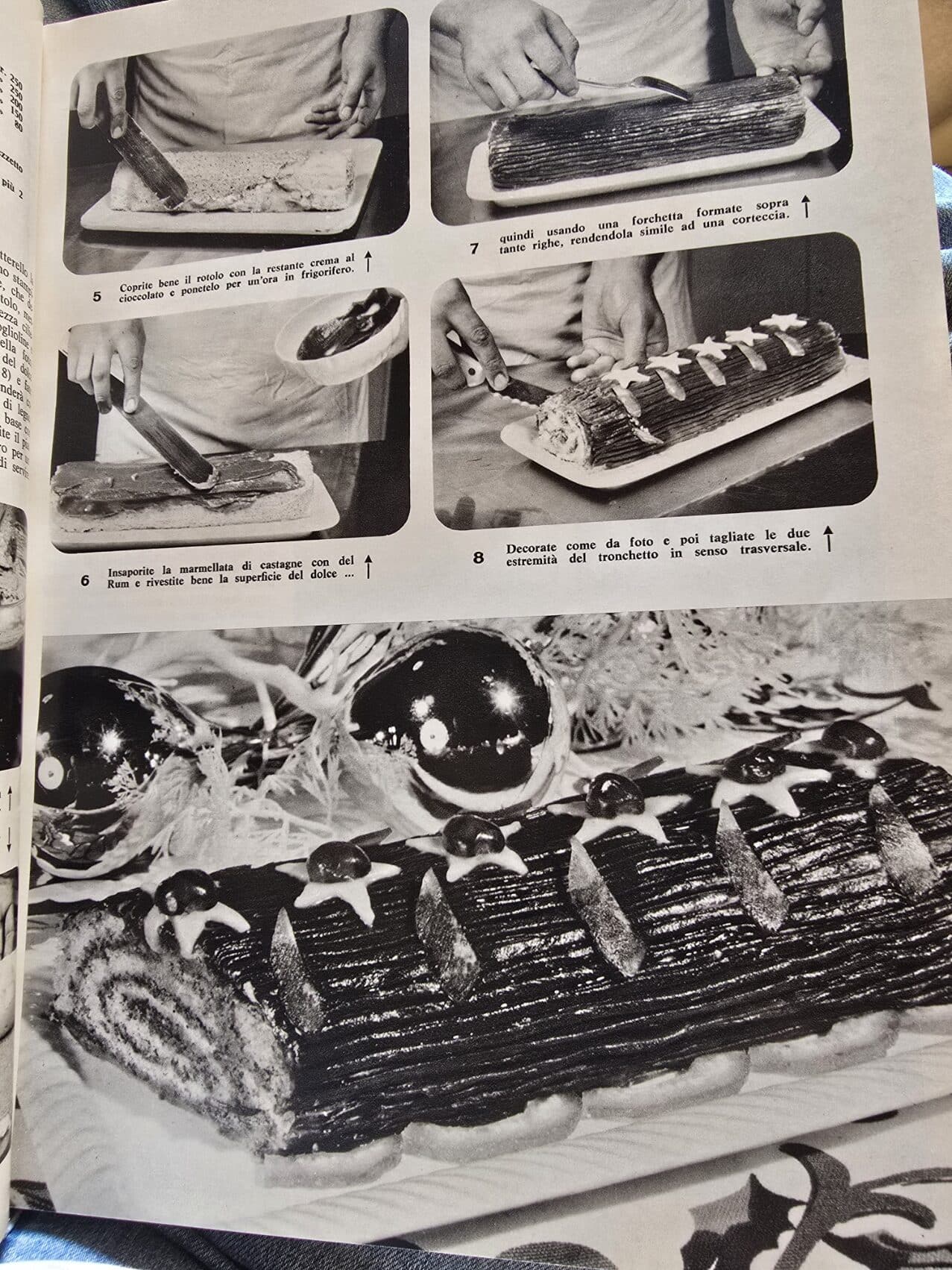
While that 1970s article used a purchased sponge cake, I prefer the authentic approach of making the Genovese sponge cake from scratch.
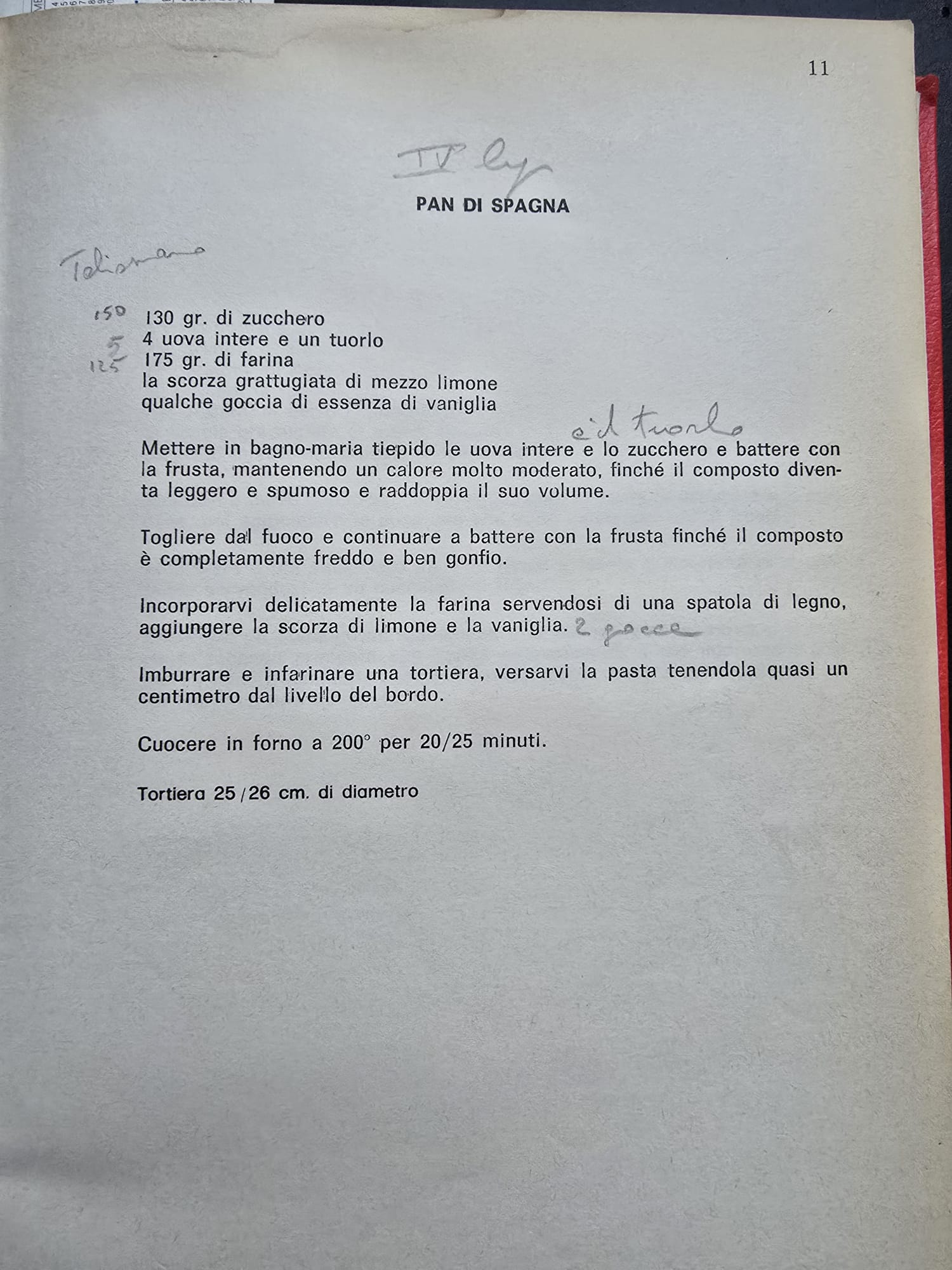
I use the original whisked recipe from the Cordon Bleu classes my mother took in Rome during the '70s. Although often called a Genoise in France, this whisked cake actually originated in Genoa, Northern Italy.
The filling uses mascarpone, a traditional Italian staple, while the frosting features chestnut mousse.
Chestnuts are a classic Italian winter ingredient, often celebrated during local village sagre and present in many Christmas recipes.
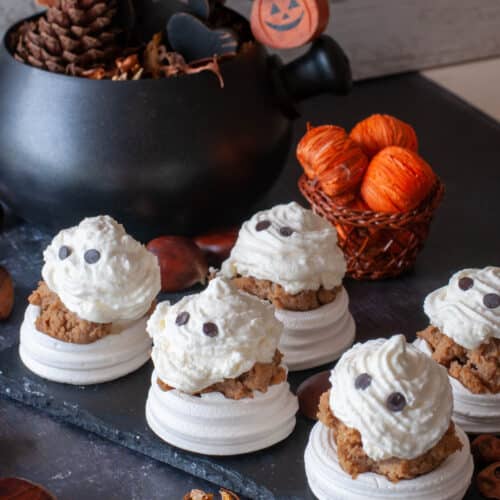
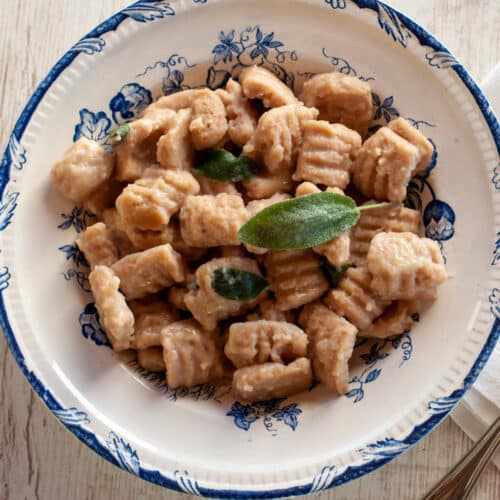
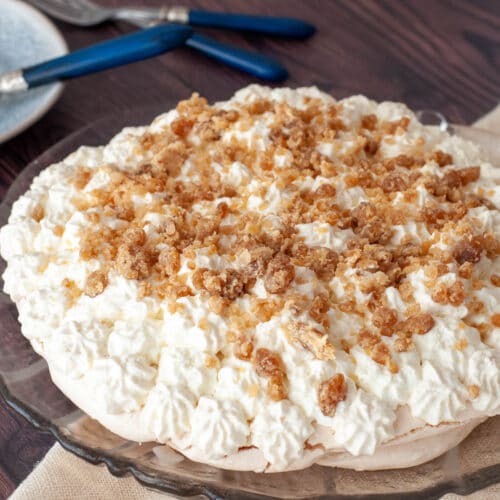
For more recipes with chestnuts: Roasted Chestnuts On an Open Fire, Italian Homemade Vegan Chestnut Gnocchi, Simple Mont Blanc Dessert, Chestnut Pavlova
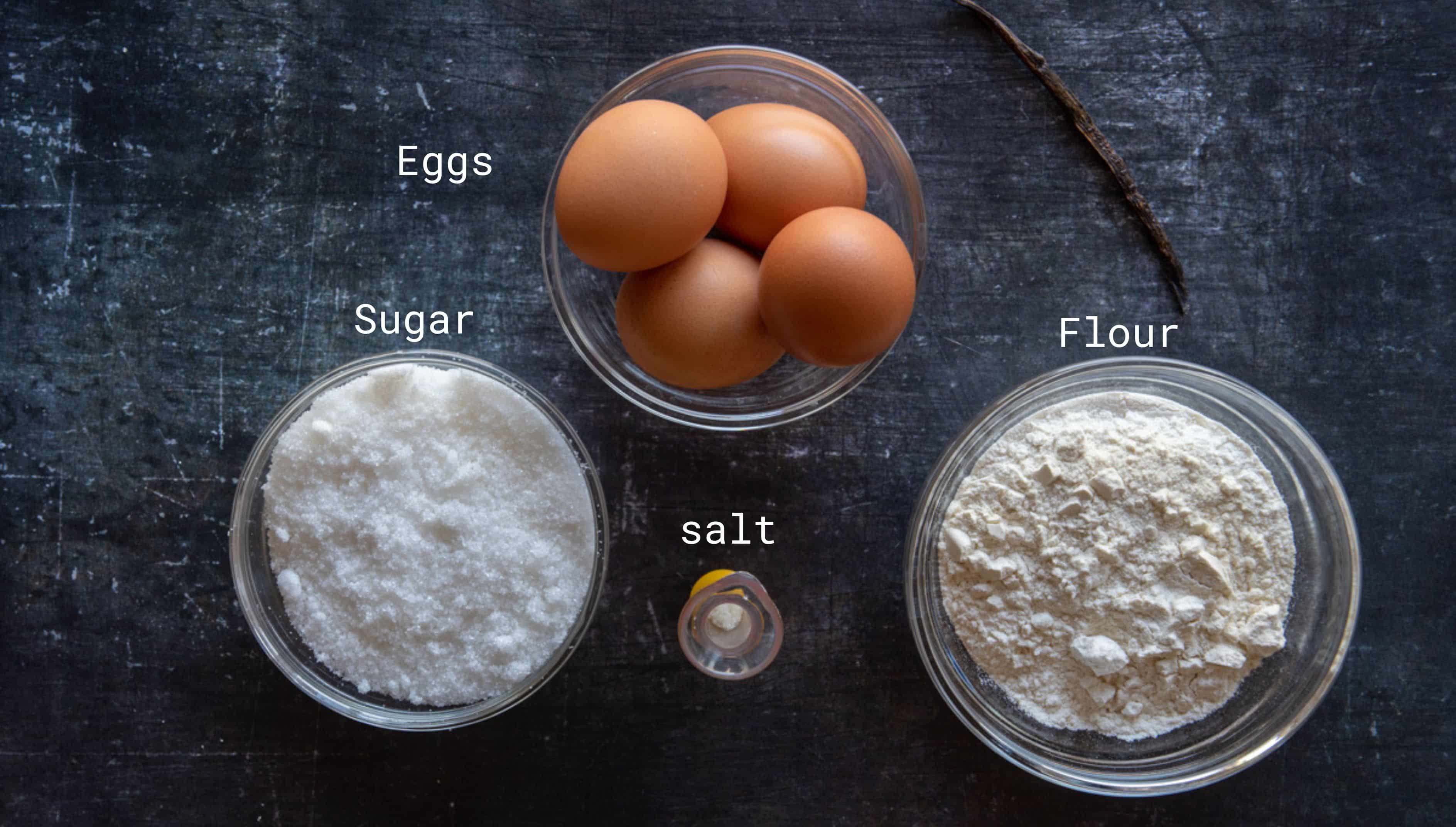
Ingredients
For the Genovese Sponge Cake
- Large Eggs: Whisked with sugar over a bain-marie to provide the essential structural lift and flexibility needed for a perfect roll.
- Granulated Sugar: Used to stabilize the egg foam during the whisking process, ensuring a light and airy sponge.
- Pastry Flour (Type 00): This fine Italian flour is equivalent to pastry flour and is crucial for a delicate crumb that rolls without cracking.
- Salt: A small pinch of coarse salt is used in the traditional Italian pantry to enhance flavors.
- Vanilla Essence: Adds a classic aromatic note to the whisked batter.
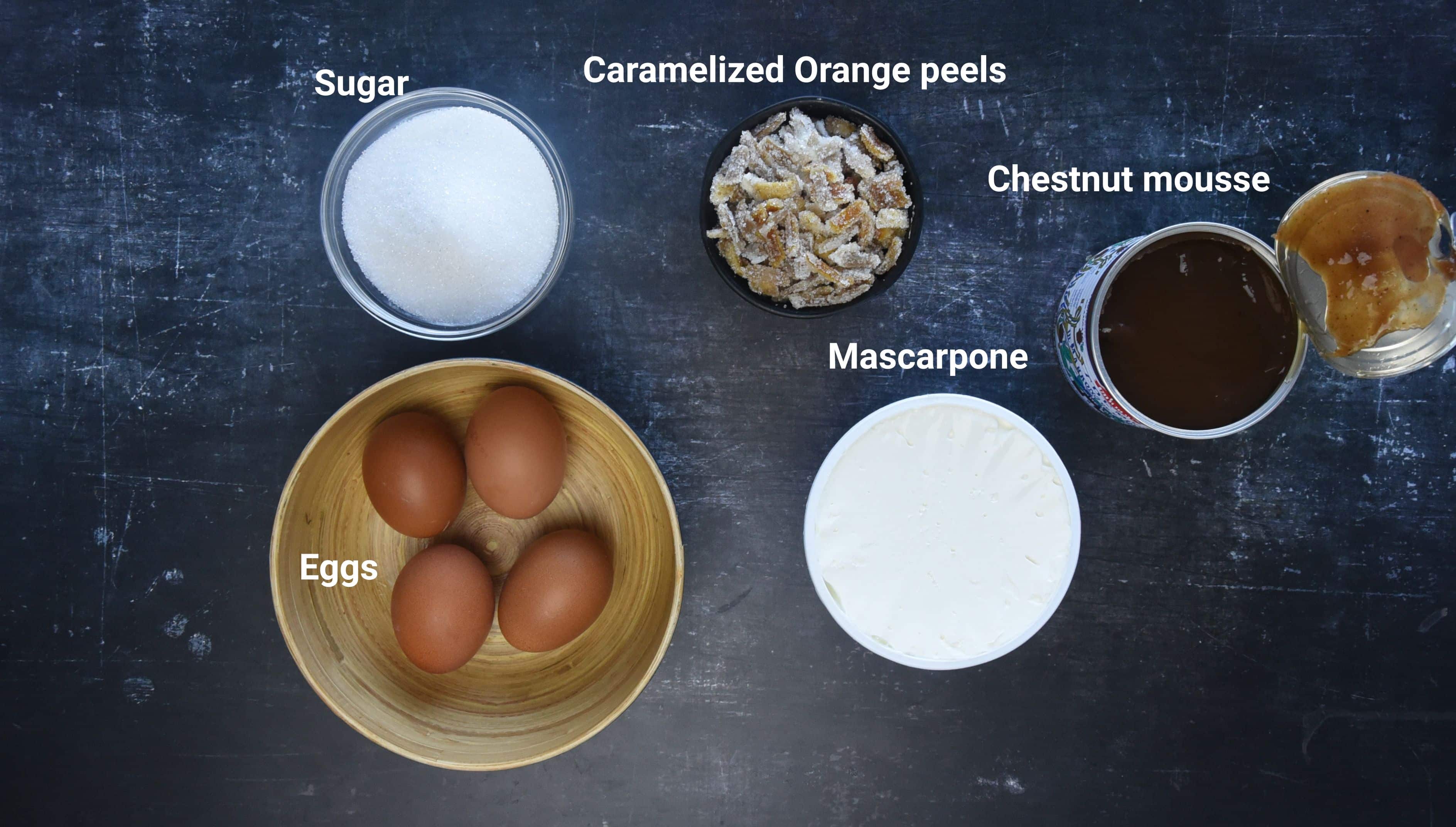
For the Tiramisu Cream Filling
- Mascarpone Cheese: A rich, Italian dairy staple that creates a creamy, indulgent consistency for the filling.
- Eggs: Whisked with sugar to form the traditional, airy base of the Tiramisu-style center.
- Granulated Sugar: Sweetens the cream and helps stabilize the mascarpone mixture.
For the Frosting and Decoration
- Marron Spread: This provides the "bark" texture. You can buy it already made or find my recipe for chestnut spread
- Candied Cherries: Adds a festive touch and vibrant color to the holiday log.
- Caramelized Orange and Lemon Zest: These citrus elements provide a bright contrast to the rich cream.
Find the measurements in the recipe card
Step-by-Step Instructions
Preparing the sponge cake
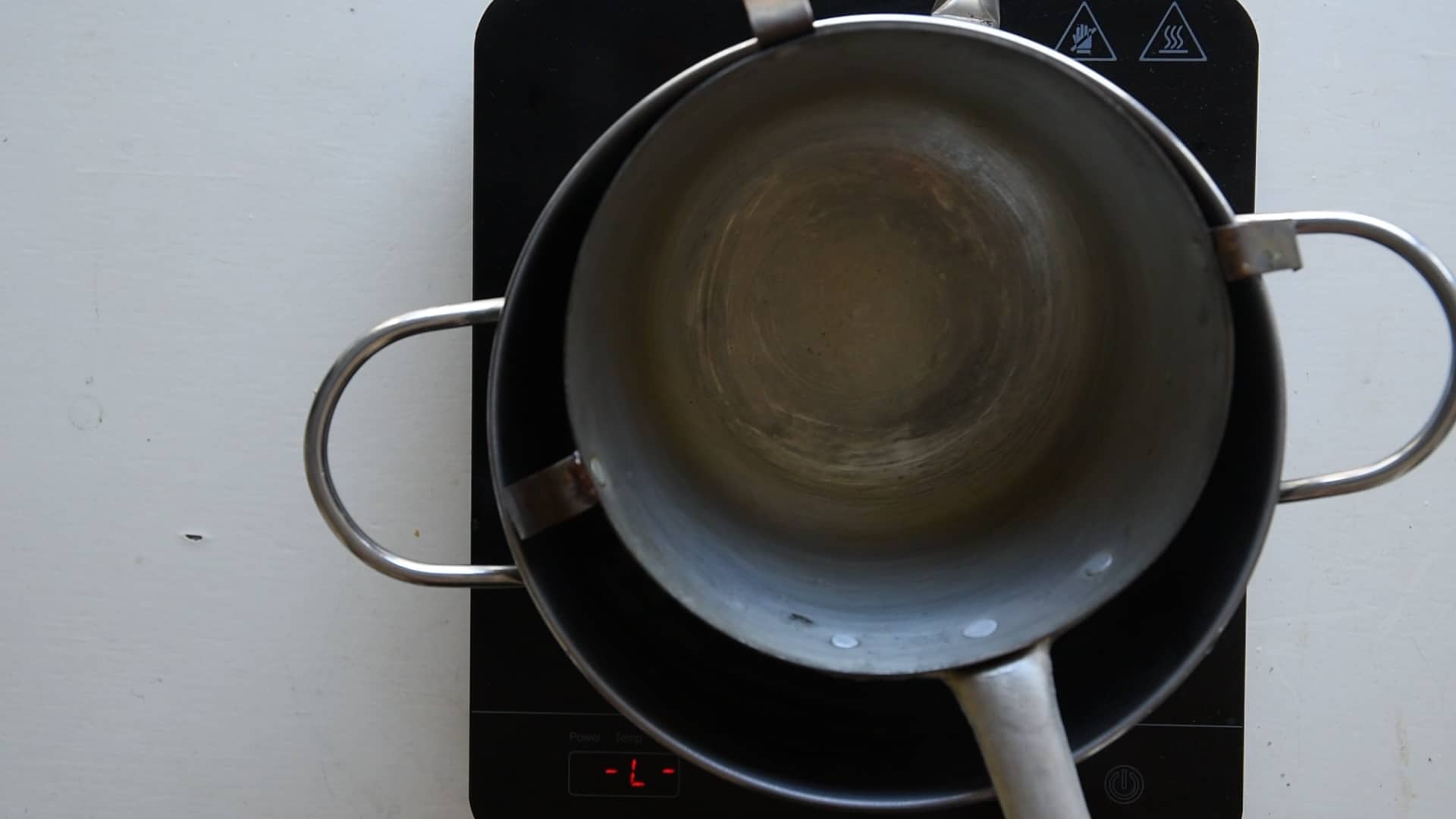
Set up a bain-marie by placing a heatproof bowl over a pan of simmering water, ensuring the water does not reach a boil.
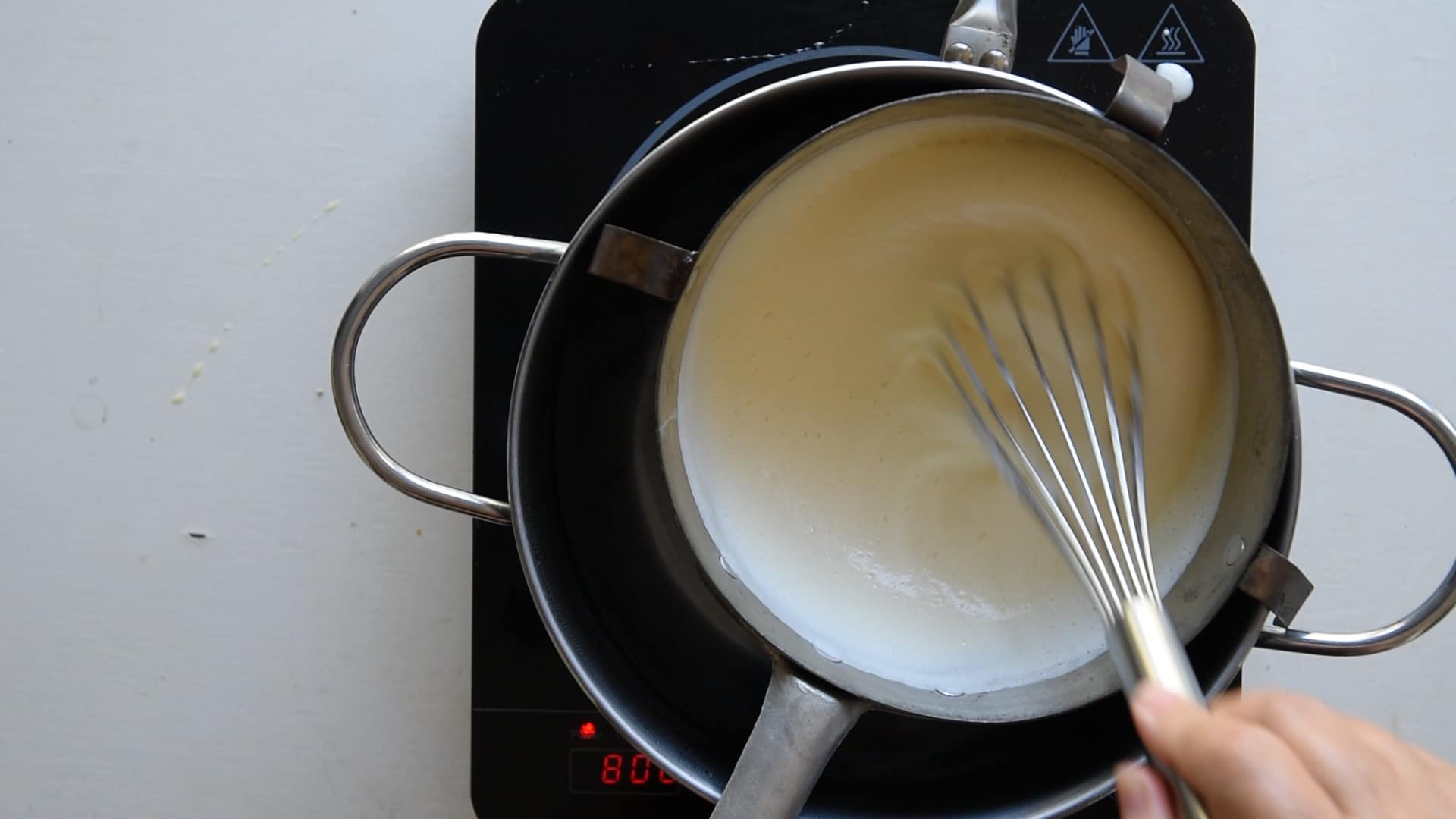
Whisk the eggs and sugar in the bowl continuously until the mixture is thick, pale, and has tripled in volume.
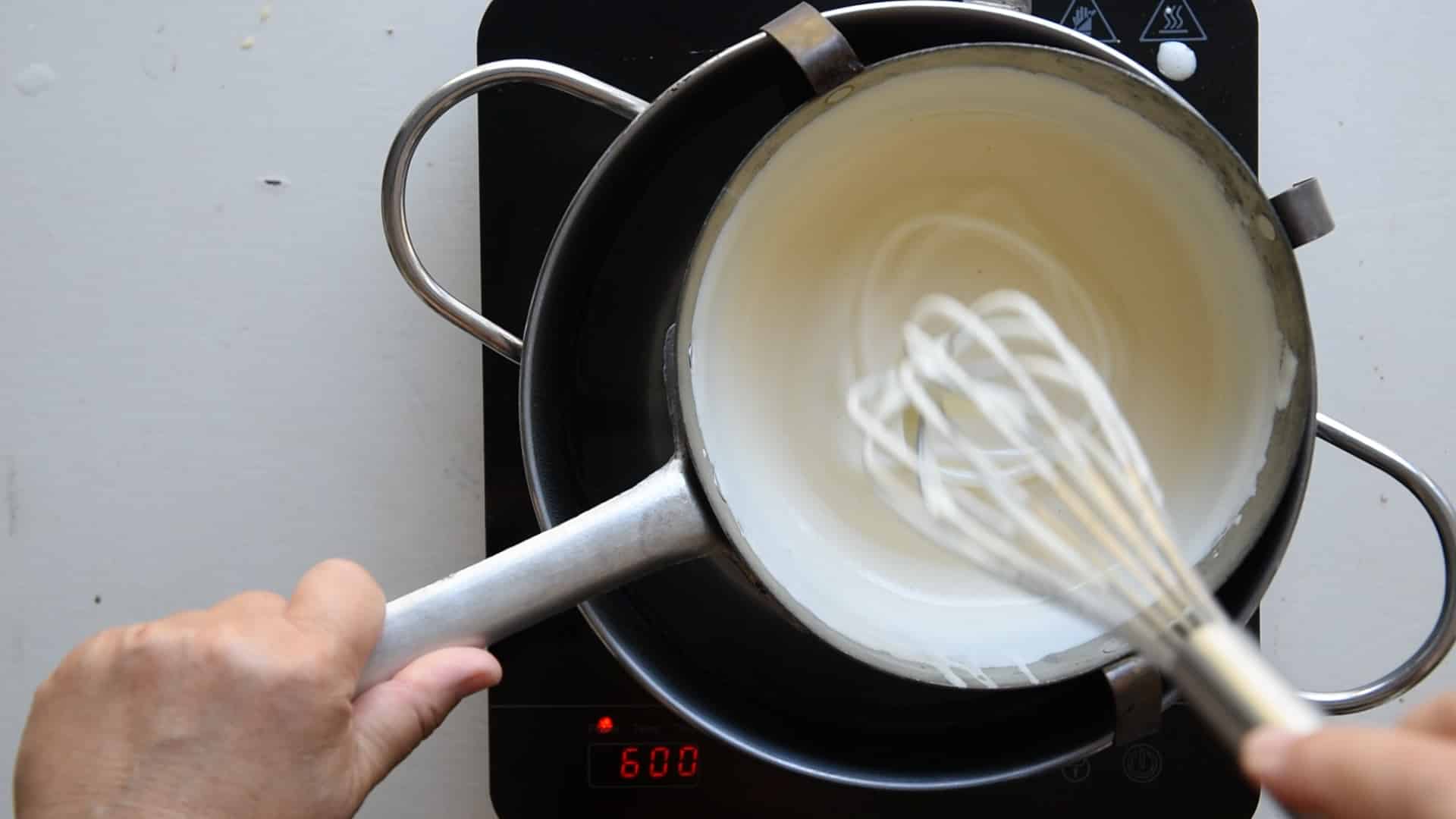
Whisk vigorously until you can form a ribbon trail on the surface.
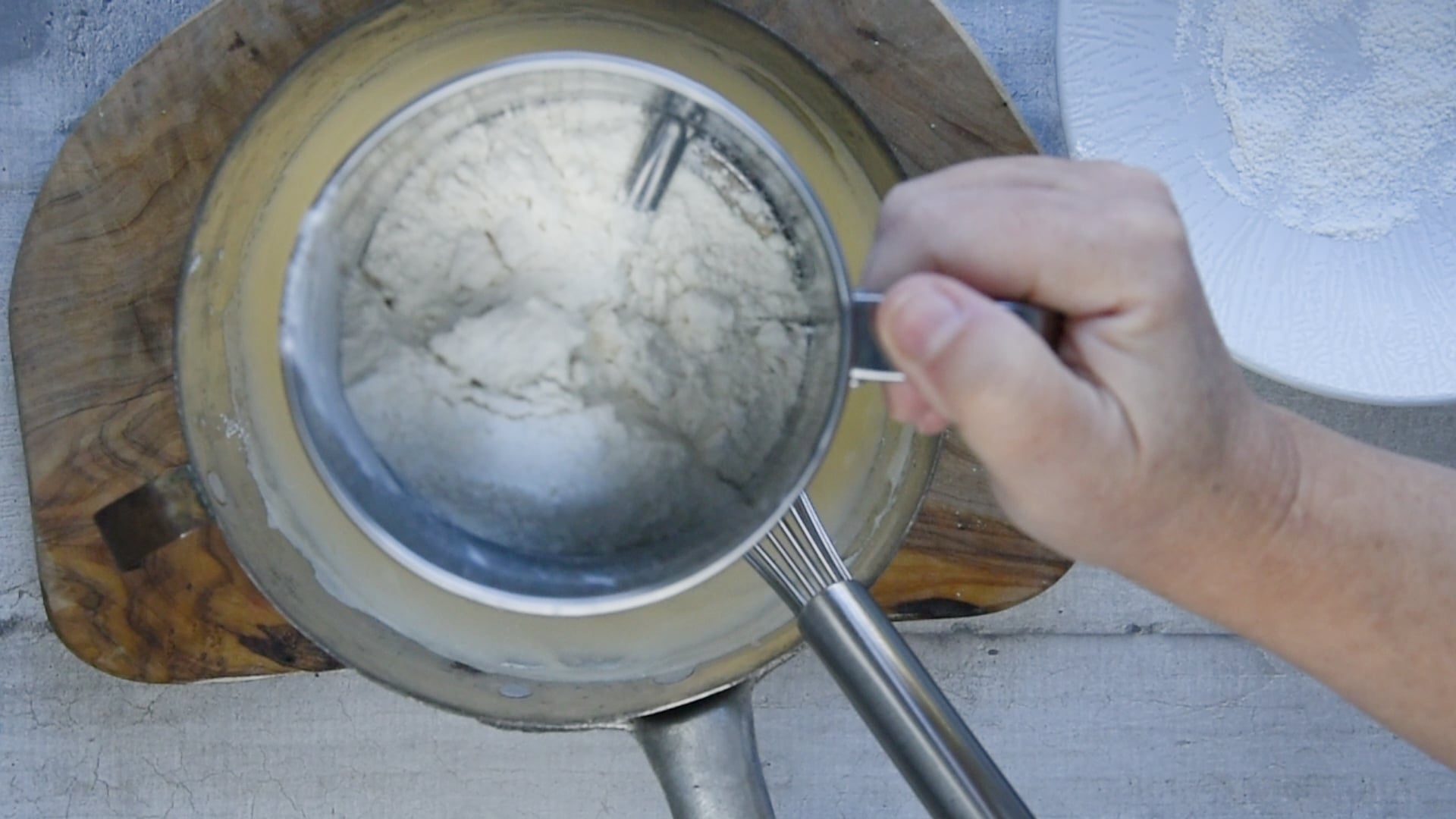
Remove the bowl from the heat and gently fold in the sifted flour, salt, and vanilla essence with a whisk, using slow movements to maintain the air in the batter.
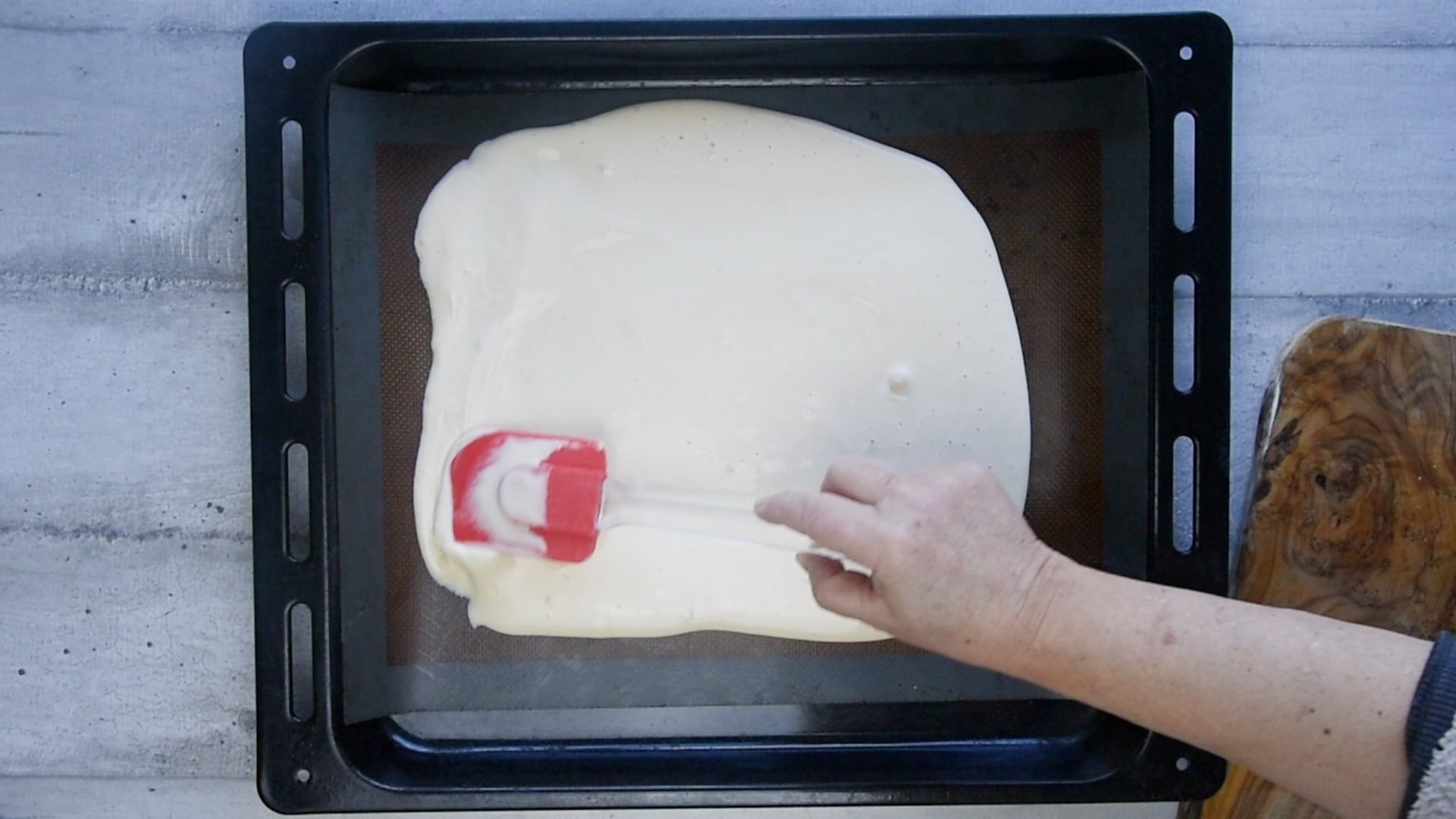
Spread the mixture evenly onto a baking tray lined with parchment paper.
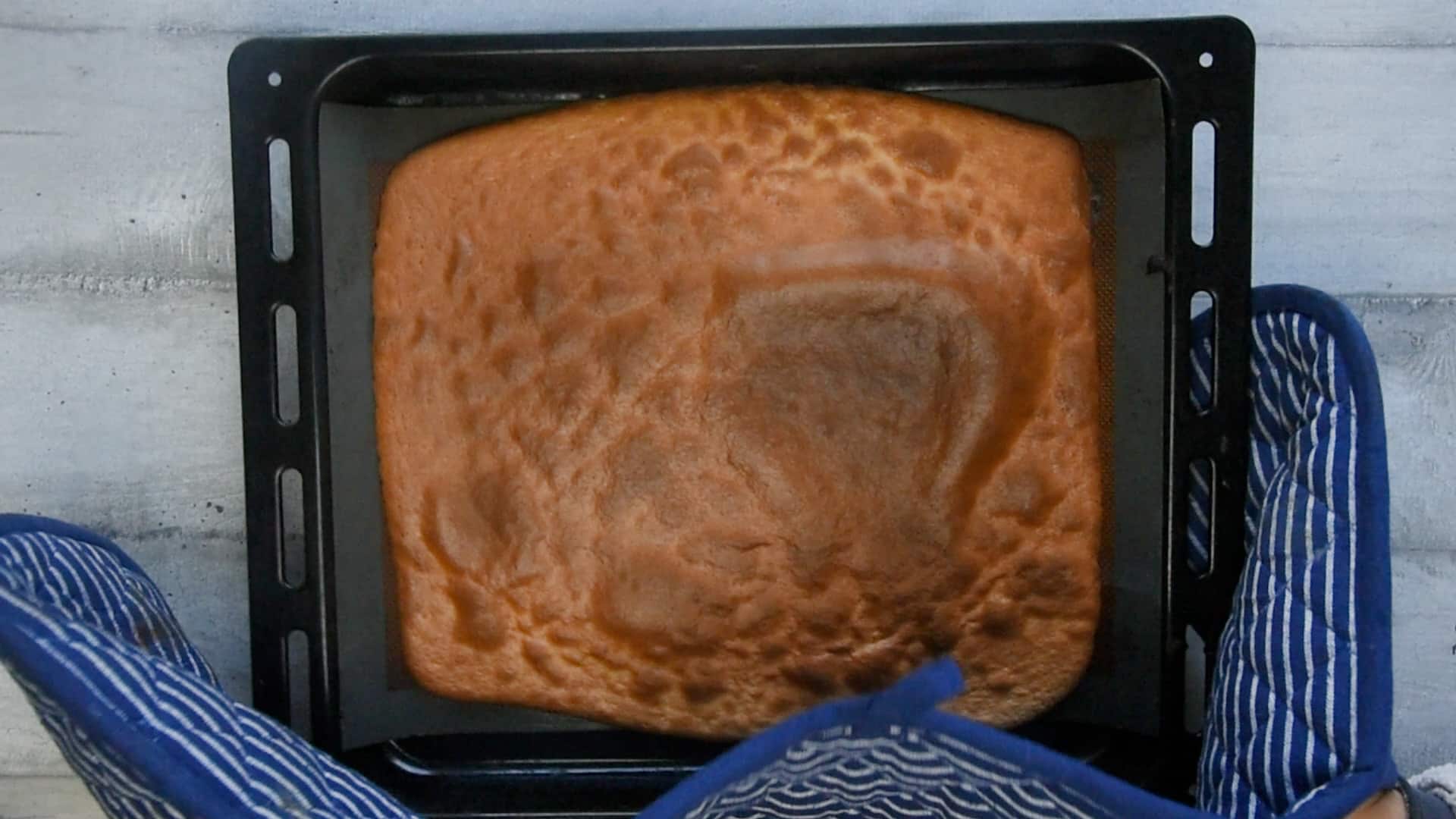
Bake in a preheated oven at 200°C (390°F); since the layer is very thin, it will cook rapidly, usually in about 10 minutes.
Remove the sponge with the parchment paper from the baking tray and roll it immediately while still warm to set the shape so it doesn't break.
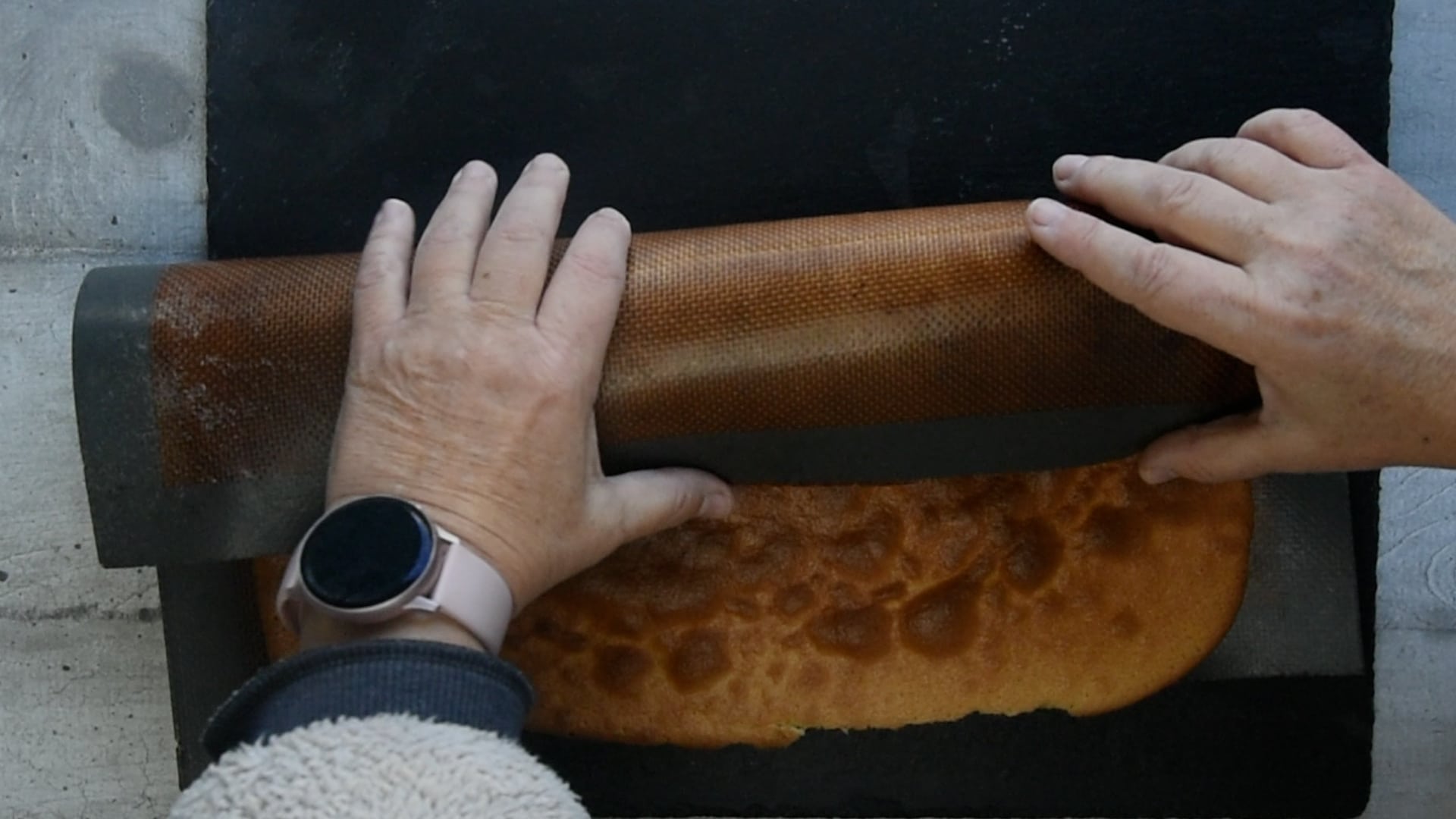
To simplify the process I bake it over a reusable silicon sheet that makes it easier to roll
Preparing the Mascarpone cream
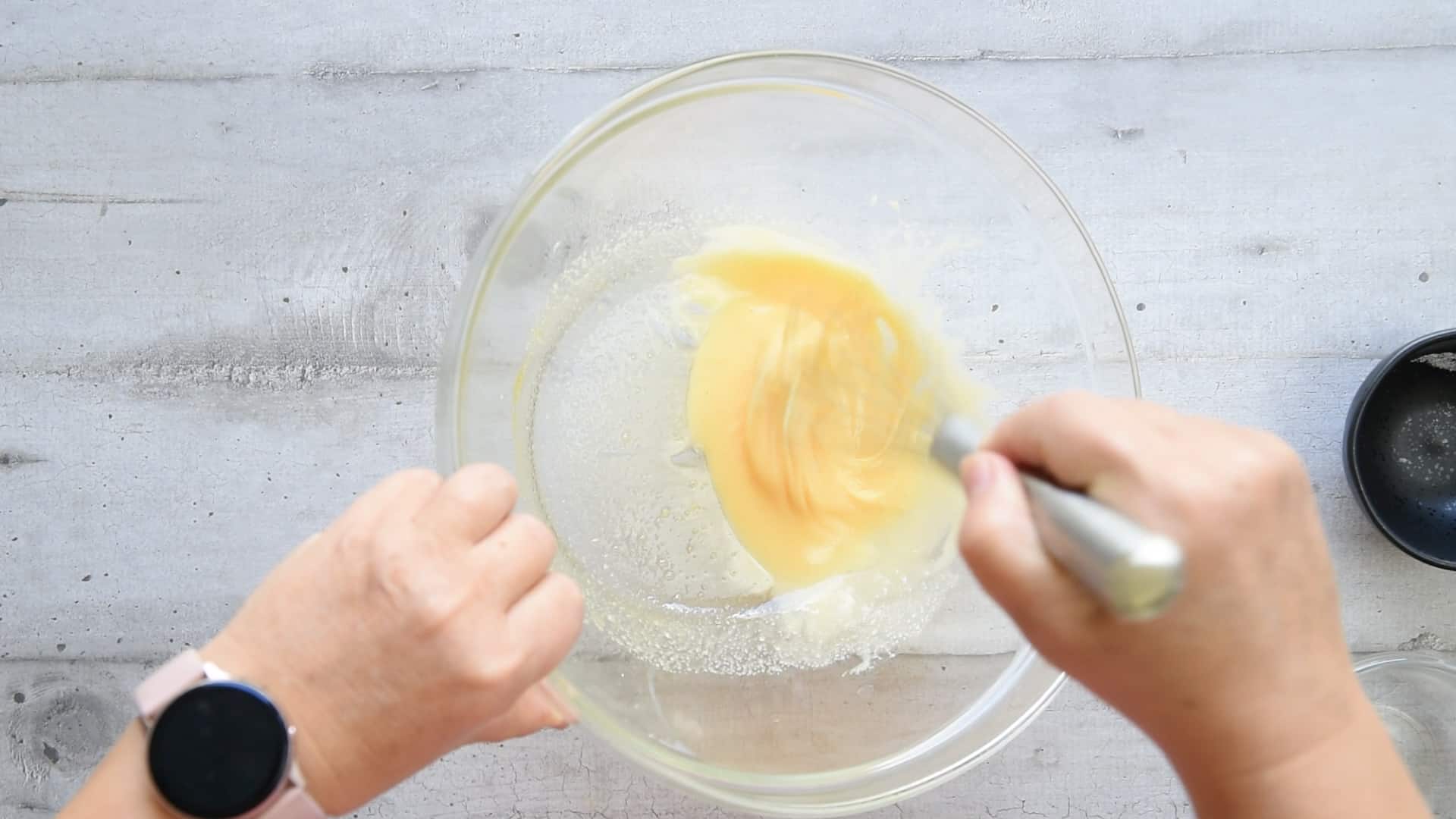
Prepare the filling by first whisking the egg yolks with sugar until pale and creamy.
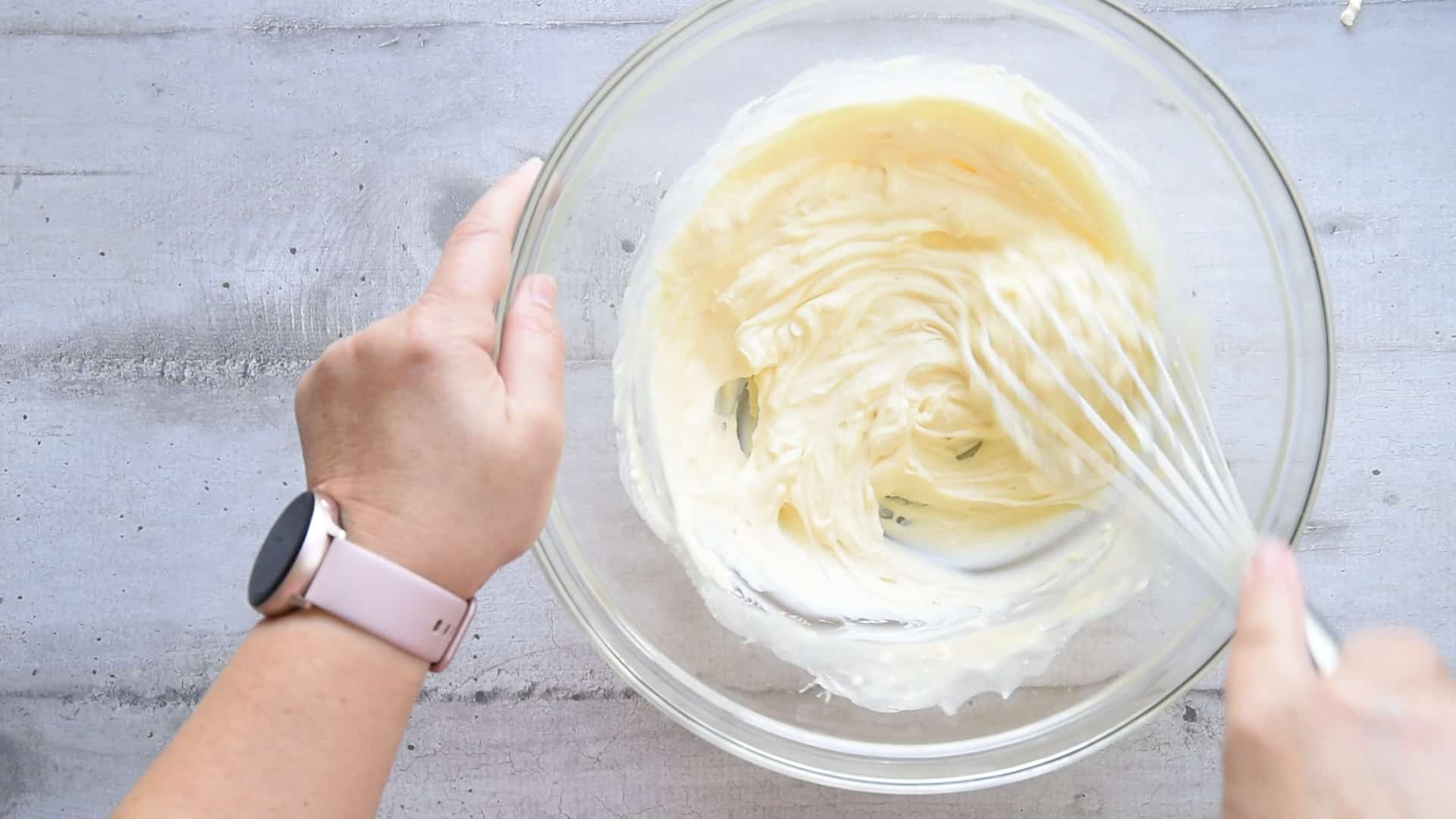
Gently fold in the mascarpone until smooth.
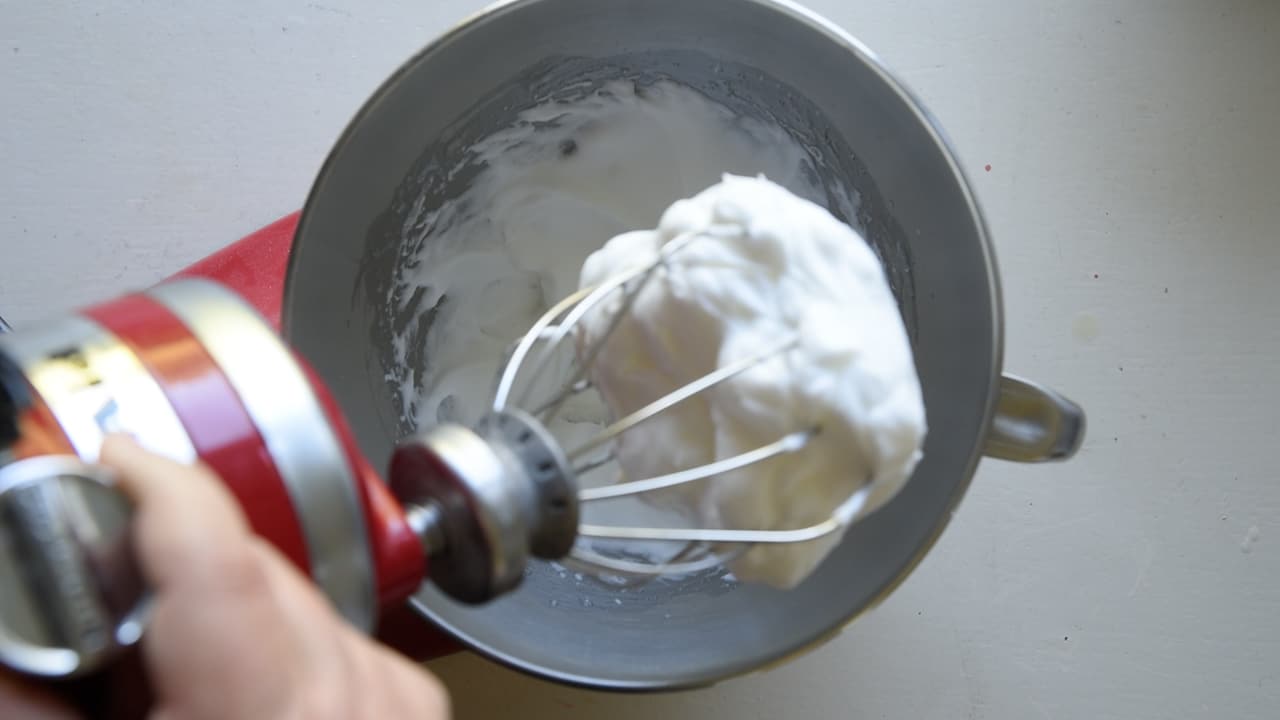
In a separate clean bowl, whisk the egg whites until stiff peaks form.
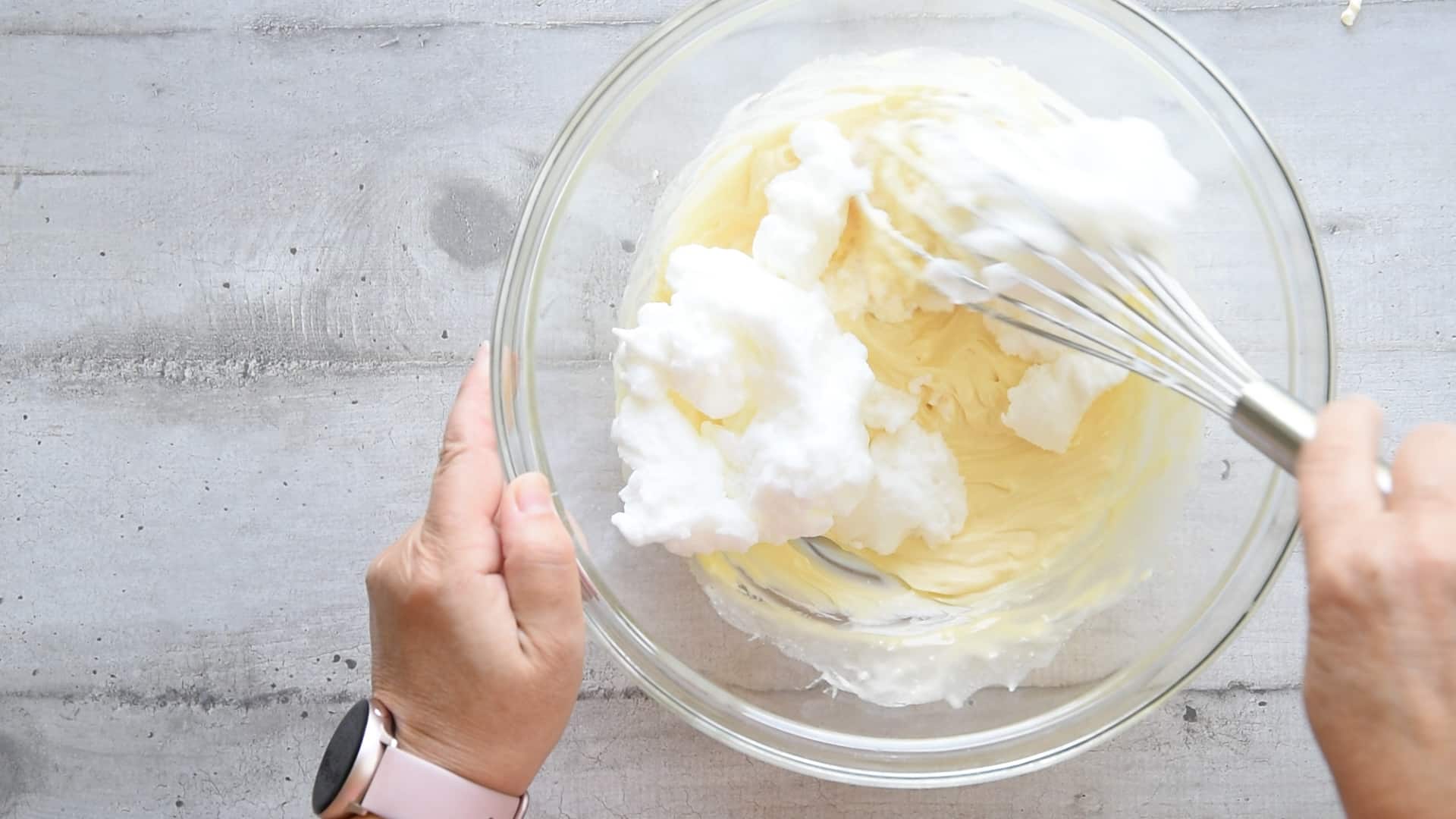
Gently fold them into the mascarpone mixture to create a light, fluffy cream.
Assembling the log
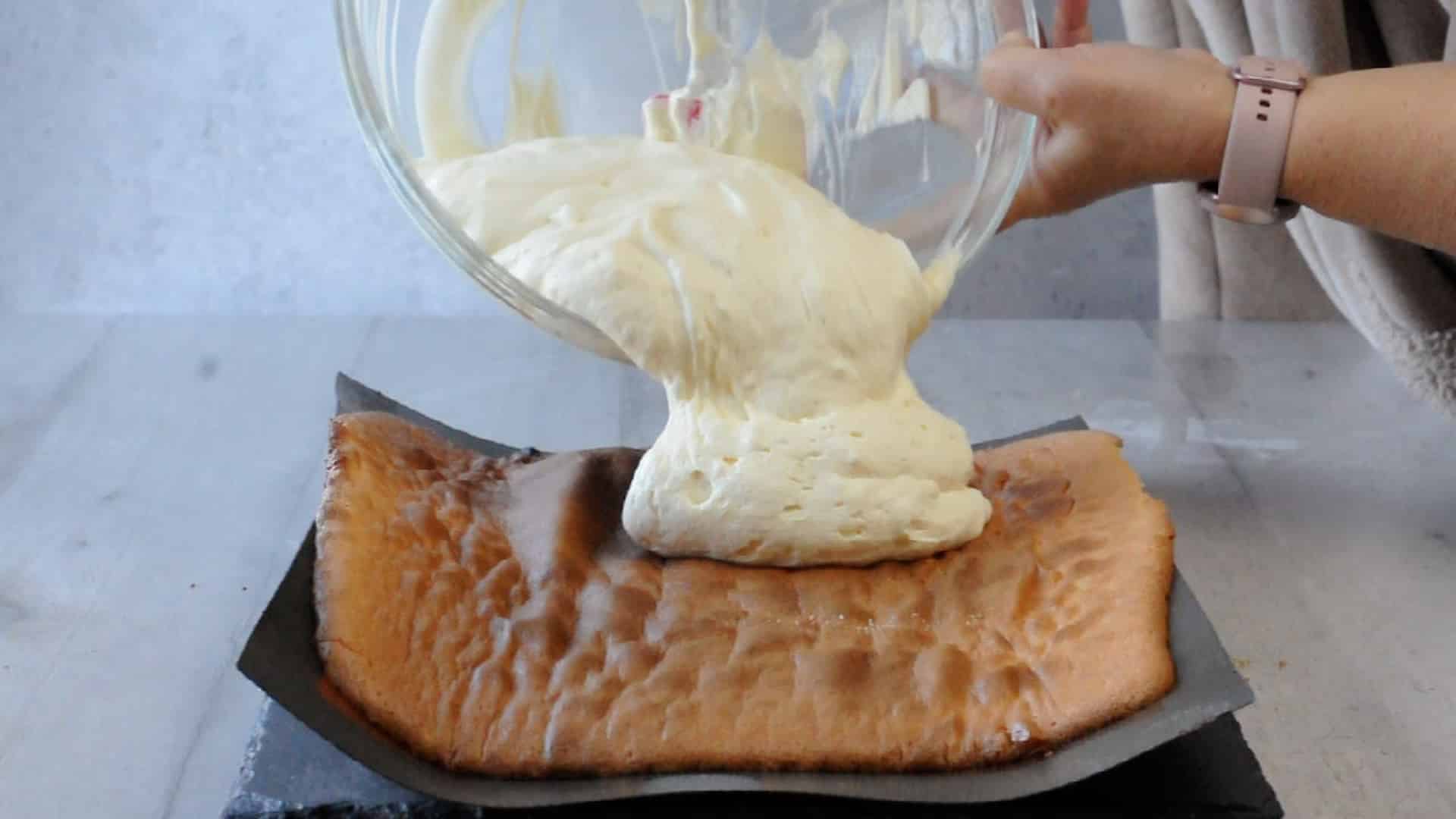
Unroll the cooled sponge and spread the mascarpone cream evenly across the surface.
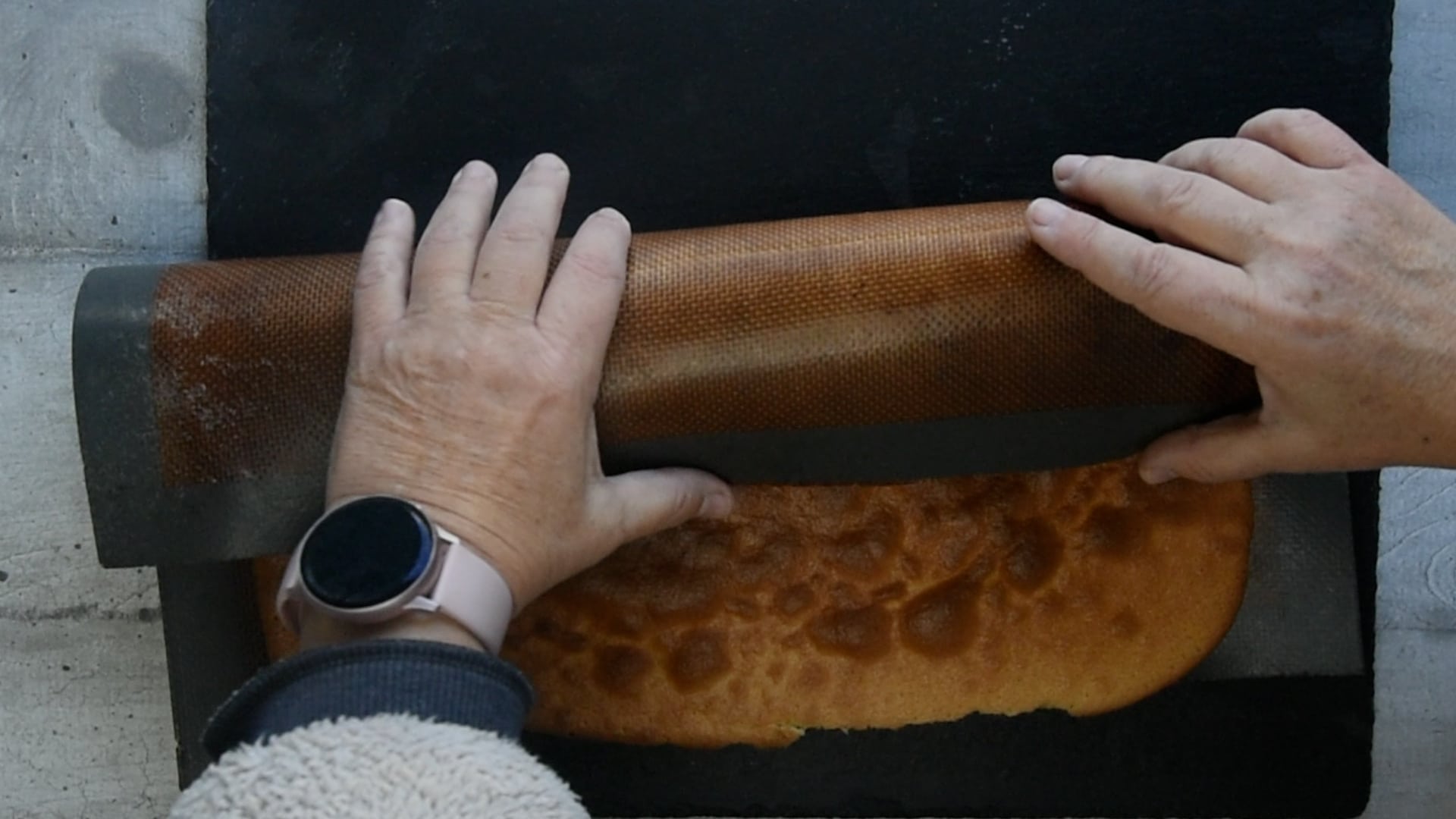
Roll the sponge back up tightly; if you prefer, you can lightly brush the sponge with orange liqueur, though I skip this for large family gatherings to keep the dessert child-friendly.
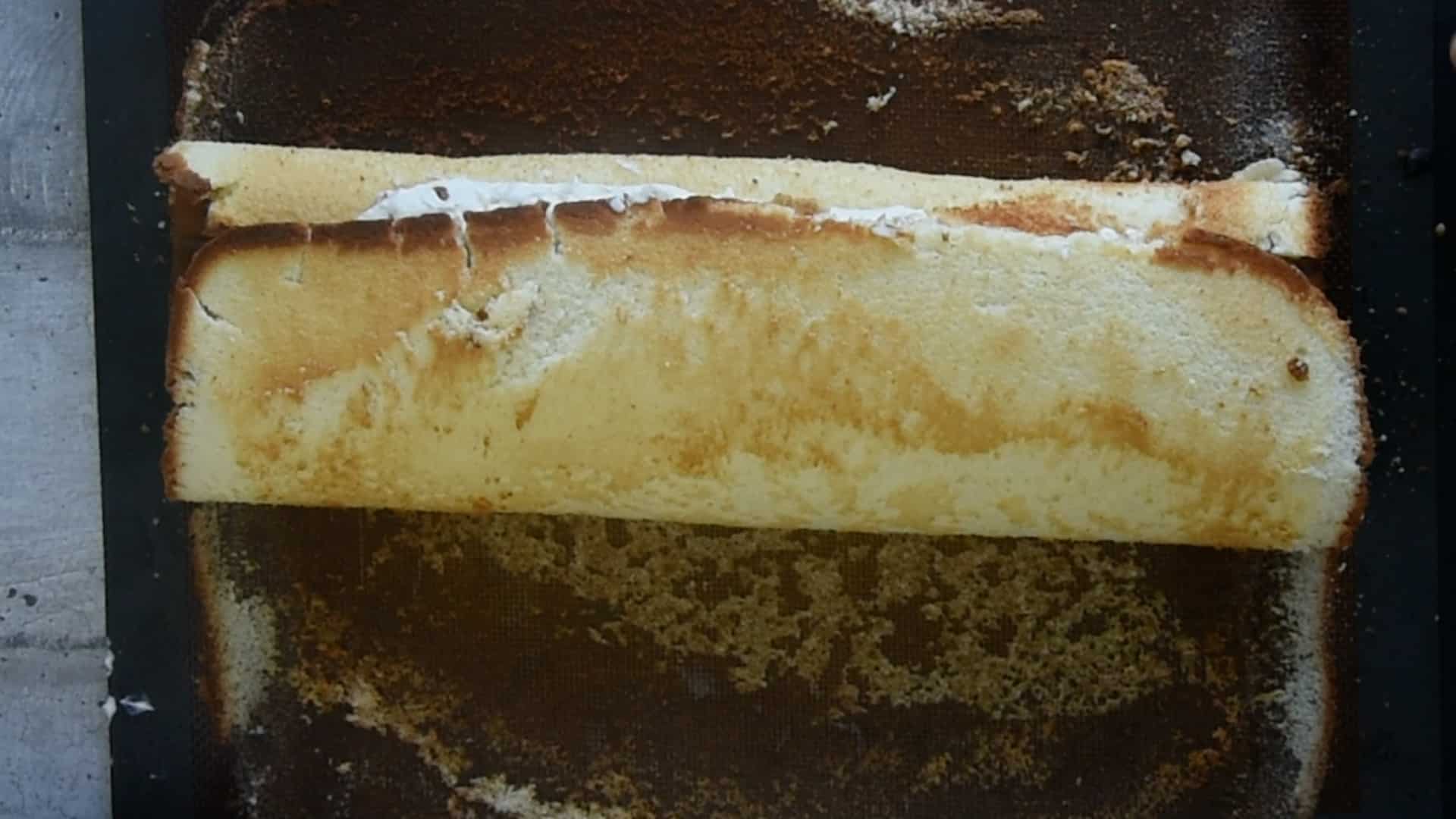
Refrigirate for a couple of hours to firm it up
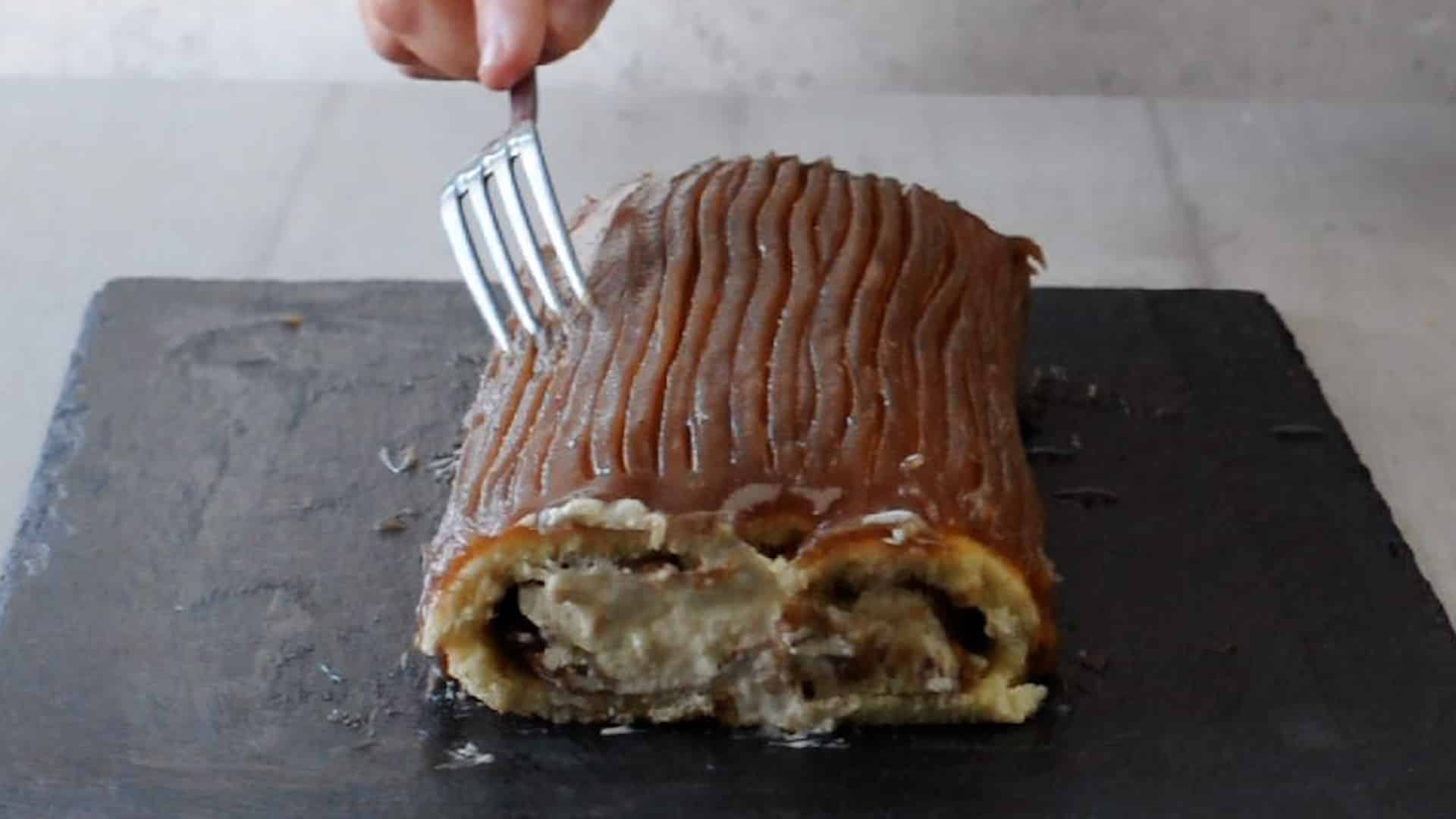
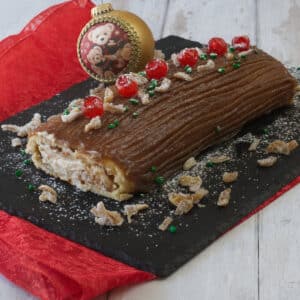
Frost the exterior with the marron mousse, using a fork to create textured lines that mimic the look of tree bark.
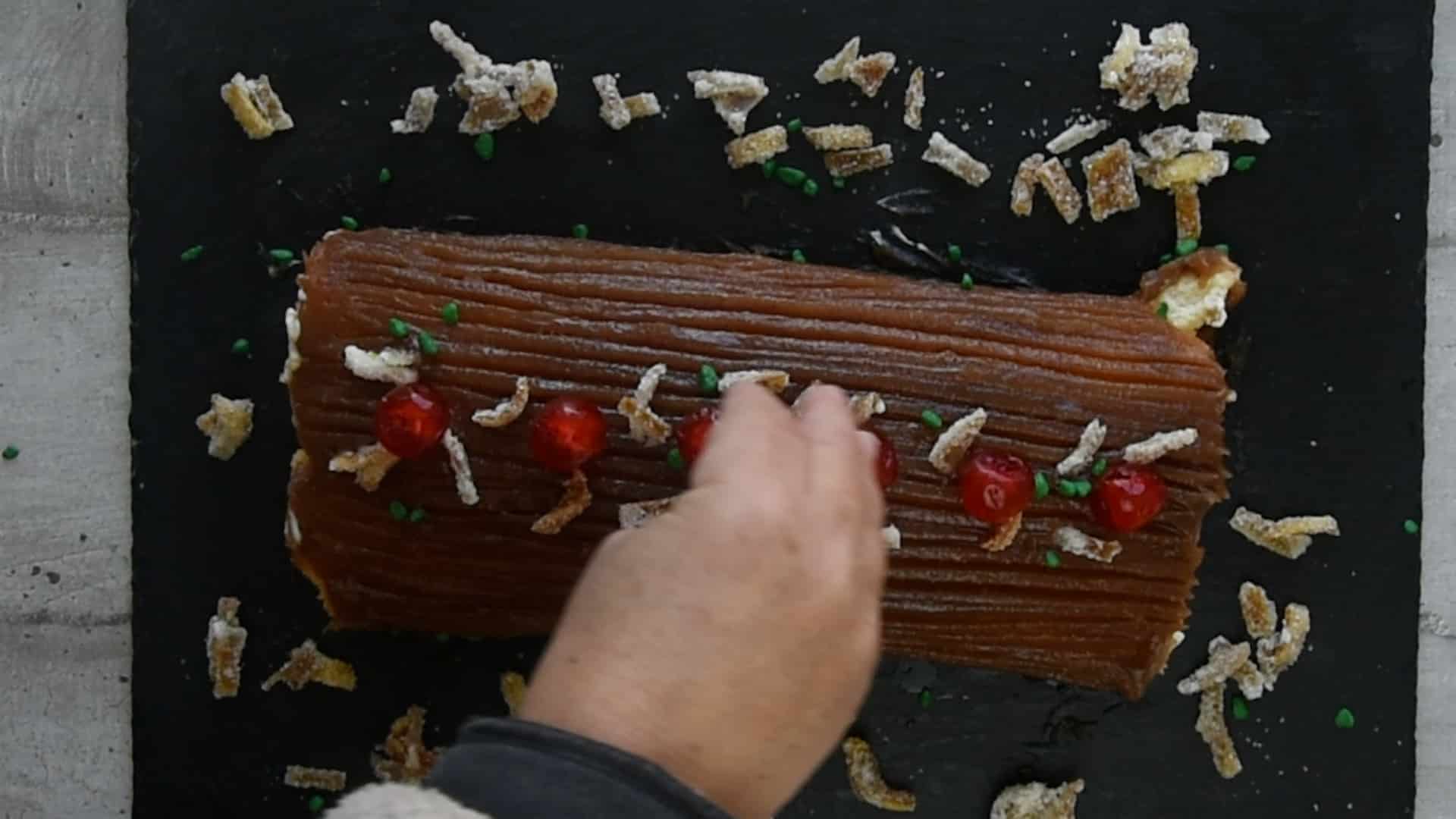
Garnish with candied cherries and caramelized orange and lemon zest, then refrigerate for several hours to allow the flavors to meld and the structure to firm up.
I decorate the log with my homemade candied citrus peel.
Serving Suggestions
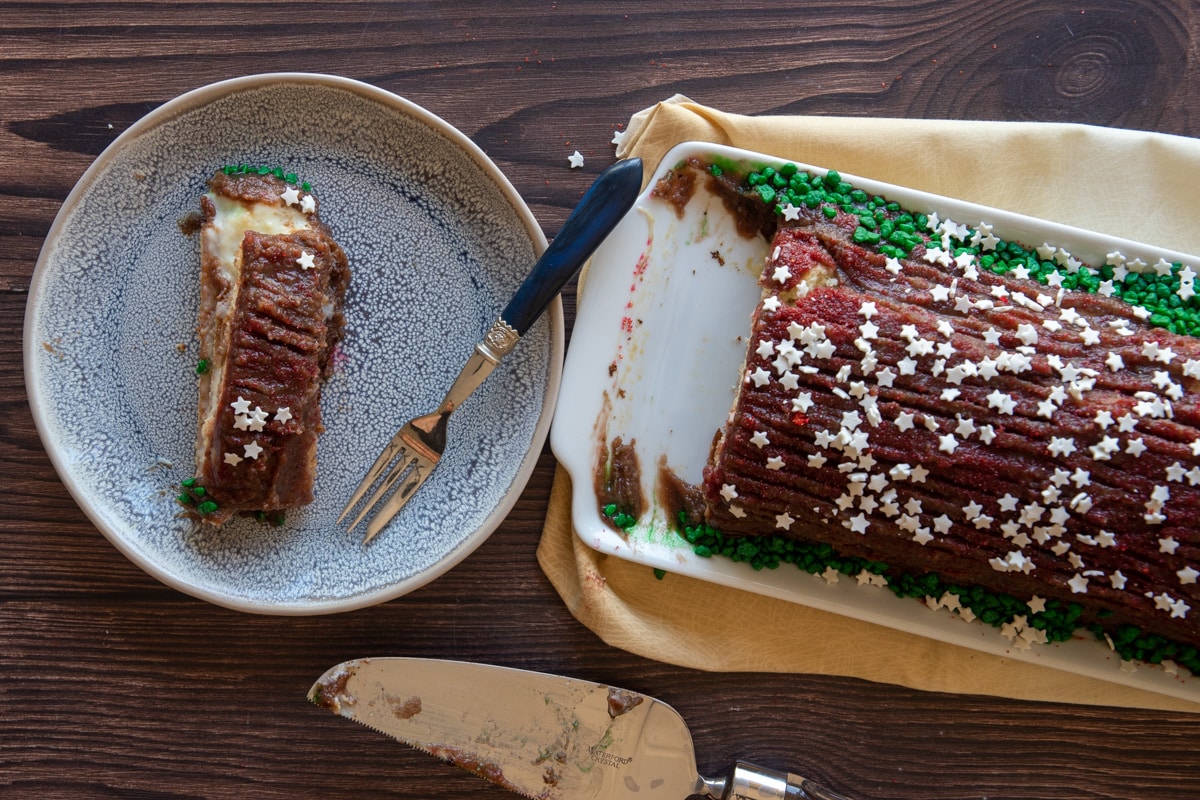
Keep the Tronchetto di Natale in the fridge until you are ready to serve it to maintain the structure of the mascarpone cream and frosting.
It makes a splendid centerpiece for your dessert table.
While I skip using alcohol in the cake for the sake of the children, a selection of homemade liqueurs is mandatory for the adults to aid digestion after a lavish meal.
Whether you offer a classic Limoncello or a more complex infused spirit, serving these traditional digestivos is the perfect way to finish the celebration.
More recipes with Chestnuts

If you are making this Tronchetto di Natale, please leave your comment below. I would love to hear from you. You can find more delicious ideas if you FOLLOW ME on Facebook, YouTube, Instagram or sign up to my newsletter.
Tronchetto Di Natale (Italian Tiramisu Yule Log)
Verified Culinary AuthorityVideo
Equipment
Ingredients
Swiss rolls sponge
- 4 fresh eggs
- ¾ cup sugar
- ½ cup flour
- 1 pinch salt
Filling
- 4 fresh eggs separated
- 4 tablespoon sugar
- 17 oz Mascarpone
Decoration
- 17 oz chestnut cream
- 5 candied cherries
- 16 oz caramellized orange peels
Instructions
Sponge cake
- Set up a bain-marie by placing a heatproof bowl over a pan of simmering water, ensuring the water does not reach a boil or touch the bottom of the bowl.
- Whisk the eggs and sugar in the bowl continuously until the mixture is thick, pale, and has tripled in volume.
- Whisk vigorously until you can form a ribbon trail on the surface.
- Remove the bowl from the heat and gently fold in the sifted flour, salt, and vanilla essence with a whisk, using slow movements to maintain the air in the batter.
- Spread the mixture evenly onto a baking tray lined with parchment paper.
- Bake in a preheated oven at 200°C (390°F); since the layer is very thin, it will cook rapidly, usually in about 10 minutes.
- Remove the sponge with the parchment paper from the baking tray and roll it immediately while still warm to set the shape so it doesn't break.
Mascarpone cream
- Prepare the filling by first whisking the egg yolks with sugar until pale and creamy.
- Gently fold in the mascarpone until smooth.
- In a separate clean bowl, whisk the egg whites until stiff peaks form.
- Gently fold them into the mascarpone mixture to create a light, fluffy cream.
Put it together
- Unroll the cooled sponge and spread the mascarpone cream evenly across the surface.
- Roll the sponge back up tightly; if you prefer, you can lightly brush the sponge with orange liqueur, though I skip this for large family gatherings to keep the dessert child-friendly.
- Refrigirate for a couple of hours to firm it up
- Frost the exterior with the marron mousse, using a fork to create textured lines that mimic the look of tree bark.
- Garnish with candied cherries and caramelized orange and lemon zest, then refrigerate for several hours to allow the flavors to meld and the structure to firm up.


Leave a Reply