
Gnocchi di patate (pronounced NYOH-kee) are Italian potato dumplings that we serve as a primo piatto, and in this recipe I show you how to make both fluffy gnocchi and classic gnocchi. In the 70s my mother taught me this recipe from her Cordon Bleu class in Rome. The recipe has no egg, so the pure potato flavor stands out.

Jump to:
When it comes to Italian potato gnocchi, you'll find a real difference between what you buy at the store and what you make fresh at home.
While store-bought gnocchi offer convenience, they are frequently denser and can be a bit rubbery.
This is mainly because of the ingredients added to help them last longer on the shelf.
These additions can unfortunately take away from the soft, pleasant feel that good gnocchi should have.
Homemade Italian potato gnocchi, on the other hand, made simply with potatoes and flour, offer a much lighter texture and a richer potato flavor.
Store-bought versions just can't usually compare in terms of quality and taste.
Choosing to make gnocchi at home really ensures a better dish overall.
The difference in both texture and flavor is quite noticeable.
Once you've tasted fresh, homemade gnocchi, you'll likely find it hard to go back to store-bought.
This easy homemade gnocchi recipe will show you how to get the texture you like, whether you prefer them large and a bit firmer or small and very soft.
And you can enjoy them with your favorite sauces, like classic pesto or butter and sage.
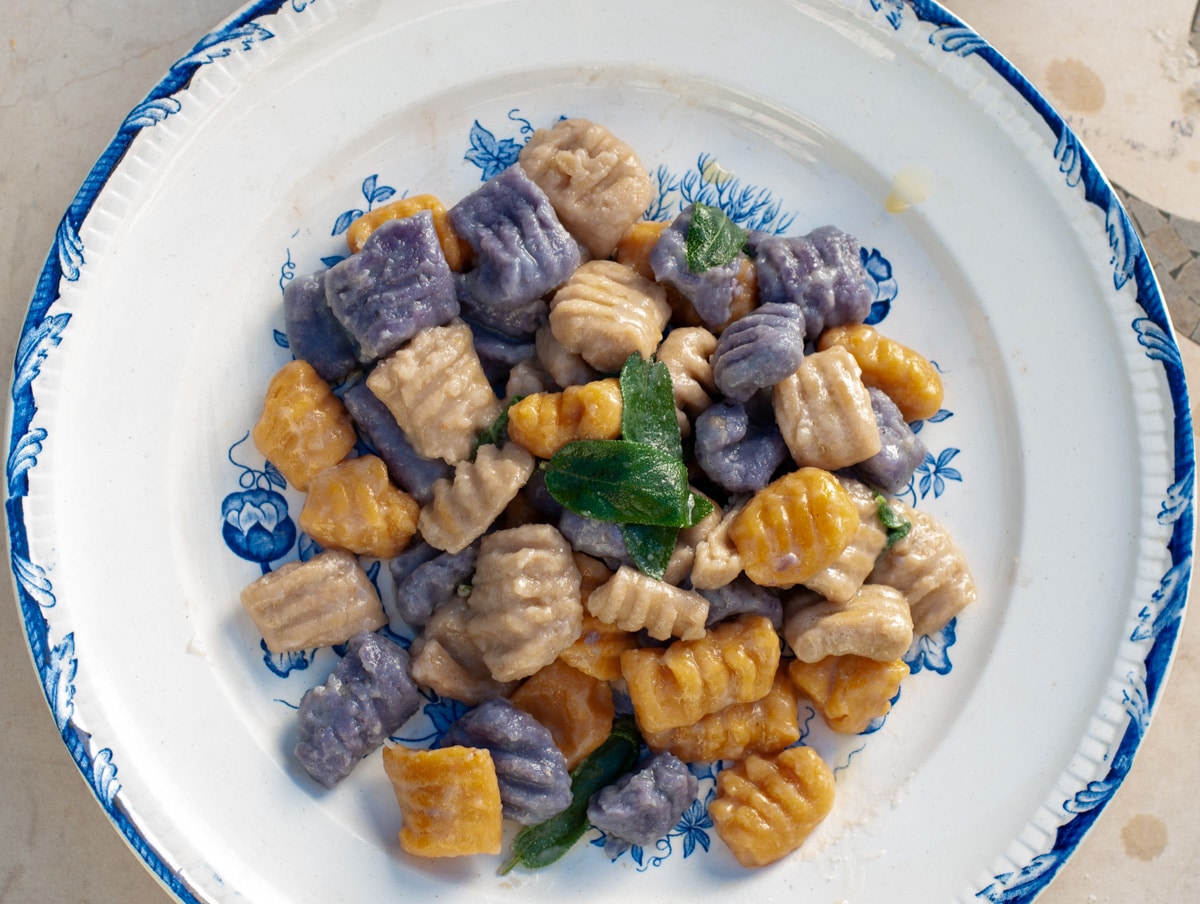
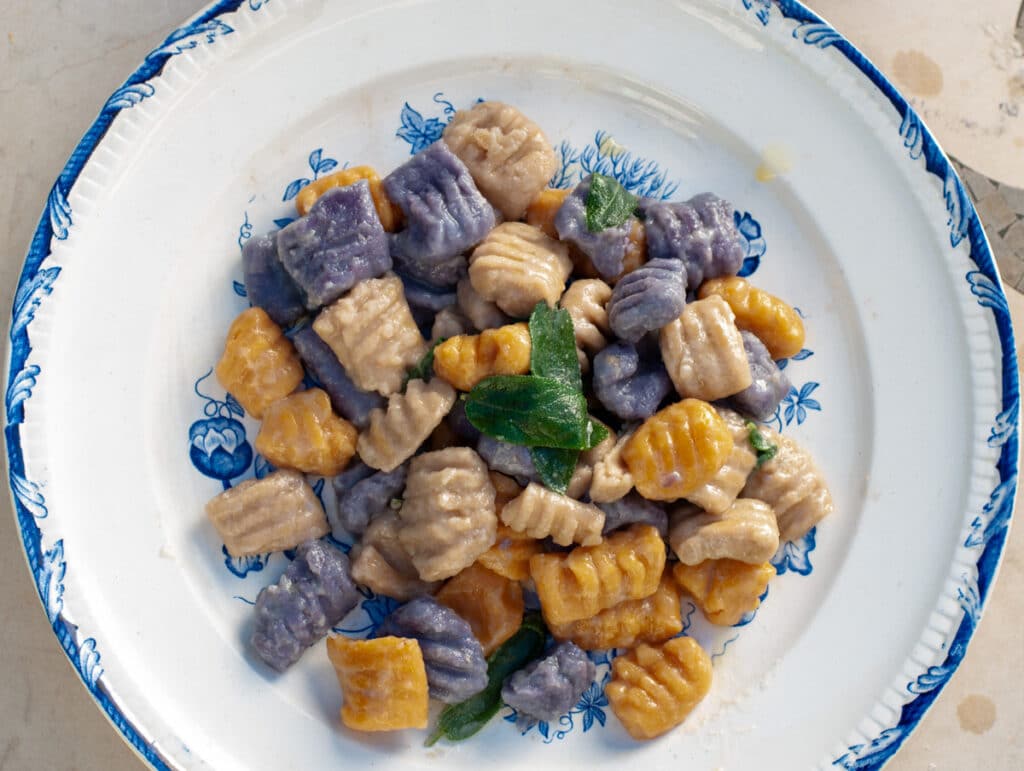
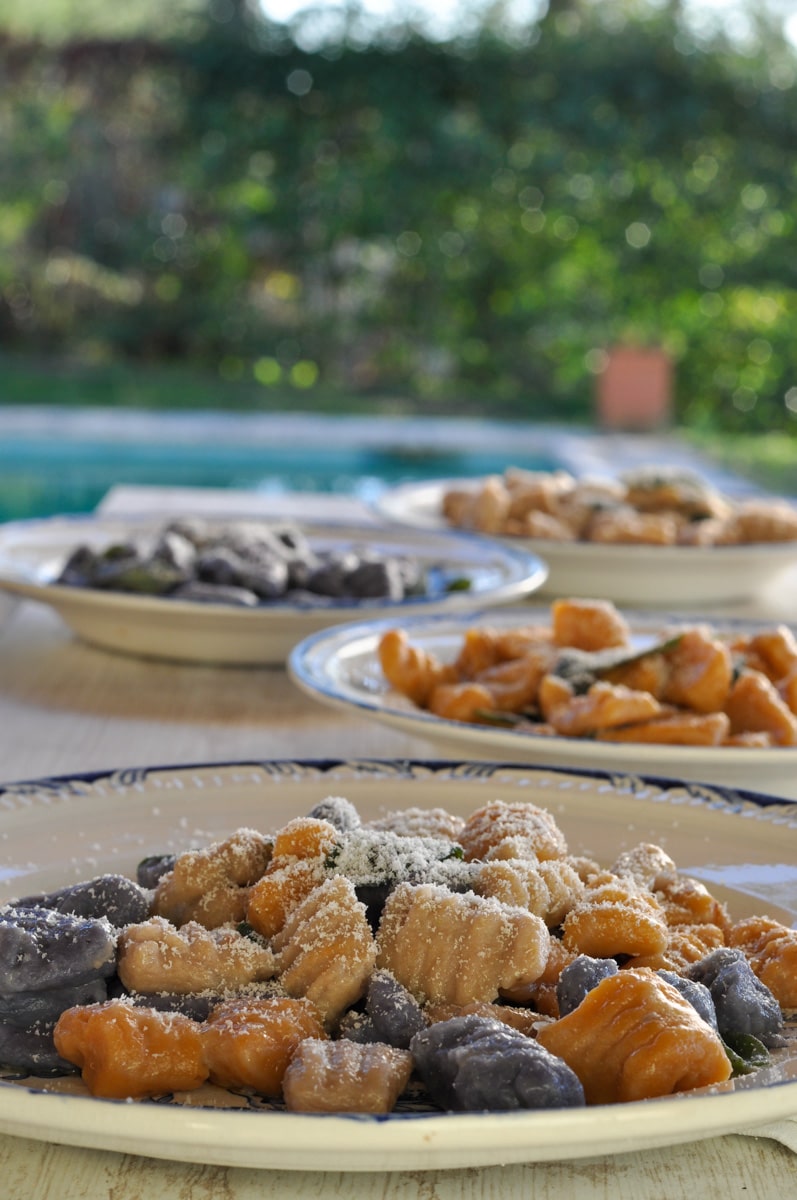
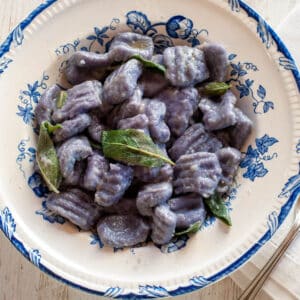
For added flavor and color, consider incorporating different types of potatoes or vegetables, such as purple or sweet potatoes, chestnuts, or sweet pumpkins.
While potato-based gnocchi is the most common, variations like ricotta cheese gnocchi, breadcrumb gnocchi, and semolina gnocchi also have a rich history in Italian cuisine.
Eggs, Yea or Nay
Gnocchi can raise some serious controversy in Italy. There are two authentic versions, one with eggs and one without, and their supporters defend them as passionately as their favorite soccer team. If gnocchi had political parties, they would be the Eggists and the Eggless.
I am a strong eggless supporter as without the egg, they can cater to vegetarians and vegans alike, and I can tailor its texture to the specific dish I'm making.
This is the technique my mother taught me in the 70s and I have always made them this way without ever compromising on that light and tender texture.

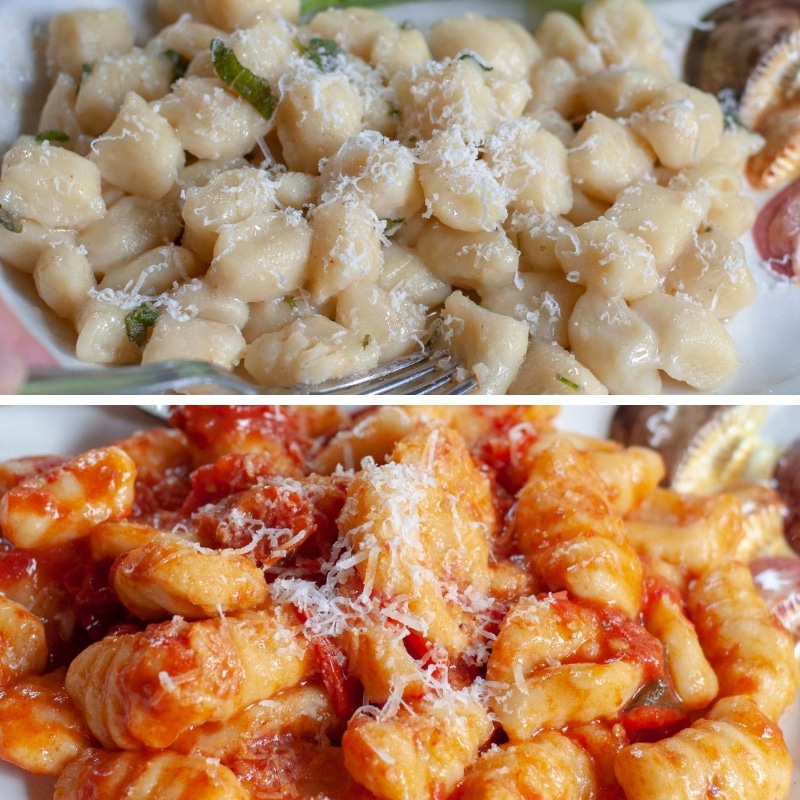
These delightful Italian eggless dumplings can be light and airy or robust and firm.
The lighter gnocchi complement light sauces, ideal for starters or sides, while the heftier version stands up well to rich sauces like ragù, making it a perfect main course.
Ingredients
To prepare a delicious gnocchi dish, you will need the following main ingredients:
- Potatoes: Opt for old, Russet potatoes, which remain smooth and firm when boiled. Boil the potatoes unpeeled to prevent water absorption.
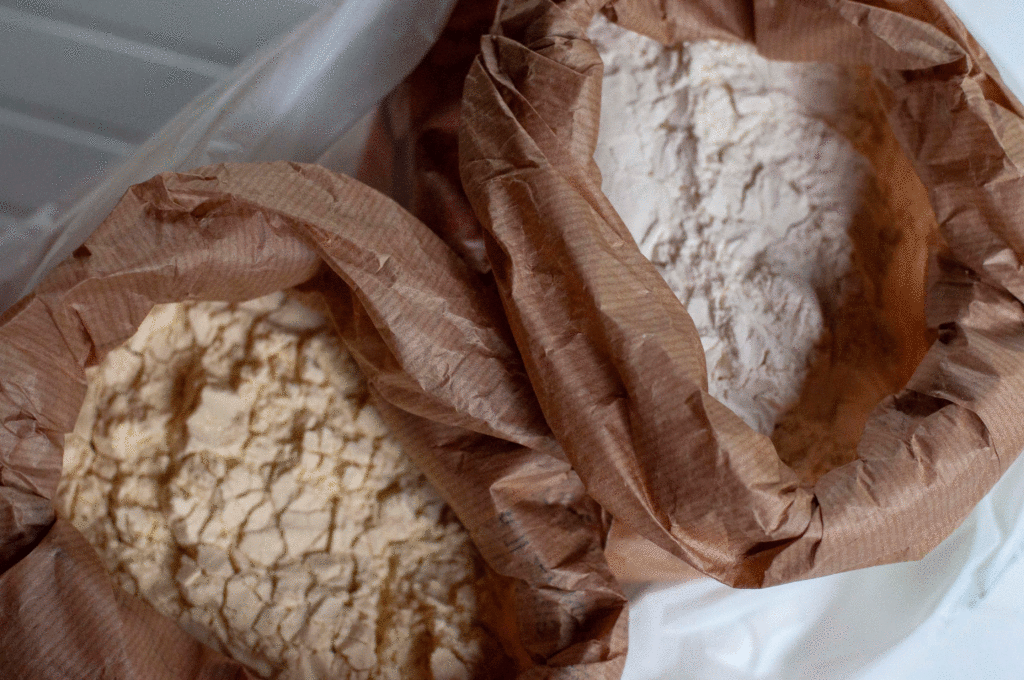
- Type 00 or all-purpose flour: In Italy we always use type 00; all-purpose flour will do.
- Semolina flour: Use this only for chunky gnocchi variations.
- Salt: For seasoning the dough and boiling water.
Instructions
How to cook the potatoes

- Boil the potatoes with their skins on in salted water for 20 minutes.

- To check if the potatoes are cooked through, gently pierce the center of the largest potato with a paring knife. If the knife slides in easily with little to no resistance, they are ready.
If you are using a potato ricer:

- Drain the potatoes and peel them immediately.

- Mash the potatoes while still warm, using a potato ricer (but not a blender).
Extra tips for cooking the potatoes
- Do not peel the potatoes before boiling. The potatoes will absorb too much water leading to soggy gnocchi.
- Avoid using a blender, as this overworks the potatoes, releasing too much starch and resulting in a dense, waxy, and gummy gnocchi texture.
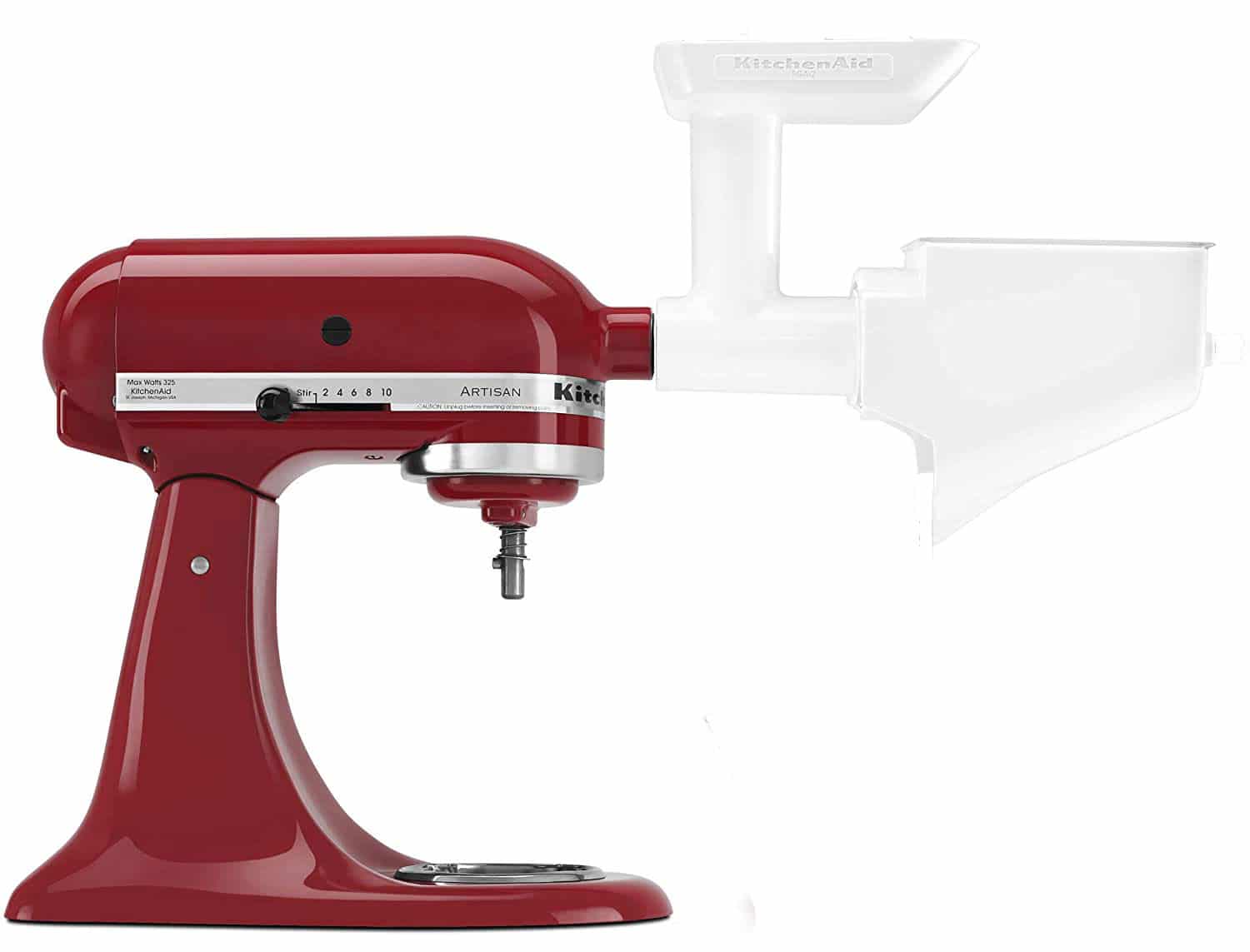
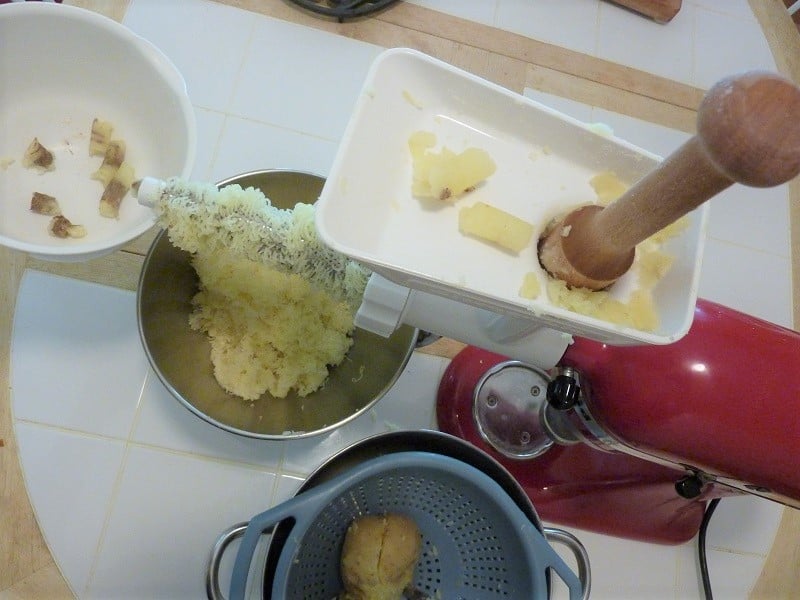
- I recommend using the kitchenaid vegetable strainer as it mashes and peels the potatoes at the same time.
If you are using a vegetable strainer:

- Cut the potatoes in quarters while they are still warm

- Place a slice of cooked potato into the feed tube of the KitchenAid Vegetable Strainer attachment.

- Use the food pusher to gently but firmly push the potato through the strainer.

- Collect the potato skin as it is discharged from the end of the strainer pipe.
N.B: Pass the discharged skins and any remaining puree back through the feed tube again until only dry skin is expelled.
- Set aside the mashed potatoes to cool down completely.
N.B: Do not make the mash the day before as the texture of the potatoes becomes dry, grainy, and loses the right kind of moisture and creaminess

How to make the gnocchi dough
After the mashed potatoes have reached room temperature, mix them with the following ingredients for either fluffy or chunky gnocchi:
Fluffy Gnocchi:
- mashed potatoes
- type 00 or all-purpose flour
- salt
I explain the fluffy version, with its measurements, in my light and fluffy gnocchi recipe.

Chunky Gnocchi:
- mashed potatoes
- semolina flour
- type 00 or all-purpose flour
- salt
Find the measurements in the recipe card.
Reminder: Using a minimal amount of flour makes the best gnocchi. Too much flour results in tougher gnocchi.

How to shape them
- Lightly flour a large, clean work surface.
- Place the mashed potatoes in a mound with a hole in the center. Sprinkle most of the flour over the potatoes.

All-purpose flour and a pinch of salt for fluffy potatoes

All-purpose and semolina flour and a pinch of salt for classic potatoes

- Using your hands, gently begin to incorporate the flour into the mashed potatoes.

- Lightly fold and press to combine, working on the floured surface to prevent sticking.

- Continue until the dough just comes together into a cohesive mass.

- Take a walnut-sized piece of dough and gently roll it back and forth on the lightly floured work surface to form a long rope, about finger-width in diameter.
- Using a bench scraper or knife, cut the rope into your desired gnocchi shapes.

For fluffy gnocchi, cut into small squares

For classic, firmer gnocchi, cut into slightly longer pieces
- Repeat steps 6 and 7 with the remaining dough until all the gnocchi are shaped and arrange them over floured trays on a single layer

How to indent them
Because fluffy gnocchi are small and delicate, indenting them is an extra step that doesn't significantly improve texture or sauce absorption.
We will only indent the larger classic gnocchi:

- Use the back of a fork as your shaping tool. Place a gnocchi piece at the top of the fork's back, resting across the tines.

- Apply gentle pressure with your thumb to the gnocchi and roll it downwards, guiding it along the back of the fork towards the end of the tines.

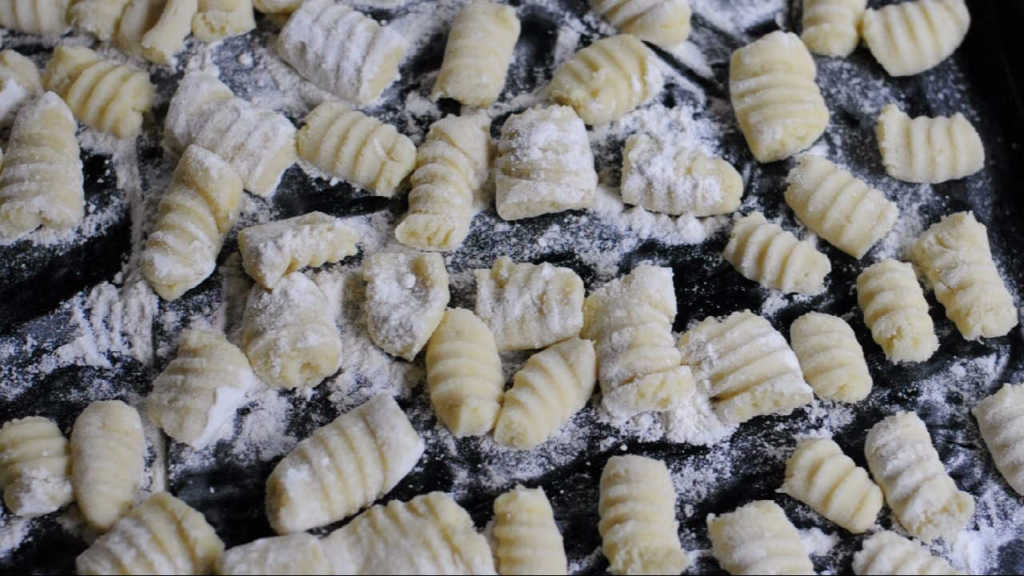
- The gnocchi will be shaped with characteristic ridges from the fork and a slight curve or indentation from your thumb.

- Arrange the gnocchi over floured trays on a single layer
Before you cook them
Important - Avoid Sticking Gnocchi: This step is critical! Shaped gnocchi are delicate and will stick together if not properly handled.
Gnocchi easily absorb kitchen humidity, especially steam from the boiling water, making proper tray placement essential to prevent them from becoming sticky and misshapen.
How to Prevent Sticking:
- Spread the shaped gnocchi out in a single layer on a lightly floured baking sheet or large tray, leaving space between each one.
- Dust the gnocchi generously with flour, ensuring they are lightly coated all over.
Don't Worry About Excess Flour: Any extra flour will be released into the cooking water. The flour is only there to keep the gnocchi from sticking before they are cooked. Do not mix it into the dough.
How to cook gnocchi

- Have a large pot of salted water at a rolling boil, like for cooking pasta.

- Carefully drop gnocchi into the boiling water in small batches, ensuring they are not overcrowded.

- Cook just until the gnocchi float to the top - this happens quickly! Immediately scoop them out with a slotted spoon.

- Gently place the cooked gnocchi directly into your prepared sauce.

- Gently toss the gnocchi in the sauce to coat them.

- Repeat the cooking process for all remaining gnocchi batches.
How to serve them
Light and Fluffy Gnocchi
Light and fluffy gnocchi have less flour, making the potato flavor more prominent.
Ideal as a starter or side dish, it's best to pair them with delicate sauces that enhance the potato taste without overpowering it. I share all my tricks for keeping them light in my light and fluffy gnocchi recipe.
Some refreshing sauce options include:
- Sage and butter: A simple combination of melted butter and fresh sage leaves.
- Truffle Gnocchi Sauce: Infused with the bold flavor of truffles, this sauce complements the lighter texture of the gnocchi.
- Fresh basil pesto: A blend of fresh basil, pine nuts, garlic, Parmesan cheese, and olive oil adds a vibrant touch
- Red pesto: fresh tomatoes, basil, garlic, and olive oil create a deeper, richer pesto option.
- Pistachio pesto: a rich and nutty sauce made with pistachio nuts, fresh basil and Parmesan cheese

Chunky and Firm Gnocchi
Chunky and firm gnocchi hold up well with more robust sauces, like those featuring mushrooms, seafood, or meat sauce.
These heartier dishes can be served as a main course. Suggested pairings include:
- Simple tomato sauce: A light base composed of tomatoes, garlic, and a touch of basil
- Bolognese sauce: A rich, meaty sauce with ground beef, tomatoes, and herbs
- Lamb ragu: Slow-cooked lamb with tomato sauce and a hint of rosemary for a lush, flavorful combination.
- Wild mushrooms chanterelle: Earthy chanterelle mushrooms cooked with garlic, parsley, and cream.
- Or seafood: A mix of shrimp, clams, and white fish for a satisfying oceanic twist.

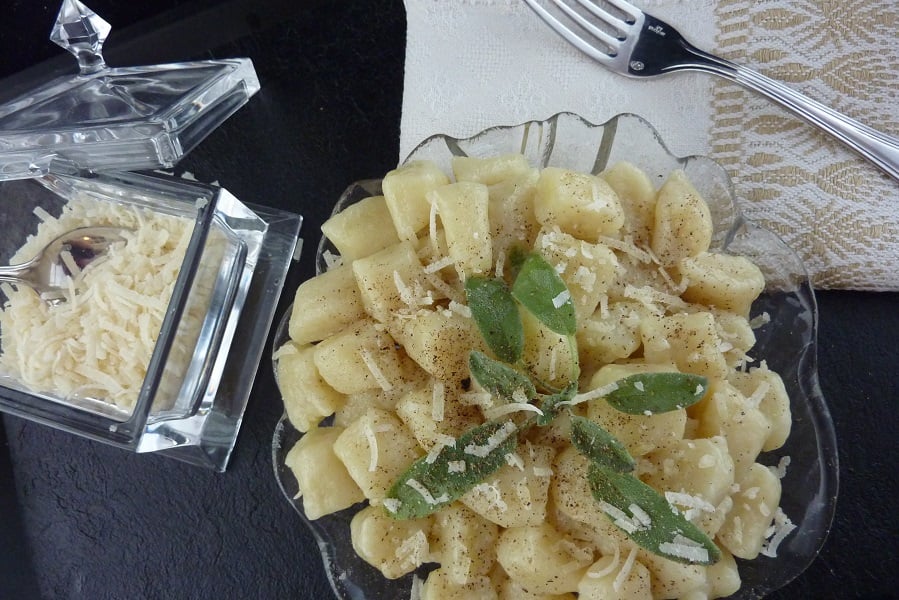
Complete the dish by generously topping the gnocchi with grated Parmigiano Reggiano for a perfect balance of flavors.
Storing gnocchi
Storing gnocchi properly can help preserve its taste and texture. Ideally, it should be served fresh on the same day it is made.
I wouldn't freeze gnocchi, otherwise they become too humid and break apart. Some people do, but it may not be the same recipe.
If I do not have time to make them, I buy them at a good deli store that sells them freshly made.
Reheat leftover baked gnocchi topped with sauce and Parmesan cheese.
Remember, freshly made gnocchi is always the best option.

Equipment
I find it very useful to use the KitchenAid and its vegetable strainer.
It separates the skin directly, so I don't have to peel the potatoes.
It is perfect when you make gnocchi, mashed in a flash, and you don't have to burn your hands to peel hot potatoes.
If you want to know what other recipes I make with it, read The KitchenAid Attachments I Use To Cook Italian.
Other useful tools include a potato ricer for creating smooth mashed potatoes without burning your hands.
A fork, gnocchi board, or gnocchi roller can be used to indent the gnocchi dough.
Lastly, baking sheets are essential for laying out the formed gnocchi before cooking.
Variations
Gnocchi offers diverse flavors and colors when combined with other ingredients like spinach, chestnuts, pumpkins, sweet potatoes or purple potatoes.
Some popular variations include ricotta gnocchi, gnocchi alla Romana, Canederli bread gnocchi, Parisian gnocchi made with choux paste, and gnocco fritto, the fried version from Emilia Romagna.
History of Italian Gnocchi
Potatoes arrived in Italy from the Americas in the 16th century, and for almost two hundred years they were viewed with suspicion and largely used as animal feed.
During the famines of the 18th century, Italian cooks began mashing boiled potatoes into the traditional gnocchi dough, in place of part of the flour or breadcrumbs, which gave a lighter and softer dumpling.
In 1801 Vincenzo Corrado published the earliest Italian potato gnocchi recipe.
In the late 19th and early 20th centuries, cookbooks written for home cooks warned that too much flour made a sticky paste (colla), that eggs could make the dough too hard, and that too little flour made the gnocchi dissolve in the boiling water.
You can read the full history of gnocchi in my article on the types of Italian gnocchi.
FAQ
Italian gnocchi offer two authentic variations, one with eggs and one without. I am a strong eggless supporter, as without the egg they can cater to vegetarians and vegans alike, and I can tailor their texture to the specific dish I'm making. This is the technique my mother taught me in the 70s.
Usually the potatoes were blended or the dough has too much flour. A blender overworks the potatoes, releasing too much starch and giving a dense, waxy and gummy texture, so I use a potato ricer. Too much flour makes the gnocchi tough, so I use as little as I can, but not too little, otherwise they will dissolve in the water when boiling.
If they are too soft and break when boiling, either you added too little flour or they have absorbed too much humidity.
Cooked gnocchi can last up to 3 days stored in an airtight container in the fridge. However, the texture of the potatoes changes over time, so gnocchi are best eaten fresh. They can be reheated in a pan or in the oven, adding some more sauce or butter.
I wouldn't freeze gnocchi, otherwise they become too humid and break apart. Some people do, but it may not be the same recipe. If I do not have time to make them, I buy them at a good deli store that sells them freshly made.
We eat gnocchi as a first dish after the starters and before the main course. For more information on how Italians structure their meals, you can read the article: Italian Sunday dinners: a 6 meal courses
Looking forward to hearing your Italian homemade gnocchi experience in the comments below. You can find more delicious ideas if you FOLLOW ME on Facebook, YouTube, Pinterest and Instagram or sign up to my newsletter.

📋 How To Make Italian Gnocchi
Verified Culinary AuthorityVideo
Equipment
Ingredients
For the gnocchi
- 4 old medium potatoes about 1 lb - 500 g
- ½ cup semolina flour
- ¼ cup all-purpose flour
- 1 teaspoon salt
- 1 tablespoon salt in water for boiling the gnocchi
For the cherry tomato sauce
- 3 cups cherry tomatoes
- 3 leaves Chopped basil leaves
- 2 cloves peeled garlic cloves
- 2 tablespoon Olive oil
- 1 teaspoon salt
- 6 tablespoon freshly grated Parmesan
Instructions
Making the gnocchi dough
- Boil the potatoes for 20 minutes4 old medium potatoes
- Pierce with a knife to check that they are done and drain them
- Peel immediately and mash the potatoes while still warm
- Set aside and let them cool down COMPLETELY
Make the gnocchi sauce
- Stir fry the garlic cloves2 cloves peeled garlic cloves, 2 tablespoon Olive oil
- Remove the cloves from the pan
- Add the chopped cherry tomatoes3 cups cherry tomatoes
- Add the basil leaves and the salt3 leaves Chopped basil leaves, 1 teaspoon salt
- Let it simmer covered, stirring from time to time
How to make gnocchi dough
- Once the potatoes are cold, mix them with the flours and the salt½ cup semolina flour, ¼ cup all-purpose flour, 1 teaspoon salt
- Mix the dough by hand until smooth
How to shape the gnocchi
- Take a small amount of dough, enough to fill your palm
- Roll it and make a long thick string
- Cut the gnocchi into shape
- Repeat until all the dough is shaped into gnocchi
- To indent the chunky gnocchi you can use a gnocchi board or the back of a fork.
- Apply a small pressure on the gnocchi against the fork while pushing them down.
- Lay the gnocchi on a floured tray
- Keep the gnocchi separate otherwise they stick to each other
- Dust with more flour
How To Cook Gnocchi
- Bring a pot of salted water to boil, same as for cooking pasta1 tablespoon salt
- Drop some gnocchi into the boiling water, not too many. Just enough to cover the bottom of the pan.
- Once the gnocchi start to float, remove them with a skimmer and place them directly in the pan where you have your gnocchi sauce.
- Stir gently into the sauce
- Once they are all removed, add the next batch of gnocchi until they are all cooked
How To Serve Gnocchi
- Serve the gnocchi still warm adding plenty of Parmesan cheese6 tablespoon freshly grated Parmesan
Notes
- Peel and strain the potatoes while still warm
- DON'T peel the potatoes before boiling them or your gnocchi will be soggy.
- Use a potato ricer, but do not use a blender as it will make them waxy.
- Wait until they are completely cold/room temperature before mixing them with the flour
- Do not add too much flour, as the best gnocchi are made with a minimal amount of flour. If you add too much flour you will have tough gnocchi
- Once the gnocchi are shaped lay them on a tray full of flour. Keep the gnocchi separate otherwise, they stick to each other.
- You can dust more flour as it will wash away when the gnocchi are cooked, but do not mix it into the dough
Leave a Reply