
Besides its religious meaning, Christmas in Italy is just another opportunity to eat a lot, with every region and every family following its own traditions. Growing up, we had two types of Christmas, either with all the relatives in Calabria or with just us in Rome, where we were living. From a crowded feast to an intimate celebration, this is how we planned our Italian Christmas.
Christmas food in Italy: from the Vigilia to La Befana
Christmas Eve (La Vigilia, 24 December). The Vigilia is a dinner di magro, which means without meat. The rule is no longer obligatory, but coming from a coastal Southern family, our Vigilia was always (and still is) a dinner of fish. If we were spending Christmas in Rome, we went to midnight mass that night. Either way, seafood was a light dinner, so we would not feel weighed down (appesantiti) before the heavy meal planned for the next day. For a selection of Italian seafood recipes to choose from for your Vigilia, you can read The Ultimate Feast of Seven Fishes Menu.
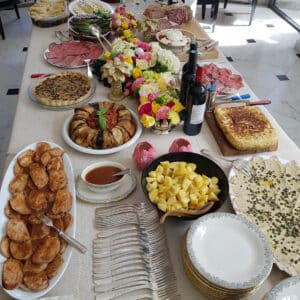
Christmas Day (Natale, 25 December). Outside Italy it is often called the traditional Italian Christmas dinner, but for us it is a lunch, because in Italy lunch has always been the main meal of the day. It is a lunch with meat, and it is so abundant that it lasts until the evening. The courses varied depending on the number of people, but everyone contributed to the feast, either by bringing a dish or by helping on the day. You can read how we organize a big Italian meal in my article Hosting an Authentic Italian Dinner Party.
Santo Stefano (26 December). The day after Christmas is a lighter lunch with the leftovers, which I describe at the end of this post.
Cenone di Capodanno (31 December). New Year's Eve was more festive, and dinner was often seafood or a cold buffet, because the main focus of the evening was a party or games like mercante in fiera and tombola. The youngsters stayed with the family until midnight, then headed off with their friends for the rest of the night.
Capodanno (1 January). On New Year's Day the tradition is cotechino or zampone with lentils. By then we had eaten so much that I doubt anyone really cared about the cotechino (I never did). The lentils were always on the table, because they are a wish for money in the coming year. While the youngsters wandered around the house with a hangover, the adults enjoyed the New Year's Concert of the Vienna Philharmonic.
La Befana (6 January). La Befana was never a day for eating, but a celebration for children. During the night an old lady, the Befana, brought sweets to the good children and charcoal to the bad ones. The day is the Epiphany, when the Re Magi, the Three Wise Men, reached the baby Jesus with their gifts. La Befana marked the end of the festivities and the return to school.
During the entire period, every city in Italy is full of Christmas markets, and it is a tradition to visit the nativity scenes in the churches. In Rome, where I grew up, we went on a tour of the most spectacular ones around town, from the four papal basilicas of St Peter's, St John Lateran, Santa Maria Maggiore and St Paul Outside the Walls to the smaller churches.
A crowded feast or an intimate Christmas lunch
How we organized Christmas lunch depended on the number of guests. At a large gathering, everyone brought a dish, and each course had several choices. This solved two problems:
- Nobody had to prepare one huge course for many people. Cooking large quantities in a kitchen that is not properly equipped can ruin the result, as a large pot of pasta can easily get overcooked, and a huge tart or soufflé may not cook properly in the center.
- With different choices, guests with allergies, food intolerances or special diets had more options.
At a more intimate celebration, everyone helped in the kitchen, and the preparation itself became part of the celebration.
The order of courses at a traditional Italian Christmas lunch
Christmas lunch follows the same order of courses as any important Italian meal.
- Antipasti are both cold and warm. The cold ones are often a pâté or a terrine. In the South it is tradition to serve warm fried antipasti made with a yeast dough, called crispelle, crispeddi, paste cresciute or zeppole depending on the region, together with olive ascolane and fried deviled eggs. The frying station is always managed by the man of the family, and with us it was either my father or my Neapolitan Zio Giuseppe.
- Primo is often an elegant consommé, served with garnishes such as small fried meatballs, croutons or tortellini. For a large party, baked timballi or soufflés of rice or pasta are practical to serve. For a more intimate celebration, we make homemade gnocchi, and everyone helps to shape them.
- Secondo is either poultry, often a capon, or a roast. Turkey is rare, as it is a large bird, and we would rather have several courses so everyone can choose. I make my duck à l'orange or a turkey roll, which is made only with the breast and is therefore a much smaller portion. For the roast, we have a crown of lamb, a porchetta romana, a fiorentina on the barbecue, or a pork tenderloin with a fancy stuffing, like my sausage and chestnut stuffing.
- Contorni are a mix of cold and warm, served at the same time as the secondo. The salads are insalata di rinforzo, made with a mix of vegetables and cauliflower, and insalata imperiale, where fruit is added, as in the fennel and orange salad. The warm side dishes go with anything, like roasted potatoes or roasted butternut squash, and some can also be a main for vegetarians, like a cauliflower flan or a potato and zucchini casserole. [Links to add when published: insalata di rinforzo, cauliflower flan]
- Formaggi come after the secondo. After such a meal, cheese is not really a requirement, but we would have a special local pecorino as a treat, served with red pepper jelly.
- Frutta e dolci. While panettone, pandoro (without candied fruit), torrone and dried fruit are typical Christmas desserts everywhere in Italy, in the South we have specific specialities, like struffoli, petrali, pitta 'nchiusa and nacatole. For those who like creams and puddings, we also make special homemade Christmas desserts, like a cream budino [link to add when published], a Christmas log made with tiramisu cream or a Mont Blanc.
- Espresso and digestivo end the meal, often with a homemade liqueur.
For more about how the courses of an Italian meal follow each other, you can read my Hosting an Authentic Italian Dinner Party: Courses, Menus, and Traditions.
How to plan an Italian Christmas menu ahead
With some organization, many courses can be prepared in advance, so you have time to look after your guests and enjoy the day. Here is what can be made weeks before and frozen, what can be made ahead of time and what is best made at the last minute, course by course.
Antipasti
- Weeks before: olive ascolane, fried deviled eggs and fried mozzarella sticks and balls can be prepared and frozen, then fried at the last minute.
- Ahead: the ham terrine can be made days before the party, and so can the foie gras terrine.
- Last minute: all the fried antipasti, like crispelle and the frozen ones, are fried just before serving.
[WPRM roundup: olive ascolane, fried deviled eggs, fried mozzarella sticks and balls, ham terrine, foie gras terrine, crispelle]
Primo
- Weeks before: the consommé can be made and frozen, and so can some of its garnishes, like the small fried meatballs.
- Ahead: timballi, the tricolor rice timbale, the baked anelletti and the Tagliatelle Pasta Pie can be assembled ahead of time and baked at the last minute.
- Last minute: the tortellini soufflé goes in the oven just before serving, and homemade gnocchi are shaped together on the day. Fresh tortellini for the consommé can be bought at a good deli and cooked at the last minute.
[WPRM roundup: consommé, fried meatballs, tricolor rice timbale, rice eggplant timbale, baked anelletti, Tagliatelle Pasta Pie, tortellini soufflé, homemade gnocchi]
Secondo
- Weeks before: the sausage and chestnut stuffing can be made and frozen. I make a large quantity, so if I need extra meat for unexpected guests at the last minute, I can easily defrost more.
- Ahead: the duck à l'orange and the turkey roll can be made ahead. The crown of lamb, the porchetta romana and the pork tenderloin with its stuffing can be assembled the day before and roasted on the day.
- Last minute: the capon is roasted on the day, and the fiorentina goes on the barbecue just before serving.
[WPRM roundup: duck à l'orange, turkey roll, crown of lamb, porchetta romana, stuffed pork tenderloin, sausage and chestnut stuffing, fiorentina]
Contorni
- Ahead: the potato and zucchini casserole can be assembled ahead and baked on the day, and the butternut squash mash and the cauliflower flan can also be made ahead. [Link to add when published: cauliflower flan]
- Last minute: roasted potatoes go in the oven on the day, and the salads are dressed just before serving.
[WPRM roundup: potato and zucchini casserole, butternut squash mash, roasted potatoes, fennel and orange salad]
Preserves
- Months before: the red pepper jelly, the balsamic fig glaze, the grape jelly and the caramelized onion relish can be made in August and September, when the fruit is in season, and frozen. They are served with the pâté, the meat or the cheese.
[WPRM roundup: red pepper jelly, balsamic fig glaze, grape jelly, caramelized onion relish]
Dolci
- Weeks before: struffoli can be frozen, then assembled the day before, and the chocolate covered figs can be made weeks ahead.
- Ahead: the torrone can be made ahead, although it is often bought from a local producer. The cream budino [link to add when published], the Christmas log and the Mont Blanc are made the day before.
[WPRM roundup: struffoli, torrone, Christmas log, Mont Blanc, chocolate covered figs]
Digestivi
- Months before: Nocino can only be made in June, when the walnuts are still on the tree. Limoncello and chocolate liqueur are made months before, as they need time to infuse.
- Last minute: VOV is made at the last minute.
[WPRM roundup: Nocino, Limoncello, chocolate liqueur, VOV]
Santo Stefano: the day after Christmas
On 26 December, Santo Stefano, lunch is lighter and uses the leftovers. Usually there is so much left over that you do not need to cook for the next few days. We turn the leftover meat and roasts into a festive chicken aspic, gelatina di pollo, which is a welcome light dish after the Christmas feast, or into a pâté like my ham terrine.
Frequently asked questions
What is a traditional Italian Christmas dinner? In Italy it is a lunch on the 25th, so abundant that it lasts until the evening. It starts with a pâté or fried antipasti, followed by a consommé, tortellini or a baked timballo, then a capon or a roast with contorni. It ends with panettone, torrone and the regional Christmas desserts.
Is the main Christmas meal in Italy lunch or dinner? It is lunch on the 25th. The dinner is on Christmas Eve, the Vigilia, and it is often meatless.
What is the difference between the Vigilia and Christmas lunch? The Vigilia on the 24th is a dinner di magro, without meat, based on fish. Christmas lunch on the 25th is the big meal with meat.
Do Italians eat turkey at Christmas? We do have a tradition of serving poultry at Christmas, but rarely turkey. More often it is a capon (cappone) or a pheasant (fagiano).
What pasta do Italians eat at Christmas? Italians eat pasta in broth, mainly tortellini, cappelletti or raviolini, or a baked pasta such as a timballo or a pasticcio.
How many courses are in an Italian Christmas lunch? A full lunch has antipasto, primo, fish, secondo with its contorni, cheese, fruit and dessert, then coffee and a digestivo. A smaller lunch can leave some courses out, as long as the order is kept.
What do Italians eat on Santo Stefano? On 26 December lunch is lighter and uses the leftovers from Christmas lunch.
What Christmas desserts do Italians eat? Panettone, pandoro, torrone and dried fruit are eaten all over Italy, while in the South we also have specialities like struffoli, petrali, pitta 'nchiusa and nacatole.
Why do Italians eat lentils at New Year? On New Year's Day lentils are always on the table with cotechino or zampone, as they are a wish for money in the coming year.
More articles you may like
For more information about Italian cuisine history, tradition, and culture, you can read: 77 traditional Italian ingredients and best brands, 36 Essential Herbs And Spices Used In Italian Cooking, history of traditional Italian food by region, 32 most popular Italian street food, 22 Italian breakfast recipes, Italian Sunday dinner a 6 meal courses.
For more classic Italian recipes and Italian dinner ideas, you can find my recommendations of authentic Italian cooking books translated into English in my Amazon shop section: Cooking Books
Hope you find this article helpful, please if you have any questions, write them in the comments below and I will be happy to respond and help. For more information, you can visit the category: Italian food traditions. You can find delicious ideas if you FOLLOW ME on Facebook, YouTube, Pinterest and Instagram or sign up to my newsletter.


Leave a Reply