
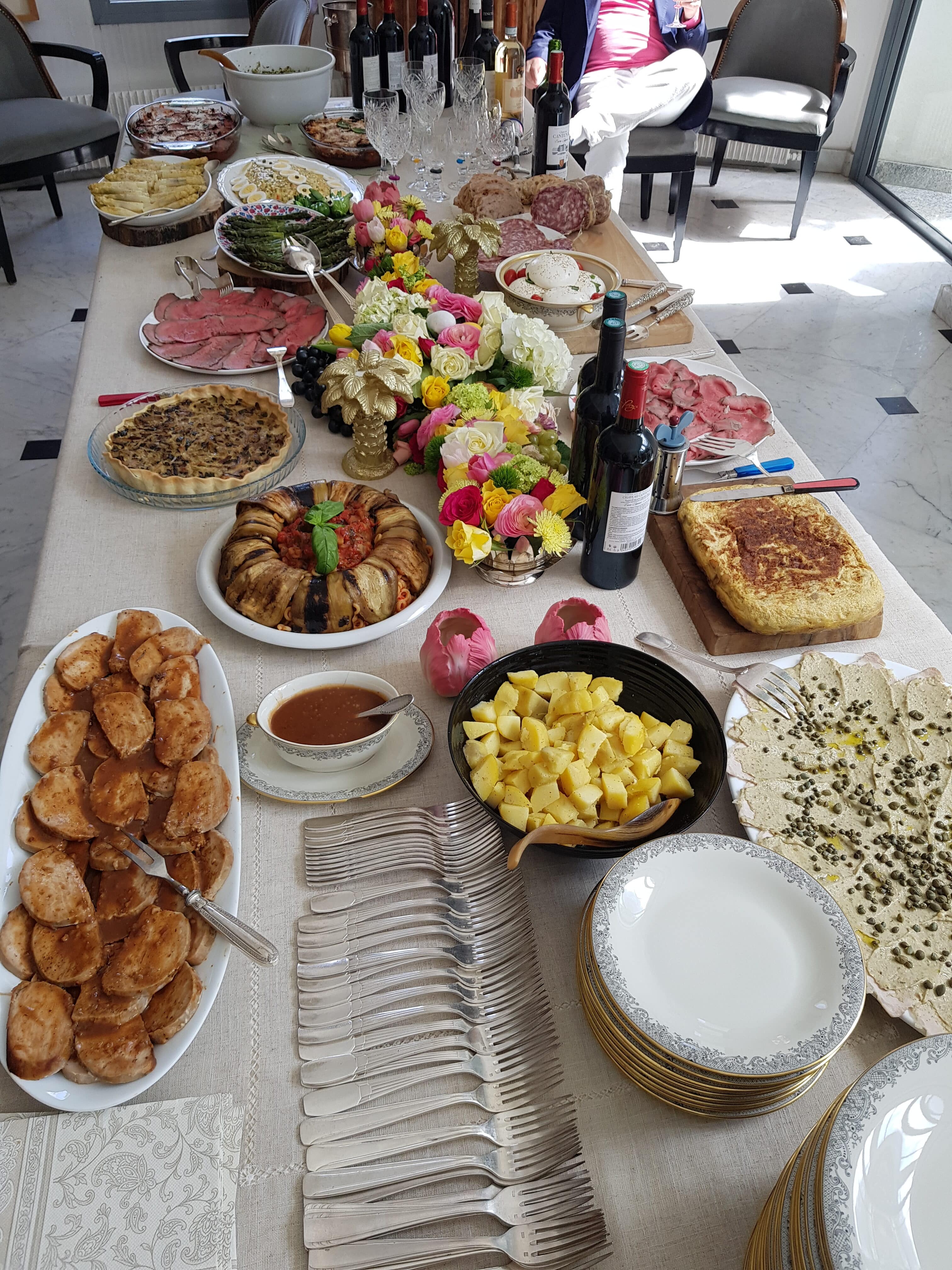
An Italian dinner party is not the usual three-course meal of starter, main and dessert. It follows a set order of courses, from the antipasti to the espresso and digestivo, and each one is served on its own.
Jump to:
- How Italians structure their meals
- An Italian 13-course menu for special occasions
- The rules for planning an Italian menu
- The advantage of having many courses
- "Fare il bis" go back for seconds
- Appetizer course
- Primi piatti
- Secondi piatti
- Side dishes Contorni
- Cheese, desserts and liqueurs
- How to plan an Italian dinner party menu ahead
- Build up memories
- Ideas for menus
- Planning an Italian party
- Frequently asked questions
- More articles you may like
All over Italy the courses are served in this same order, while the recipes change from region to region.
In this post I explain how the courses are organized, how many to serve depending on the occasion, and how to plan the menu so you can spend time with your guests instead of being stuck in the kitchen.
The order of courses we follow today dates back to the Renaissance.
At that time the scalco, the head steward of a noble house, decided in which order the dishes were served, and the cook prepared them.
In the 19th century we moved from the French service, with all the dishes on the table at once, to the Russian service, with one course served at a time, and this is still how we eat today.
You can read the full story in my article on Italian food history and cultural influences.
How Italians structure their meals
Outside Italy a dinner party is usually a starter, a main and a dessert, while in Italy it is more complex. Whether it is a dinner with friends or a big celebration, we never have fewer than six courses:
- Aperitivo with stuzzichini, served standing before sitting at the table
- Antipasto
- Primo piatto: pasta, risotto, gnocchi or soup
- Secondo piatto with its contorni
- Formaggi, frutta e dolci
- Espresso and digestivo
You can see how we put together a family Sunday lunch, course by course, in my article Italian Sunday dinner: a 6 meal courses.
For a big celebration the menu becomes much more elaborate, and I will explain why.
An Italian 13-course menu for special occasions
For weddings, important birthdays and other special celebrations, like our Italian Christmas lunch, some of these courses are doubled, and the menu can grow to 13 courses.
While you may find this excessive and random, there are specific rules to follow and there is always a reason behind them.
The extravagant traditional Italian menus include:
- Nibbles: stuzzichini. Served while standing holding an aperitif
- Warm antipasti
- Cold antipasti
- First primo piatto with a delicate flavor
- Second primo piatto with a stronger flavor
- Secondo piatto made with seafood
- Lemon or lime sorbet to cleanse the palate
- Secondo piatto made with white meat (chicken, rabbit)
- Secondo piatto made with red meat (pork, beef or lamb)
- Contorni: side dishes served with each secondo piatto
- Formaggio: Cheese platter
- Frutta e dolci: Fresh fruit and dessert
- Espresso and digestivo liqueur
All 13 courses are rarely served in the same meal, but whichever courses you choose, keep them in this order. The meal is built to bring out the taste of each dish, going from the lighter flavors to the stronger ones.
So don't be surprised if an Italian dinner lasts the entire day, ends with a digestivo, takes a week to digest, and months to burn off.
A selection of homemade liqueurs is mandatory for good digestion.

The rules for planning an Italian menu
Each dish is chosen to balance the others, following rules that go back centuries:
- Never repeat the main ingredient in two courses, so if you serve roasted potatoes with the secondo, the primo will not be potato gnocchi. The only exception is truffle.
- Never serve two carbs together, which is why garlic bread with pasta is not Italian.
- Balance dry and juicy dishes by serving a juicy secondo with a dry contorno, and a dry secondo with a juicy one.
- Serve warm antipasti first, then cold ones, never together.
- Keep the antipasto light, as it should open the appetite and not fill you up.
- Skip the antipasto if the primo is substantial, like a rich pasta, a risotto or a timballo, so your guests do not get too full.
- Match the primo to the secondo, with a light vegetable pasta or risotto before fish or white meat, and a soup or consommé before a roast.
- Go from light to heavy when there is more than one secondo, with seafood first, then white meat and finally red meat.
- Choose the dessert by the time of day, with a warm fruit dessert or a light cold one at lunch, and a cold dessert like ice cream or a cake at dinner.
- Choose how to serve by the number of guests, putting all the dishes on the table at once like a buffet for a big party, and serving one course at a time for an intimate dinner.
The advantage of having many courses
There are two main advantages to serving a long Italian meal, plus an extra one:
- It gives your guests a wide choice of traditional Italian dishes in case they have some food allergy or intolerance or follow a special diet.
- When guests get to the secondo course, they will be quite full, so you don't need to prepare much meat or fish. As contorni and primi are usually less expensive, Italian meals can be abundant and lavish as overall they are more economical.
- One more good news! You will have leftovers and will not have to cook for the next few days.
Don't worry, everyone will help prepare, as those who don't know how to cook are responsible for buying pastries or starters.

"Fare il bis" go back for seconds
Food is brought to the table in a serving dish. Everyone helps themselves with the portions they want to have.
Meals are never served directly on the dinner plate as in restaurants.
You would normally serve yourself a small amount and repeat for a second serving if you wish to...and everyone does!
The only dishes not served a second time are consommé, soup, cheese, and fruit.
Appetizer course
Depending on the rest of the meal menu, the appetizers can be simple or elaborate.
Simple appetizers: stuzzichini
If your menu already has 4 to 5 courses, you just need to serve some nibbles as appetizers.
A simple Aperitivo includes some bites to eat with an aperitif before you sit at the table. Here are some ideas:
- small dishes of olives, nuts, salami slices, bresaola, selection of hams and cheese cubes
- bruschetta or crostini with a pâté like ham terrine or foie gras terrine, or toppings like caponata, tapenade or eggplant caviar
- Small fried nibbles like crespelle, zucchini flower, eggplant balls, olive Ascolane, fried cremini, fried deviled eggs, frittelle di neonata or fried mozzarella sticks and balls.
As an aperitif, you can serve:
- Prosecco
- Spritz: ¼ cup - 6 cl Prosecco, 4 tablespoon - 4 cl Aperol, 1 tablespoon of tonic water
- Bellini: ⅓ cup - 10 cl Prosecco, 3 tablespoon - 5 cl of peach juice

Elaborate appetizers
If you want to serve only a Primo Piatto or a Secondo Piatto, you can do that by preparing a more elaborate Antipasto.
An elaborate informal starter is called "rustici" assortment, which can include:
- Bruschetta with mozzarella and tomato or bacon and mushrooms
- Arancini
- Pizzette, fried pizza or focaccia bites
- Sausage rolls
Not everybody would make them fresh, you can easily buy them in any rosticceria, which is open on a Sunday and is strategically located close to the church, next to a pasticceria (pastry shop).

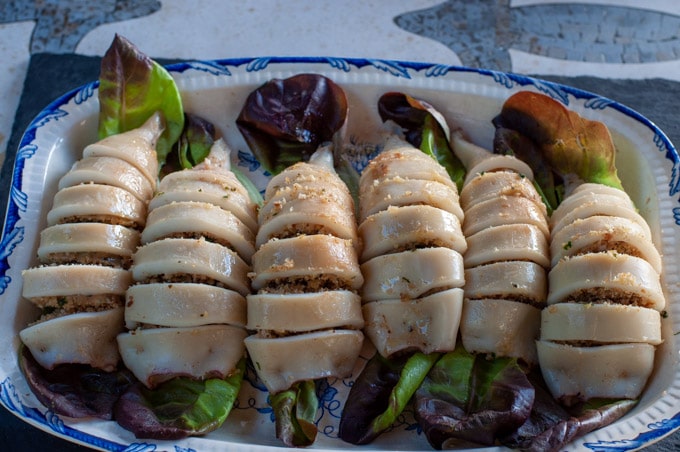
More refined and elaborate seafood starters are:
- Seafood Fritto Misto or fried calamari
- Octopus salad
- Cozze gratinate or impepata di cozze
- Salmon tartare

Or vegetables like:
- grilled vegetables
- roasted peppers
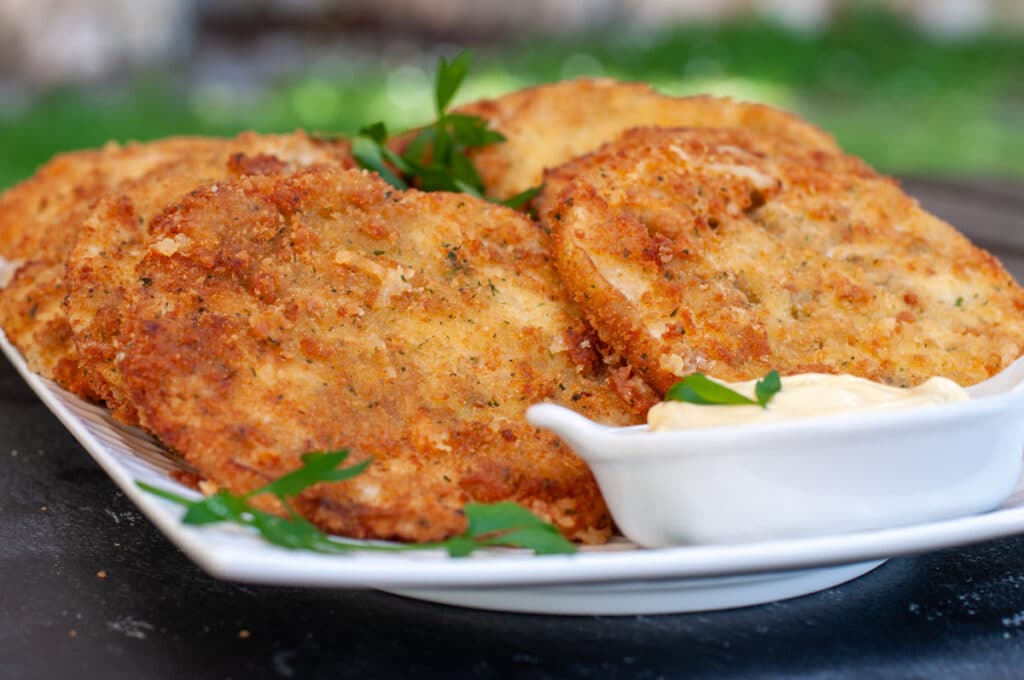
- zucchini fritters
- parmigiana
- fried eggplants
- stuffed zucchini and eggplants
- stuffed mushrooms with pistachios
- little tomato timbales
Primi piatti
Primi piatti are pasta, risotti, gnocchi or soups like minestra. All are eaten in a pasta bowl and are not served with other food at the same time.
Depending on the recipe, grated Pecorino Romano, Parmesan cheese, or Ricotta Salata cheese (to name a few) are offered in a serving bowl with a spoon for everyone to add to their plate.
Cheese is never served with seafood dishes, it can be substituted with toasted breadcrumbs or grated almonds.
You can find some Primi Piatti ideas in the categories:

Secondi piatti
Il Secondo is usually a main dish of meat or seafood, and in luscious meals, you will have both.
If there is more than one secondo piatto, seafood is served first, then a lemon or lime sorbet to rinse the palate.
After the sorbet the meat is served, first the white meat (poultry or rabbit), then the red (beef, lamb or pork).
Usually, meat and seafood are served as they are cooked, meaning the sauce and the vegetables they are cooked with as from the recipe.
Any other vegetables or side dishes are served simultaneously but on different serving dishes.

Side dishes Contorni
Side dishes are served at the same time as the secondo, they are usually cooked warm or cold vegetables or salads and/or potatoes.
Salads can be simple romaine lettuce served in a large bowl seasoned only with extra virgin olive oil and red wine vinegar.
If you serve more than one secondo seafood and meat, each secondo will have its own side dishes.

If you are serving two types of the same course (two types of meat or two types of seafood), you can find side dishes that will go well with both.
Usually, one of the side dishes is a potato dish, either warm, like roasted potatoes, or cold, like a potato salad.
If you are serving two types of the same course (two types of meat or two types of seafood), you can find side dishes that will go well with both.
Usually, one of the side dishes is a potato dish, either warm, like roasted potatoes, or cold, like a potato salad.

Cheese, desserts and liqueurs
To end the perfect Italian dinner, you can serve some cheese with some crusty bread, but it is unnecessary.
You can find a selection of Italian and French cheese in these articles.
For Italian dessert, you can either have someone buy a pastry assortment Pasticcini della domenica, or make your own cake.
Here you will find a list of desserts to choose from.
For special holiday celebrations, some traditional Italian desserts are a must-have, like the Christmas desserts I list in my Italian Christmas lunch article [link to add when published].
You can find some of those recipes in the category: cookies and festivities desserts
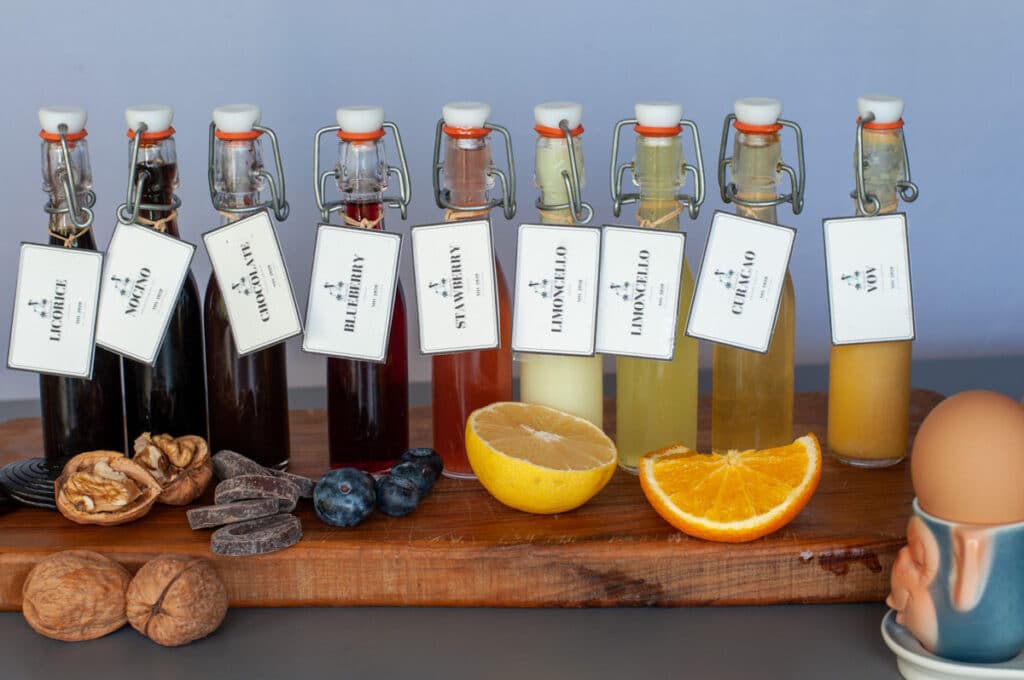
To finish any important Italian dinner, you must have a selection of liqueurs to serve so guests can digest your lavish meal.
Sure, you can buy them, and that is okay.
But if you have your own homemade selections, you will be a hero, everyone will praise and admire you and will be remembered for generations to come.
If you want to try it, you can find a collection of recipes in the category: homemade liqueurs.
Surprise your friends and family with an unusual edible gift.
How to plan an Italian dinner party menu ahead
Cooking so many courses on the day would be a full-time job, so we build the menu around what can be prepared ahead and leave only a few dishes for the last minute.
- Share the work with the family. Someone fetches the fresh pasta at the pastificio, someone fries the antipasti, someone brings the dessert and the youngsters set the table. At home my father was always the one frying.
- Choose cold antipasti you can make days ahead, like caponata, roasted vegetables, a terrine or a pâté. Anything with eggplants tastes better after a day in the fridge, as it absorbs all the flavors. You can also buy good cold cuts and jarred vegetables at a deli.
- Prepare the primo ahead and bake it at the last minute. Fresh pasta and risotto need to be cooked at the last minute, so at a large dinner party it is more practical to serve a baked primo piatto that you assemble ahead of time and only bake before serving. It can be a lasagna, a timballo or a pasticcio, like my Tagliatelle Pasta Pie, the tricolor rice timbale or the baked eggplant pasta.
- Focus your attention on the secondo, as it is the dish you cook on the day, and choose contorni that only need warming up in the oven, like baked potatoes, gnocchi alla romana or giambotta. If you are not serving a primo, a baked risotto can also be served as a contorno.
- Freeze weeks ahead anything that takes a long preparation, like soups, consommé, pies, vegetable casseroles, stuffing and even struffoli. The fried antipasti, like olive ascolane and mozzarella sticks and balls, go in the freezer uncooked and are fried on the day.
- Freeze in small portions, so you defrost only what you need and there is always extra you can add for an unexpected guest.
- Freeze the basic prep too, like grated Parmesan, breadcrumbs, soffritto and stock. With the basic ingredients already chopped, it will take you less time to make a dish.
- Set up a buffet for a big party, with the cold dishes already on the table while the hot dishes are cooked, and serve one course at a time only for an intimate dinner.
Build up memories
Celebrating a special dinner is a great way for the family to bond; it builds up memories that will stay with you for the rest of your life.
When family members eventually leave us, those meals are the perfect opportunity to remember them through their recipes and cooking skills.
For my boys and me, Sunday meals are a way to remember my late husband Robert, and his barbecue skills.

Ideas for menus
Italian Sunday meals are not preplanned, they are based on what is in season, fresh on the market, or at the fishmonger's stalls.
On Saturday, take a stroll to the local farmer's market. See what looks fresh and inspiring and build your menu around that.
If you see a new ingredient, try and experiment with it. After all, what are families for?
Cook for them and ask their opinions on how a recipe can be improved or what can be combined with.
Sundays are the perfect time for home cooks to practice and improve their cooking skills.
Next time you have unexpected guests, you will be able to get a perfect dinner with no stress and in no time.
If you want to find out more about the way Italians plan their meals based on simple ingredients that are fresh and look good at the market, you can read my article:
A Family Meal Planner Based On Fresh Vegetables

Planning an Italian party
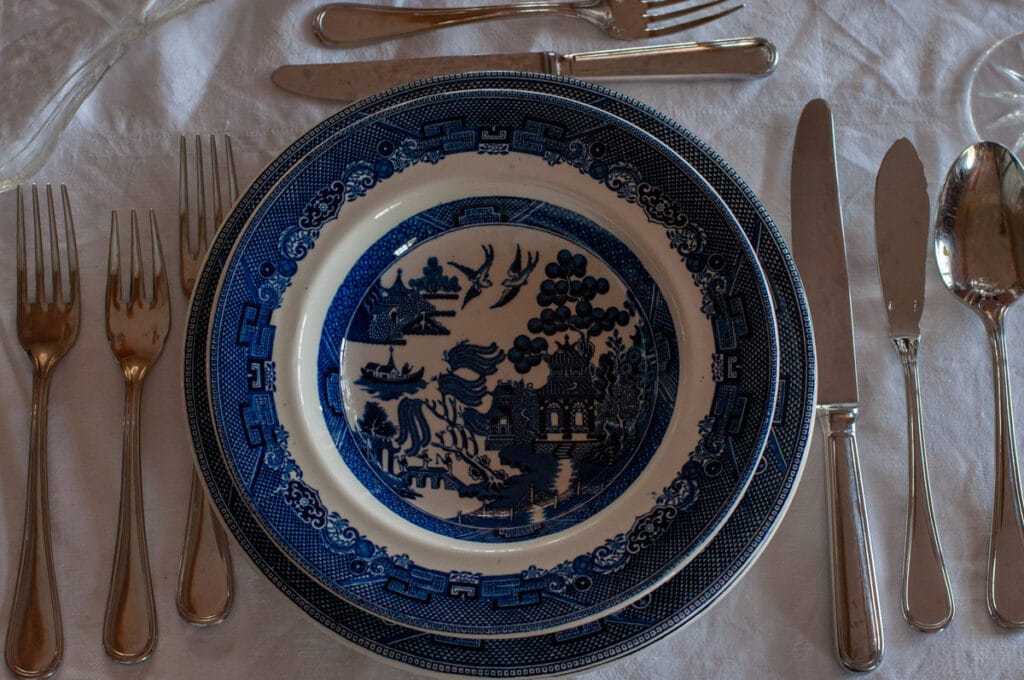
If you are planning an Italian party, besides the menu and the meals you are preparing, it is important to follow the Italian table setting and etiquette.
I always use my nice dishes on Sunday.
What better occasion to treat yourself and your family to a fancy table set?
Children should be involved in the table setting, so they can learn from an early age how to set the dinner table and how to eat properly.
You can read more about it in the article coming up next: Italian Table Setting And Etiquette.
Fun fact: Did you know you are not supposed to say: "Buon appetito" before dinner starts?
Find out why in the article above!
Frequently asked questions
How many courses are in an Italian dinner party? We never have fewer than six courses: aperitivo, antipasto, primo, secondo with its contorni, cheese, fruit and dessert, then espresso and digestivo. For weddings and big celebrations the menu can grow to 13 courses.
What is the order of courses in an Italian meal? The meal starts with the aperitivo and stuzzichini, followed by the antipasto, the primo piatto, the secondo with its contorni, cheese, fruit and dessert, and it ends with espresso and a digestivo.
What is a primo piatto? The primo is pasta, risotto, gnocchi or soup, served on its own before the secondo.
Are side dishes served with the main course in Italy? Yes, the contorni are served at the same time as the secondo, but in separate serving dishes.
Why do Italians serve so many courses? With many courses your guests have more choice, which helps anyone with an allergy, an intolerance or a special diet. By the time the secondo arrives everyone is quite full, so you need less meat or fish, and there are always leftovers for the following days.
Why is a sorbet served in the middle of an Italian meal? When there is more than one secondo, a lemon or lime sorbet is served after the seafood to cleanse the palate before the meat.
Do Italians serve bread with pasta? We never serve two carbs together, which is why garlic bread with pasta is not Italian.
Is it rude to ask for seconds at an Italian dinner? Not at all, as everyone helps themselves from the serving dishes and goes back for seconds. The only dishes not served a second time are consommé, soup, cheese and fruit.
Can an Italian dinner party be prepared ahead? Yes, the cold antipasti can be made days before, the baked primo can be assembled ahead and baked at the last minute, and many dishes can be frozen weeks before.
More articles you may like
For more information about Italian cuisine history, tradition, and culture, you can read: 77 traditional Italian ingredients and best brands, 36 Essential Herbs And Spices Used In Italian Cooking, history of traditional Italian food by region, 32 most popular Italian street food, 22 Italian breakfast recipes, Italian Sunday dinner a 6 meal courses.
For more classic Italian recipes and Italian dinner ideas, you can find my recommendations of authentic Italian cooking books translated into English in my Amazon shop section: Cooking Books
Hope you find this article helpful, please if you have any questions, write them in the comments below and I will be happy to respond and help. For more information, you can visit the category: Italian food traditions. You can find delicious ideas if you FOLLOW ME on Facebook, YouTube, Pinterest and Instagram or sign up to my newsletter.



Leave a Reply